
Reviewed · POMPEII TOURS
Pompeii Skip-the-line Tour with Archaeologist Guide
Pompeii has a rare power, it feels like you are walking inside a snapshot of AD 79. What makes this experience different is that it uses a guide who can read the site like a text, so the ruins stop being random piles of stone and start making sense fast. I especially like having an archaeologist guide in charge, with past groups calling out specialists such as Lello and Italo by name.
Two other things I like: the route hits the main showpieces in about two hours, and the format keeps the group small (max 16), so you can actually ask questions. One possible drawback to plan for is that this is still a “highlights first” visit, so you may want extra time afterward if you like to linger in corners.
Key things worth knowing before you go
- Archaeologist-led walking tour with guides like Lello and Italo, who point out details most people miss.
- Skip-the-line support, but your confirmation is not a standalone ruins ticket, you enter with the guide.
- A tight hits-the-best-parts circuit through the forum, theater, thermal baths, and the Lupanare (brothel).
- You walk on original surfaces, including lava rock and the wagon-wheel ruts cut into the streets.
- Small-group feel (up to 16), which helps with pace and Q and A.
- Good preparation for summer, with reminders to bring a hat and wear comfortable shoes.
Why a 2-hour archaeologist tour works better than wandering alone
If you have never visited Pompeii, you can feel a little lost fast. There is so much to see, and without context the buildings can blend together. The real value here is that you get a guide who can explain what you are looking at while you are looking at it, instead of after you have wandered away and forgotten the details.
I like that the tour is built around the city’s everyday rhythms, not just big monuments. You move through places tied to civic power, entertainment, bathing, and commerce, then the guide connects it back to what happened when Vesuvius erupted in AD 79. That story matters because Pompeii is preserved in a way that lets you study how people actually lived, not just what officials wanted carved in stone.
This format also respects your time. Two hours is not enough to see everything in Pompeii, but it is enough to give you a mental map. Once you understand the layout and the purpose of the major zones, your self-guided time after the tour becomes much more rewarding.
More of Pompeii:
- Pompeii: Entry Ticket and Guided Tour with an Archaeologist
★ 4.8 · 19,459 reviews - Pompeii: Entry Ticket with Optional Audio Guide
★ 4.2 · 12,360 reviews - From Naples: Pompeii Ruins & Mount Vesuvius Day Tour
★ 4.3 · 11,459 reviews
Getting to the site: train to Pompei Scavi and meet at Piazza Esedra
You handle the journey to Pompeii on your own, which is pretty normal for this kind of tour. From Naples or Sorrento, you take the Circumvesuviana train and get off at Pompei Scavi station. Then you make your way to the meeting point where the guide will be not far from the entrance area.
The stated meeting point is Hotel Vittoria, Piazza Esedra, 80045 Pompei (NA), Italy, and the tour ends back at the meeting point. That round-trip setup is convenient, especially if you want to keep exploring after the tour without reorganizing transportation.
Because Pompeii is outdoors and you will be walking on ancient ground, plan your arrival with comfort in mind. Give yourself enough time to get from the station to the meeting area, and then to find your guide. One rule to take seriously: if you are late or miss the tour, there are no refunds.
Skip-the-line in practice: use the guide, not just the confirmation
The tour is marketed as skip-the-line, and in practice that usually means you are handled by the guide during entry rather than standing around figuring things out. But there is an important detail: this is not a standalone ticket to the ruins. Your confirmation works only with the guide.
So what you should expect is a guided entry experience that gets you into the park efficiently, then immediately turns into walking and interpretation. This is a good match for a first visit, because your time starts being productive right away instead of spent in bottlenecks.
Also, keep in mind the group size is capped at 16. That number is big enough to feel social, but small enough that the guide can keep the group together while still pausing for questions. For Pompeii, that matters, because slowing down in the right spots is what transforms a walk into an education.
The forum and civic Pompeii: temples, civic buildings, and power
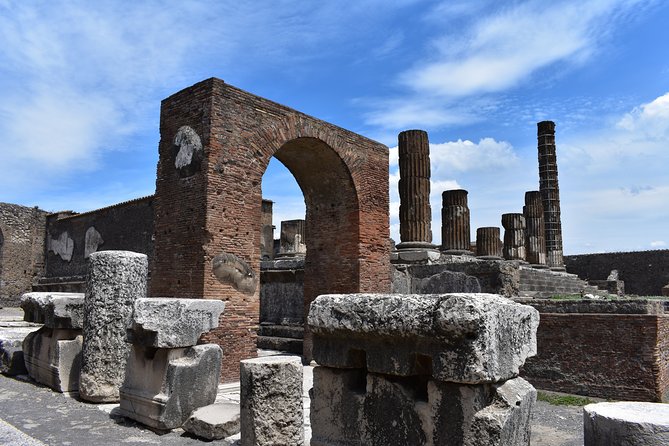
The forum is the heart of a Roman city, and Pompeii’s is one of the best places to start if your goal is understanding how society worked. In the tour, you walk through the forum area to see the ruins of temples and civic buildings, and hear how government and religion were tightly linked.
I like this stop because it gives you a framework. When you later see theaters, baths, or businesses, you can better understand what kind of city it was and who spent time where. The guide’s job is to connect the physical remains to Roman daily life, like who gathered, what decisions were made, and why certain buildings mattered.
You will also get a sense of how public space functioned. The forum was not only about worship and politics, it was about movement, announcements, and social pressure. Even though Pompeii is silent now, this is the zone where you can still picture the crowd.
Practical note: forums are exposed. Bring a hat and expect sun. If you are heat sensitive, aim for the cooler times of day when you can.
More Pompeii bookings worth a look
- Pompeii: Skip-the-Line Entrance Ticket with Audio Guide
★ 4.0 · 2,509 reviews - Pompeii: Guided Walking Tour with Entrance Ticket
★ 4.3 · 1,423 reviews - Rome to Pompeii Guided Tour with Wine & Lunch by High Speed Train
★ 5.0 · 1,379 reviews - Pompeii: Skip-the-Line Entry Ticket with Audio Guide or Tour
★ 4.1 · 1,364 reviews
Theater, baths, and everyday streets you can walk through
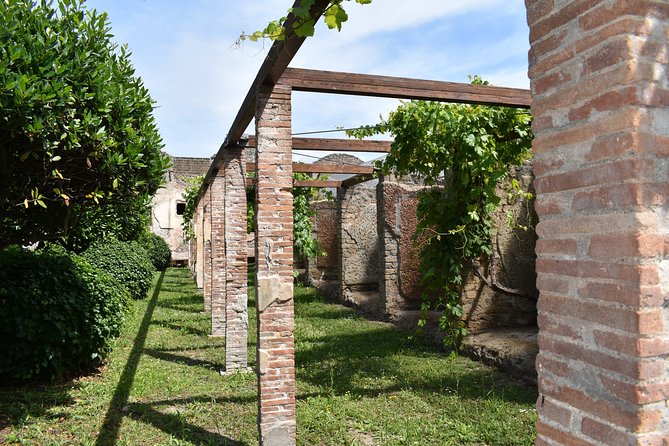
A big reason to take a guided Pompeii intro is that the guide can make the city’s routine feel visible again. This route includes the theater, thermal baths, and the remains of local businesses like restaurants, bars, and shops.
The theater stop is one of the best for seeing how Romans used public entertainment. The guide explains the kinds of performances that once filled the space, including tragedy and comedy. Even if you are not a theater nerd, it helps to understand that these venues were part of civic life, not just leisure.
Then the thermal baths show another side of the culture. You learn how residents would bathe, exercise, and gossip. That is a helpful mental shift, because you stop thinking of baths as purely physical and start understanding them as social infrastructure.
As you walk between these areas, the guide also points out street-level details, including the ruts left by wagon wheels. That is where Pompeii turns tactile. You are seeing how heavy traffic shaped the ground.
One more perk: the tour includes time where you peek into the remains of everyday commerce. Those little storefront remnants are easy to miss if you are only hunting for major highlights.
Gladiator barracks and how Roman security training worked
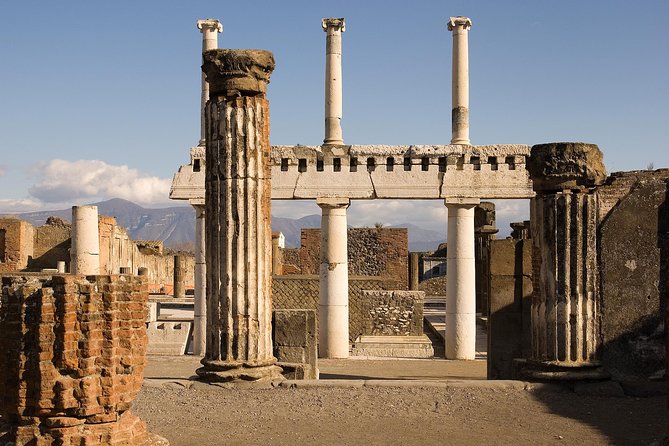
Pompeii is famous for its big-name sights, but the power of this tour is that it keeps connecting different parts of the city to the same theme, how Romans organized life. One of the stops is the barracks area where gladiators once trained and lived.
This is not just a spooky add-on. Gladiators were athletes and performers with a real training system and a social role in Roman entertainment. When you see the barracks, you get a sense of discipline behind the spectacle, and the guide can explain what the spaces likely supported day to day.
I like this stop because it adds contrast. After seeing civic space in the forum and public entertainment in the theater, the gladiator barracks brings you back to labor, training, and control.
It also helps you feel the scale of Pompeii. Even with only two hours on the clock, you are seeing how entertainment, security, and daily routines fit together in one city.
Brothel visit at the Lupanare: what to expect and how to stay respectful
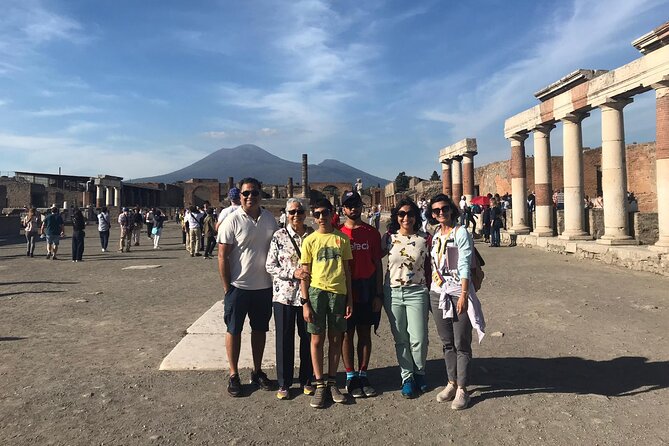
The rebuilt brothel, the Lupanare, is one of Pompeii’s most popular attractions. This tour includes it, and the guide frames it as part of the city’s real economy and social life, not just as shock value.
You should expect a quick, direct look at the remains, with explanation that helps you understand how it functioned in the ancient setting. If you are visiting with kids, decide based on their maturity and your comfort level, because this is a site tied to sexual commerce.
Even if you are an adult, I recommend staying in a learning mindset. Pompeii is fragile, and the guide is the one who will steer you toward respectful viewing behavior. One past guide experience noted a firm stance against people treating ruins like picnic space, which is exactly the right attitude here.
This is one of the places where a guide adds real value. Without context, you might stare at the walls and move on. With context, you can connect what you see to how the city worked.
What to wear and how much walking is really on lava rock
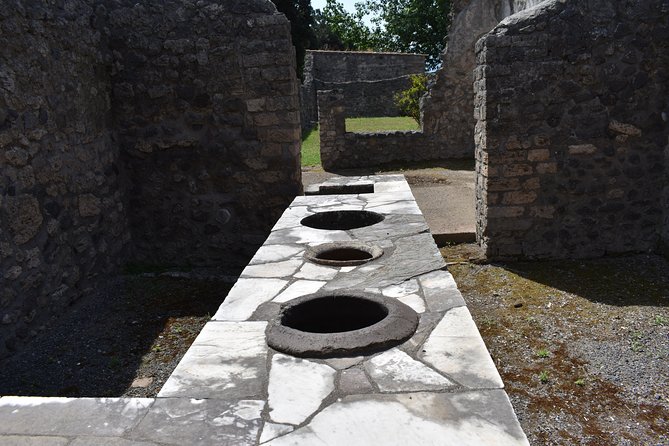
You will be walking on original streets, including lava rock. That means good shoes are not optional. The tour explicitly asks for comfortable shoes, and I agree. The ground is uneven, and you will be in it for the full walking loop.
In summer, sun is a real factor. The tour suggests packing a hat, and that is solid advice. If you get overheated easily, plan water around your day, even though food is not included.
Also, think about posture and pace. Pompeii walking is not like museum floors. You spend time looking down, turning your head up for architecture, then back down again to read the street textures and ruts. If you have mobility limitations, this is a “check first” kind of tour, since you are not just standing still at one spot.
If you can, bring a light layer for shade. Some areas are exposed, others feel cooler when you pass between rooms or facades.
Small-group max 16: pacing with real time for questions
One theme that shows up again and again with this tour is the small-group size and the guide’s ability to keep things moving without turning it into a sprint. With a maximum of 16 travelers, the guide can do something larger-group tours often struggle with: pause, answer, and adjust.
That is especially valuable at Pompeii, because people naturally have questions when they spot something unusual. Past experiences highlight guides like Lello and Italo keeping a witty, energetic pace, which is useful because it keeps attention up while still covering real archaeology.
It also helps that you are not alone trying to decode signs and building remains. You can listen, then look again at the same features with clearer eyes.
If you are the type who likes to know why something is there, you will feel the difference quickly. You are not only collecting facts, you are learning how to read a ruin.
And yes, the time can feel like it moves fast, because you are always transitioning between spaces that explain different parts of Roman life. That pacing is a benefit when you have only a half day.
Value check at $71.35 and who this tour suits best
At $71.35 per person for about two hours, you are paying for three things: a local guide, admission tickets, and a guided experience that helps you not waste time. For a first Pompeii visit, that combination is usually good value, because Pompeii can be overwhelming if you go without structure.
The admission piece matters. You are not just paying for narration, you also have entry costs handled as part of the package. Then the guide turns those entrances and ruins into an organized story, including the eruption of Mount Vesuvius in AD 79 and how Pompeii and surrounding areas were buried and preserved.
This tour also suits you if you want a quick but thoughtful start. If you have limited time and still want to see forum life, entertainment, bathing culture, and the Lupanare, you will get a well-rounded introduction.
I would consider it less ideal if you want a long, self-paced wandering day. Two hours is intentionally focused. Think of it like a guided orientation that makes your later exploration smarter.
After the 2 hours: how to keep exploring with less guessing
One smart thing about choosing a guided intro is what it sets you up to do afterward. Pompeii is huge, and you will not see everything in two hours. The payoff is that your head feels organized afterward, so you can choose where to spend extra time.
When you leave the tour, you will already know what you just saw and why it mattered: how the forum tied together civic and religious life, how bathing functioned as social space, what the theater represented, and how gladiators lived and trained. That context helps you recognize what you are looking at the moment you head off again.
A simple strategy: pick one or two zones that genuinely hooked you during the walk, then return for deeper looking. If the baths grabbed you, focus on that area. If the forum and civic buildings felt powerful, spend more time in that zone.
If you have the energy, plan to keep moving at a relaxed pace after the tour. This is one of those places where you often notice new details the second time, because now you know what to look for.
Should you book this Pompeii archaeologist skip-the-line tour?
Yes, book it if you want your first Pompeii visit to feel coherent and efficient. The biggest selling points for most people are the archaeologist-led guidance, the small group cap at 16, and the high value of seeing the forum, theater, baths, gladiator barracks area, and the Lupanare with context instead of guesswork.
Skip it only if you hate guided tours, need a very slow pace, or you want a purely self-directed day with lots of personal detours. For everyone else, this is a smart way to turn limited time into real understanding, and you will leave with a much better sense of Pompeii than you could manage alone.
FAQ
How long is the Pompeii Skip-the-line Tour with Archaeologist Guide?
It lasts about 2 hours.
How much does the tour cost?
The price is $71.35 per person.
What is included in the tour price?
A local guide and admission tickets are included.
Is this a standalone ticket to the ruins?
No. This is a guided tour confirmation. You can use it only with the guide, so the entry works as part of the tour.
Where does the tour meet and where does it end?
The start point is Hotel Vittoria, Piazza Esedra, 80045 Pompei (NA), Italy. The tour ends back at the same meeting point.
How do I get to Pompeii from Naples or Sorrento?
Take the Circumvesuviana train to Pompei Scavi station, then make your way to the meeting point not far from the entrance area.
What should I wear for the tour?
Wear comfortable shoes, because you will walk on original ancient streets and lava rock. In summer, pack a hat for sun.
How big is the group?
The tour has a maximum of 16 travelers.
Can I cancel if plans change, and what if weather is bad?
Free cancellation is available up to 24 hours in advance for a full refund. If the tour is canceled due to poor weather, you will be offered a different date or a full refund.
Reviewed lately around Pompeii
- Explore Pompeii with an Archaeologist★ 5.0 · 511 reviews
- From Sorrento: Pompeii Half-Day Skip-the-Line Tour★ 4.6 · 541 reviews
- Day Trip of Pompeii, Herculaneum and Vesuvius from Naples★ 4.5 · 547 reviews
- Day Trip of Pompeii, Sorrento and Positano from Naples/Salerno★ 5.0 · 560 reviews
- Pompeii Private Tour with an Archaeologist and Skip The Line – 3 hours★ 5.0 · 564 reviews
- 3 Days in Sorrento, Capri & Pompeii: la Dolce Vita★ 4.0 · 595 reviews
- Sorrento & Pompeii Guided Day Trip from Rome with Optional Pickup★ 4.5 · 598 reviews
- Pompeii private tour with an Official Guide★ 5.0 · 631 reviews
Pompeii Tours, compared.
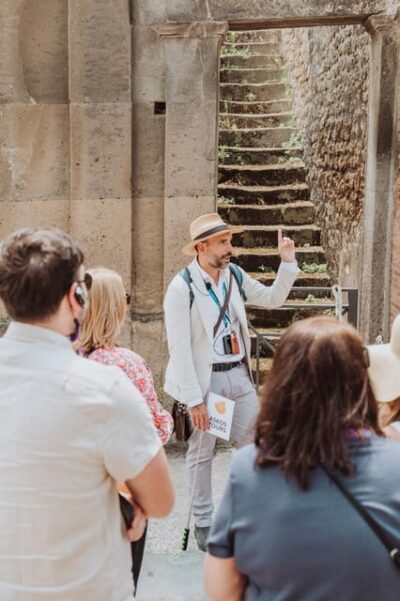
Pompeii: Entry Ticket and Guided Tour with an Archaeologist
Read our review →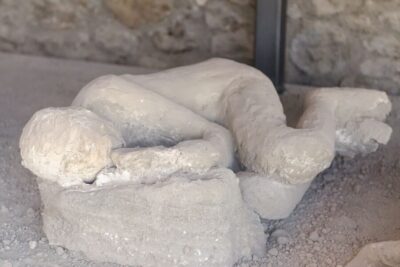
Pompeii: Entry Ticket with Optional Audio Guide
Read our review →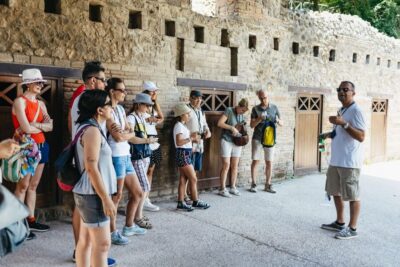
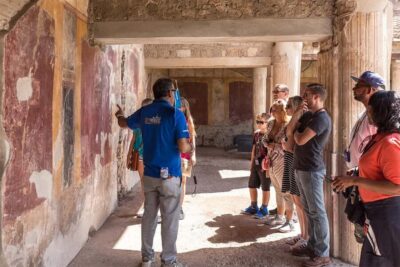


Pompeii Small Group Tour with an Archaeologist
Read our review →
Pompeii, Amalfi Coast and Positano Day Trip from Rome
Read our review →
Pompeii and Mount Vesuvius Day Trip from Rome with Pizza Lunch
Read our review →Browse the lists this tour appears in