
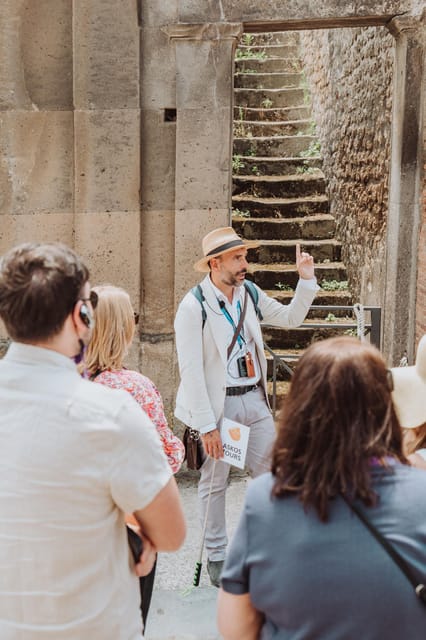
Reviewed · POMPEII TOURS
Pompeii: Entry Ticket and Guided Tour with an Archaeologist
Pompeii is already jaw-dropping, but an archaeologist guide turns it from ruins into real places and real decisions. I love how tours led by people like Teresa focus on what you are seeing, not just what you are reading.
The second big win for me is the pace and size. You stay in a small group up to 20 people, which makes it easier to hear explanations and ask questions as you move.
One possible drawback: Pompeii is not smooth and flat. Expect uneven ground, some steps, and long walking for a 2-hour visit, so comfortable shoes matter more than you think.
Key things that make this Pompeii tour worth it
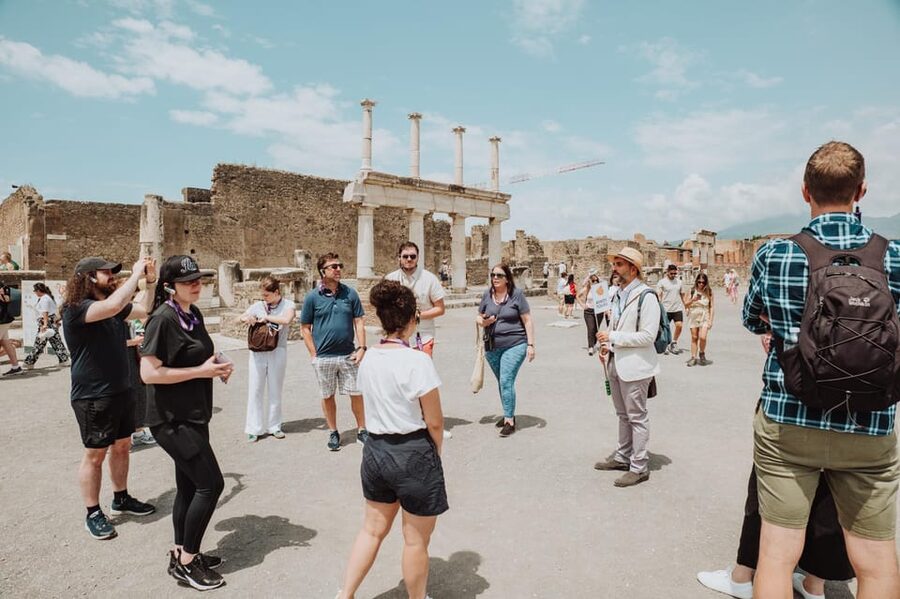
- Archaeologist-led guidance that helps you read the buildings like a map of daily life
- Skip-the-line access so you start exploring instead of waiting outside
- Small group size up to 20 for better focus and easier questions
- A smart route hitting the big names, including the House of the Faun, Lupanar, and House of Menander
- Headsets for groups of 10 or more to keep the audio clear in busy areas
- Built-in next-step advice for what to see after the guided portion ends
Pompeii plus an archaeologist guide: why the stones make sense
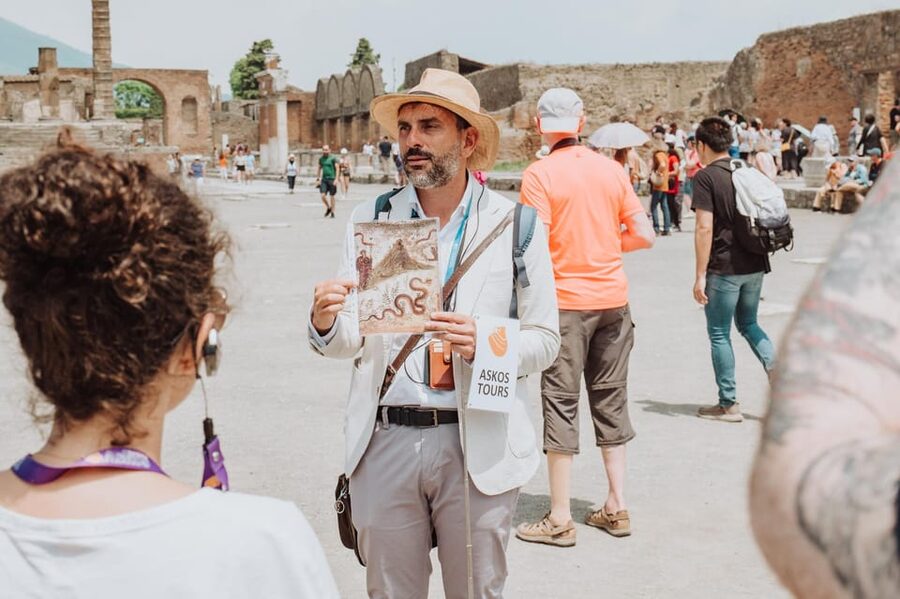
Pompeii works best when you can connect the dots. Otherwise, you get a lot of walls and columns and not much meaning. With an archaeologist guide, you start noticing what Romans cared about, how they moved through streets, and why certain rooms were built the way they were.
I also like the way these guides bring context without turning the tour into a lecture. Names like Anna Sorrento, Alfredo, and Mike show up in the style of leadership people keep mentioning: clear explanations, good storytelling, and humor that keeps you awake while the ruins quietly do their magic.
This is a 2-hour walking experience. In that time, you will see major stops and get enough background to keep your brain switched on. If you love history but hate feeling lost, this format is a good match.
More of Pompeii:
- Pompeii: Entry Ticket with Optional Audio Guide
★ 4.2 · 12,360 reviews - From Naples: Pompeii Ruins & Mount Vesuvius Day Tour
★ 4.3 · 11,459 reviews - From Rome: Pompeii, Amalfi Coast, and Sorrento Day Trip
★ 4.6 · 7,031 reviews
Tickets and timing: skip-the-line entry that saves real vacation time
Skip-the-line access is a big deal at Pompeii. The site is famous, so crowds happen. When you can enter faster, you trade stress for time in the streets.
You also get the entrance ticket included, so you are not juggling paperwork and payment screens mid-day. The tour includes a Pompei Express entrance ticket plus the guide, which makes it simpler to plan your day around a clean start time.
Price is listed at $35 per person for 2 hours. For Pompeii, that is a reasonable value when you consider what you are buying: the ticket, a live archaeologist guide, and headsets when the group reaches 10 people or more. If you were to do this solo, you might still pay the ticket and then spend more time figuring out what to look for.
Meeting point and smart prep for uneven Pompeii streets
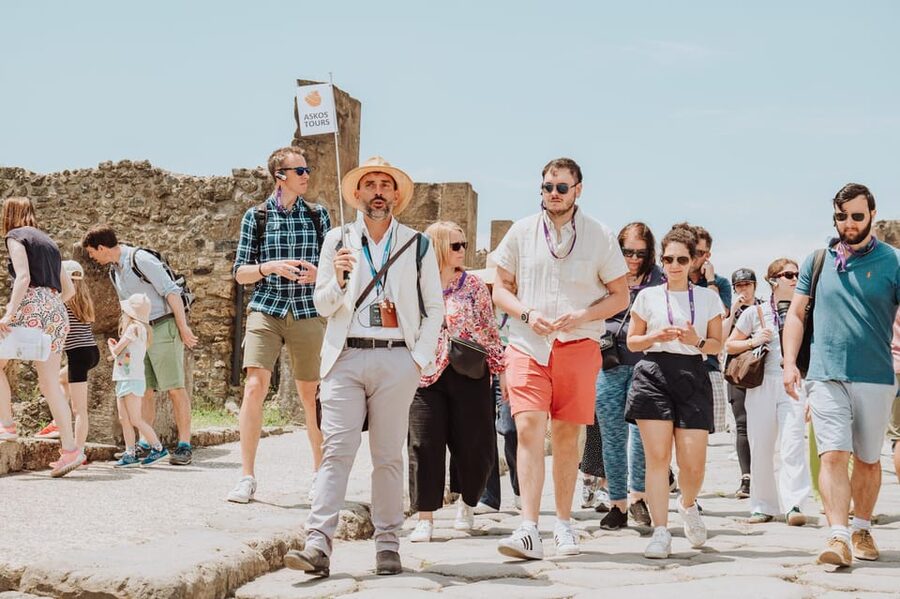
The meeting point can vary by option, and one listed location is Via Villa dei Misteri, 2. The key move is to confirm exactly where to meet for your booked slot, since the tour starts from a specific place.
Now the practical part. Pompeii streets and entrances are uneven. People specifically recommend good comfortable shoes because you will walk a lot on rough paths and you may climb a couple of steps. If you wear soft flip-flops or thin sandals, you will feel it fast.
Bring water. One common frustration is not just the length of Pompeii, but getting dehydrated while you are still trying to enjoy the tour and then find your next drink stop.
If you use the provided headsets, take a second to adjust them when you first get them. Some visitors find the audio needs a little fussing to stay clear once crowds thicken.
Also note what is not allowed: mobility scooters are not permitted, and the tour is not suitable for wheelchair users. If you have mobility limits, this is the point where you should be honest with yourself about what you can handle for 2 hours of walking.
First stops: Porta Marina and the Temple of Apollo as orientation
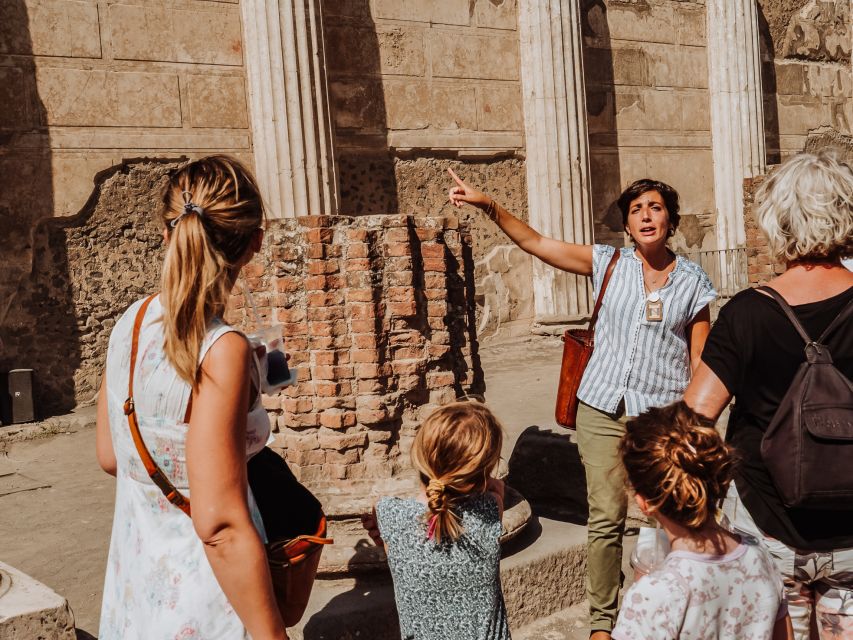
Your walk begins through the approach points that help you understand where the city starts to open up. You pass Porta Marina early, then head toward the Temple of Apollo.
Why these stops matter: Porta Marina is a gateway, so it sets your mental frame. You start thinking like a person walking into town rather than like a tourist reading a sign. Temple of Apollo helps you shift from street-level movement to the religious and civic purpose behind the architecture.
In a small group, you can get a quick sense of direction. Guides often point out how spaces were designed for movement, ceremonies, and public attention, not just worship.
More Pompeii bookings worth a look
- Pompeii: Skip-the-Line Entrance Ticket with Audio Guide
★ 4.0 · 2,509 reviews - Pompeii: Guided Walking Tour with Entrance Ticket
★ 4.3 · 1,423 reviews - Rome to Pompeii Guided Tour with Wine & Lunch by High Speed Train
★ 5.0 · 1,379 reviews - Pompeii: Skip-the-Line Entry Ticket with Audio Guide or Tour
★ 4.1 · 1,364 reviews
Foro Civile di Pompei: public life, meetings, and the Roman machine
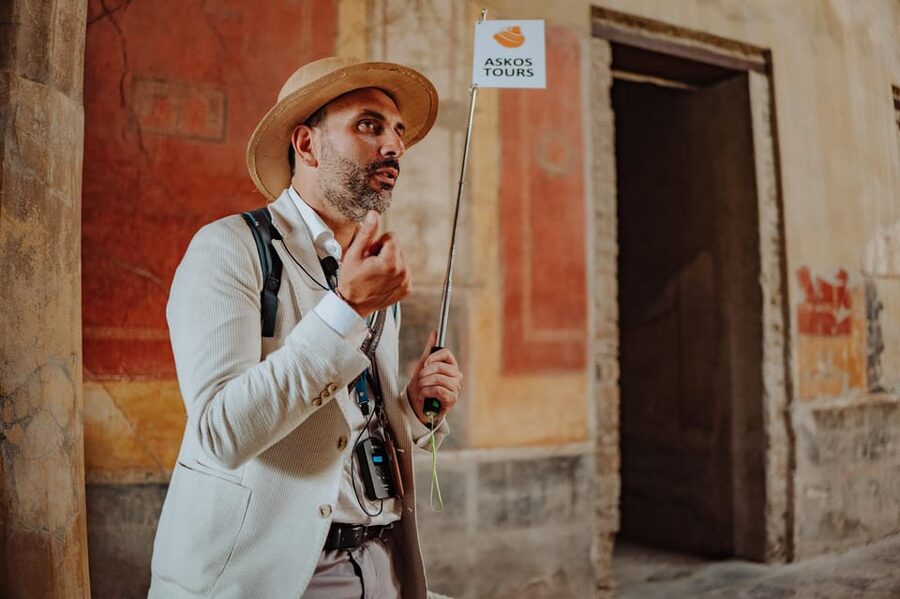
Next comes the Foro Civile di Pompei. This is where you feel the rhythm of a Roman city. Forums were not just for politics. They were for gatherings, announcements, and the everyday social energy of people who lived there.
During this segment, you also get the broader civic-and-religious mix people expect at Pompeii, including major public buildings you do not want to miss. The tour description flags places like the Basilica and the Forum, plus the feel of busy public zones.
A good guide will do something useful here: connect the building forms to real functions. You start noticing patterns like how people would have entered spaces, where they would have gathered, and how a public square shapes behavior.
House of the Faun: mosaics, status, and what art says about power
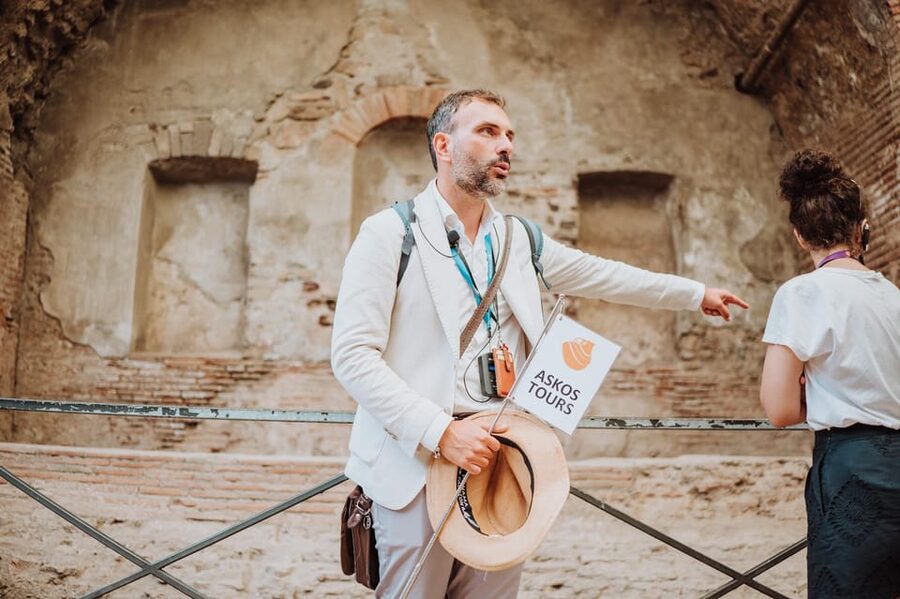
The big centerpiece stop is the House of the Faun. You get a guided tour here, with time focused on the standout features. This is one of Pompeii’s most famous residences, often the place that makes visitors realize the site is not only about tragedy, but also about taste, money, and daily routines.
Expect to spend real time looking. The guide will help you interpret what you are seeing, like floor design choices and the way rooms were laid out around courtyards and movement paths. You will also hear how wealth showed up in Pompeian homes, right down to decoration and how spaces controlled privacy.
One bonus from a guided format: you are less likely to treat this like a checklist stop. Instead, you start asking why certain rooms matter and how people used them.
Lupanar: a stop with awkward questions, handled with context
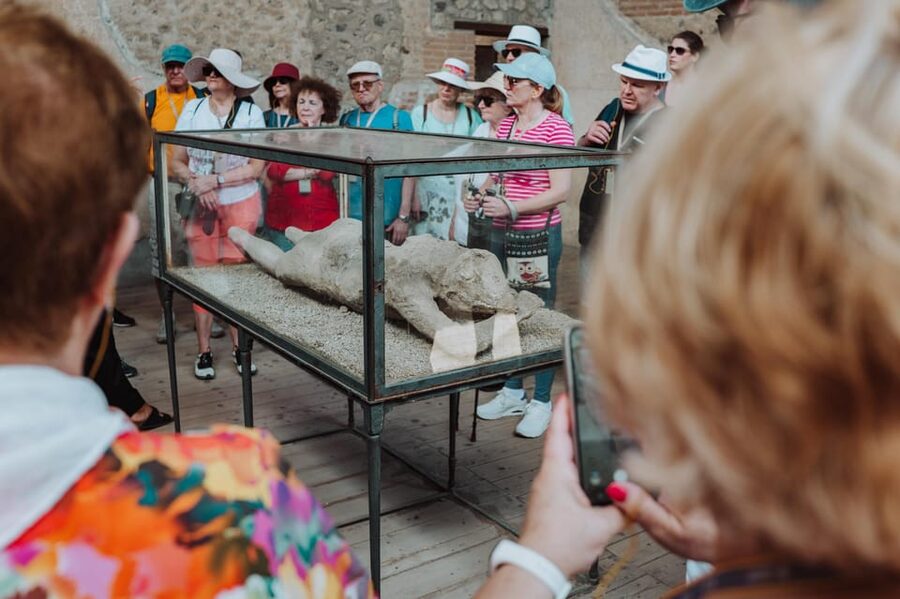
Then you reach the Lupanar, the best-known commercial sex venue in Pompeii. It is also the stop that can make people tense, because it is modern in theme even though it is ancient.
This is where having a guide really helps. You do not just see a labeled building. You get a framed explanation about what it was, how it fit into the city, and what the surrounding design implies about function and access.
Practical note: this is one of those areas where you might see lots of people, so the small group format matters. You stay together, you hear the guide’s explanation, and you are not left trying to guess details in silence.
If you dislike uncomfortable topics, you should still consider going, but go in knowing what you are seeing. Pompeii is a complete slice of life, not an edited highlight reel.
House of Menander to Macellum: homes, neighbors, and the food economy
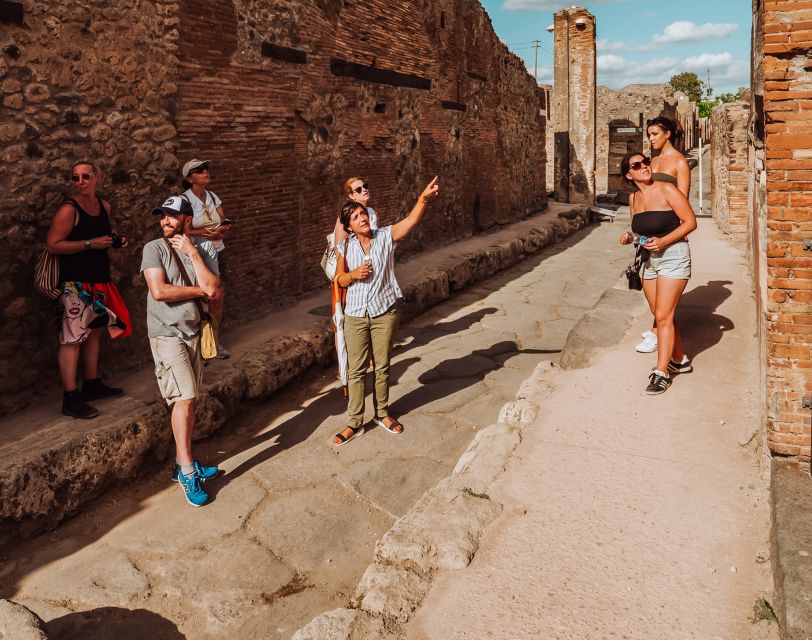
The route continues to the House of Menander. This is another residence stop with guided time, focused on how homes communicated wealth, comfort, and social rank.
What I like about pairing the House of Menander with the next stop is the shift from private to public. You are not stuck in one bubble. You see that Pompeii had both household culture and market culture living side by side.
Next you visit the Macellum of Pompeii. This is the food market area, the kind of place where you can connect architecture to daily routines: buying, selling, and the constant flow of people.
Guides often make this leg click by pointing out how market structures influenced movement and how spaces supported commerce. If you have ever wondered what ancient shopping felt like, this is where you start getting answers that go beyond imagination.
Forum Baths: the everyday routine behind the tragedy
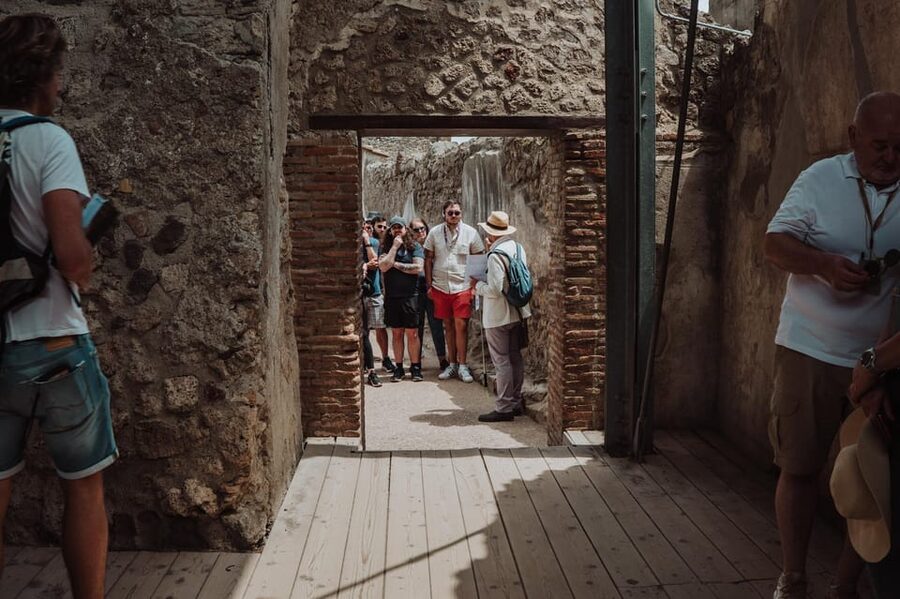
Finally, you reach Forum Baths. Baths were a big part of Roman life, and they were not only about hygiene. They were about meeting people, spending time, and keeping the city’s social circuits running.
A guided tour helps here because baths can look confusing if you are just wandering. The guide’s job is to make the circulation of spaces make sense, plus explain how different zones likely worked.
This stop also helps you understand Pompeii as a functioning city. You move from art and homes to market life to public bathing. That progression gives you a fuller picture of what would have felt normal day to day, even before 79 AD changed everything.
What you gain from an archaeologist, not just a guide with facts
Sure, any guide can point at walls. The difference is how they interpret what those walls mean.
The most praised part of this experience is the archaeologist angle. People describe archaeologists who can connect Roman architecture to art, sociology, mythology, and everyday behavior. One visitor singled out a guide who wove Roman philosophy into the ruins, which is exactly the kind of context that makes these places feel like living environments.
Another repeated theme is humor that stays respectful. Guides like Teresa and others with humor help you keep your attention when Pompeii turns into a sea of stone. When you can laugh and learn, you remember more.
And then there is the practical finish. The tour ends with recommendations for more Pompeii exploration and also what to do in the contemporary city afterward. That matters because Pompeii is huge. If you only know the big headline stops, you might miss the smaller areas that fit your interests once your guided route ends.
Who this tour fits best
This tour is a great choice if you want:
- Structure. Pompeii is big and easy to get turned around in, even when you think you have a map.
- Context. You want to understand why a room or a street corner matters.
- A real explanation style, not just dates and names.
It is also a strong pick for first-timers. Even if you have studied Pompeii before, walking with an archaeologist helps you re-sort the information in your head.
On the other hand, it is not the best fit if you:
- use a wheelchair, or rely on mobility scooters
- need very short, low-impact walking days
- expect a leisurely pace with lots of sitting time
Before you go: small rules that affect your day
There are a few practical rules worth knowing in advance.
- Unaccompanied minors are not allowed.
- Dogs are only permitted if they do not exceed 10 kg and a maximum height of 40 cm. The dog must be on a leash, held in the arms inside buildings, and you must collect and dispose of excrement.
- The tour is in languages including English, Spanish, French, Italian, Portuguese, and German, so you can choose a guide who speaks your language well.
Weather can also matter for comfort. Rain does not stop Pompeii, and the tour tends to keep moving. Dress for wet ground and plan for slippery patches where needed.
Should you book this Pompeii archaeologist tour?
Yes, if you want to leave Pompeii with more than photos. This tour is built for learning by seeing, not learning by guessing. The mix of skip-the-line entry, small-group pacing, and archaeologist-led stops like the House of the Faun, Lupanar, House of Menander, Macellum, and Forum Baths makes the $35 price feel like a real bargain for what you get.
Book it especially if you like asking questions and you do not want to spend your day trying to figure out what each building is. If you cannot do uneven walking or you need wheelchair access, skip this one and look for a different format that matches your mobility needs.
FAQ
How long is the Pompeii entry plus archaeologist tour?
The tour duration is 2 hours.
Does this experience include skip-the-line entry and the admission ticket?
Yes. The entrance ticket is included, and the tour offers skip-the-line access.
How big is the group, and do you provide headsets?
The group is small, up to 20 people. Headsets are included for groups of 10 people or more.
What languages is the live guided tour available in?
The guide offers live tours in English, Spanish, French, Italian, Portuguese, and German.
Is it free to cancel, and how far in advance can I cancel?
You can cancel up to 24 hours in advance for a full refund.
Is the tour suitable for wheelchairs or mobility scooters?
No. Mobility scooters are not allowed, and the tour is not suitable for wheelchair users or people with mobility impairments.
Reviewed lately around Pompeii
- Explore Pompeii with an Archaeologist★ 5.0 · 511 reviews
- From Sorrento: Pompeii Half-Day Skip-the-Line Tour★ 4.6 · 541 reviews
- Day Trip of Pompeii, Herculaneum and Vesuvius from Naples★ 4.5 · 547 reviews
- Pompeii Skip-the-line Tour with Archaeologist Guide★ 5.0 · 559 reviews
- Day Trip of Pompeii, Sorrento and Positano from Naples/Salerno★ 5.0 · 560 reviews
- Pompeii Private Tour with an Archaeologist and Skip The Line – 3 hours★ 5.0 · 564 reviews
- 3 Days in Sorrento, Capri & Pompeii: la Dolce Vita★ 4.0 · 595 reviews
- Sorrento & Pompeii Guided Day Trip from Rome with Optional Pickup★ 4.5 · 598 reviews
Pompeii Tours, compared.

Pompeii: Entry Ticket with Optional Audio Guide
Read our review →


Pompeii Small Group Tour with an Archaeologist
Read our review →
Pompeii, Amalfi Coast and Positano Day Trip from Rome
Read our review →
Pompeii and Mount Vesuvius Day Trip from Rome with Pizza Lunch
Read our review →
Pompeii Day Trip with Optional Vesuvius and Lunch
Read our review →Browse the lists this tour appears in