
Reviewed · POMPEII TOURS
Pompeii Small Group Tour with an Archaeologist
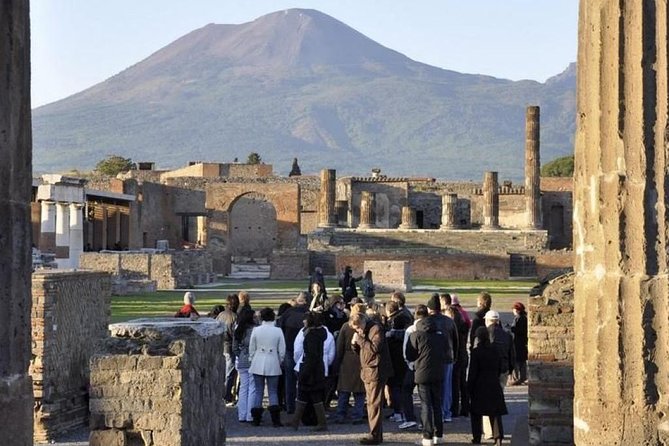
Pompeii can feel like a vast outdoor maze. This small-group tour solves that with archaeologist-led context and skip-the-line entry that gets you moving fast at Porta Marina Superiore. I also like that the guides can be truly academic, with examples like archaeologist Alessandra and archaeologist Paolo showing up in past tours. The main drawback is simple, it is about 2 hours, so you will see the highlights, not every street and corner.
What you get is a tight route through the places that explain the city: the Basilica and Forum for public life, the Granaries for the shocking plaster casts, and then the houses, baths, and theaters that show how people lived. Just plan on lots of walking on uneven ground and some steps and ramps, so wear proper shoes and expect a workout.
Key highlights in this Pompeii small-group tour
- Porta Marina Superiore entry with Pompeii Express to save time right at the start
- Basilica and Forum first, so you understand the city’s layout before you wander
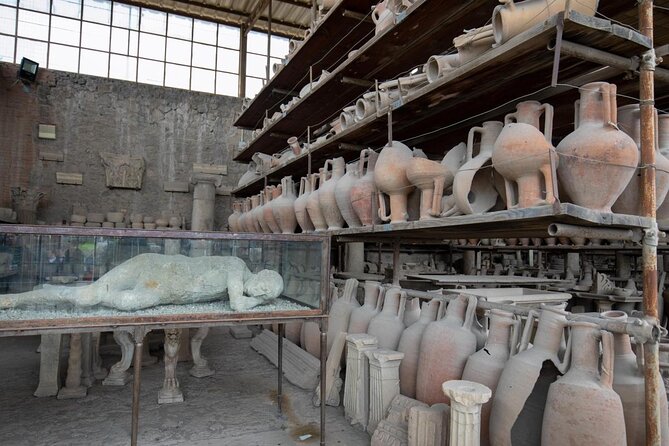
- Granaries of the Forum casts of victims, plus a dog and a tree
- House of Menander and Stabian Baths for elite homes and everyday routines
- Lupanar and the main street walk, for a frank look at Roman street life
- Teatro Grande finale, Pompeii’s biggest theater experience on the route
Why an archaeologist guide changes Pompeii fast
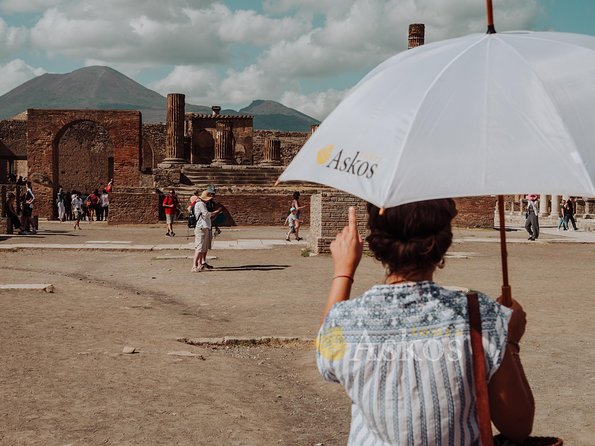
Pompeii hits you visually right away. But the real magic is when someone connects what you are seeing to why it looked like that, how people used the space, and what 79 AD froze in time. That is the advantage here: you are not just collecting photos. You are getting explanations built around architecture and archaeology, led by a licensed guide with an archaeological background.
I also like the pacing model. You move from one anchor site to another, with short stops that keep the tour from dragging. That matters because the park is big, and getting stuck in slow bottlenecks can eat your best daylight.
One thing to keep in mind: this is designed to cover a lot in a short window. If you love long, quiet time in one room with no crowd pressure, you may want to add self-guided time on another day. Here, you are buying clarity and efficiency.
More of Pompeii:
- Pompeii: Entry Ticket and Guided Tour with an Archaeologist
★ 4.8 · 19,459 reviews - Pompeii: Entry Ticket with Optional Audio Guide
★ 4.2 · 12,360 reviews - From Naples: Pompeii Ruins & Mount Vesuvius Day Tour
★ 4.3 · 11,459 reviews
Meeting point and the 2-hour route that keeps you oriented
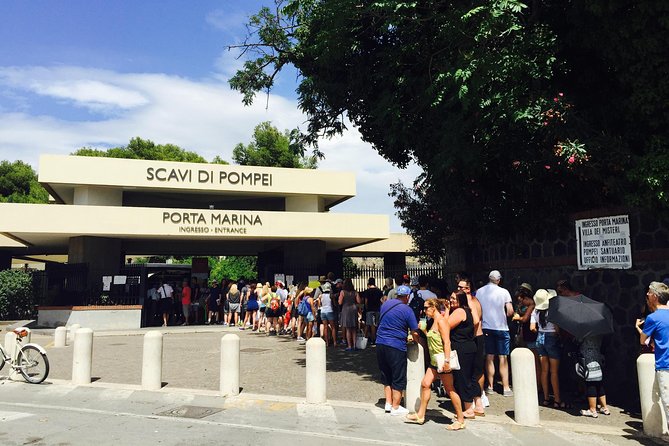
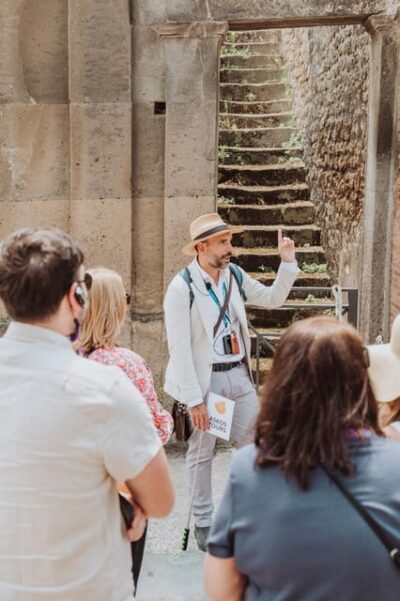
You meet at Via Villa dei Misteri, 2, 80045 Pompei NA. From there, you align with the group at the Pompeii entrance called Porta Marina Superiore, where the guide holds an Askos Tours sign.
The tour then follows a logical loop inside the ruins. You will hit major landmarks early, then work your way through houses, bath life, and street culture, and finish in the city’s largest theater complex. Ending inside the ruins means you do not have to reverse-commute with the group. It also means it helps to know your exit plan at the end, because Pompeii is not intuitive once you break away.
Past experiences with guides like Teresa, Julia, and Vincenzo were praised for making the city feel human, with clear storytelling and enough time to ask questions. If your guide is talkative, do not worry. The stops are short enough that the walk still keeps moving.
Porta Marina Superiore to the Basilica: start with the civic heartbeat
Stop 1 is the Pompeii Archaeological Park at Porta Marina Superiore. The key practical win is that you start with Pompeii Express entrance and go in with the group, rather than trying to piece together timing on your own.
Then you move to the Basilica. Even if you have never heard the word before, this is a good first “anchor” stop because it explains how commercial life worked. The Basilica was an open portico used for shelter and public activity, so you can picture merchants, deals, and daily movement under an architectural roofline.
In my view, this is a smart start for first-timers. You are learning what the space was for before you jump into houses. That makes later stops make more sense, because you can compare public versus private Pompeii.
Forum square basics: learn the city before the emotional stops
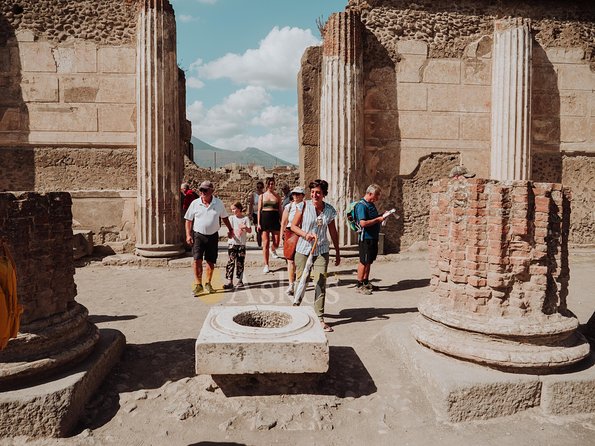
Next comes the Forum de Pompeya, the ancient main square. This is the place where Pompeii’s public life concentrated. The tour keeps it brief, but it is enough time for you to recognize the Forum as a hub, not just a big open area.
After you see the civic heart, you are ready for the Granaries of the Forum. That order matters. If you go straight to tragedy without first understanding the city’s structure, you miss the point. Here, you build context first.
A quick practical tip: when you stop for a photo, still look around. Pompeii rewards 360-degree scanning. That is how you start seeing connections between streets, entrances, and sight lines.
A different Pompeii day to consider:
- From Rome: Pompeii, Amalfi Coast, and Sorrento Day Trip
★ 4.6 · 7,031 reviews - From Rome: Pompeii, Amalfi Coast and Positano Day Trip
★ 4.6 · 6,620 reviews - Pompeii, Amalfi Coast and Positano Day Trip from Rome
★ 4.5 · 6,250 reviews - Pompeii and Mount Vesuvius Day Trip from Rome with Pizza Lunch
★ 4.5 · 6,151 reviews
Granaries of the Forum: the casts that make history stick
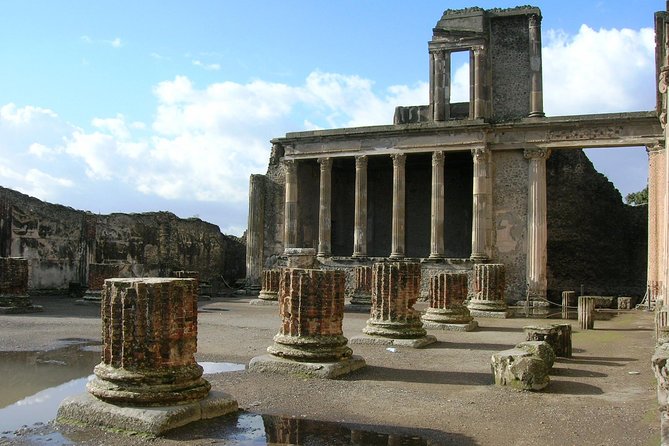
Stop 4 is the Granaries of the Forum. In the granary area, you can spot marble tables and baths for fountains that once adorned house entrances. The tour also points out plaster casts of victims of the famous eruption, plus casts connected to a dog and a tree.
This is the emotional center of many Pompeii visits. What I like about having a guide here is tone control. The explanations stay focused on what the evidence tells us and how archaeologists read it. That keeps the site from feeling like a shock attraction and turns it into a human record of catastrophe.
Also notice what is happening around the casts. The environment is part of the lesson. You are looking at a place where storage and public activity met, so you can understand how quickly daily life can end, and how completely the eruption erased normal routines.
If you are sensitive to tragedy, take breaks. You do not need to stare through discomfort. A good guide will give you time and pacing options, and that is something several guides, including Paolo and Antonio, were praised for in the way they handled group energy.
Walking the main street: mosaics, frescoes, and road-level clues
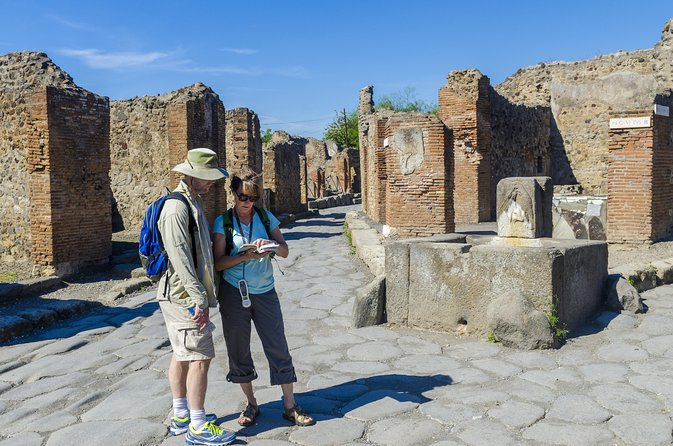
After the Forum stops, you stroll along the original paved roads through the city. This is where the tour feels most “Pompeii-real,” because you are moving at street level instead of only standing in big monuments.
You will pause to admire frescoes and mosaics inside the House of Menander and also encounter decoration and detail during other stops. Even when a stop is only around 15 minutes, the guide helps you see what matters, like how floor patterns relate to rooms and how wall painting signals taste and status.
One consideration here is logistics. Uneven ground plus short stop times means you need to keep moving with the group. If you tend to lag behind, you may end up skipping parts of the story just to catch up. Put your water where you can reach it quickly, and keep your phone flashlight ready for shaded corners.
House of Menander: elite decoration in a structured stop
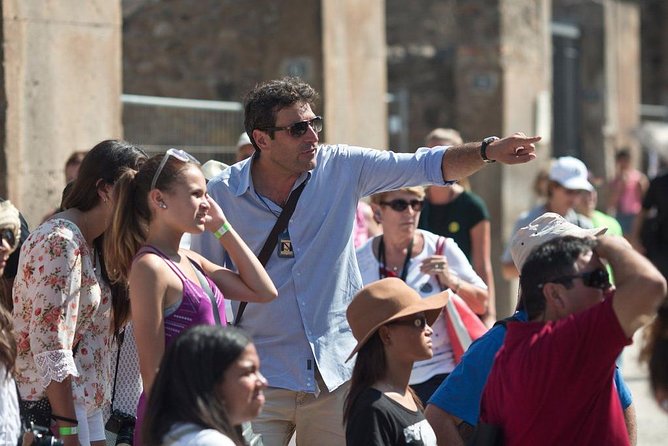
Stop 5 is the House of Menander, described as one of the richest and most magnificent houses in Pompeii for architecture, decoration, and contents. This is a classic Pompeii contrast stop. You go from public life and tragedy to private wealth.
The value of a guided visit here is interpretation. It is easy to walk past details and think, pretty, next. With an archaeologist background, you learn what the layout and ornamentation suggest about the household. Even if the stop is only about 15 minutes, you get a focused narrative arc about how wealth expressed itself in domestic space.
Try to slow down at doors and thresholds. Houses in Pompeii are all about movement patterns. A guide will usually point out how people entered, where they would gather, and how certain rooms were positioned for visibility and daily use.
Stabian Baths: oldest thermal complex and everyday rhythm
Stop 6 is the Stabian Baths (Terme Stabiane). The tour frames these as the oldest thermal complex in the city and notes their wide area between the Brothel lane, the Holconius crossroads, and the Via Stabiana.
You get a practical feel for how public bathing worked in Roman life. Baths were not just hygiene. They were social space, routine space, and sometimes political or business-adjacent space, because people met while they did everyday things.
This stop also helps your mental map. By now you have learned the city’s public anchors. The baths show you another layer of civic routine, the kind that happened every day, not just on big festival days.
In winter, you may feel more comfortable with the outdoor walking. One guide praised the tour as especially enjoyable in winter because lines are shorter. In summer, plan for sun and heat. Bring sunscreen and sunglasses, and treat your water as a must, not a maybe.
Lupanar brothel ruins: frank context, respectful pacing
Stop 7 is the Lupanar, described as the most famous brothel ruins in Pompeii. This is the stop where Pompeii stops being polite. Roman street life included commerce and services that many visitors prefer to treat like a rumor.
What you should expect from a good guide is framing. The goal is not to shock you. The goal is to show how the city functioned, including the commercial side of daily existence. If you want context, this stop delivers, because the guide connects architecture and location to how the space likely worked.
The drawback is personal comfort. If you are uncomfortable with this topic, it can feel intense. The best solution is simple: pace yourself, and ask the guide to keep the focus on the archaeology and urban layout rather than graphic detail. A guide like Amedeo or Alfredo was praised for clarity and keeping groups comfortable, which usually helps in moments like this.
House of the Faun and Teatro Piccolo: scale and style cues
Stop 8 is the House of the Faun, one of the largest and most impressive private residences in Pompeii. This is another status comparison stop, after Menander and before the theater finale.
Then there is a brief look at the so-called Teatro Piccolo. Even with limited time, it helps you understand that Pompeii had multiple entertainment spaces, not just the big headline theater.
The overall route builds a sense of scale. Houses show private power. The smaller theater hints at community culture. Then the last stop makes that culture official.
Teatro Grande: Pompeii’s biggest theater as a closing scene
Stop 9 is Teatro Grande, the most important theater in Pompeii and the city’s largest theater experience on this route. This is a strong ending point because theaters were civic glue. They gather people. They broadcast status. They make a city feel like a community.
If you are the type who wants one “wow” memory from Pompeii, make this your anchor. Before you leave, look upward and around. A theater is about sight lines and movement. When you understand that, the whole day feels more connected.
A practical note: this tour ends inside the ruins. When the group finishes, you may want to know where the exit is without guessing. One past experience included feedback that the guide did not share exit-finding tips at the end. So, ask before you wrap up, where you will go to exit the archaeological park.
Price, included ticket, and what your money is really buying
The price is $35.67 per person for an approximately 2-hour tour. What makes it feel like value is that you get three things bundled together: a licensed archaeologist-focused guide, small-group size (maximum 20 people per guide), and Pompeii Express entrance built for quicker access.
You are also paying for structure. Pompeii is big enough that “self-guided highlights” often turn into “spent time figuring out where to go.” The tour replaces that confusion with a planned route, so you actually see the Basilica, Forum, the Granaries, Menander, the Stabian Baths, the Lupanar, the House of the Faun, and the Teatro Grande.
Included gear matters too. For groups of 16 or more, you get headsets. That is a big deal inside a noisy outdoor site, because it keeps you from playing phone-distance whisper-chess with your guide.
Food and drinks are not included, and transportation is not included. Plan for water and a snack strategy before or after. The tour is short enough that you can manage it with a bottle of water and smart timing.
Best fit: who should book, and who should consider a different plan
This tour is a great match for you if:
- you want guided context without committing to a full day
- you are visiting Pompeii for the first time and want the key landmarks in a smart order
- you like when guides tell stories about the people of Pompeii and the eruption, not just dates and stones
It is also ideal if you appreciate archaeologist-level explanations. Multiple guides were praised for storytelling skill and the way they answered questions patiently, including Paolo, Teresa, Julia, and Vincenzo.
Consider a different option if:
- you have mobility limits, since the route is not recommended for travelers with mobility issues or impairments, with steps and ramps and a bit of steep climbing
- you want minimal walking or a slower paced museum-style experience
- you prefer a smaller group feel, because even with a max of 20, the group can still feel big when everyone is stopping at the same viewpoints
For service animals, entry is allowed. For dogs, there are specific limits: only dogs under 10 kg and with a maximum height of 40 cm. Leashed access is required, and you must hold them in your arms inside buildings, with collection of excrement required. If you are traveling with a dog, double-check your pet’s size and plan how you will manage breaks.
Should you book this Pompeii archaeologist tour?
Yes, I would book it if you want a clean path through Pompeii that actually teaches you what you are looking at in about 2 hours. The small-group size, archaeologist background, and included skip-the-line Pompeii Express entry make it a good value for a first visit. It also works well when you want to end with Teatro Grande and still have energy to explore on your own afterward.
Skip it only if mobility is an issue for you, or if you hate walking on uneven stone. If either of those applies, look for a private plan that can adjust the route.
Finally, bring your best “Pompeii shoes.” Then show up a little earlier than you think you need. Pompeii is timing sensitive, and a calm start makes the whole route feel easier.
FAQ
How long is the Pompeii small group tour with an archaeologist?
It is approximately 2 hours.
Where do I meet, and where does the tour end?
You start at Via Villa dei Misteri, 2, 80045 Pompei NA, Italy. The tour ends inside the ruins at Pompei scavi 80045 Pompei.
Is the entrance ticket included?
Yes. The tour includes a Pompeii Express entrance ticket, and you use skip-the-line entry.
Is the tour in English?
Yes, it is offered in English.
What is the group size, and do we get headsets?
The group is small, with a maximum of 20 travelers per guide. Headsets are provided for groups of 16 or more.
What should I wear or bring?
Wear comfortable shoes. In summer, bring sunglasses and sunscreen. Also bring a small bottle of water.
Are food and drinks included?
No, food and drinks are not included.
Is the tour suitable for mobility issues?
It is not recommended for travelers with mobility issues or impairments due to steps, ramps, and some steep climbing. Mobility scooters are not allowed. If you need something more suitable, you are instructed to contact the operator to ask for a private tour.
Can I cancel for a full refund?
Yes. Free cancellation is available up to 24 hours in advance for a full refund. If you cancel less than 24 hours before the experience starts, the amount paid will not be refunded.
Reviewed lately around Pompeii
- Explore Pompeii with an Archaeologist★ 5.0 · 511 reviews
- From Sorrento: Pompeii Half-Day Skip-the-Line Tour★ 4.6 · 541 reviews
- Day Trip of Pompeii, Herculaneum and Vesuvius from Naples★ 4.5 · 547 reviews
- Pompeii Skip-the-line Tour with Archaeologist Guide★ 5.0 · 559 reviews
- Day Trip of Pompeii, Sorrento and Positano from Naples/Salerno★ 5.0 · 560 reviews
- Pompeii Private Tour with an Archaeologist and Skip The Line – 3 hours★ 5.0 · 564 reviews
- 3 Days in Sorrento, Capri & Pompeii: la Dolce Vita★ 4.0 · 595 reviews
- Sorrento & Pompeii Guided Day Trip from Rome with Optional Pickup★ 4.5 · 598 reviews
Pompeii Tours, compared.
Pompeii: Entry Ticket and Guided Tour with an Archaeologist
Read our review →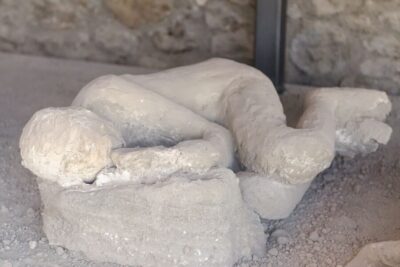
Pompeii: Entry Ticket with Optional Audio Guide
Read our review →

Pompeii, Amalfi Coast and Positano Day Trip from Rome
Read our review →
Pompeii and Mount Vesuvius Day Trip from Rome with Pizza Lunch
Read our review →
Pompeii Day Trip with Optional Vesuvius and Lunch
Read our review →Browse the lists this tour appears in