
Reviewed · AUDIO TOURS
Pompeii: Skip-the-Line Entry Ticket with Audio Guide or Tour
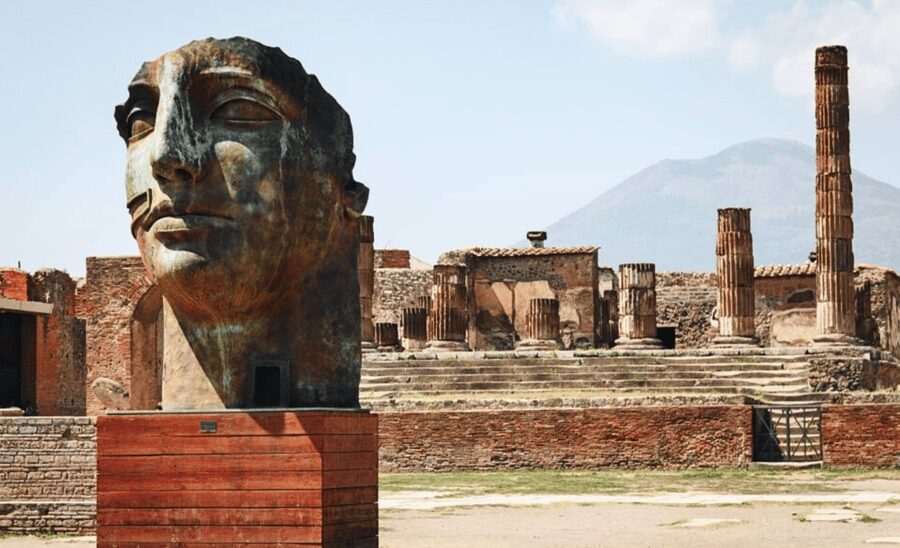
Pompeii is one of those rare places where the ruins feel like you’re walking through a preserved moment in time. This ticket bundle is interesting because you pair skip-the-line entry with an audio guide and digital map, so you spend more time inside the city and less time figuring things out.
I really like how direct the start is, with ticket exchange at Vox City in Piazza Esedra. I also like that you can choose your pace once you’re in, instead of being locked into someone else’s timing.
My second favorite part is the audio setup itself: the guide includes multilingual commentary and is meant to trigger based on where you are, so you get context right as you reach major buildings. The site highlights in the audio also steer you toward big-name sights like the Forum, temples of Venus, Apollo, and Jupiter, and the House of the Faun.
One possible drawback to consider: this experience relies on your phone and audio setup, and some people found the app not autoplaying reliably, plus you do not get access to the suburban villas.
Key things worth knowing before you go
- Fast-track entry from Piazza Esedra means you’re not stuck in the main ticket lines
- Phone audio guide with map lets you move at your own pace through Pompeii’s maze-like streets
- Major stops are built in, including Forum areas, temples, baths mosaics, and the House of the Faun
- Autoplay and GPS can be a mixed bag, so plan for some manual hunting
- Suburban villas are excluded, so you’ll focus on the main urban core
Vox City ticket pickup at Piazza Esedra, right by Hotel Vittoria
The whole experience starts at Piazza Esedra, at the Vox City info point in front of Hotel Vittoria. You exchange your voucher there for your official entry tickets, and if you chose the guided option, that’s also where you meet your guide.
This is a big deal because Pompeii can feel chaotic at the entrance, especially when groups are funneling in from multiple vendors. Having a clear, single meeting point helps you get your bearings fast and get through the gate without the usual delay.
More of Pompeii:
- From Naples: Pompeii Ruins & Mount Vesuvius Day Tour
★ 4.3 · 11,459 reviews - Naples or Sorrento: Full-Day Pompeii and Mount Vesuvius Tour
★ 4.6 · 4,235 reviews - Pompeii & Mt.Vesuvius Day Tour from Naples with Pizza Lunch
★ 4.0 · 2,901 reviews
Skip-the-line entry: what you really save, and when it matters
The main value here is time. With fast track entry, you generally avoid the long ticket purchase queue and get into the excavations more quickly, which is especially important if you’ve only got about 2 hours on the ground.
Pompeii is huge, covering around 44 to 50 hectares depending on how you measure the site area, and it can feel endless once you’re walking. So saving 30 to 60 minutes at the start can be the difference between seeing a few key zones and feeling like you’ve just scratched the surface.
I’d also think of this as risk management. If you arrive at a busy hour, skipping the ticket line reduces the chance that your day at Pompeii turns into a waiting game.
Audio guide on your phone: how to use it without getting frustrated
This ticket includes an audio guide with a digital map and multilingual commentary in English, French, Spanish, German, and Italian. But you should treat it like a small tech project, not like a guarantee.
Here’s the practical reality: the voucher includes a QR code so you can download the audio guide prior to arrival. Bring headphones and a charged smartphone, because you’ll need both. One review also mentioned needing support for downloading, so it’s smart to download before you step outside into the crowds and wind.
Also, not everyone had perfect autoplay. A few people reported the audio clips not starting automatically in relevant zones, or that the app navigation and site naming were a bit confusing at times. That doesn’t mean the audio guide is useless, it just means you’ll want to be ready to tap items on the map and manually select points of interest when autoplay stalls.
My tip: before you enter, open the map and get comfortable with how points of interest appear on-screen. If your battery is low or your connection is spotty, switch to airplane mode after the download so you’re not fighting signal issues while walking.
The two-hour Pompeii experience that makes the most sense
Two hours sounds short, but it can be a solid hit if you focus on Pompeii’s most important “story” neighborhoods. Your audio guide is designed to take you through the main urban core, where you see homes, temples, public buildings, and everyday spaces that explain Roman life.
If you want a simple mental plan, aim for this flow:
- start with the Forum area and the big civic-religious landmarks
- move into the residential zones where daily life comes alive
- weave through baths, markets, theater spaces, and water infrastructure
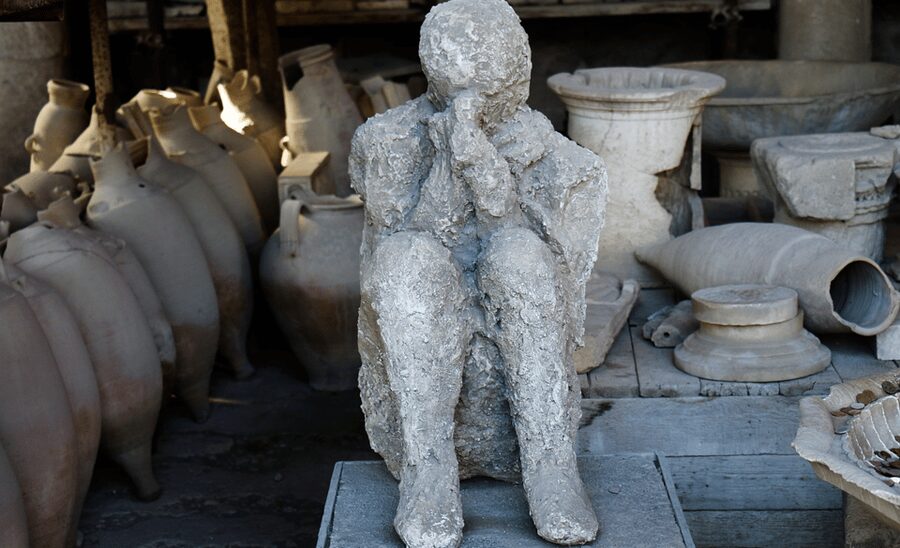
- end with the eruption context and the haunting victim casts
Even with a fast route, Pompeii rewards slow steps. People often end up staying longer than the ticket duration once they get into the swing of it, especially if they’re photographing or reading details.
More Naples bookings worth a look
- Herculaneum: Skip-the-Line Entry Ticket with Audio Guide
★ 4.3 · 870 reviews - Naples: National Archaeological Museum Ticket & Audio App
★ 4.4 · 617 reviews - Ercolano: Herculaneum Entry Ticket with Optional Audio Guide
★ 4.1 · 581 reviews - Ercolano: Herculaneum Skip-the-Line Ticket & Audio Guide
★ 4.0 · 275 reviews
Forum and major temples: Venus, Apollo, and Jupiter

One of the best things about Pompeii is how concentrated the symbolism feels. In a single walk you get civic space, religious space, and the buildings that show what people believed and how they organized their city.
The audio guide steers you toward temples dedicated to Venus, Apollo, and Jupiter, with the Forum area as a backdrop to everything. You’ll also get Mount Vesuvius in view at times, which is one of those quiet reminders that the city’s story is not just about the Romans, it’s about the volcano too.
What I like about this portion is that it sets the tone. You see how grand spaces sat right next to quieter streets, and how “public” life shaped “private” life.
House of the Faun and the residential neighborhoods that feel personal
Pompeii’s homes are not just impressive, they feel specific. The House of the Faun is a highlight in the audio guidance, and it’s the kind of place where you start to understand the difference between a Roman house and a modern one.
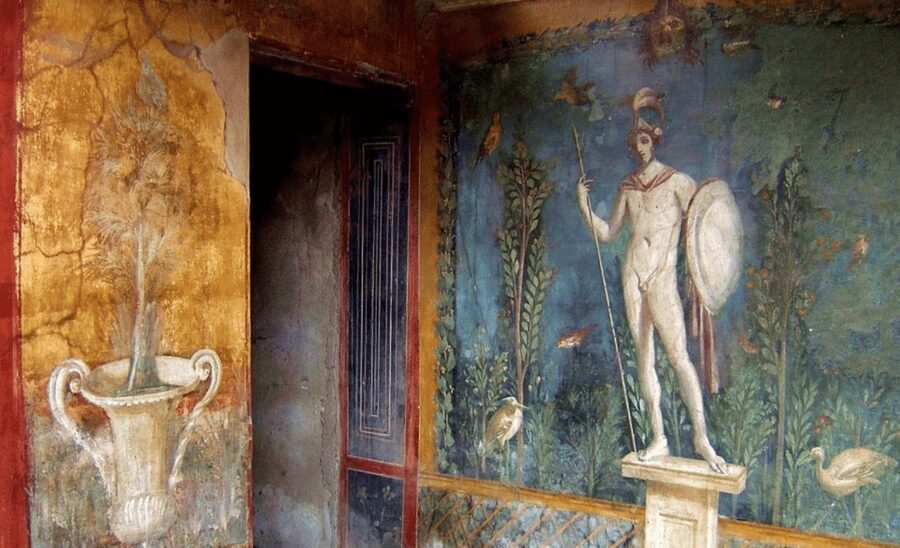
As you move through the residential streets, you’ll also hit the vibe of opulent daily life and small details that make people feel real. You’ll pass through spaces that once held gatherings, routines, and rank-based differences in who lived where.
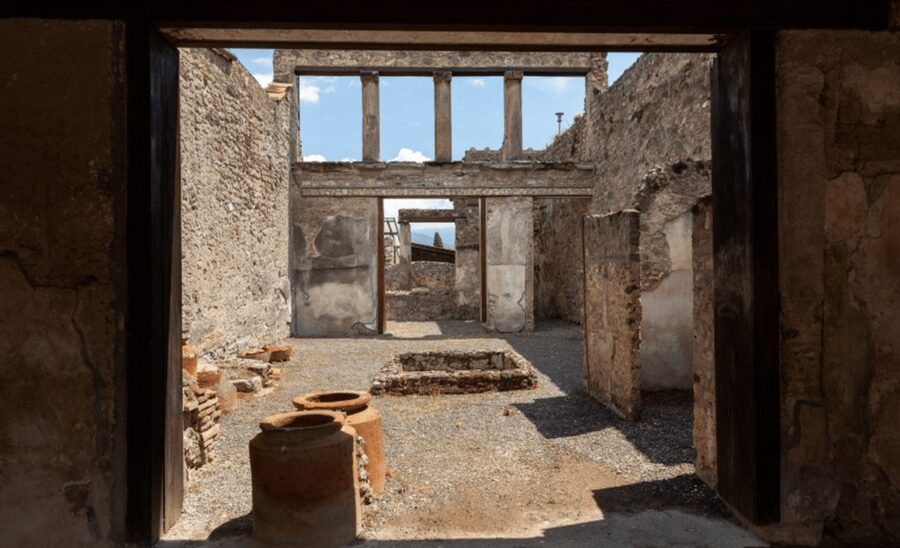
This is also where Pompeii becomes photograph-friendly in a practical way. Instead of only getting wide views, you get texture, doorways, courtyards, and wall remnants that make your photos look like the ruins themselves are telling the story.
Markets and public baths mosaics: where Roman routine shows up
Pompeii’s marketplaces and public baths are where the ruins start to feel like human behavior, not just architecture. Your audio guide points you toward areas like the public baths and the mosaics, which are excellent for understanding taste, artistry, and how public spaces worked.
I love that this isn’t only about temples and big monuments. Pompeii shows how people spent time, argued, traded, bathed, and relaxed in spaces that were designed to serve daily life.
If you’re short on time, don’t rush through these areas. Even quick stops at mosaic floors and bath interiors give you the kind of visual proof that Pompeii is uniquely preserved.
Theatrical spaces, aqueduct remnants, and Vesuvius views
You’ll also encounter the grand theater and remnants of water infrastructure like aqueducts and fountains. These are the “how the city functioned” pieces, and they help you connect Pompeii’s beauty to engineering and municipal priorities.
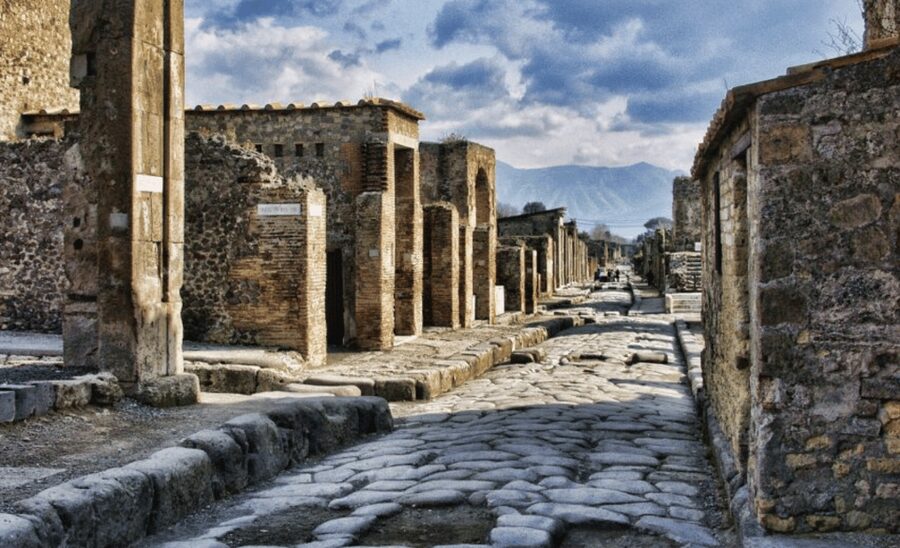
As you walk, keep an eye on the angles where Mount Vesuvius appears in the distance. Those glimpses turn the eruption story from something you read about into something you can physically picture while standing in the street.
This is a great moment for a quick break too. Sit where you can, take a photo, and reset before you move into the emotional parts of the site.
The eruption story you cannot un-know: victim casts and 79 CE context
Pompeii’s emotional punch lands partly because it’s not just ruins, it includes traces of the people. Your audio guide includes the catastrophic eruption in 79 C.E., explaining how it both devastated and preserved the city.
You’ll come across plaster casts of victims, which are hard to forget once you see them. The audio helps you understand what you’re looking at, rather than letting it become a random grim stop.
If you’re a reader, slow down here. The structure of Pompeii encourages you to rush, but the story near the casts is one you should actually absorb, even if it costs you a few minutes elsewhere.
Little details to look for: inscriptions and the Vesuvinum joke
Pompeii is full of everyday humor, and the audio highlights some of it. One of the more memorable examples is the inscription in Sirico’s house, Salve lucru, meaning Welcome, profit. You’ll also see wine jars labeled Vesuvinum, a clever reference to the volcano and wine.
These details make the ruins feel less like a museum display and more like a real neighborhood with real people and real marketing habits. If you like human-sized stories, this is where you’ll smile.
So when you spot inscriptions or labeled objects, take the extra 30 seconds. They add personality to the big historical framing.
Optional art historian tour: when a human guide is worth it
If you pick the guided option, you’ll go with a professional art historian. You’ll meet at Vox City in Piazza Esedra and depart at your booked time slot.
This is a smart choice if you want the “why” behind what you see. Reviews tied to this option praised guides who explained details clearly and kept things moving through crowds, and a radio headset setup reportedly worked well for one group.
I also saw several guide name mentions tied to positive experiences, including Grace, Maria, and Mario. That kind of consistency is usually a good sign with a complex site like Pompeii, where the right route can save you confusion.
Pick the guided option if:
- you want help choosing what to prioritize in a short window
- you enjoy art and architecture context, not just a facts list
- you’re traveling with kids or anyone who prefers a structured visit
Price and value for $37, plus the audio and fast-track tradeoffs
At around $37 per person for skip-the-line entry plus audio and map, you’re paying for convenience and interpretation, not just the excavation ticket. Pompeii’s official entry price is often lower when purchased directly, and one buyer noticed the official ticket being around 19 euros, meaning the combo can be a bigger jump once you add the audio bundle and fast-track handling.
So is it worth it? It depends on your style.
If you like independence and you’re comfortable using your phone, the value is strong because you get into the site quickly and you can self-direct. If you want to squeeze the most out of limited time, avoiding ticket lines also makes your payment feel less like a surcharge and more like an investment in time.
If you expect the audio guide to work flawlessly every time with autoplay and GPS, temper that expectation. A few people reported trouble with download, app behavior, or audio starting automatically. In that case, you might feel like you paid extra for something you didn’t fully use.
Should you book this skip-the-line Pompeii ticket with audio?
Book it if you want time savings plus a self-guided structure, and you’re willing to download the audio and bring headphones. If you’ve only got a couple of hours, skip-the-line access is a practical way to make those hours count at one of Italy’s most demanding sites.
Choose the guided art historian option if you want someone to steer you through the maze and explain the big picture in a way that connects temples, homes, baths, and the eruption story. In a short visit, a good guide can make Pompeii feel less like walking around and more like understanding a city.
Pass or reconsider if you rely on phone tech working perfectly, or if you mainly want the suburban villas, because this ticket does not include access to those villa sites.
Reviewed lately around Naples
- Naples: National Archaeological Museum of Naples Guided Tour★ 4.8 · 498 reviews
- Naples Pasta Class: Fettuccine & Ravioli with Grandma’s Recipe★ 5.0 · 506 reviews
- Naples Walking Tour with Underground Roman Ruins Ticket★ 4.5 · 510 reviews
- Private Day tour of Positano, Amalfi and Ravello from Naples★ 5.0 · 522 reviews
- Naples: Street Art & History Tour in the Spanish Quarters★ 4.9 · 540 reviews
- Private Day Tour: Sorrento, Positano, Amalfi, Ravello from Naples★ 4.5 · 546 reviews
- Day Trip of Pompeii, Herculaneum and Vesuvius from Naples★ 4.5 · 547 reviews
- Day Trip of Pompeii, Sorrento and Positano from Naples/Salerno★ 5.0 · 560 reviews
Audio Tours, compared.

Pantheon Fast-Track Ticket and Official Audio Guide
Read our review →
Pompeii: Entry Ticket with Optional Audio Guide
Read our review →
La Fenice Opera House Entry Ticket with Audio Guide
Read our review →
St. Peter’s Basilica & Dome Entry Ticket & Audio Tour
Read our review →
Cathedral & Brunelleschi’s Dome Ticket & Audio App
Read our review →
Michelangelo’s David Priority Ticket & Audio App
Read our review →
Uffizi Priority Ticket & Masterpieces Audio App
Read our review →
City Sightseeing Hop-On Hop-Off Bus with Audio Guide
Read our review →Browse the lists this tour appears in