
Reviewed · POMPEII TOURS
Complete Pompeii Skip the Line Tour with Archaeologist Guide
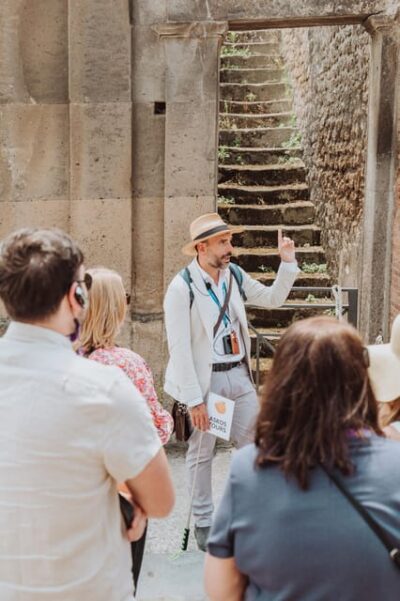
Pompeii can feel like an endless stone maze. This tour makes it readable, with an archaeologist guide explaining what daily life looked like right before the 79 AD eruption, often with friendly, clear storytelling like Enzo or Ilaria.
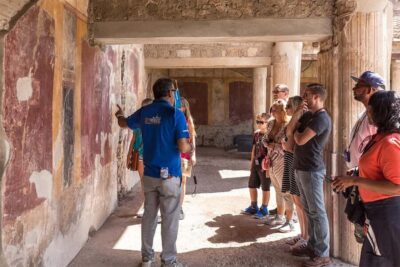
I especially like the small group size (15 or fewer). It keeps you moving, but it also means you can ask questions and actually hear the explanations through the provided headsets.
One thing to consider is that it is still a walking tour in Pompeii’s outdoor ruins. Wear real walking shoes and plan for sun and heat, because the route is active even though the time is short.
Key highlights worth knowing
- Skip-the-line entry with pre-reserved tickets, so you lose less time standing around
- Archaeologist-led commentary that connects monuments to daily routines, not just stone facts
- A focused route that hits major highlights like Pompeii’s Main Street and the Roman baths
- Time to see major surviving evidence of everyday life, including a Roman bakery
- Photo stops built into the pacing, so you can capture key scenes without racing ahead
- An optional Express version (around 2 hours) if you want the greatest hits fast
Why Pompeii Makes Sense With an Archaeologist Guide

Pompeii is famous, but that can be a trap. It’s so well known that you might end up staring at ruins without understanding the patterns behind them. The real magic here is the way an archaeologist can turn the site into a lived-in place again.
On this tour you are not just walking from one famous stop to the next. You get context about how people in the Roman Republic lived, shopped, prayed, ate, and spent their free time. Guides like Francesco, Sonja, and Francesca often explain the practical side too, like what certain buildings were for and why the layout mattered to everyday routines.
The other big win is the pacing. Pompeii is large and uneven underfoot, so a short guided loop helps you avoid the most common beginner mistake: wandering, missing the best preserved areas, then feeling like you did not get your money’s worth.
More of Pompeii:
- Pompeii: Entry Ticket and Guided Tour with an Archaeologist
★ 4.8 · 19,459 reviews - Pompeii: Entry Ticket with Optional Audio Guide
★ 4.2 · 12,360 reviews - From Naples: Pompeii Ruins & Mount Vesuvius Day Tour
★ 4.3 · 11,459 reviews
Skip the Lines, Then Start at Via Villa dei Misteri
The tour starts at Via Villa dei Misteri, 1, in Pompeii, and it ends inside the Archaeological Park. That matters because it keeps the walking loop inside the site rather than repeating directions you do not control.
This experience is built to reduce waiting. You get pre-reserved entrance tickets, and that can be a big deal at Pompeii where lines can eat up your only good sightseeing hours. On a tight schedule, the time saved is often more valuable than the extra detail you might find by doing it alone.
The small group format also affects the logistics in a good way. With up to 15 people, you usually spend less time herding everyone toward the next landmark. You can also hear the guide better when the tour uses headsets when needed.
My practical advice: arrive early enough to find the meeting group calmly. One recurring theme from people is that directions can send you to a nearby building that is not the exact starting spot, so take your time at the beginning.
What the Tour Covers: Bakery, Forum, Apollo, and More
You start inside Pompeii proper with your guide leading the way. From there, the route focuses on the kinds of places that help you understand a Roman city as a system, not just a list of artifacts.
A standout is the Roman bakery, with preserved remains that help you picture how people ate and how food moved through daily life. Pompeii’s preservation is famous because it freezes small details, but it is also famous because those details connect to human routines. A bakery stop turns the site from spectacle into something you can almost smell and taste.
Then you move through major civic anchors, including the Roman Forum. A forum is where public life happened, where power and business met. When the guide ties the forum to what people likely discussed and purchased nearby, you stop treating it as a generic plaza and start seeing it as the city’s social engine.
You also visit key religious and cultural space, including the Temple of Apollo. Religion is not just big statues and dramatic columns. It is part of how people marked time and meaning. In Pompeii, that connection becomes much clearer when you hear how the guide links worship to local identity.
Pompeii’s Main Street: Where Shops and Streets Tell the Story
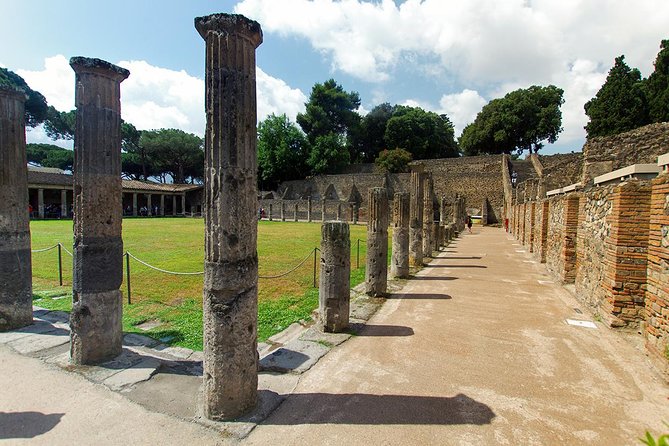
Pompeii’s Main Street is one of those stops where the layout does most of the explaining. Walking it with an archaeologist guide changes the experience. Instead of just seeing old stones, you can understand why certain buildings lined up where they did and how pedestrian movement likely worked.
The guide often uses this kind of street view to show you the rhythm of the city: where you would pass shops, how storefronts relate to residential space, and how ordinary commerce fit into daily routines. It is one of the best places to take photos, too, because the street perspective gives you context.
There is also a realism to this stop that I think makes it worth the guided format. Pompeii is not all big temples and dramatic views. It is also narrow streets, practical entrances, and the kind of everyday movement that most solo visitors do not notice unless someone points it out.
More Pompeii bookings worth a look
- Pompeii: Skip-the-Line Entrance Ticket with Audio Guide
★ 4.0 · 2,509 reviews - Pompeii: Guided Walking Tour with Entrance Ticket
★ 4.3 · 1,423 reviews - Rome to Pompeii Guided Tour with Wine & Lunch by High Speed Train
★ 5.0 · 1,379 reviews - Pompeii: Skip-the-Line Entry Ticket with Audio Guide or Tour
★ 4.1 · 1,364 reviews
Roman Supermarket, Cemetery, and the Reality of Daily Life
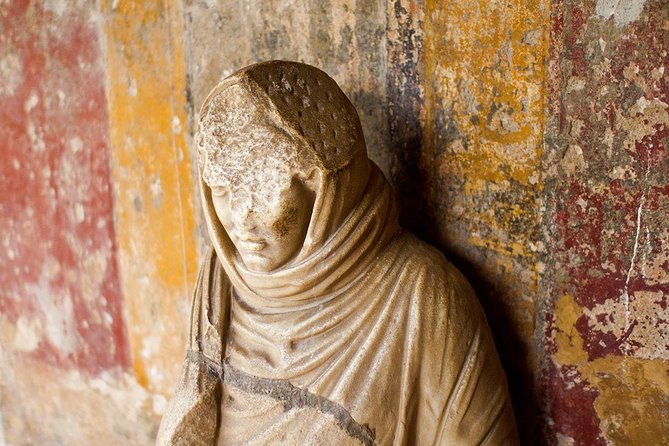
One of the tour’s strengths is that it does not only show monuments. It includes places that reflect the everyday city, including an ancient supermarket type site and a cemetery.
Seeing the preserved evidence of commerce helps you understand that this was not a museum city. It was a city with schedules, transactions, and regular needs. The cemetery stop adds the other side of daily life, including how people dealt with death and remembrance.
This is where archaeologist commentary can really pay off. Without guidance, cemetery spaces can look like background. With guidance, you get a sense of how the living and the dead sat in the same urban world, not separated by myth or distance.
If you like understanding how people actually lived, these non-glamorous stops are often the most satisfying parts of the tour.
Brothel Stop, and Why Age Appropriateness Is Mentioned
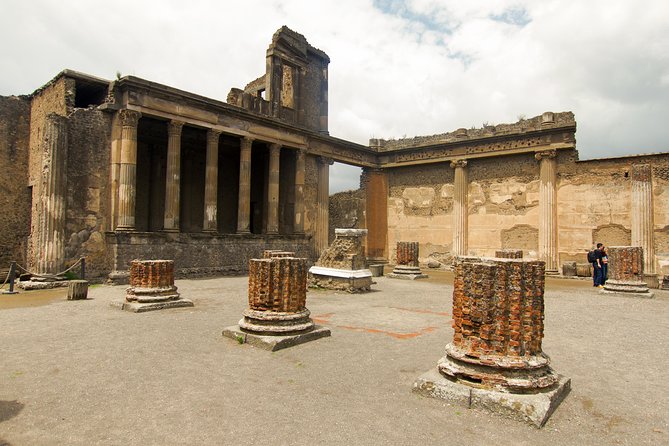
The tour includes a brothel stop if age appropriate. That short note is not just a legal checkbox. It signals that the tour is willing to address the full range of urban life, including what was not always politely discussed in public.
If you are traveling with teens or older kids, you may want to check how your guide handles the content and how much detail is appropriate. If you are sensitive to adult subject matter, this is also the moment to mentally prep yourself.
The upside is that a city like Pompeii is honest about what people did and how they organized social life. The presence of this stop can make the tour feel more complete, not watered down.
Plaster Casts: The Most Moving Part of Pompeii
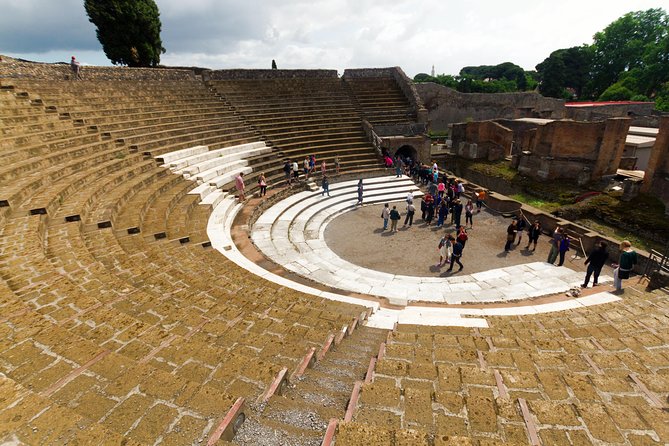
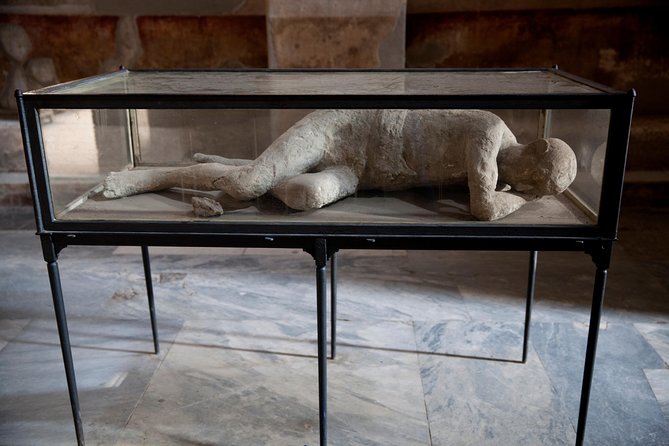
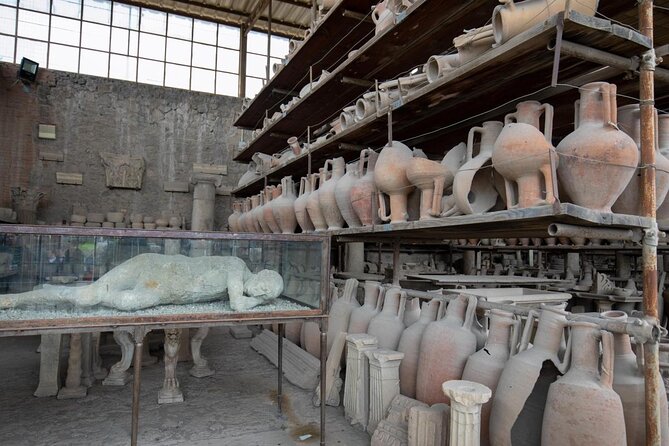
Few Pompeii experiences hit harder than the plaster casts of people caught in the eruption. The tour specifically calls out casts that represent victims caught at the exact moment of their death.
This stop is emotionally heavy. Even when you know the story, the bodies and positions make it feel immediate and personal. That is why this is often the point where the guide’s tone matters. A good archaeologist guide does not turn tragedy into a lecture. They explain what the casts are, what they can teach us, and why preservation matters.
If you are the kind of person who gets overwhelmed in intense museum spaces, consider taking a breath before you start this part of the route. A short pause can help you absorb what you are seeing without rushing.
Roman Baths and the Value of Ending With a Different Kind of Space
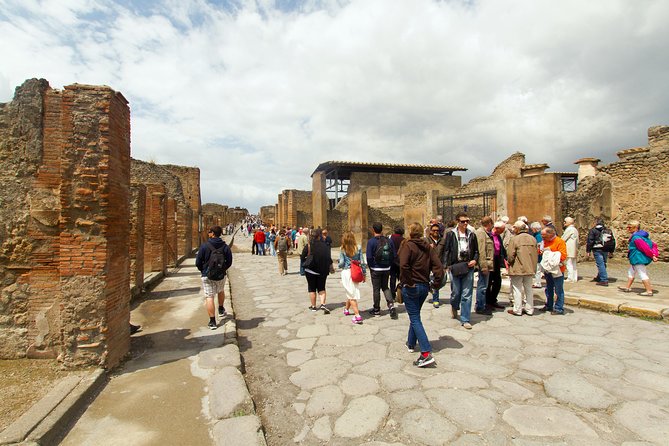
The tour includes Roman baths, with guided commentary and a photo stop. Baths are great because they show a different side of city life. They are social, practical, and tied to routine.
In Pompeii, bath spaces can help you picture what people did with time. You also get a clearer sense of how buildings were designed for daily movement of people, not just religious rituals.
Ending with these kinds of communal spaces can also change your emotional tone. After the intense visibility of the casts and the seriousness of civic and burial sites, baths offer a reminder that the city still had ordinary days and regular routines.
Pompeii Express Option: When 2 Hours Is Enough
If you are short on time, you can choose the Express option, which is around 2 hours and covers a highlights route. This is ideal when Pompeii is one stop in a bigger plan, like when you have a train schedule or another site the same day.
In my view, Express makes sense if:
- you want the biggest Pompeii sights without committing to a longer walk
- you prefer a tighter route so you can explore on your own after
- you are traveling with limited stamina but still want guidance
The standard experience is a better pick if you want time for more of the story, more stops, and a bit more back-and-forth with your guide.
Either way, the guide stays with you, so you still benefit from interpretation, not just navigation.
Group Size, Headsets, and Why They Matter in a Busy World Heritage Site
Pompeii is a World Heritage site, and that comes with crowds and noise at peak times. That is exactly where headsets and a small group help. When you have headsets when needed, the guide’s explanations become much easier to follow near busy areas.
A group of 15 or fewer also changes the vibe. You are not stuck listening from far back, and you can keep your own pace. In a place with lots of standing still, that freedom matters.
The tour is also described as featuring photo stops alongside guided segments. That sounds minor, but it is a practical benefit. You can take pictures without feeling like you are slowing the group to a crawl.
Timing, Walking Pace, and What to Bring
This is a walking tour at a moderate pace. Most people can participate, but it is still outdoors on uneven stone.
Plan for the basics:
- Wear walking shoes you can trust on uneven ground
- Bring sun protection for bright days
- Bring water, especially in warmer weather
Also, do not treat bathroom timing like an afterthought. The tour includes pauses, but Pompeii does not always make restroom breaks convenient. I strongly recommend using facilities before you start, then letting the guide’s pauses handle the rest.
One more logistics tip: meeting point confusion is real. If your directions send you up toward a building near the train station, double-check you are at the entrance closer to the start of the guided group. Getting that sorted early prevents stress later.
Value: Is $71.38 Worth It for Pompeii?
At $71.38 per person, this is not the cheapest way to see Pompeii. But you are paying for three things that add real value in practice.
First is the skip-the-line part, backed by pre-reserved tickets. For Pompeii, saving waiting time can be the difference between enjoying the ruins and feeling rushed.
Second is the archaeologist-led format. Pompeii is one of those sites where explanations change the experience. A guide can point out what you are seeing, then connect it to how people actually lived. When someone has a true research mindset, you get fewer generic statements and more solid interpretation.
Third is the small-group experience with headsets when needed. In a crowded park, being able to hear the guide and move as a group is a quality-of-life upgrade.
If you like art history or archaeology but also want clear, human stories, this tour tends to deliver. If you prefer to wander without structure, you might feel you could spend the money on your own ticket and pace. Still, even then, you might regret losing out on the understanding the guide provides.
Should You Book This Pompeii Skip the Line Tour?
Book it if you want Pompeii to feel understandable, not overwhelming. This is a strong choice for first-time Pompeii visits, for people who want to cover key sights quickly, and for anyone who likes learning how everyday life worked.
Skip it only if you hate walking, want total freedom to roam at your own pace, or already have a very strong Pompeii guide plan and a person-friendly way to navigate the site without interpretation.
If you decide to book, do it with a simple mindset: wear good shoes, bring sun protection, and show up ready to learn. Pompeii is dramatic, but it becomes unforgettable when an archaeologist helps you see the ordinary people behind the stones.
FAQ
How long is the Pompeii tour?
The tour runs about 2 to 3 hours. There is also a Pompeii Express option at booking that takes about 2 hours.
Is this tour offered in English?
Yes. The tour is offered in English.
What is the group size?
The tour is limited to a maximum of 15 travelers.
Does the price include admission tickets to Pompeii?
Yes. The tour includes pre-reserved entrance tickets.
Are headsets provided during the tour?
Yes. Headsets are included when needed.
Where does the tour start and end?
The meeting point is Via Villa dei Misteri, 1, 80045 Pompei NA, Italy. The tour ends inside the Archaeological Park of Pompeii.
Is hotel pick-up or drop-off included?
No. Hotel pick-up and drop-off are not included.
What sites or areas are covered during the tour?
The tour includes stops such as a Roman bakery, Pompeii’s Main Street, the Temple of Apollo, the Roman Forum, an ancient supermarket, a cemetery, a brothel if age appropriate, and Roman baths. The tour also includes plaster casts for victims of the eruption.
Do I need to provide my full name at booking?
Yes. The full names of all participants must be provided at booking and must match the names on your ID or passport. Name changes are not permitted.
Is the tour mostly walking?
Yes. It is a walking tour, and you should be able to walk at a moderate pace.
What is the cancellation policy?
Free cancellation is available up to 24 hours in advance of the experience start time for a full refund.
Reviewed lately around Pompeii
- Pompeii and Mount Vesuvius Small Group Tour★ 4.5 · 233 reviews
- From Salerno: Pompeii Guided Walking Tour★ 4.5 · 235 reviews
- Naples: Tour of Mt Vesuvius and Pompeii w/ Lunch & Wine tasting★ 5.0 · 241 reviews
- Explore Naples & Pompeii in One Day – Guided Half-Day Tour★ 4.5 · 253 reviews
- From Pompeii: Mount Vesuvius Guided Tour with Transfer★ 4.8 · 255 reviews
- From Rome: Sorrento & Pompeii Day Tour with Hotel Pickup★ 4.2 · 257 reviews
- From Rome: Pompeii All-Inclusive Tour with Live Guide★ 4.3 · 261 reviews
- Pompeii: Guided Small Group Tour Max 6 People with Private Option★ 5.0 · 269 reviews
Pompeii Tours, compared.
Pompeii: Entry Ticket and Guided Tour with an Archaeologist
Read our review →
Pompeii: Entry Ticket with Optional Audio Guide
Read our review →


Pompeii Small Group Tour with an Archaeologist
Read our review →
Pompeii, Amalfi Coast and Positano Day Trip from Rome
Read our review →
Pompeii and Mount Vesuvius Day Trip from Rome with Pizza Lunch
Read our review →Browse the lists this tour appears in