
Reviewed · POMPEII TOURS
Sharing Tour of Pompeii
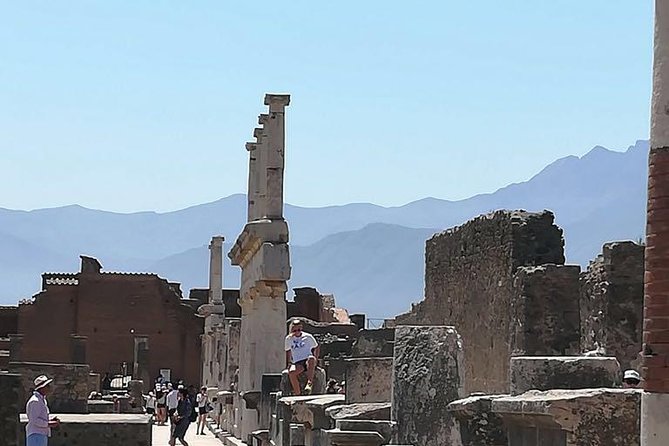
Pompeii is interesting because it is not a rebuilt postcard. It is an ancient city paused by the eruption of Vesuvius in 79 AD, then uncovered over time by archaeologists. For me, what makes this tour appealing is the focused small-group format and the way a guide can help you spot what matters as you walk.
I like that the route hits three different sides of Roman life, from public religion to private home life. The Casa dei Vettii stop is especially strong because it is known for standout first-century Roman art, and the story tied to the owners gives you a clear way to look at the place.
One thing to plan for up front: the Pompeii entrance ticket is not included in the price you see, so you will need to add the daily entry cost per person (listed as 20.00 Euro per person). Also, since this experience has a minimum number of travelers, there is a small chance of being offered a different date or a full refund if that minimum is not met.
Key things to know before you go
- Up to 8 people keeps it easier to hear your guide and stay together in the ruins
- 2 hours 30 minutes is long enough for real explanations without dragging
- Three high-impact stops: a Roman temple, the Casa dei Vettii, and the lupanari
- Mobile ticket and English make the day smoother from start to finish
- Pickup offered for added convenience
- Pompeii entry ticket is separate (budget 20.00 Euro per person)
Why This Pompeii Tour Works: Temple, Home, and Street Life
This is a Pompeii tour built around contrast. In a compact 2 hours 30 minutes, you go from a Roman temple, to a domus (a private home), to the lupanari, a place connected with sex work in the Roman world. That mix matters, because Pompeii can feel like “just stones” if you only look at buildings. A guide turns those stones into a picture of how different parts of daily life worked.
You also get a smart pacing. Pompeii is big, and it is easy to burn time by wandering without purpose. With a set route, you spend more time understanding details you would otherwise miss, and less time getting lost in the flow of ruins.
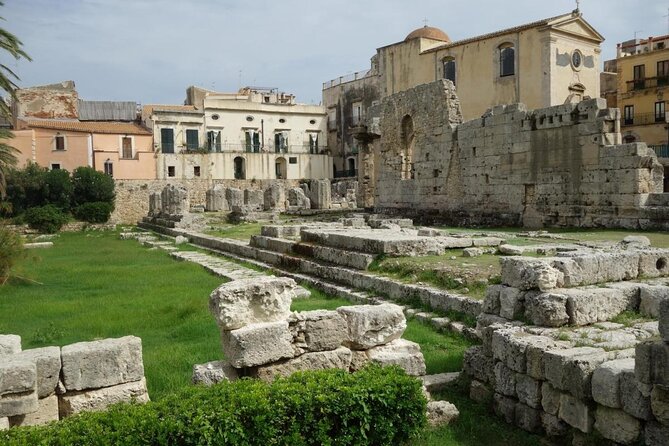
The best part for many people is that this is not a giant bus tour. The group size is capped at up to 8, and the experience is set up so only your group participates. In practice, that usually means fewer bottlenecks at viewpoints and easier conversation when questions pop up.
More of Pompeii:
- Pompeii: Entry Ticket and Guided Tour with an Archaeologist
★ 4.8 · 19,459 reviews - Pompeii: Entry Ticket with Optional Audio Guide
★ 4.2 · 12,360 reviews - From Naples: Pompeii Ruins & Mount Vesuvius Day Tour
★ 4.3 · 11,459 reviews
Price and Tickets: What You Pay, What You Must Add

The tour price is listed as $193.49 per group (up to 8 people). That is a useful way to think about value because Pompeii entry costs can otherwise get confusing when you add everyone individually.
But here is the key budgeting point: the Pompeii entrance ticket is not included. The price that applies is 20.00 Euro per person, and it does not come bundled into the tour rate. The provider notes that they buy the Pompeii entrance tickets daily for customers, but you should still plan to pay the entrance fee separately.
So what is the value you are paying for? In this case, the tour price is largely for the guide time and the structure of the visit. A good guide is what helps you understand why a building is buried, why certain rooms matter, and what to look for as you move between stops. If you are the type of traveler who likes context, that is where your money goes.
If you are traveling with a few people, the group price can help. If you are going solo, check the per-person math in your head, because the group fee may still end up feeling similar to other guided options once the entrance ticket is added.
Meeting at Villa Dei Misteri: Getting Started Without Stress
This tour starts at Pompei Scavi Villa Dei Misteri, 80045 Pompei, and it ends back at the same meeting point. If you are using public transportation, this is in a practical area, since it is noted as near public transportation.
Pickup is also offered, and that can be a big deal on a site as spread out as Pompeii. Even if you do not use pickup, knowing where you meet is half the battle. When you arrive, look for the Sharing Tour of Pompei sign and your guide waiting for you.
Because Pompeii day plans often get tight, it helps to treat the meeting point as a firm anchor. Arrive with a little buffer, then you can relax into the start and focus on the sites instead of logistics.
Stop 1: The Buried Roman Temple and Why 79 AD Still Feels Close
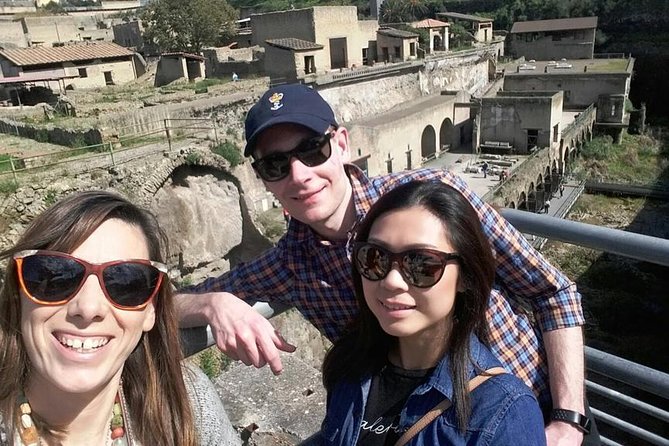
Your first stop is a Roman temple that was buried by the eruption of Vesuvius in 79 and later recovered through archaeological excavation. This is an important opening because it sets the emotional and visual tone of the whole visit.
A temple is not just a pretty facade. In the Roman world, temples were tied to public life and belief. In Pompeii, the fact that this structure ended up buried is what gives you the unique “pause button” effect. You are seeing a place that stopped mid-motion, then survived in the ash long enough for later excavation to uncover it.
What I like about starting here is that it gives you a frame for how the city was organized. Once you understand that Pompeii had formal public space devoted to religion and civic identity, it is easier to appreciate the shift later to domestic life at the Casa dei Vettii.
One practical note: temples and other stone structures in Pompeii can be visually complex. If you do not have a guide, you can easily miss what the guide wants you to notice. On this tour, your guide’s job is to direct your attention, so you do not end up just walking past major landmarks.
A different Pompeii day to consider:
- From Rome: Pompeii, Amalfi Coast, and Sorrento Day Trip
★ 4.6 · 7,031 reviews - From Rome: Pompeii, Amalfi Coast and Positano Day Trip
★ 4.6 · 6,620 reviews - Pompeii Small Group Tour with an Archaeologist
★ 5.0 · 6,593 reviews - Pompeii, Amalfi Coast and Positano Day Trip from Rome
★ 4.5 · 6,250 reviews
Stop 2: Casa dei Vettii, Roman Art, and the Owners Behind the Name
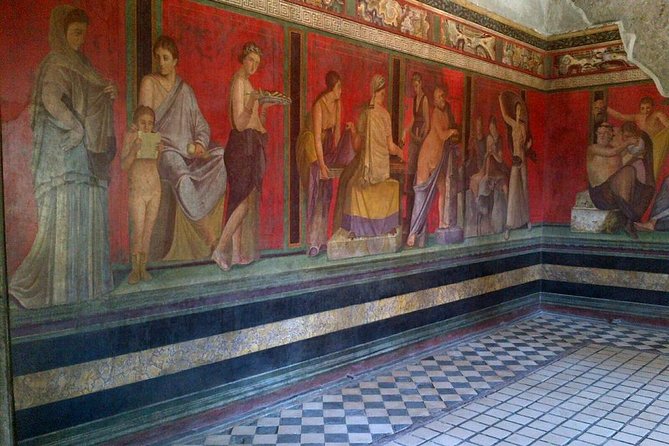
Next up is the Casa dei Vettii, a Roman domus that was also buried during the 79 AD eruption and recovered after excavation. This stop is often the highlight for travelers who love art and interiors, because this house is recognized for first-century Roman art.
It is also named for the owners, the Vettii. That sounds small, but it changes how you read a house. Instead of seeing it as a generic “ancient home,” you start thinking about the people connected to it and what they wanted to show. In Roman homes, decorative choices can be a kind of self-expression. A guide can help connect the art to the household, so you do not just admire paintings and patterns as objects. You understand them as part of Roman domestic identity.
The Casa dei Vettii stop can also be a good pace-break. Compared to outdoor stone streets, a house visit gives you a sense of scale and room-to-room movement. Even if you are not an art specialist, the guide’s explanations can help you see why certain elements mattered.
Potential drawback to keep in mind: houses in Pompeii are often limited by what has survived. That means you might not see everything you imagine from photos. Still, this is precisely where a guide helps, because they can explain what is visible and what the layout suggests about how people lived.
Stop 3: Lupanari, Roman Names, and How to Look at Adult Subjects Respectfully
The last stop is the lupanari, from the Latin term related to a prostitute (lupa). During the Roman period, these were places dedicated to mercenary sexual pleasure, often described as appointment houses or brothels. Some parts are still visible in the ruins of Pompeii.
This stop can be uncomfortable for some people, and that is normal. The topic is adult, and it is not presented as modern entertainment. What makes this stop valuable is context: a guide can help you understand the social and economic role that these businesses played in the city, without turning it into shock value.
I also like that it broadens your picture of Pompeii. You see public architecture, private living spaces, and then a commercial space tied to sexuality and paid services. That makes Pompeii feel more like a city where different types of people and jobs existed side by side, instead of a museum of temples and fancy houses only.
How to look at this stop: focus on structure and meaning. Think about what kinds of rooms or entrances might have been used for this specific purpose. Avoid treating it like a morbid novelty. With the right framing, you can come away with a more complete understanding of Roman street life.
What the Small Group and Guide Time Really Adds Up To
With a group cap of up to 8 and a guide leading you between three major stops, you get practical advantages that matter at Pompeii.
First, you spend less time guessing. Pompeii ruins can be confusing because walls and spaces are fragmentary. A good guide helps you interpret what you are seeing, and that makes the walk feel purposeful.
Second, you avoid the “photo-only” trap. You will take photos, sure, but you also get explanations that help your pictures mean something later. When you understand what a place was for, your memory sticks better.
Third, your guide can help you manage the flow of a busy site. Even if the walk is not long, Pompeii visitors can create friction. Small-group tours generally make it easier to keep moving while staying oriented.
The experience is offered in English, and your tour includes a private tour guide. That matters if you care about accuracy in terminology, like Roman domus, lupanari, and how to connect the eruption story to what you see on the ground.
Timing, Terrain, and How to Prepare for 2 Hours 30 Minutes
This tour is listed at around 2 hours 30 minutes. That is a sweet spot for Pompeii. It is enough time to learn at three meaningful stops, but it is not so long that you lose focus or get exhausted.
Pompeii is an outdoor site with uneven ground, stone steps, and lots of walking. Wear comfortable shoes. Bring sun protection, especially if you are going in warmer months. If you get to the first stop ready to look and listen, the rest of the tour usually clicks.
Also, since you will need to add the 20.00 Euro per person entrance ticket, check your day plan so you do not scramble right when you arrive. Having that budget in mind lets you enjoy the tour instead of worrying about payment steps.
Who This Tour Is Best For
This tour fits especially well if you want:
- A guided Pompeii route without trying to plan a self-guided itinerary
- A mix of sites that cover public religion, private home life, and commercial street life
- A small group size (up to 8) for a calmer experience
- English explanations from a guide who can connect what you see to why it matters
It can also be a good choice if you want a manageable timeframe and do not want to commit to a full day in the ruins.
If you prefer total freedom, or you want to spend extra time lingering in one area, you might find 2 hours 30 minutes a bit tight. But if your goal is understanding and momentum, this route is built for that.
Should You Book This Pompeii Sharing Tour of Up to 8?
I would book this tour if you want a structured Pompeii visit that goes beyond surface sightseeing. The combination of Casa dei Vettii, a buried Roman temple, and the lupanari gives you a fuller sense of the ancient city’s different functions. With a small group and a private guide, you are more likely to leave with real understanding instead of only photos.
Before you commit, do two quick checks:
- Budget the Pompeii entrance ticket (20.00 Euro per person), since it is separate from the tour price
- Have a flexible backup plan in case the provider needs to cancel or reschedule due to the minimum traveler requirement
If those points work for you, this is a strong value way to see Pompeii with context and direction, without spending your whole day stuck in the logistics of a complex site.
FAQ
How long is the Sharing Tour of Pompeii?
The tour is about 2 hours 30 minutes.
How much does the tour cost and how many people are in a group?
The price is $193.49 per group, up to 8 people.
Is pickup available?
Yes, pickup is offered. If you do not use pickup, you will meet the guide at the starting location.
Where do we meet the guide?
The meeting point is Pompei Scavi Villa Dei Misteri, 80045 Pompei. The guide will be waiting for you with a Sharing Tour of Pompei sign.
Is the Pompeii entrance ticket included?
No. The Pompeii entrance ticket is not included. The listed entrance ticket amount is 20.00 Euro per person.
What accessibility details are provided?
The tour notes that service animals are allowed and it is near public transportation, and most travelers can participate.
Reviewed lately around Pompeii
- Pompeii and Mount Vesuvius Small Group Tour★ 4.5 · 233 reviews
- From Salerno: Pompeii Guided Walking Tour★ 4.5 · 235 reviews
- Naples: Tour of Mt Vesuvius and Pompeii w/ Lunch & Wine tasting★ 5.0 · 241 reviews
- Explore Naples & Pompeii in One Day – Guided Half-Day Tour★ 4.5 · 253 reviews
- From Pompeii: Mount Vesuvius Guided Tour with Transfer★ 4.8 · 255 reviews
- From Rome: Sorrento & Pompeii Day Tour with Hotel Pickup★ 4.2 · 257 reviews
- From Rome: Pompeii All-Inclusive Tour with Live Guide★ 4.3 · 261 reviews
- Pompeii: Guided Small Group Tour Max 6 People with Private Option★ 5.0 · 269 reviews
Pompeii Tours, compared.
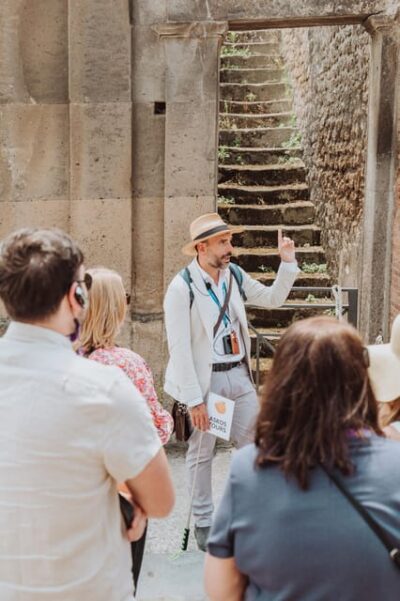
Pompeii: Entry Ticket and Guided Tour with an Archaeologist
Read our review →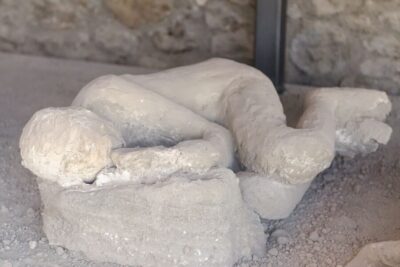
Pompeii: Entry Ticket with Optional Audio Guide
Read our review →
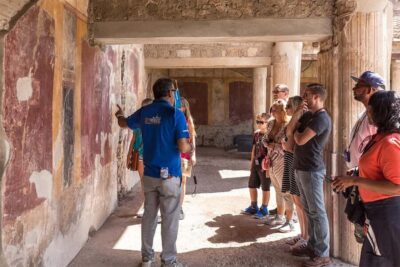


Pompeii Small Group Tour with an Archaeologist
Read our review →
Pompeii, Amalfi Coast and Positano Day Trip from Rome
Read our review →
Pompeii and Mount Vesuvius Day Trip from Rome with Pizza Lunch
Read our review →Browse the lists this tour appears in