
Reviewed · LAST SUPPER & DA VINCI TOURS
Rome: Leonardo Da Vinci Experience Entry Ticket
If you like science, art, and the kind of imagination that turns sketches into mechanisms, the Leonardo da Vinci Experience in Rome is a smart stop. It mixes 50 invention reconstructions with an art-focused gallery, so you get the artist and the engineer in one route.
I especially like the self-paced audio guide with many language options, and I also like the hands-on style displays, including working models you can try. The main catch is size: it is not a huge museum, so if you are expecting original masterpieces, you may finish quickly and want to pair it with something nearby.
Key takeaways before you go
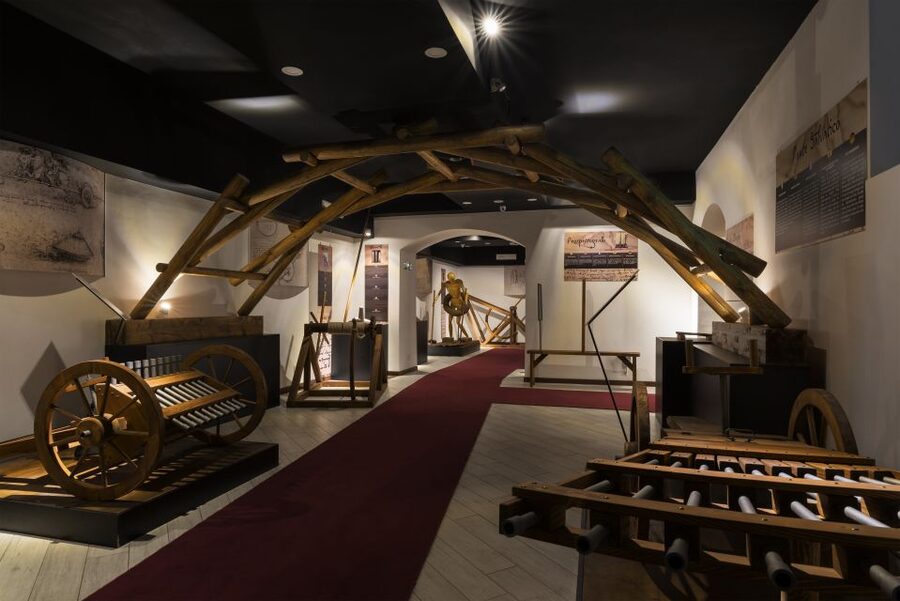
- 50 interactive inventions connected to Leonardo’s designs, including practical machines tied to modern ideas
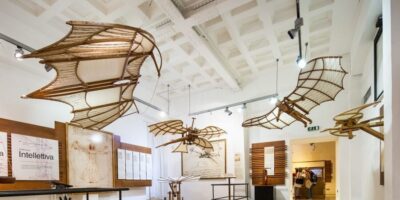
- Five exhibition halls featuring flying machines, war machines, and other mechanical concepts
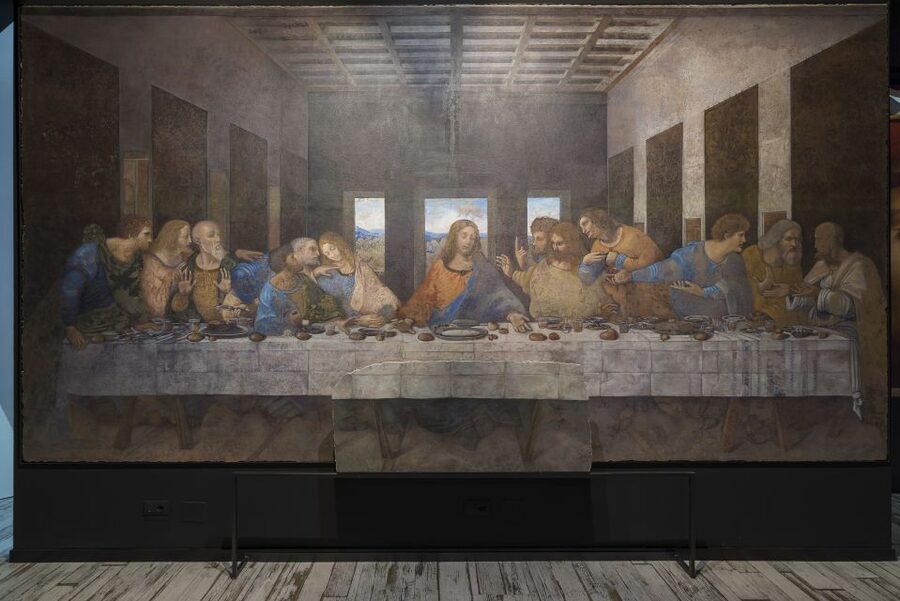
- Full-sized reproduction of The Last Supper plus explanations that tackle the mystery angle many people come for
- Leonardo’s Room of Mirrors, tied to his study of light and how it relates to photography and projection
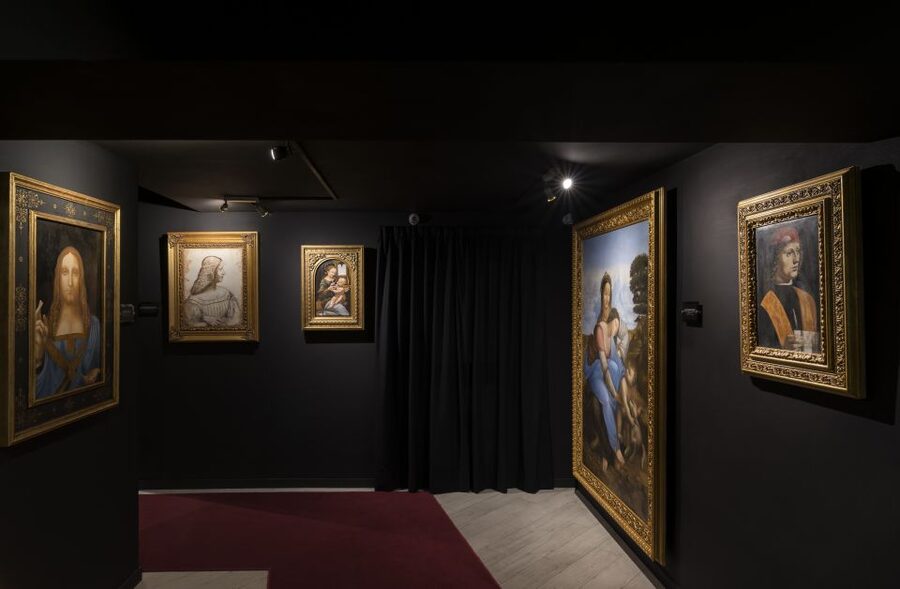
- Art gallery with certified reproductions from Vatican Museum restoration artists, plus famous works like The Virgin of the Rocks and Lady with an Ermine
- Air-conditioned indoor comfort, with free WiFi and restrooms so you can take your time
Where the Leonardo da Vinci Experience fits in Rome (and why its location helps)
The Leonardo da Vinci Experience is at Via della Conciliazione 19, just about 150 meters from St Peter’s Square. That matters more than you might think. Rome days near the Vatican can turn into a crush of lines and timing games, so having a ticketed, indoor, self-guided option nearby is a nice safety valve.
At $18 per person for about a day, it is built for visitors who want something different from the usual big-ticket monuments. You are not buying a long guided tour. You are buying access to a well-structured walk-through where the main work is done for you: audio guidance, exhibit organization, and working models.
Because it sits so close to St Peter’s, you can plan around real life. Hot afternoon? This is indoors. You need a break from queues? This is a focused detour that still feels Roman, since it is part of the Vatican-area orbit.
Your best plan: self-guided timing, pace, and what to do first
This is not a guided tour. The ticket comes with an audio guide, and the experience is designed so you can move room to room at your own pace. That is usually a win. You control how long you linger with the inventions, and you can slow down for the art moments that catch your attention.
How long should you budget? Most people can do it in about an hour if they keep moving. If you stop to try interactive displays and read labels, a more comfortable target is 1.5 hours. If you are especially into the mechanisms, you can easily stretch it longer.
A practical tip from the experience vibe: if you can, go earlier in the day. When you arrive during calmer hours, you are more likely to stroll through the rooms without feeling like you are being pushed along.
Getting your audio guide working fast (and why headphones matter)
The ticket includes an audio guide in multiple languages: English, Spanish, French, Italian, German, Portuguese, Russian, and Chinese. It is designed to guide you room by room, with explanations for both the inventions and the art.
One small detail that can make or break the experience: you should bring headphones. The visit notes specifically say to bring them. Once you have headphones, the museum format clicks. You will spend less time scanning and more time understanding what you are looking at.
If you want the best flow, start with the first exhibits, then cycle back to the parts that pull you in. With self-guided audio, you do not need to understand everything in order. You can follow what interests you most, then let the rest fill in the gaps.
Inside the 5 exhibition halls: flying machines, war machines, and the fun part
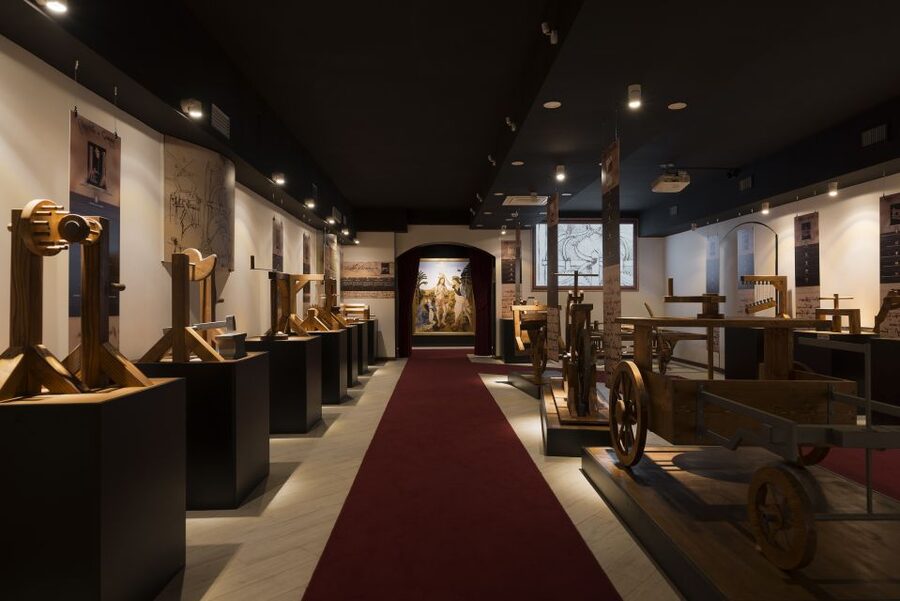
The core of the Leonardo da Vinci Experience is organized into five exhibition halls, and the exhibit themes are mechanical in a way that feels surprisingly modern. You start seeing Leonardo less as a painter and more as a maker who tested ideas.
Here is how the halls usually land for your brain:
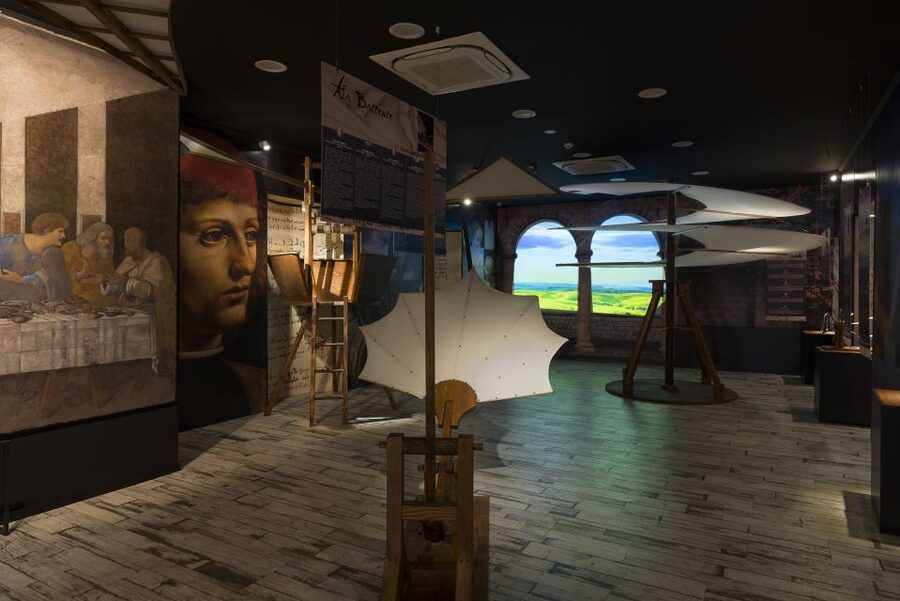
- You see flying-machine concepts and construction logic, not just pretty sketches.
- You move into other machine categories, including war machines, and you get explanations for how these ideas fit Leonardo’s engineering thinking.
- You encounter model-based displays that help you understand scale, motion, and purpose.
The standout value is that many exhibits are interactive or working-model style, meaning you are not only reading. You can try machines and see how the design functions. That is where the “wait, how would that even work?” feeling turns into a “oh, I get it” moment.
You also get the set-piece imagination items. There are photo moments where you can pose with larger-than-life reconstructions like a helicopter-style model or an armored tank. Even if you only spend a minute on photos, it helps break up the more technical sections.
And yes, it is also kid-friendly. Multiple visitors note that interactive mechanical displays work well for children and adults at the same time. If your group has different interests, this format makes it easier for everyone to share attention without one person getting bored.
The Last Supper reproduction and the art mystery angle
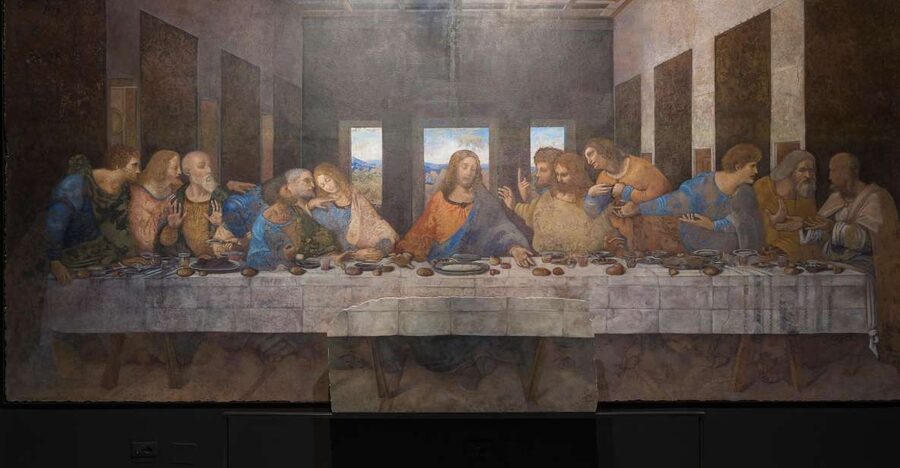
One of the headline attractions is a full-sized reproduction of The Last Supper. That alone is worth it if you came for the Leonardo da Vinci Code-style mystery. But what makes it more than a one-minute photo stop is that the experience also frames why this painting is controversial and what people latch onto.
Next to the reproduction, you get clearer context around composition and technique, plus audio explanations that help you interpret what you are seeing. It is not just about having a famous image in front of you. It is about giving you a guide to read it.
If you are expecting the real painting, this is the wrong box to check. What you get here are reproductions and reconstruction-style displays. Still, a big reproduction can be a powerful way to understand why people were drawn to this work long before novels made it extra famous.
The painting gallery: Vatican restoration reproductions and Leonardo’s signature portraits
Beyond the Last Supper, the experience also includes an art-focused gallery with 20 certified reproductions painted by prominent Vatican Museum restoration artists. That is a meaningful detail, because it signals a care level beyond generic posters.
You also see two versions of The Virgin of the Rocks, with the originals located at the Louvre and London’s National Gallery. That pairing matters. Seeing two versions side by side helps you notice differences in composition and mood, and it gives you a way to compare Leonardo’s approach rather than treating each painting like a single isolated icon.
Other art highlights include:
- Lady with an Ermine, a portrait tied to the moment Leonardo changed how classical portraiture felt
- Leonardo’s art technique explanations delivered through the audio guide, which helps you connect the science side to the painting choices
Even if you are not an art-historian type, the audio support helps you understand what is going on in a practical way. You are not just looking at a face or a scene. You are learning how Leonardo thought about light, form, and realism.
Leonardo’s Room of Mirrors: light, images, and the photography link
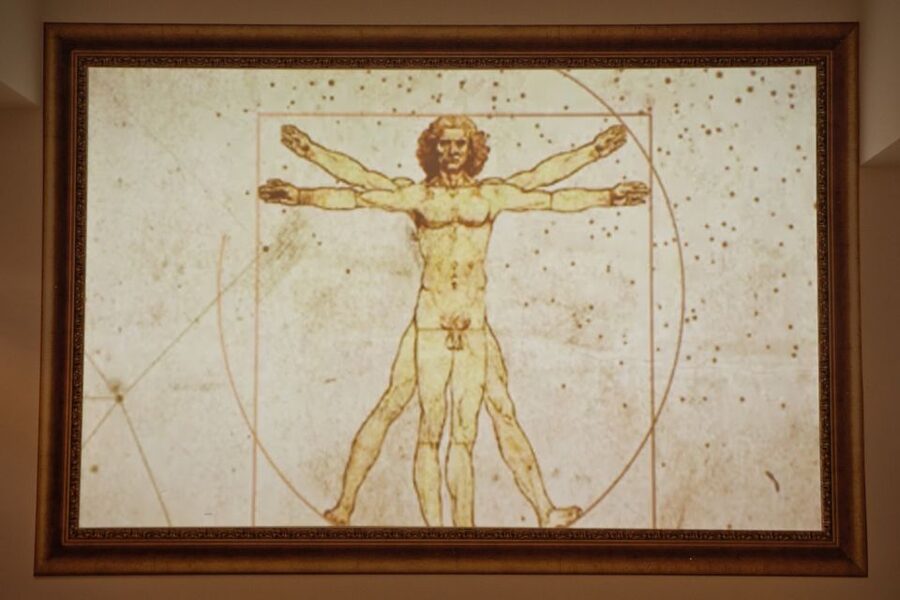
One of the most memorable sections is Leonardo’s Room of Mirrors. The experience ties Leonardo’s study of light to the later invention of photography and projection.
Why this room works: it makes an abstract idea physical. Instead of treating light as a textbook concept, you see how reflection, angles, and perception can change what you think you are looking at.
Then there is the photo-play angle. Many visitors mention photo opportunities that pair well with the tech themes. These little stops are not just for fun. They keep the flow moving so the technical and artistic parts do not blend into one long lecture.
Working-model inventing: what you can try, not just read about
A major reason this ticket gets strong marks is that it does not feel purely passive. The experience presents Leonardo as an inventor who built designs that could work, including concepts like a solar-energy working idea and other machine categories.
You also get a spread of items tied to real-life development of tools. The exhibit explanations describe machines such as digging and lifting equipment and references that connect to inventions like the sewing machine and bicycle. Even if you only absorb half of it, the takeaway is clear: Leonardo’s thinking shows up in engineering habits that still exist today.
There are also interactive moments people call out as highlight-worthy, including the chance to try hands-on activities. One visitor notes you can build a Leonardo bridge by yourself, which sums up the tone of the place. It is designed to get your hands involved, even if the exhibits are still museum-level reconstructions.
Staff help and the human touch inside a self-guided museum
Even with audio guidance, staff matter. People mention friendly, helpful service, and some visitors specifically single out staff members such as Flavia, Alla, and David for their explanations and upbeat approach.
You might not get a guided tour, but you still have human support if you have questions. That is especially useful if you want to understand which exhibits are the most interesting for your group, or if your language preference affects how smoothly you move through the audio.
Value check: is $18 a good deal for what you get?
At $18 per person for a 1-day ticket, the value is strongest if you want:
- indoor comfort with air conditioning
- a lot of explanation without paying for a private guide
- interactive-style invention displays
- a structured blend of engineering and art
The value is weaker if you came specifically for original works. This experience is built on reconstructions and certified reproductions, not museum masterpieces on loan. If you want originals only, you may feel the time is too short.
But for most Rome visitors, this hits the sweet spot. It is a compact, meaningful detour near St Peter’s Square. You get audio guidance, working-model fun, and a set of famous art names that give context to why Leonardo still pulls attention.
Who should book this ticket (and who may prefer something else)
This is a good fit if you:
- want a family-friendly Rome activity that still feels serious
- like hands-on learning with machines and models
- want a self-paced museum experience with an audio guide that makes it easy to follow along
- are near the Vatican and want an indoor option that does not eat your whole day
You may want to rethink if you:
- only care about original paintings and sculptures
- hate short museums, because the experience is not designed to fill an entire afternoon for everyone
- need a high-touch guided lecture, because this ticket is built for self-guided exploration
Should you book the Leonardo da Vinci Experience ticket?
Yes, if you are in Rome and you want something smart that does not require advanced art or engineering knowledge. The combination of interactive inventions, an audio guide in many languages, air conditioning, and a mix of art and engineering makes it a good value stop at $18.
I would especially book it if you are already planning time near St Peter’s Square. This is the kind of add-on that keeps your day moving, teaches you something real, and still leaves energy for the bigger sights outside.
FAQ
Where is the Leonardo da Vinci Experience located?
It is at Via della Conciliazione 19, Rome, about 150 meters from St Peter’s Square.
How long does the experience take?
The ticket is valid for 1 day, and the visit is typically planned for around an hour, with the option to take more time.
Is this experience self-guided or does it include a guided tour?
It is self-guided. A guided tour is not included.
Is an audio guide included, and what languages are available?
Yes. An audio guide is included and available in English, Italian, French, German, Spanish, Russian, Chinese, and also Portuguese.
Do I need headphones?
Yes. The experience notes ask you to bring headphones.
What’s included with the ticket besides entry?
The ticket includes an audio guide, free WiFi, a fully air-conditioned environment, and access to restrooms.
What is the main focus of the exhibits?
You can learn about around 50 of Leonardo da Vinci’s inventions, explore multiple exhibition halls with machines, and also see art displays tied to Leonardo’s famous works.
Is the museum air-conditioned?
Yes. The environment is fully air-conditioned.
What is the cancellation and payment flexibility?
You can cancel up to 24 hours in advance for a full refund. You can also reserve now and pay later, depending on availability.
Is the ticket valid for just one day?
Yes. The ticket is valid for 1 day, with starting times based on availability.
More of Leonardo's Milan
- Milan: Da Vinci’s Last Supper Guided Tour
★ 4.7 · 10,143 reviews - Milan: Science and Technology Leonardo da Vinci Museum Entry
★ 4.5 · 7,169 reviews - Milan: Guided Walking Tour & Last Supper Visit with Ticket
★ 4.7 · 5,409 reviews - Milan’s Must See: Half-Day Tour of Last Supper, Duomo & La Scala
★ 4.0 · 4,193 reviews
Last Supper & Da Vinci Tours, compared.
Science and Technology Leonardo da Vinci Museum Entry
Read our review →
Guided Walking Tour & Last Supper Visit with Ticket
Read our review →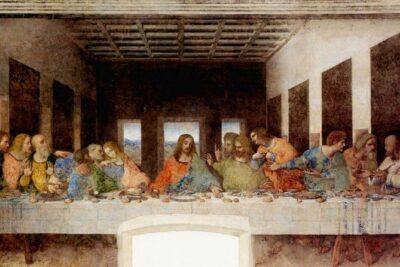
Milan’s Must See: Half-Day Tour of Last Supper, Duomo & La Scala
Read our review →
Milan Duomo & The Last Supper Skip-the-Line Small Group Tour
Read our review →Browse the lists this tour appears in