
Reviewed · LAST SUPPER & DA VINCI TOURS
Rome: Leonardo da Vinci Exhibition Entrance Ticket
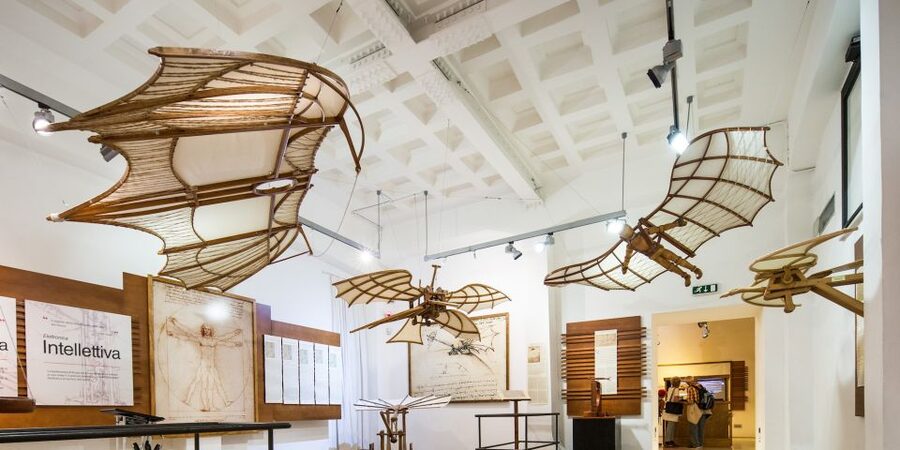
This Leonardo da Vinci exhibition in Rome is interesting because it turns ideas on paper into full-scale machines you can see in action, plus 3D holograms that bring his inventions and paintings into view. It’s set inside the Palazzo della Cancelleria, a historic building owned by the Vatican, with extra context layered into the site itself.
I especially like two things. First, I like the chance to touch and play with almost all the machines, including an activity where you can build your own version of a Da Vinci bridge. Second, I like the pacing across engineering themes, Water, Air, Fire, and Earth, with nine holograms used to explain how his thinking links art and engineering.
One possible drawback: the exhibition is small and fast, so if you want a long, slow museum experience, you may feel done sooner than you planned. Also keep in mind there are touch and do-not-touch areas, plus some spots can be less forgiving if you are watching your footing.
Key things to know before you go
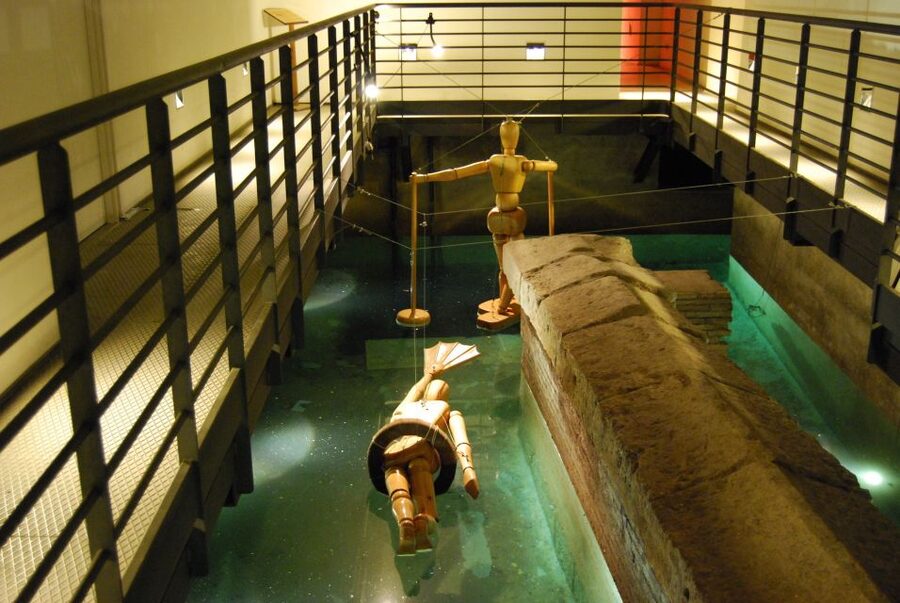
- Palazzo setting with real historical weight: the building includes the underground pond area tied to a tomb dating to 43 BC.
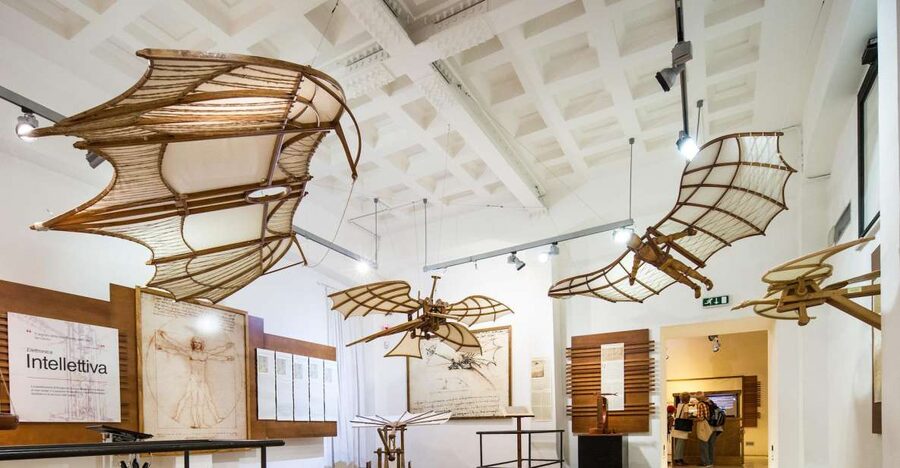
- Full-size machines you can interact with: you can test many of the models made from Da Vinci’s designs.
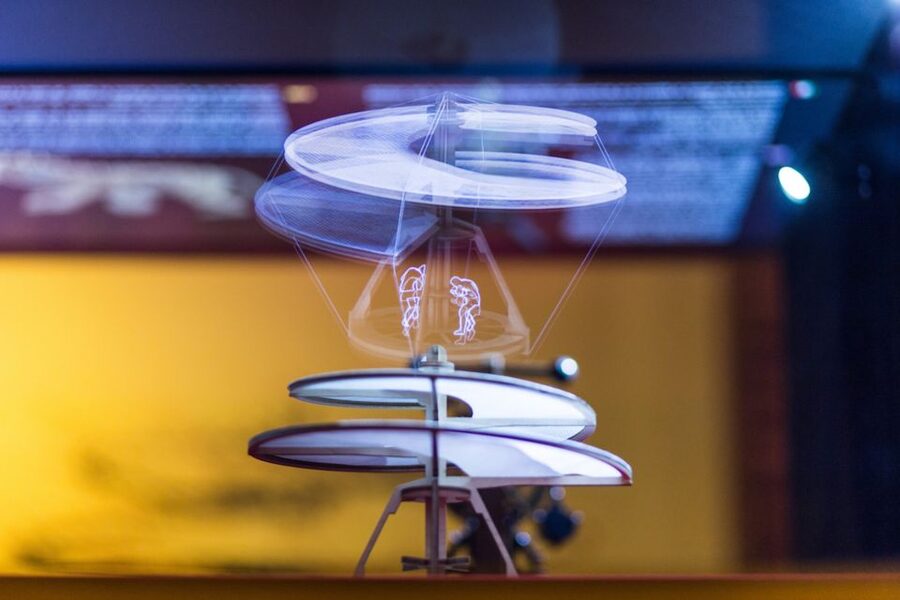
- 3D holograms are a major hook: the show highlights nine holograms showing paintings and inventions.
- Hands-on bridge building: there’s a make-and-test activity connected to a Leonardo bridge idea.
- A short visit that still adds up: many people get through in under a couple of hours, depending on how long you linger at interactive stations.
- Best value when you use the audio or gadget: the included gadget helps, and an audio option is often recommended for extra clarity.
Palazzo della Cancelleria: where the Leonardo da Vinci exhibit fits in Rome
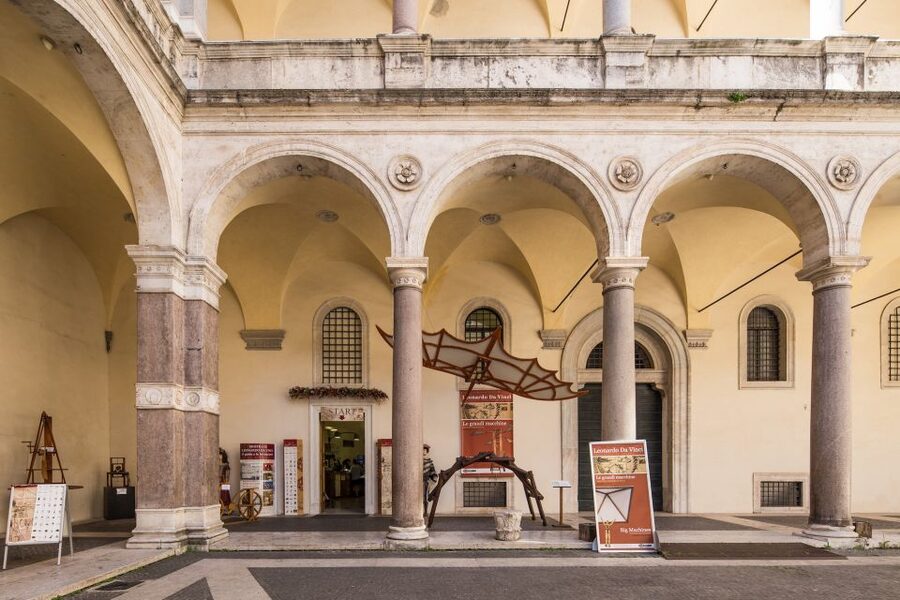
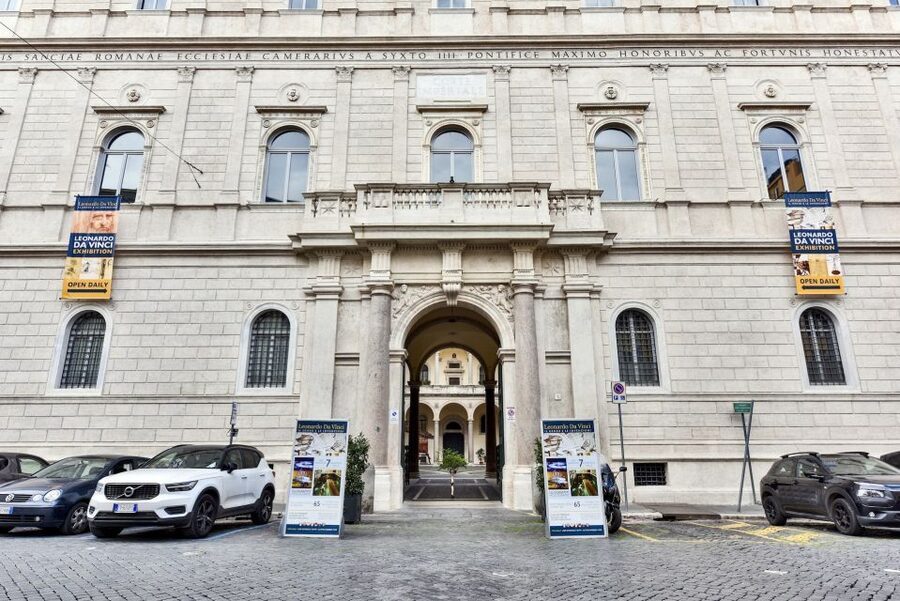
This exhibition takes place at La Mostra Leonardo da Vinci, at Piazza della Cancelleria 1, near Campo dei Fiori and Piazza Navona. That location matters because it slots neatly into a classic Rome walk. You can make it part of a day that already includes wandering between lively plazas and shaded side streets.
The Palazzo della Cancelleria also brings a special extra layer. The building is owned by the Vatican, and it is a point of interest for its architecture. On the upper floor, you’ll find the Sacra Rota, the church court tied to marriage cases, and on-site you can also find a tomb dating to 43 BC. That tomb, linked to architect Auro Irzio, sits immersed in an underground natural pond, which adds a surreal, quietly dramatic feel to the place.
If you like context, you’ll appreciate that the exhibit is not just a standalone showroom. It sits in a living, complex historic setting, so your visit feels more anchored than a random museum stop.
More Museums in Rome
- Vatican Museums, Sistine Chapel & St Peter’s Basilica Guided Tour
★ 4.5 · 39,149 reviews - Rome: Vatican Museums, Sistine Chapel & Basilica Tour
★ 4.3 · 13,872 reviews - Vatican Museums & Sistine Chapel Skip-the-Line Entry Ticket
★ 4.4 · 13,838 reviews
Ticket value at about $10: what your money buys
At about $10 per person, this is priced like an add-on you can feel good about, not a big budget splurge. It’s also good value because your ticket covers the exhibition entrance fee, and you receive a gadget.
You should go in expecting self-paced exploration. A guide is not included, so you rely on the gadget and the exhibit design to explain what you’re seeing. The good news is that people consistently highlight how clear and well staged the information is, so you are not left guessing.
Also, there are perks that make logistics easier. You can skip the ticket line, entrance is available until 1 hour before closing time, and the exhibition is wheelchair accessible. Those details matter in busy Rome, because time and energy are usually the real constraints, not your interest level.
A 4-part route through engineering themes: Water, Air, Fire, Earth
The exhibition experience is organized into four sections, built around Leonardo’s engineering mindset. You move through themes that connect to how he studied the natural world and applied those observations to practical inventions.
Water: this is where you’ll see how he thought about flow, systems, and movement. Expect machines and studies connected to water behavior, plus interactive elements that help you understand why his designs were more than sketches.
Air: this section leans into lighter-than-air thinking and flight-related ideas. Even if you are not a “history person,” this part tends to click because aviation concepts are naturally visual and hands-on.
Fire: here the focus shifts to heat, energy, and mechanics linked to tools and war-era engineering. It’s one of the more intense areas conceptually, but it also tends to be memorable because it shows how Leonardo considered power and control.
Earth: this is where earth and ground connect back to building, structures, and practical engineering. If you like architecture and structures, this part often feels the most satisfying because it ties his designs to real material thinking.
The exhibit also uses drawings as a backbone. Seven interactive installations with Leonardo’s sketches help you connect the lines on paper to what those lines could become as a working object.
Full-size machines and the joy of hands-on testing
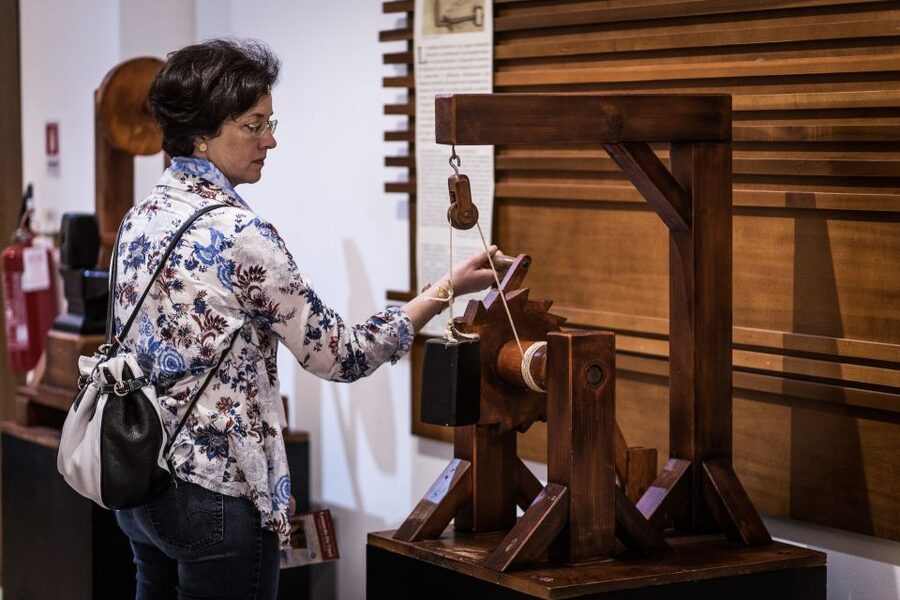
The headline for this exhibition is bold: you get to see over 65 full-scale machines made according to Leonardo’s designs. That’s a lot, and it’s the reason the place feels fun rather than purely academic. You are not just looking at models. You are getting that rare museum feeling where you can test ideas.
A few types of machines tend to be the crowd magnets. Tank models and scientific instruments come up repeatedly as favorites, and the flying machine displays are also a common “stop and stare” moment. You’ll also see musical instruments included in the mix, which is a nice reminder that Leonardo was not limited to engineering alone.
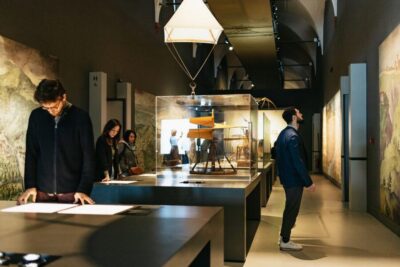
One of the best parts, if you enjoy tinkering, is the chance to touch and play with almost all the machines. Many people also liked the hologram-assisted explanations for how these devices are supposed to work in practice, not just how they look.
Practical tip: pace yourself. If you run through every display too quickly, you miss the point of a hands-on show. Spend a little extra time on the stations that let you interact, then skim the rest. That approach gives you both understanding and variety.
More of Leonardo's Milan:
- Milan: Da Vinci’s Last Supper Guided Tour
★ 4.7 · 10,143 reviews - Milan: Science and Technology Leonardo da Vinci Museum Entry
★ 4.5 · 7,169 reviews - Milan: Guided Walking Tour & Last Supper Visit with Ticket
★ 4.7 · 5,409 reviews - Milan’s Must See: Half-Day Tour of Last Supper, Duomo & La Scala
★ 4.0 · 4,193 reviews
The holograms: nine 3D moments that turn sketches into a story
The exhibit features nine holograms showing Da Vinci’s paintings and inventions in 3D. This is positioned as the only holograms in the world of the artist and inventor, so it’s clearly meant to be a signature element.
What you’ll likely enjoy most about the holograms is how they reduce the gap between “interesting idea” and “understandable mechanism.” A lot of museum engineering is static. Here, the hologram style helps you see what parts do, how the motion is meant to work, and how Leonardo’s artistic eye and engineering logic overlap.
If you like modern ways of explaining old ideas, this is the spot. It is also a good way to keep kids interested without dumbing anything down.
The underground pond and the 43 BC tomb detail
One of the most unusual aspects connected to this venue is the tomb immersed in an underground natural pond, dating to 43 BC. Even if the exhibition itself is the main event, this site detail is a big part of why the visit feels different from a typical ticketed museum.
That underwater setting creates a visual contrast. You’re surrounded by the inventions and engineering themes, but the building’s ancient feature grounds the experience in time. It’s also a practical bonus because underground sections can feel like a break from Rome heat.
In other words, even when you’re focused on Da Vinci, the location keeps doing work for you. It helps the visit feel like a story, not just a checklist of models.
Gadget and audio option: how to get more from the exhibit without a guide
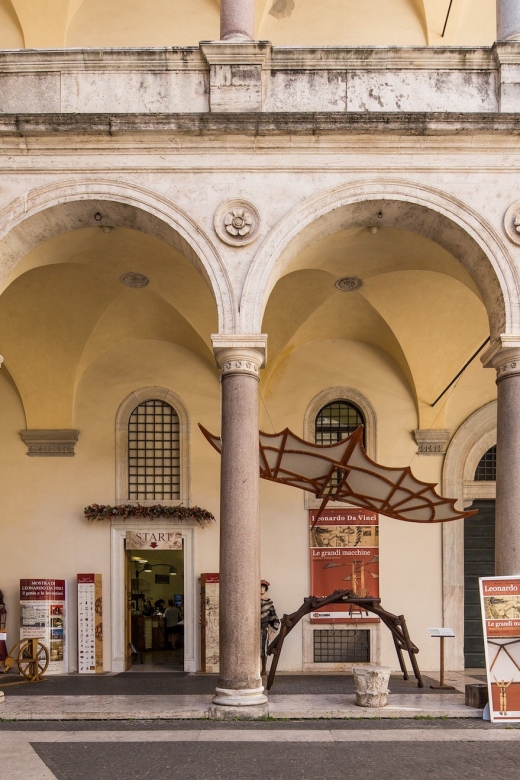
Your ticket includes an in-exhibit gadget, and that helps you explore without needing a staff member to walk you through every step. Still, no matter what gadget you use, you should plan to read signs and follow the exhibit’s flow rather than skipping ahead.
Many visitors strongly recommend adding an audio option using headphones, since it provides excellent explanations and ties the information together in a way that matches the machines and drawings. One useful note: audio content may not always match the exact order of rooms, so treat it like a companion, not a strict room-by-room script.
If you want the best experience with the least stress, here’s a simple approach:
- Start with the gadget and follow the exhibit rooms.
- Use the audio for the stations that interest you most.
- Don’t worry if the audio order feels slightly different from the room numbering, because the exhibit is still designed to make sense.
How long it takes, and how to pace it for your day
This is not a “half-day in a cathedral” type of exhibit. Most people report a visit around 45 to 60 minutes, though some linger closer to 2 hours based on how long they spend with interactive stations.
That flexibility is useful in Rome. It means you can fit it between bigger sights, or you can use it as a cool indoor reset on a hot day. It also means you should arrive with a plan to enjoy the hands-on elements rather than trying to see everything at a sprint.
If you have kids, keep expectations realistic. The mix of interactive areas and areas marked for touch limits can make the route a bit tricky if you are trying to keep tiny hands safe. One family-friendly upside is that many interactive exhibits tend to hold attention longer than passive displays.
Staff, layout, and the few friction points to know
People consistently describe the staff as friendly and welcoming, which matters a lot in a self-paced experience. A good desk team makes it easier to get your bearings fast, especially when you have to choose where to focus first.
The exhibit is thoughtfully staged, and it’s not overwhelming in size. That said, there are two common friction points to be aware of.
First, directions can be confusing for some visitors because the room flow may not feel perfectly intuitive. If that happens, don’t panic. Take a moment to check the room numbers or overall layout, then restart your pace.
Second, the show includes trip hazards or clear touch boundaries in some spots. If you wear slippery shoes, slow down on any transitions near interactive areas.
Finally, one small caution: a few models may be in less than perfect condition in places. Overall, it still functions as a strong learning experience, but don’t expect every machine to look brand-new.
Is it worth it for families, engineering fans, and first-time Da Vinci visitors
This exhibition works for a few different traveler types.
Families: it’s a strong pick when you want kids to do something, not just look. The interactive models and holograms give you built-in “what happens if” moments. It can also be a quiet, air-conditioned respite.
Engineering and transport fans: the focus on science, aviation, and mechanical thinking makes this especially rewarding. You’ll recognize modern themes in Leonardo’s concepts and see how ideas about movement and structure were already there centuries ago.
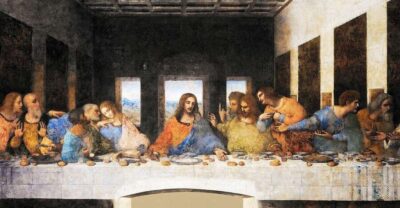
Art lovers: don’t dismiss it as engineering-only. The holograms include Da Vinci paintings, and there’s also mention of a copy of The Last Supper within the exhibit. That blend helps the show appeal even if you came for the artist, not the mechanics.
If you are the type who loves to read every label, you’ll get a lot out of the drawings-based installations too.
Where to fit it in Rome near Campo de’ Fiori and Piazza Navona
Because the entrance is at Piazza della Cancelleria 1, it pairs well with a Rome day that already includes Campo dei Fiori and Piazza Navona. You can walk between them, stop for coffee, then cool down indoors here.
Also, because entry is available until 1 hour before closing, it helps to build in buffer time. Rome days run long, and this ticket gives you a real window without making you rush like you would with some timed-entry attractions.
If you want a smoother experience, consider visiting earlier in the day or in the later afternoon rather than during the peak midday crush.
Should you book the Leonardo da Vinci Exhibition Entrance Ticket?
I think you should book if you want a low-cost, high-interaction Leonardo experience in central Rome. The full-scale machines, touch-friendly setup, and nine holograms make it feel like you’re watching ideas get built, not just reading about them. Add in the cool underground spaces and the welcoming staff, and it becomes a great value choice.
Skip it or adjust expectations if you need a long, slow museum day or if you dislike hands-on exhibits with touch boundaries and occasional navigation confusion. Also, if you are only interested in paintings and not engineering, you may need to focus your time on the hologram segments and drawing stations.
Best use case: pair this with your Roman walking day, plan for about 45 to 90 minutes, and spend extra time on the stations that let you try something.
FAQ
Where is the Leonardo da Vinci exhibition entrance in Rome?
The meeting point is at La Mostra Leonardo da Vinci, Piazza della Cancelleria 1, near Campo dei Fiori and Piazza Navona.
How long does the visit usually take?
The activity is listed as 1 day, but many visitors report it is a fairly short museum-style visit, often around 45 to 60 minutes, with some taking closer to 2 hours.
How much is the ticket, and what is included?
The price is about $10 per person. Your ticket includes the exhibition entrance fee, and you receive a gadget.
Is a guide included with the ticket?
No. A guide is not included with the ticket.
Can I skip the ticket line?
Yes. The ticket includes skip-the-ticket-line entry.
Until when can I enter?
Entrance is available until 1 hour before closing time.
Is the exhibition wheelchair accessible?
Yes. The exhibition is wheelchair accessible.
Are free cancellation and pay-later options available?
Yes. You can cancel up to 24 hours in advance for a full refund, and you can reserve now and pay later.
Reviewed lately around Rome
- Colosseum, Palatine Hill and Roman Forum with Guided Tour★ 5.0 · 500 reviews
- Exclusive Golf Tour Private VIP with Local & Gelato o Wine★ 5.0 · 500 reviews
- Rome Trastevere Pasta Making Class with Eating Europe★ 5.0 · 505 reviews
- Rome by Night Walking Tour★ 4.5 · 506 reviews
- Rome: Colosseum Express Tour with Forum & Palatine Access★ 4.5 · 511 reviews
- Rome Food Experience Max 6 People Group Tour | w/Private Option★ 5.0 · 516 reviews
- Rome: Papal Audience Experience with Pope Leo XIV★ 4.8 · 518 reviews
- Rome: Escorted Papal Audience Experience with Entry Ticket★ 4.4 · 518 reviews
Last Supper & Da Vinci Tours, compared.
Science and Technology Leonardo da Vinci Museum Entry
Read our review →
Guided Walking Tour & Last Supper Visit with Ticket
Read our review →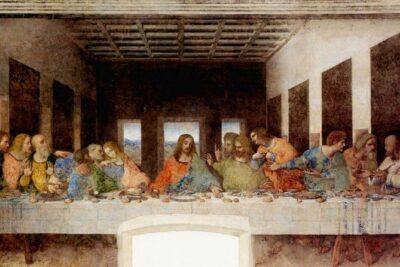
Milan’s Must See: Half-Day Tour of Last Supper, Duomo & La Scala
Read our review →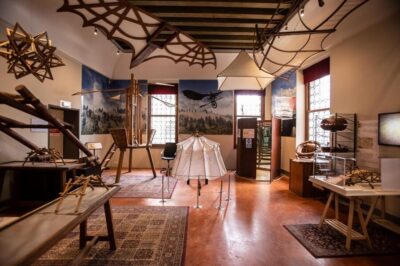

Milan Duomo & The Last Supper Skip-the-Line Small Group Tour
Read our review →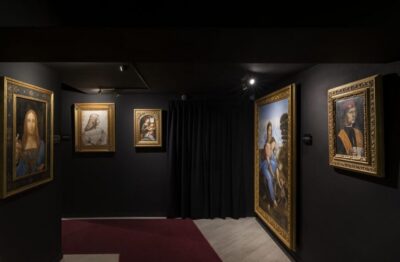
Browse the lists this tour appears in