
Reviewed · HISTORICAL TOURS
2 Hours Private Historical Tour in Genoa
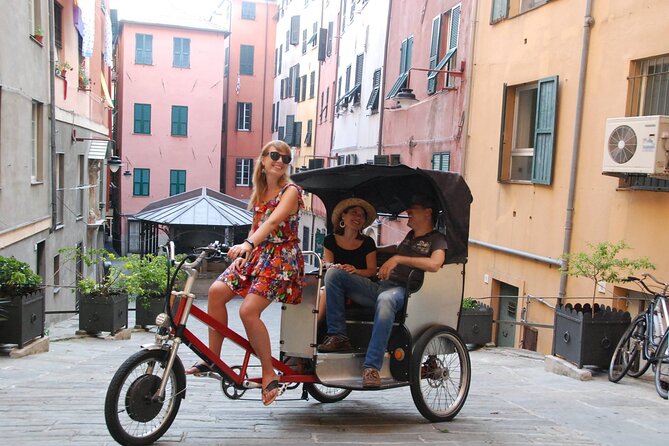
Genoa can feel like a puzzle, all steep lanes and sudden views. This private, short tour is interesting because you get a guided route through the tight historic center without having to fight traffic, maps, or parking. I like that it is truly private for your group, and I like the way the tour pairs quick stops with enough time to actually look up at churches, palaces, and squares.
One thing to consider: it depends on good weather, and it is still a street-level route in a real working city. If you go in very poor weather, the operator may switch dates or refund, and if you are unlucky you may run into minor vehicle issues like flats.
Key Things You’ll Notice on This Genoa Tour
- Private group, up to 2 people: you travel as your own unit, not with strangers.
- Central starting point at Galata Museo del Mare: easy to find, and it loops back to the same place.
- You do less walking, but you still see more: narrow streets become manageable when you ride and let the guide handle navigation.
- Stop design hits big Genoa themes: medieval origins, merchant wealth, and the harbor that shaped everything.
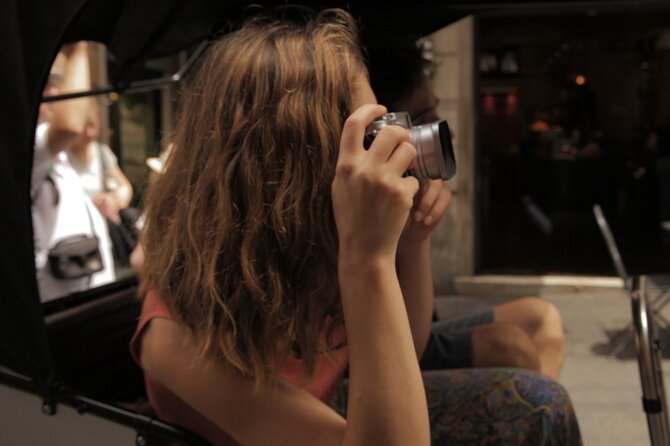
- Guides can be very hands-on and photo-friendly: frequent pauses for pictures and short explanations.
- Vehicles are convenient but mechanical: a few past issues caused delays, so build in a little buffer on port days.
Why This 2-Hour Private Historical Tour Works in Genoa’s Tight Streets
This tour is built for a city that refuses to be efficient. Genoa’s old center is all angles, steps, and sudden changes in slope. The whole point here is to keep you moving while still getting the story behind what you are seeing.
The big win is the setup. You start at Galata Museo del Mare near the waterfront, then you work your way through famous sights and lesser-seen corners without spending your time figuring out turns. Your driver-guide handles navigation and driving, so you can focus on the architecture and the street life.
Another plus is pacing. The itinerary is short, around two hours, so it is ideal when you have a cruise-port window or just want a strong first orientation. You will cover multiple areas, including the medieval core and the harbor zone, without turning the day into a full-on hike.
The last practical note is real-world terrain. Genoa has hills. Even with a vehicle, some routes can be tougher than they look on a flat map. A few previous outings included pushing, walking a section, or waiting briefly for a replacement vehicle after a mechanical hiccup.
More Historical Tours in Genoa:
- Genoa: 2-Hour Guided Walking Tour of the Historical Center
★ 4.2 · 605 reviews - Venice: St. Mark Basilica Ticket, Audioguide+History Gallery
★ 3.9 · 4,780 reviews - Venice’s Best: Basilica, Doge’s Palace, Gondola & History Gallery
★ 4.5 · 2,478 reviews
Meeting at Galata Museo del Mare: Getting Started Without Stress
You meet at Galata Museo del Mare, Calata Ansaldo De Mari 1, 16126 Genova GE, Italy. The tour ends back at the same meeting point, which is a gift on days when you want to keep your afternoon plans intact.
Pickup is offered. The guidance is simple: you find the driver in the square in front of the terminal exit. That matters because it reduces the usual travel anxiety of meeting someone in a sea of people. If you are arriving by cruise, this is a very workable location.
You will also have a mobile ticket, and confirmation happens at booking time unless you book close to departure. Service animals are allowed, and the tour is listed as suitable for most travelers.
If you are someone who likes a clean start, this is a good sign. You do not have to wander around the city before the tour begins.
Piazza Sarzano and Santi Cosma e Damiano: Medieval Genoa Starts Here
The route begins in the old nucleus area around Piazza Sarzano. This square sits in the zone often described as Genoa’s original core, linked to the ancient name Ianua. You get a quick look at the bell tower of Sant’ Agostino and a small temple nearby. The background detail that usually sticks is Ravecca street, which gives you a sense of how the city connects squares and narrow lanes.
Expect about 15 minutes here. This stop is short on purpose. It gives you a feel for medieval Genoa’s layout, then moves on before your attention fades.
Next is Chiesa Santi Cosma e Damiano. The church is presented as one of the beautiful medieval-center sights, but the idea is that the guide keeps part of the experience as a surprise. Expect to learn a few specific things about what makes this church worth your time rather than treating it like a checkbox.
There is about 5 minutes at this stop, free admission. In practice, these short church stops work best when your guide points out what to notice: materials, simple details, and why this building sits where it does in the historic center.
Via Garibaldi’s Golden Street: Palaces, Names, and Power
Then you hit Via Garibaldi, one of Genoa’s showpiece streets. Your time here is around 15 minutes, and this is the segment that usually makes the whole tour feel like a highlight reel.
The guide’s story connects architecture to identity. Via Garibaldi was originally called Strada Maggiore, then Strada Nuova, and later known until the 19th century as Via Aurea, the Golden Street. In 1882, it was renamed for Giuseppe Garibaldi. Those name changes matter because they track who held power and what Genoa wanted to project at different moments in time.
You are walking into a corridor of major palaces and impressive buildings. Even if you are not a deep-architecture person, this is an easy place to look up. The street is wide enough compared to Genoa’s usual narrow alleys, so you can actually take in the scale without craning your neck the entire time.
This stop is also a morale booster for first-time visitors. After the tight lanes, Via Garibaldi gives you a clear sense of the city’s wealth and ambition.
More Genoa bookings worth a look
- Lucca: 2-Hour City Center Walking Tour
★ 4.7 · 1,314 reviews - Milan Duomo and Rooftop 2-Hour Guided Tour
★ 4.6 · 1,076 reviews - Vatican Museums & Sistine Chapel Express 2-Hour Guided Tour
★ 4.5 · 1,037 reviews - Florence: 2-Hour Guided Sightseeing Bike Tour
★ 4.5 · 1,004 reviews
Casa di Colombo Near Porta Soprana: A Columbus Youth Stop, With Real Genoa Context
Next is La Casa di Colombo, the so-called Columbus’ House. The location is near the gate of Porta Soprana, just outside the medieval walls, and that setting is part of the story.
Important context you get here: the building you see is likely an 18th-century reconstruction of an earlier medieval structure. It is associated with the navigator spending his youth here, with written sources suggesting the years 1455 to 1470.
You also hear the harsh Genoa detail, that the original building was likely destroyed in 1684 bombing by the French fleet under King Louis XIV. That kind of context changes how you see a place. It stops being a tourist clue and becomes part of the city’s survival history.
The house has two levels. The ground floor is described as a workshop used by his father, Domenico Columbus, who dealt in wool weaving and trade. The family lived upstairs. Expect about 10 minutes, free admission.
This stop is especially good if you like history but hate museum fatigue. You are not stuck inside. You are learning while standing in place.
Piazza Banchi and the Dockside Market Past You Can Still Feel
From there, the tour heads to Piazza Banchi. It sits just off one of Genoa’s important docks, and the location matters.
This square was once the site of the old grain market. In the 12th century, it was known as piazza dei banchi because money-changers worked in stalls under the porticoes of surrounding buildings. In other words, this is where trade and finance met the everyday food supply.
You get around 15 minutes here. This stop is short, but it helps you connect the dots between Genoa’s money and its geography. When you understand that the harbor was not just a pretty edge, the Old Port later on hits harder.
A practical bonus: the dock area makes it easy to orient yourself. Even if you do not remember every detail, you will remember where you are in relation to the water.
San Lorenzo Area, Legends, and Giardini Luzzati: Places Where Stories Live in Stone
One of the core spiritual and historic anchors is the area around Cattedrale di San Lorenzo, Genoa’s most important church. This portion runs about 15 minutes and is introduced through the idea that the cathedral and its artistic representations sparked legends and curiosities.
There is also a city-shaping point: after relocation of the cathedral and construction of walls, the San Lorenzo area became the heart of the city. Genoa is described as a city without many squares, and the parvis of San Lorenzo functioned as a social and political stage in the Middle Ages.
So even if you do not go inside, this stop teaches you how public life worked in the medieval center.
After that, you visit Giardini Luzzati. The timing is about 10 minutes, free admission. The guiding style here is similar to the church stop earlier, the place is treated as a treat rather than a lecture. If you like “show me” tourism more than “tell me” tourism, you’ll probably like this segment.
Giardini Luzzati is one of those spots where the city feels less like a sequence of landmarks and more like a lived-in neighborhood. That makes it a nice change of pace before you reach the grand square and palace zone.
Piazza De Ferrari, Palazzo San Giorgio, and the Merchant-Square Energy
Now you move into one of Genoa’s best-known open spaces: Piazza Raffaele De Ferrari, the main square. This is dedicated to Raffaele De Ferrari, Duke of Galliera, who donated a large sum in 1875 toward projects to expand the port. That is a big message. In Genoa, money and infrastructure are never far apart from art and public architecture.
At the center is a monumental bronze fountain created by architect Cesare Crosa of Vergagni in 1936. You also see important buildings around it, including Teatro Carlo Felice and the Accademia Ligustica di Belle Arti designed by Carlo Barabino.
The square is bordered by:
- Palazzo Ducale (with its main entrance on Piazza Matteotti)
- Palazzo della Regione Liguria (offices built in 1920)
- Palazzo della Nuova Borsa, a fine example of Art Nouveau from 1912
The stop is about 10 minutes, free admission. This is a “reset” point. After winding medieval lanes, you get a clear view of how the city formalized itself around public grandeur.
Then you see Palazzo di San Giorgio. This is another quick 10-minute stop, free admission, and it works as a bridge between the square’s presentation and the merchant power that shaped Genoa’s rise.
Finishing at the Old Port: Renzo Piano’s Waterfront and Your Next Move
The last stop is the Old Port area, around 15 minutes. This is where Genoa shifts from medieval core to modern energy.
You learn about the waterfront plaza designed by famous Genoese architect Renzo Piano. This area is set up for both tourists and locals, with room for events and recreation. You also get panoramic views of the city and harbor, plus access to major attractions nearby.
This is a smart ending. It gives you a natural place to pause and decide what to do next, whether you want a slower walk, a coffee stop, or a harbor-side photo session.
If you are on a cruise day, this finish point can also simplify logistics, since you return to the same meeting area at Galata Museo del Mare.
Price and Value: Paying $114.93 for Two, Not for an Entire Crowd
The price is $114.93 per group, up to 2 people, for an experience of about 2 hours. That is not cheap compared with free city wandering. But it can be excellent value depending on your goal.
Here’s the value equation I use:
- If you want a guided orientation and less stress on a short day, you are buying time and direction.
- If you prefer sitting and looking rather than pushing through steep lanes, the ride turns effort into sightseeing.
- If you are traveling as a couple, the per-group pricing can feel fair, especially when you compare it to the cost of private guiding on foot.
A key point: the tour is often booked around 43 days in advance on average. That hints that prime time slots can go fast, especially in busy seasons and on cruise arrivals. Booking ahead usually protects your preferred day and time.
You also get free admission at each stop on the itinerary as presented, which keeps spending under control once you are there.
Choosing the Right Fit: Who This Tour Suits Best
This is a great match if you are:
- visiting Genoa for the first time and want to get your bearings fast
- on a cruise and need a compact plan
- traveling with someone who prefers not to walk every cobblestone stretch
- the type who likes short, clear history told on the move
It is also a strong choice for people who feel overwhelmed in Genoa. The city’s complexity is real. This kind of guided route gives your brain a scaffold, so you can enjoy later wandering with more confidence.
One more practical note from real-world experience with this style of tour: dress for wind. You may be outdoors and exposed to breezes, so hat and sunscreen can be wise. Rain can happen. One past outing still worked in rainy conditions, but the operator states the experience requires good weather, and they may offer another date or a full refund if canceled due to poor weather.
Should You Book This Tour? My Practical Take
I would book this if you want a confident Genoa intro in two hours, with a route that links medieval lanes to the harbor in a sensible order. The itinerary touches major themes without dragging you from one museum line to the next.
I would think twice if your day is very time-critical with zero buffer, because a small number of outings experienced mechanical delays like a flat tire or rickshaw issues. The guide response in those cases seemed to be handled quickly when replacement vehicles were available, but it can still eat time.
Also, book it earlier in your trip if you can. Getting a route and context first makes your later self-guided wandering better. Genoa rewards repeat looking. This tour sets you up for that.
If you do book, go in ready to look up, not just forward. Your best photos tend to come from the moments where the guide stops you, points something out, and gives you those few minutes to frame the square, church, or palace correctly.
FAQ
Is this tour private?
Yes. It is a private tour, so only your group participates.
How long is the Genoa private historical tour?
It runs for about 2 hours.
Where do we meet in Genoa?
You meet at Galata Museo del Mare, Calata Ansaldo De Mari 1, 16126 Genova GE, Italy. The tour ends back at the same meeting point.
Is pickup available?
Pickup is offered. You will find the driver in the square in front of the terminal exit.
What language is the tour offered in?
The tour is offered in English.
What is the price?
The price is $114.93 per group, up to 2 people.
What if weather is bad?
The experience requires good weather. If it is canceled due to poor weather, you will be offered a different date or a full refund.
Reviewed lately around Genoa
- Genoa: Aquarium of Genoa & City of Children and Youth Ticket★ 4.5 · 258 reviews
- Genoa: Aquarium & Christopher Columbus’ House Entry Tickets★ 4.4 · 258 reviews
- City Sightseeing Genoa Hop-On Hop-Off Bus Tour★ 3.0 · 259 reviews
- Genova: Segway Tour★ 4.9 · 275 reviews
- Genoa: The City of Children and Young Museum Entry Ticket★ 4.1 · 303 reviews
- Homemade Pasta and Pesto Class with a Local Chef in Genoa★ 5.0 · 305 reviews
- Genoa: Aquarium and FantaCinema Combined Ticket★ 4.6 · 314 reviews
- Taste Genoa: A Full Meal Walking Food Tour by Do Eat Better★ 5.0 · 509 reviews
Historical Tours, compared.
St. Mark Basilica Ticket, Audioguide+History Gallery
Read our review →
Venice’s Best: Basilica, Doge’s Palace, Gondola & History Gallery
Read our review →
Historic Milan Tour with Skip-the-Line Last Supper Ticket
Read our review →
Rome in a Day Tour with Vatican, Colosseum and Historic Center
Read our review →
Rome Food Tour in the Historic Centre with 8+ Food Tastings
Read our review →Browse the lists this tour appears in