Reviewed · TICKETS
Rome: Palazzo Barberini Galleria Corsini Ticket & Audioguide
This ticket combo is interesting because it bundles two standout collections into one day trip across two palaces, Palazzo Barberini and Palazzo Corsini. You get the art, the architecture, and the joy of moving at your own pace between rooms.
I like that you can focus on major works by Bernini and Caravaggio without being rushed. I also like the digital app audioguide, which lets you choose what to learn and when, instead of getting stuck on a fixed tour script.
One drawback to keep in mind: sometimes parts of the experience can be affected by special events, so expect the occasional room closure. Also, the ticket is non-refundable, so lock in your plan only when you feel confident.
Key highlights at a glance
- Two palaces, two collections in one visit, starting at Palazzo Barberini and continuing to Palazzo Corsini
- Bernini and Caravaggio among the most famous artists represented
- Self-paced access to both galleries with entrance tickets
- Digital app audioguide so you can go deeper when you want
- Skip the ticket line by exchanging your smartphone voucher at the ticket office
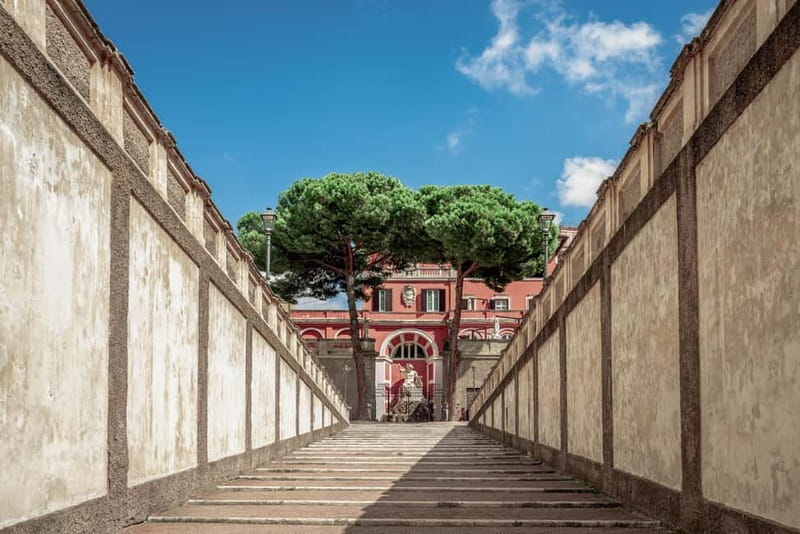
- Late-Baroque palace design at Palazzo Corsini, built for the Corsini family (1730 to 1740)
Two galleries in two palazzos, why this pairing works
This is the kind of Rome ticket that makes sense for independent travelers. Instead of choosing just one museum, you get a two-stop art run where each building has a strong personality.
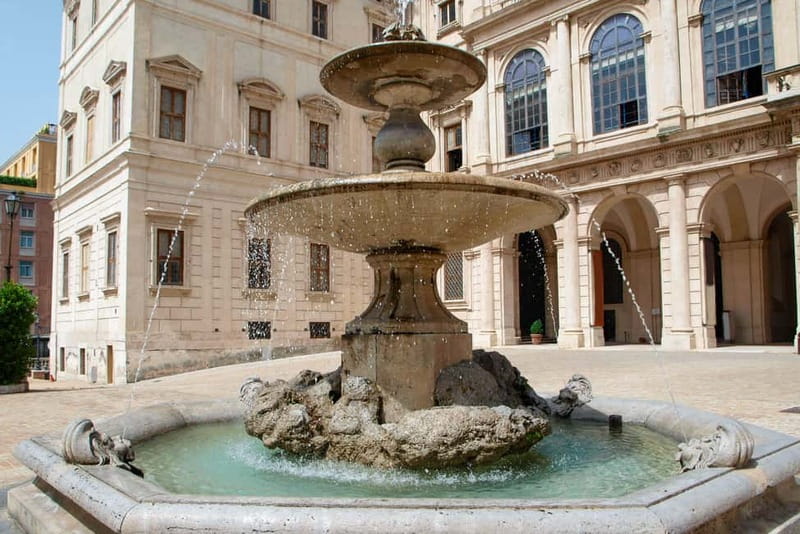
Palazzo Barberini is the place to appreciate a palace that ties directly to Pope Urban VIII and the Barberini family. That gives the gallery a sense of purpose beyond the paintings on the walls. Then you shift to the Corsini side, where the vibe turns late-Baroque, with the Corsini family’s palace built between 1730 and 1740 and designed based on plans by Ferdinando Fuga. The contrast is a big part of the value.
If you love art history, you also get a practical advantage. You’re seeing different eras and different styles in the same general neighborhood area, which makes it easier to plan a smooth day without complicated routing. And because this is a ticket for one visit rather than a rigid group schedule, you can spend more time where you actually care.
More from a Rome stay:
- Colosseum, Roman Forum & Palatine Guided Tour
★ 4.7 · 63,148 reviews - Vatican Museums, Sistine Chapel & St Peter’s Basilica Guided Tour
★ 4.5 · 39,149 reviews - Rome: Colosseum, Palatine Hill and Roman Forum Guided Tour
★ 4.8 · 32,814 reviews
Where you start: exchanging your voucher at Palazzo Barberini
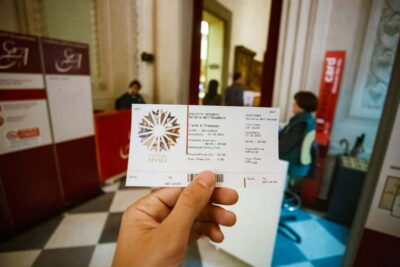
Your day starts with a simple step: exchange your smartphone voucher at the Palazzo Barberini ticket office to get an official entry ticket. The experience description also notes skip the ticket line, so that swap should be faster than waiting for standard entry tickets.
Your start and end are tied to the same meeting point setup. In other words, you begin at Palazzo Barberini, and the experience finishes back at the meeting point.
This matters because you can plan your day without worrying about a complicated end location. You can also build a little buffer for things like getting your bearings, finding the right entrance, and taking a quick pause before you go inside.
Validity works like this: you have one day to use your visit, and the guidance says to check availability to see starting times. It also states that the tickets are valid for 20 days after purchase, which is useful if your exact day in Rome might shift a bit.
Palazzo Barberini: Urban VIII’s palace and Carlo Maderno’s architecture
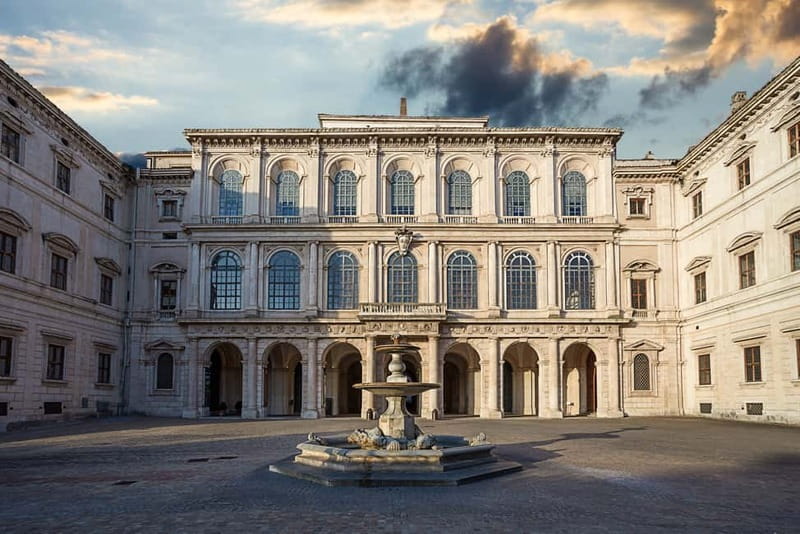
When you walk into Palazzo Barberini, you’re not just entering a museum. You’re stepping into a palace with a paper trail through Roman power and Renaissance-era planning.
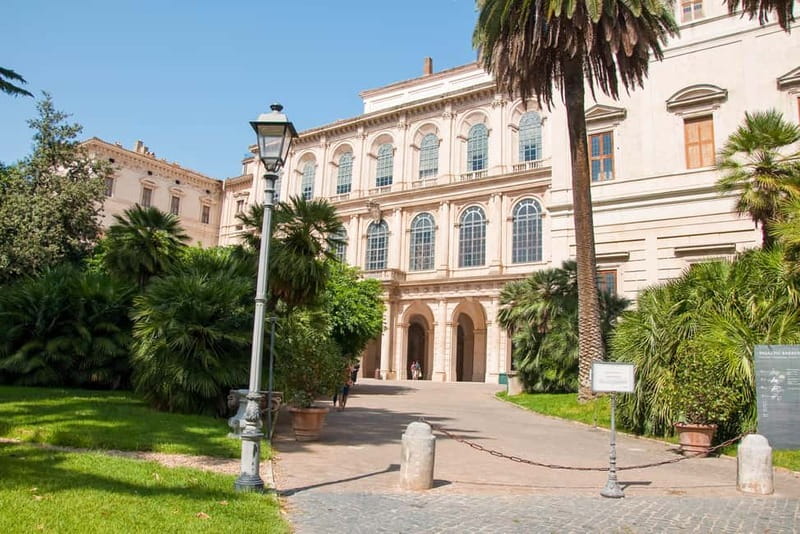
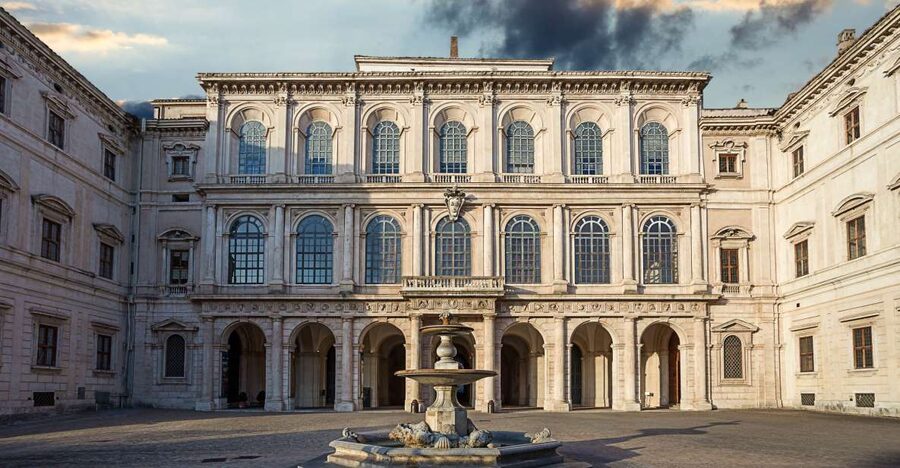
The building connects to Pope Urban VIII, a member of the Barberini family, and the gallery is housed in a structure that traces back to the 16th century. It’s also described as being designed by architect Carlo Maderno on the old location of Villa Sforza. That layering of sites is one reason this stop feels more grounded than a generic “collection in a building.”
As you move through the museum, pay attention to the building itself, not only the artworks. This is the sort of place where the room layout and architecture help you understand why these collections feel curated as part of a home-like setting. You’re meant to wander, not race.
The Barberini Gallery: artists you’ll recognize, themes you can follow
The Barberini Gallery is where the art list starts to feel like a greatest-hits menu for people who like Italian painting and European masterworks. You’ll find works by Bernini and Caravaggio, along with artists such as van Dyck, Holbein, Beato Angelico, and Lippi.
The collection continues with names like Lotto, Preti, Poussin, El Greco, Raffaello, Tiepolo, Tintoretto, Rubens, Murillo, Ribera, and Tiziano. That spread tells you a lot about what you’re walking into. This is not one narrow style. It’s a broad panorama of European art that ranges across different periods and approaches.
Here’s how I’d use that to your advantage. Don’t try to read every label. Instead, pick a method:
- If you want drama and storytelling, follow Caravaggio-leaning energy and Baroque intensity where it shows up.
- If you want composition and classical elegance, spend time with pieces tied to Raphael and artists nearby in spirit.
- If you’re a “learn as you go” person, let the audioguide steer you toward key works you might otherwise miss.
Because the ticket is self-paced and the digital audioguide is part of the deal, you can give yourself permission to pause. Rome rewards slow watching, and this is a good place to do it.
More Rome bookings worth a look
- Rome: Pantheon Fast-Track Ticket and Official Audio Guide
★ 4.3 · 21,008 reviews - Rome:Hop-On Hop-Off Panoramic Open Bus Ticket 3 Circuits x 1
★ 4.0 · 15,405 reviews - Vatican Museums & Sistine Chapel Skip-the-Line Entry Ticket
★ 4.4 · 13,838 reviews - Vatican Museums & Sistine Chapel Skip-the-Ticket-Line Tour
★ 4.3 · 10,486 reviews
Corsini Gallery at Palazzo Corsini: late-Baroque elegance
After you’ve spent time with Palazzo Barberini, Corsini is the atmosphere shift. Palazzo Corsini is described as a late-Baroque palace erected for the Corsini family between 1730 and 1740, with design based on plans by Ferdinando Fuga.
That matters because late-Baroque Rome tends to feel theatrical. Even without naming specific decorative elements you can’t see from the outside, the palace style often changes the way you experience art. The building can make painting feel like it has more air around it, more room to breathe, and more sense of performance.
The Corsini Gallery ticket gives you entry into the palace’s collection spaces, letting you explore in the same independent way as the first site. You get to choose your pace again, and that’s a big deal if you’re the kind of visitor who needs time to stand, look, read, and then stand again.
Using the digital app audioguide the smart way
This experience includes a digital app audioguide, and you’re told to download the app for more content during your visit. That’s useful because it turns the galleries into an information tool instead of just wall-to-wall visuals.
My practical tip: don’t use the audioguide for everything. Use it like seasoning.
- Turn it on for the works you feel drawn to, especially when you see the big names like Bernini and Caravaggio mentioned in the collection.
- Switch it off when you’re just enjoying the room and want quiet looking.
- If you find yourself moving too quickly, use the app to slow down, not to speed up.
Also, because the day is structured as separate entrances to two galleries, you can treat the audioguide like a bridge between them. For example, you can use it in Barberini to understand the palace context and the artists represented, then use it in Corsini to understand the late-Baroque palace design connection.
You end up learning more with less pressure, and that makes the visit feel personal instead of robotic.
A realistic plan for a one-day, two-gallery visit
You have one day validity, and you can check available starting times. Plan for a day where you’re not trying to do everything at a museum-speed sprint.
Here’s a workable approach that doesn’t rely on guessing exact time limits:
- Start with Barberini and pick a small set of “must-see” artists or works to anchor your route.
- Give yourself time for the building itself. In palaces, the rooms can change the mood.
- Transition to Corsini and let the late-Baroque palace setting reset your attention.
- Return to whatever grabbed you most. Both galleries are the kind where your second look often improves your first impression.
One more practical note. The experience guide implies that some areas can be unavailable at times due to special circumstances. So build a little flexibility into your expectations. If you find a room closed, don’t panic. Just shift focus to what’s open and let the audioguide help you find a new highlight.
Price and value: what about $19 really covers
The price is listed as $19 per person. What makes that feel reasonable is that it’s not just an entry ticket to one museum. It covers entrance to both Galleria Barberini and Galleria Corsini, and it includes the digital app audioguide.
That’s the value story: you’re paying once for a connected visit, and you’re not stuck with only one building or one collection focus.
There’s also a small “fit” point. This experience is a self-guided setup. It does not include a guided tour. If you want a person leading the narrative and answering questions in real time, you may want to add a separate tour option. But if you like to roam and use audio notes when you choose, this ticket matches that style well.
Who should book this ticket combo
This combo is a strong fit if:
- You want major art names like Bernini and Caravaggio on your list, plus a broad mix of other European artists.
- You prefer self-paced museum time and don’t want to be tied to a group schedule.
- You like architecture as much as paintings, since both visits are palazzo-based.
- You’re comfortable using a digital audioguide and downloading an app before you go.
It may be less ideal if:
- You strongly prefer a live guide to explain everything end-to-end.
- You’re the type of visitor who needs perfectly predictable room access every minute of your day, because there can be closures tied to special situations.
Good news: the ticket is wheelchair accessible, which makes it easier for visitors with mobility needs to plan confidently.
Final call: should you book Palazzo Barberini and Corsini tickets?
I’d book this if you want a straightforward, high-value art day with two palace settings, and if you like the idea of being in charge of your own pace. The combination works especially well for people who want big-name highlights, plus enough depth from the audioguide to feel you got more out of it than just photos.
Choose a slot you can commit to, download the audioguide app ahead of time, and give yourself permission to wander. This is the kind of Rome visit where the building and the paintings both do the talking, and your job is simply to slow down enough to hear it.
If you tell me what day you’re going and what you most care about, I can suggest a simple order and focus plan for Barberini vs Corsini.
FAQ
What’s included in the Palazzo Barberini and Corsini Gallery ticket?
You get entrance tickets to Galleria Corsini and Galleria Barberini, plus access to a digital app audioguide.
Do I need a guided tour?
No. This experience includes entrance and a digital audioguide, but it does not include a guided tour.
Where do I exchange my smartphone voucher?
You exchange your smartphone voucher at the Palazzo Barberini ticket office to receive the official entry ticket.
How long is the experience valid?
It’s listed as valid for 1 day, and you should check availability to see starting times.
Is the visit self-paced?
Yes. The ticket lets you explore each attraction at your own pace with your entrance tickets.
Is there an audioguide?
Yes. You can download the app audioguide to access more content during your visit.
Does this ticket help you skip lines?
Yes, it includes skip the ticket line instructions for exchanging your voucher at the ticket office.
What’s the price?
The price is listed at $19 per person.
What accessibility information is provided?
The experience is wheelchair accessible.
Is there a cancellation option?
The experience is listed as non-refundable.
Reviewed lately around Rome
- Rome: Private Customizable 3-Hour Golf Cart City Tour★ 5.0 · 229 reviews
- Papal Audience Experience with Pope Leo XIV★ 4.5 · 230 reviews
- The Three Tenors in Rome – Nessun Dorma★ 4.5 · 231 reviews
- Discover Rome in a Day – Private Driver Tour★ 5.0 · 231 reviews
- Rome: Colosseum, Roman Forum & Palatine Hill Group Tour★ 4.7 · 232 reviews
- Rome Airport Transfer – Private Luxury Service with Driver★ 4.5 · 231 reviews
- Fast track: Vatican Museums, Sistine Chapel Guided and St. Peter’s Basilica Tour★ 4.5 · 232 reviews
- Moonlight Rome: Night Walking Tour of Roman Highlights★ 5.0 · 232 reviews
Tickets, compared.
Vatican: Museums & Sistine Chapel Entrance Ticket
Read our review →
Cathedral and Duomo’s Terraces Entrance Ticket
Read our review →
Skip-The-Line Uffizi Gallery Timed Entry Ticket
Read our review →
Naples Underground Entry Ticket and Guided Tour
Read our review →
Pantheon Fast-Track Ticket and Official Audio Guide
Read our review →
Pompeii: Entry Ticket and Guided Tour with an Archaeologist
Read our review →