Reviewed · TICKETS
Ravenna: UNESCO Mosaics Entry Tickets
Ravenna’s UNESCO mosaics ticket is interesting because it lets you see multiple 5th and 6th-century masterpieces with one plan. You get access to San Vitale Basilica, Sant Apollinare Nuovo, and the Archiepiscopal Museum with St. Andrew’s Chapel, plus optional add-ons for Galla Placidia’s mausoleum and the Neonian Baptistery.
I really like the sheer craft on display, from thousands of tiny tiles in San Vitale to the story-driven mosaics in St. Andrew’s Chapel. I also like the practical way this ticket supports an easy Ravenna walking day. One drawback to consider, though, is that there is no guided visit included, so your experience depends on how closely you read the onsite explanations.
Key things to know before you book
- One ticket, multiple UNESCO stops across Ravenna, with the option to add up to 5 monuments
- San Vitale’s octagonal design and mosaics linking Old Testament scenes to Justinian and Theodora
- Sant Apollinare Nuovo’s mosaic story of Byzantine art, including the Pope Gregory blackening detail
- St. Andrew’s Chapel inside the Archiepiscopal Museum shows the early Byzantine religious divide through mosaics
- Extra value add-ons for Galla Placidia and the Neonian Baptistery if you select the 5-monument option
- Bookshop bonus with a 20% discount at the sites
Ravenna UNESCO mosaics, in real time
Ravenna is not the kind of city where you run from one big landmark to another. It’s slower and more visual. With this combo ticket, you can spend your time looking hard at mosaics, architecture, and the messages those images were meant to carry.
The best part is how the sites connect. Even when you visit on different days within the 7-day validity window, the themes stay consistent. You’ll see how Byzantine-era faith, politics, and art show up in the same stone and tile language.
You should also know that this is mostly self-guided. That’s not a problem if you like reading labels and taking your time, but if you want someone to interpret every scene out loud, you may wish you booked a guided add-on separately.
More Ravenna bookings worth a look
- Vatican: Museums & Sistine Chapel Entrance Ticket
★ 4.5 · 144,003 reviews - Milan: Cathedral and Duomo’s Terraces Entrance Ticket
★ 4.6 · 61,054 reviews
Your 7-day game plan: which stops to choose
Your ticket is valid for 7 days, and it’s one visit per monument. That flexibility matters in Ravenna because museum timing and how long you want in each church can vary day to day.
If you choose the standard version, your must-see core is:
- San Vitale
- Sant Apollinare Nuovo
- Archiepiscopal Museum plus St. Andrew’s Chapel (with the chapel visit included inside)
If you select the option for 5 monuments, you add:
- Mausoleo di Galla Placidia
- Battistero Neoniano
A smart approach is to group the sites by walking rhythm. You’ll likely do San Vitale and the nearby Galla Placidia stop on one outing, then spend another outing on Sant Apollinare Nuovo and finish at the Archiepiscopal Museum area.
San Vitale Basilica: the octagon that explains two worlds
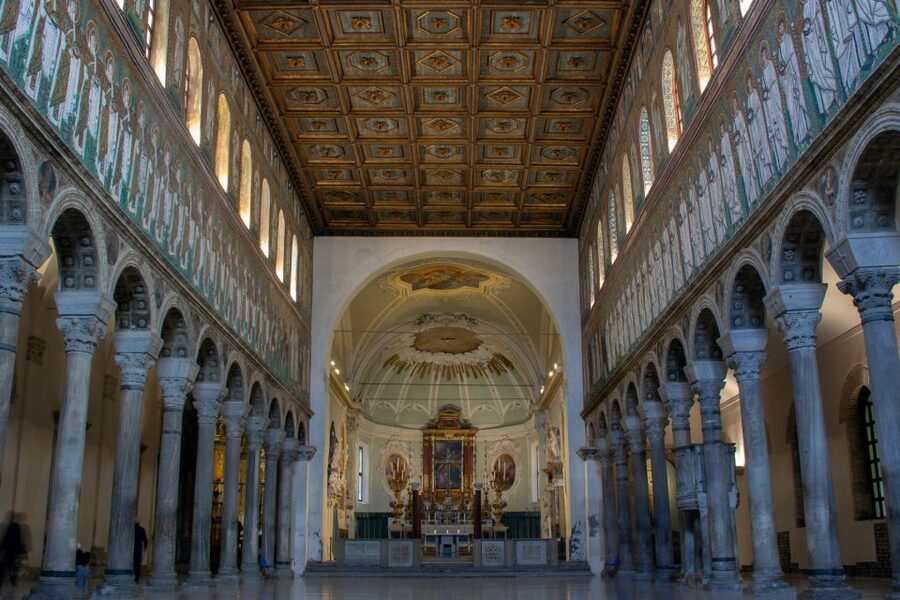
San Vitale is an octagonal 6th-century showpiece, and it makes sense fast. The building mixes Roman structure with Byzantine ideas, so the architecture feels like a transition point, not just a finished product.
Then the mosaics do the talking. Along the walls, you’ll see stories from the Old Testament represented in thousands of tiny tiles. It’s not just decorative. The scenes are arranged so your eye can move through narrative, not random patterns.
The political portrait part is equally striking. Adjacent mosaics pay tribute to Emperor Justinian I and Empress Theodora. That pairing of sacred storytelling with imperial identity is one reason San Vitale hits so hard. It’s faith, yes, but it’s also power made visible through art.
Practical tip: take your time at the mosaic zones that look like “wall reading.” If you rush, you’ll see brightness and craft, but you might miss the way the images relate to each other.
Galla Placidia Mausoleum: the 5th-century close-up
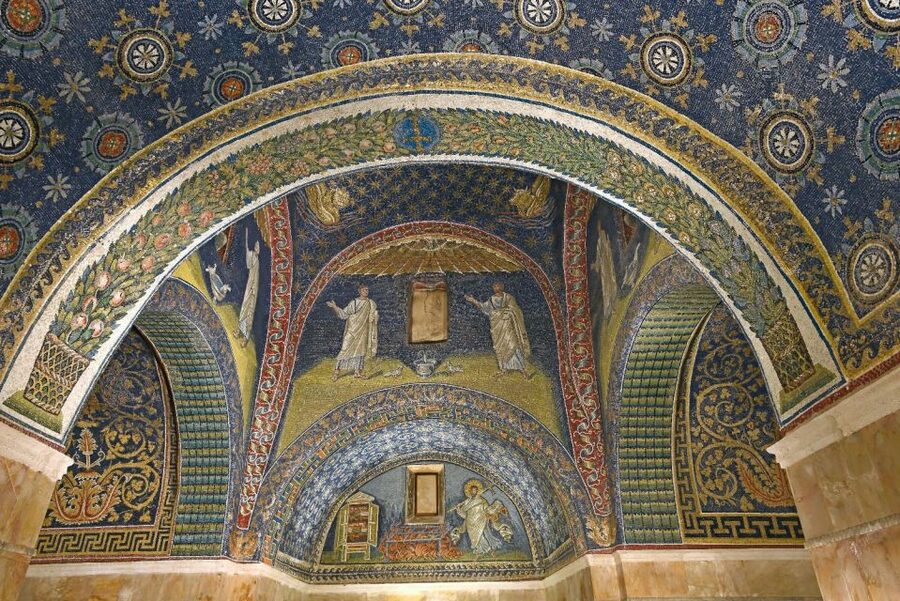
If you pick the 5-monument option, the Mausoleum of Galla Placidia becomes your quick, atmospheric reset between bigger basilicas. It dates from the first half of the 5th century, and it’s not far from San Vitale.
This stop is valuable because it shifts the mood. San Vitale can feel grand and public. Galla Placidia is more like a concentrated moment, where the age of the space shows immediately.
In a perfect Ravenna day, you visit San Vitale, then head over for the mausoleum, and then continue onward. That rhythm helps you feel how the city’s mosaic style evolved across nearby decades.
Sant Apollinare Nuovo: Theodoric’s basilica and the black mosaic story
Sant Apollinare Nuovo is a 6th-century architectural feat credited to Ostrogoth king Theodoric the Great. It can feel quieter than the headline sites, but that’s part of its charm. You’re not fighting the urge to rush.
Inside, the focus is the mosaic program. You’ll see floor-to-ceiling mosaics from the Byzantine era, and there’s an unusual story attached to them. The mosaics were once painted black by Pope Gregory the Great to help keep parishioners focused on prayer.
The mosaics also faced damage from WWI, and they were reconstructed after that. So when you look up at the images, you’re not only seeing ancient art. You’re also seeing survival and repair.
This basilica is also where you can spot the oldest mosaic cycle related to the life of Christ. That makes it especially meaningful if you like tracing how religious art taught stories before modern visitors ever arrived.
Practical tip: spend a little more time than you think you need here. The mosaics are designed for sustained looking, not quick snapshots.
Archiepiscopal Museum and St. Andrew’s Chapel: the religious divide you can see
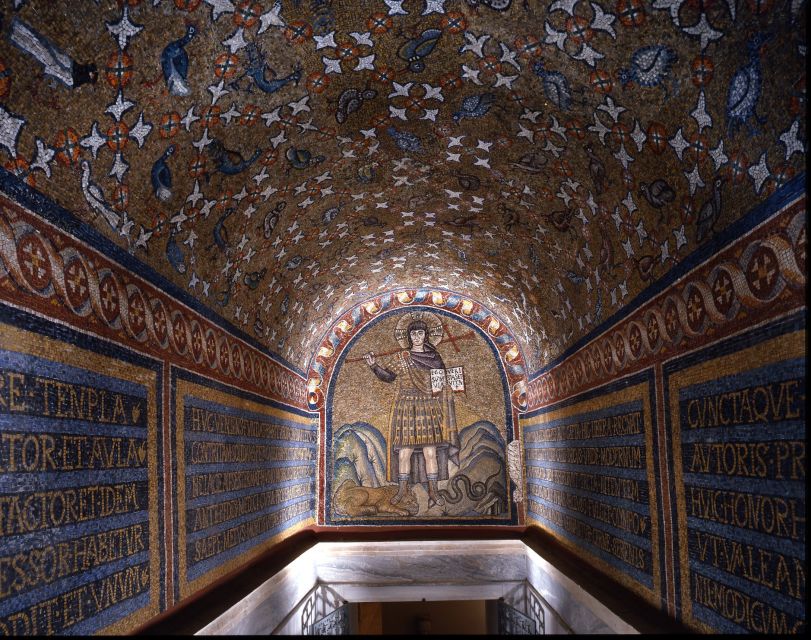
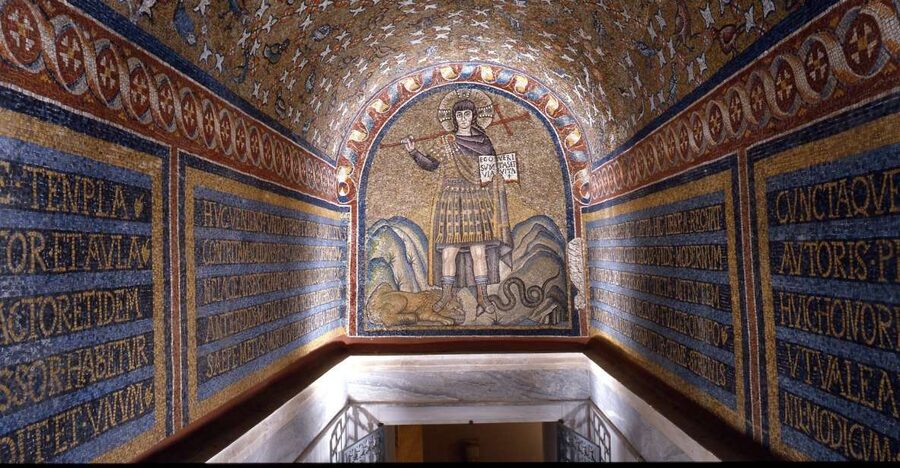
St. Andrew’s Chapel is the kind of site that rewards slower attention. It’s inside the Archiepiscopal Museum, and it’s described as a private chapel for the bishops of Ravenna. It also has the kind of layered detail that makes you want to read instead of scan.
The mosaics help you understand the early Byzantine era in a visual way. You can see evidence of the religious divide during that period, not in abstract terms, but through the way people and places are presented in mosaic scenes.
This chapel also ties into specific named heritage. It contains epigraphs, the cathedral treasure, and an ivory throne of bishop Maximian. If you like when art connects to real objects, this is where the museum part of your ticket starts feeling worth it.
The chapel is also dubbed a hidden pearl of the Archbishop Museum. Even if you don’t rely on that label, the effect is real. You get the sense of a special room within a special place.
Neonian Baptistery: dome mosaics and the Ursus to Neon connection
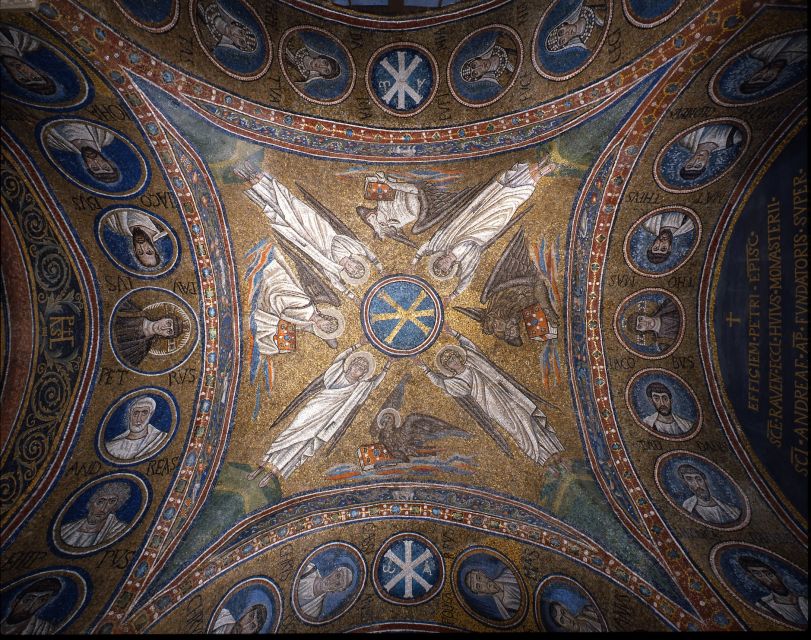
If you select the 5-monument option, the Battistero Neoniano adds a different kind of artwork. This baptistery is named after Bishop Neon, who continued its construction after his predecessor Ursus.
The main visual event is the mosaic dome decoration. The information you get here is specific: the dome decoration dates back to the time of Bishop Neone. That matters because it turns the dome from “pretty ceiling art” into a historical marker you can anchor to the people involved.
In terms of pacing, this is a good stop after you’ve already seen major basilica interiors. A baptistery’s focus feels more centralized, so it gives your eyes a rest while still delivering strong mosaic detail.
Tickets and timing: how to avoid the door-speed bump
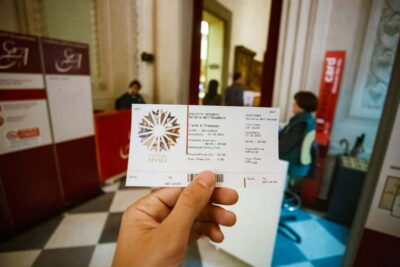
This is a ticket-based experience, not a guided tour. You must show the official ticket at the attraction entry, and your booking ticket is shared in a separate email.
That requirement sounds simple, but it’s worth planning for because Ravenna has multiple institutions and ticket desks. If your ticket details are unclear, expect a little friction at the door.
A practical way to avoid problems is to:
- Have the official ticket accessible on your phone or printed
- Make sure the email that contains the booking ticket is easy to find
- Arrive at your entrance calmly, not while multitasking
One more important detail: the ticket is valid for 7 days, but it’s 1 visit per monument. So if you love a site and want a second round immediately, you might need to commit to that choice later within the validity window, if your plan allows.
Dress code and photo rules that affect your experience
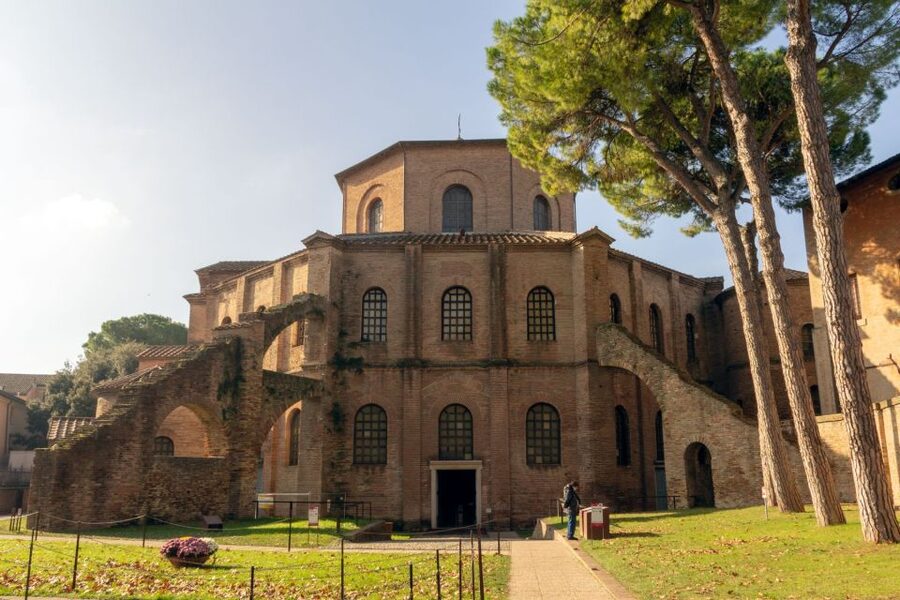
Ravenna’s churches can be strict, and your ticket comes with clear rules.
Bring comfortable shoes, because you’re moving between sites and spending real time looking up and around. Also be ready for the dress code: knees and shoulders must be covered. Clothing should not include rips, holes, or transparent material.
As for photos, flash photography is prohibited. That’s the right kind of rule here. Mosaics are fragile, and flash can spoil the viewing conditions for others.
If you want great photos, use existing light, and plan to take fewer shots but look more. You’ll get better results and you’ll respect the space.
What the $14 price really buys you
At $14 per person, this combo ticket is mostly about value through grouping. The ticket bundles major Ravenna UNESCO destinations into one pass, so you’re not paying separate admission fees for each stop.
It’s also value because you get a coherent set of experiences. You’re not paying for random monuments that don’t connect. You’re seeing a theme: Byzantine-era art, church architecture, and how political and religious identity show up in mosaics.
Then there’s a small but real add-on: a 20% discount in the bookshops of the sites. If you like taking home a mosaic guide or a book for reference while the details are still fresh in your head, that discount can offset part of your ticket cost.
Also, because this works over 7 days, you can pace yourself. That means you’re less likely to feel crushed by a single day schedule and more likely to actually study what you came for.
Is the lack of a guided visit a deal-breaker?
For some people, yes. If you want a person to explain every scene, relationships between mosaics, and why each detail matters, you may feel like you’re missing the “translator” layer.
For other people, no. If you like quiet focus, self-guided looking can be perfect. You can read what’s in front of you, return to a mosaic section that catches your eye, and move at a natural pace.
If you do self-guide, I recommend spending a minute at the start to orient yourself. Pick a couple of focal points, like the Justinian and Theodora mosaics in San Vitale, or the story cycle mentioned at Sant Apollinare Nuovo. Then let your eyes do the work.
And if you happen upon staff explanations on site, take advantage of it. Some people find names like Cinzia especially helpful when they get an interpretive explanation, so it can pay to ask if any brief context is available when you arrive.
Who should book this Ravenna combo ticket
You should book if you:
- Want to see multiple UNESCO mosaic sites without building separate tickets
- Prefer self-paced time in churches
- Like mosaics as stories, not just pretty patterns
- Plan to stay at least 2 days in Ravenna, so you can split the visits instead of cramming
You might skip or reconsider if you:
- Want a fully guided narrative with constant interpretation
- Are visiting with strict time limits where you cannot slow down at each interior
- Know you will struggle with the dress code and photo restrictions
A quick checklist before you go
Here’s how to make your day smoother with this ticket:
- Wear covered knees and shoulders to avoid last-minute stress
- Pack comfortable shoes
- Keep your official ticket ready to show at entry
- Remember flash photography is not allowed
- Decide ahead of time whether you want the 5-monument option for Galla Placidia and the Neonian Baptistery
- Plan to linger, especially in the basilicas with long mosaic walls
Should you book Ravenna UNESCO mosaics entry tickets?
I think this is a good book if you want maximum mosaic time for your money and you like self-guided travel. The fact that it covers major Ravenna UNESCO sites with one pass makes it hard to beat for convenience, especially if you’re splitting visits across the full 7-day validity.
But if you’re hoping for a guided deep story at each stop, you should either add a guide separately or pair this with your own reading. Without that, you’ll still see breathtaking art, but you may work a little harder to connect each scene to the bigger picture.
If that trade-off sounds like your style, book it. Then give yourself permission not to rush. Ravenna rewards slow looking.
Reviewed lately around Ravenna
- Guided Tour of Mosaic Tiles in Ravenna★ 5.0 · 1,693 reviews
- Ravenna: UNESCO Monuments and Mosaics Guided Tour★ 4.8 · 3,108 reviews
Tickets, compared.
Vatican: Museums & Sistine Chapel Entrance Ticket
Read our review →
Cathedral and Duomo’s Terraces Entrance Ticket
Read our review →
Skip-The-Line Uffizi Gallery Timed Entry Ticket
Read our review →
Naples Underground Entry Ticket and Guided Tour
Read our review →
Pantheon Fast-Track Ticket and Official Audio Guide
Read our review →
Pompeii: Entry Ticket and Guided Tour with an Archaeologist
Read our review →