
Reviewed · HISTORICAL TOURS
Rome Food Tour in the Historic Centre with 8+ Food Tastings
A Rome food tour like this is interesting because it turns the city’s big sights into a real eating route, not a checklist. I especially like the mix of Roman street classics (think pizza, supplì, and gelato) with plated-style comfort food, and I love that you get 8+ tastings in about 3 hours. The only drawback: it is still a walking tour, so bring good shoes and plan to feel properly full at the end.
The pace is helped by a small group size (up to 12 people) and an English-led experience. Past groups have shared great experiences with guides such as Massimiliano, Rocio, Luda, Manuel, Eduardo, and Federico, and that matters here because the stories are part of why the food clicks. If you want a guided “taste and understand” day, this format is a strong fit.
Key highlights to look for
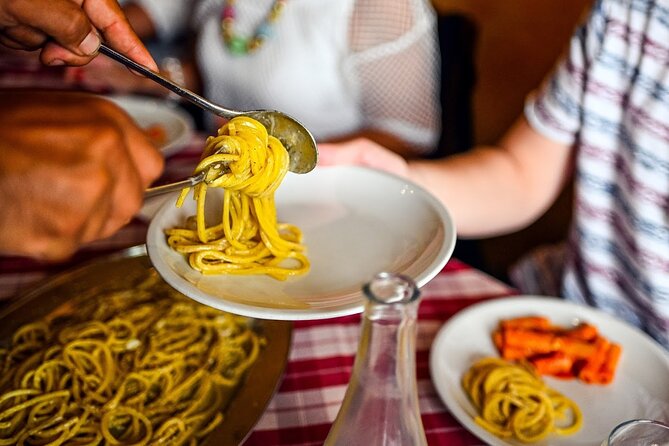
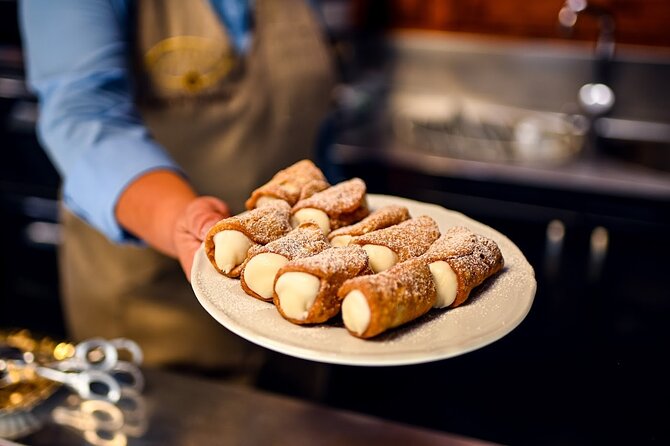
- 8+ tastings included: homemade pizza (two types), supplì, cold cuts and cheeses, two Roman pastas, cannoli, artisanal gelato, plus a secret dish
- Historic route through the core: Piazza Navona, Campo de’ Fiori, and the Largo di Torre Argentina area
- Jewish Ghetto context: the neighborhood established in 1555 in the Rione Sant’Angelo, tied to food culture
- Landmark stops with real meaning: the Four Rivers fountain, ancient walkway remains from the 2nd century B.C., and Pompey’s Theatre remnants
- Max 12 people: easier conversations and more attention at tasting moments
- English mobile ticket: convenient entry without hunting for paper
Why this Roman food walk works in real life
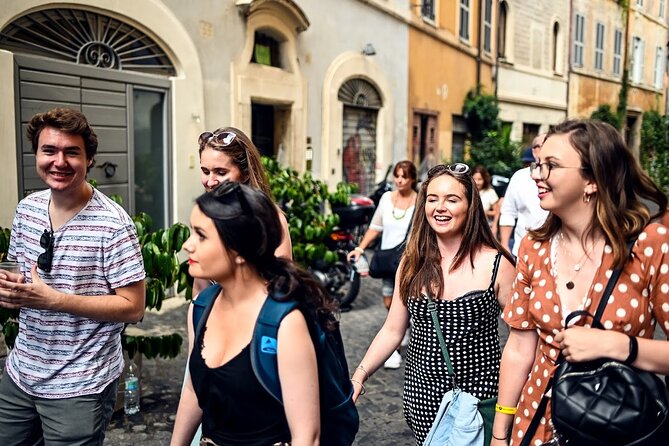
This is the kind of Rome tour that’s built for a practical goal: get oriented fast, then eat your way through the neighborhoods you just learned. In about 3 hours, you cover a compact slice of the Historic Centre, starting near Piazza Navona and finishing by Largo di Torre Argentina.
The biggest value is that you’re not just sampling sweets and snacks. Your menu is spread across multiple categories of Roman food: pizza, supplì, pastas, cheeses, cannoli, and gelato, plus an extra “secret dish” that keeps things fun. That variety helps even if you’re not sure what to order at restaurants yet.
One more thing I like: the focus on food culture, not only famous landmarks. You will walk through squares and historic corners where locals have long eaten well, which turns your tastings into context you can actually remember.
More Food Tours in Rome
- Winner 2025 Rome Twilight Trastevere Food Tour by Eating Europe
★ 5.0 · 5,157 reviews - Rome: Trastevere or Jewish Quarter Street Food Tour
★ 4.8 · 3,839 reviews - Rome Food Tour: Unlimited Tastings with Fine Wine & Barolo
★ 5.0 · 3,365 reviews
Piazza Navona to set the tone, fountains and first bites
Most Rome itineraries pass Piazza Navona like it’s just a photo stop. Here, it functions as the launch pad. You meet at Sant’Agnese in Agone, Piazza Navona 14, and the tour begins in the heart of a square that sits on the footprint of an ancient stadium.
Why this start works: Piazza Navona is built for lingering. You get baroque architecture, lively street life, and a dense cluster of cafés and trattorias nearby. That means the food culture is right in your face from minute one, which is perfect when you’re trying to understand Roman eating habits without overthinking it.
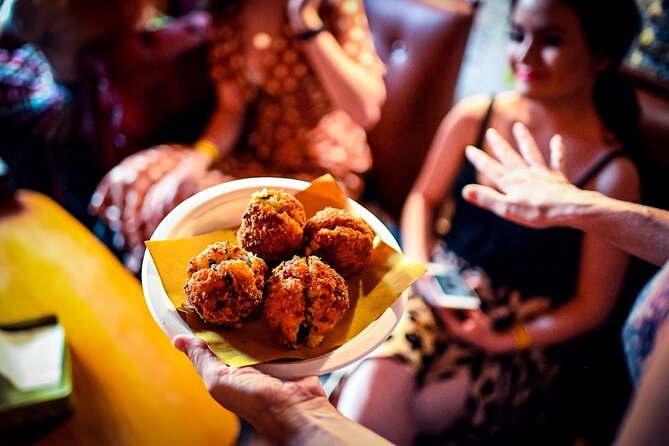
You can also expect the route to connect landmarks to how people actually snack and dine outdoors and on the move. Even before your full menu lands, the setting makes the ideas click: pizza by the slice, gelato as a palate reset, and fried bites like supplì as the kind of energy you want while walking.
Practical note: it is a famous square, so plan for crowds and keep an eye on your footing around the constant foot traffic.
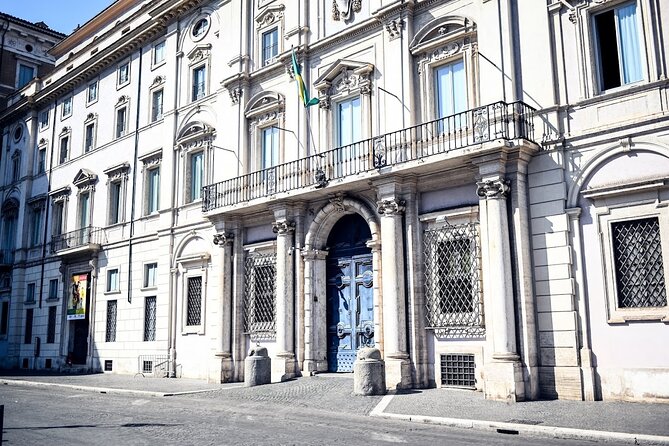
The High Renaissance palace stop near the French Embassy
After Piazza Navona, the walk shifts from open square life to more formal Rome. One of the stops is at a major High Renaissance palace that currently serves as the French embassy in Italy.
This matters because it gives you contrast. Roman food stories are not only about street corners. They also reflect how different classes lived, ate, and gathered across the centuries. A palace stop like this helps you notice the shift in scale and style, which makes the surrounding food culture feel more grounded.
You’ll be in an area where grand architecture sits a short walk from everyday dining. That’s very Rome: historic power buildings within reach of the most casual places to eat.
If you tend to prefer food tours that explain the city’s “why,” this stop is a good reminder that Rome’s meals grew inside real neighborhoods and real social structures, not in a vacuum.
Crossing into the Roman Jewish Ghetto founded in 1555
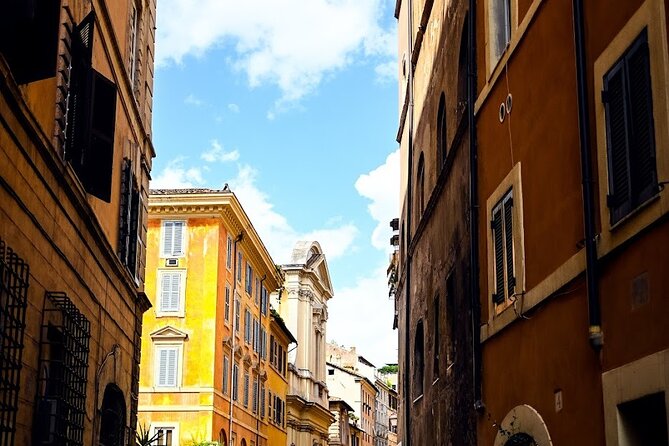
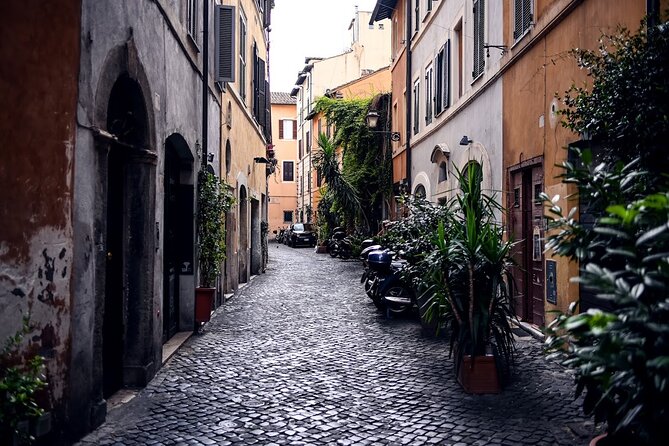
Next comes one of the most meaningful parts of the route: the Jewish ghetto established in 1555 in the Rione Sant’Angelo. This is a neighborhood with identity, history, and a food culture you can taste in how people keep traditions alive.
I like this stop because it avoids the usual approach of only listing what a site looks like. Instead, it connects the neighborhood itself to eating and community. When you’re offered Italian food on this tour, it lands better once you understand that Roman cuisine has many roots.
It is also a strong food-mapping moment. As you walk, you can see how a compact area concentrates shops, bakeries, and eateries. That makes it easier to imagine where specific dishes would have fit into daily life.
Important for expectations: you are walking through an active historic neighborhood. Keep your group together, be respectful with quiet streets, and expect some uneven sidewalks.
A different Rome day to consider:
- Colosseum, Roman Forum & Palatine Guided Tour
★ 4.7 · 63,148 reviews - Vatican Museums, Sistine Chapel & St Peter’s Basilica Guided Tour
★ 4.5 · 39,149 reviews - Rome: Colosseum, Palatine Hill and Roman Forum Guided Tour
★ 4.8 · 32,814 reviews - Rome: Guided Tour of Colosseum, Roman Forum & Palatine Hill
★ 4.7 · 27,897 reviews
Four Rivers fountain and ancient walkway remains, where Rome overlaps itself
Another stop is a classic 17th-century fountain, a homage to four rivers, featuring a Roman obelisk topped by a dove. It’s the kind of landmark that makes you pause, because it’s art, myth, and navigation all at once.
Close by, you also visit remains of an ancient walkway originally built in the 2nd century B.C. to link two Roman temples. That pairing is clever, because it shows how Rome layers time. You’re not just hearing about ancient Rome. You’re standing in the city where ancient infrastructure and later design still shape what you see today.
For you as a food tour participant, the value is simple. Rome’s food culture is not separated from the built environment. Squares, fountains, temples, and pedestrian routes all affect where people gather to eat, meet, and pass time.
If you like moments where history feels practical, this is a good section of the walk.
Campo de’ Fiori, lunch energy and street-food logic
Then the route turns toward Campo de’ Fiori, a rectangular square south of Piazza Navona. The name literally translates as field of flowers, and the area’s layout makes it a natural meeting spot.
Campo de’ Fiori is where Rome’s day-to-day rhythm becomes more visible. Even if you’ve only got a short time in the city, this kind of square gives you a feel for when people choose coffee, quick bites, and casual meals.
This is also where your tour menu starts to feel like a full meal program. You’ll be moving through the kinds of places Romans rely on for satisfying street food, not just sitting down for one big restaurant meal.
If you’re the type who likes to snack and keep walking, this portion is a match. You get the sensation of eating like a local, which is the whole point of a food tour.
Largo di Torre Argentina, temples and the sweet finish
The tour ends near Largo di Torre Argentina, a square in the ancient Campus Martius area with four Roman Republican temples and the remains of Pompey’s Theatre. Your walk closes right where the ancient city’s scale becomes obvious again.
This final stop matters because it gives your route a strong end point. Instead of stopping near another souvenir-heavy zone, you finish in an area that clearly shows Rome’s long timeline and how the past still shapes today’s streets.
And this is also where you should expect your last tastings to land well. The menu includes cannoli and artisanal gelato, and those feel right at the end of a walking tour when you want dessert that tastes like you earned it.
One tip: if you get motion-sick or tire fast, plan a slow pace through the final stretch. The food is generous, and you want to enjoy the finish, not hurry past it.
What you eat on this Rome tour, the 8+ tastings plan
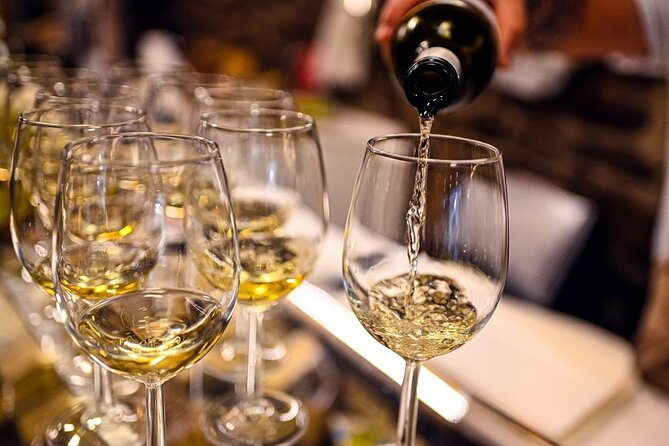
This tour is priced around $118.51 per person, and the value comes from how much food is included for a short walking window. You’re not paying separately for each bite, and the menu isn’t limited to one category like desserts or pizza alone.
Here’s what’s included on the tasting lineup:
- Two different types of homemade pizza
- Supplì
- Italian cold cuts and cheeses
- Two Roman pastas
- Cannoli
- Artisanal gelato
- Our secret dish
What I like about this lineup is how it covers the Roman “spectrum.” You get salty bites and fried comfort, plus pasta dishes and a proper sweet finish. That balance makes the tour feel complete, especially if it’s one of your first days in Rome.
The secret dish is also a smart touch. Even if you think you know Roman food, surprise items keep the experience from feeling like a repeat of what you’d order on your own.
A practical expectation: you should come hungry. The frequent five-course feel mentioned in tour highlights lines up with how people describe leaving very full. This is not a light snack tour.
How guides like Massimiliano, Rocio, and Luda change the experience
A food tour lives or dies on the guide, and this one clearly puts emphasis there. Several guides have strong name recognition from past groups, including Massimiliano, Rocio, Luda, Manuel, Eduardo, and Federico.
What to listen for while you’re on the walk:
- How the guide connects a dish to the neighborhood it comes from
- Small context about why Romans eat what they eat, not just what it is
- Tips you can use after the tour, like what to order and how to think about Rome’s food scene
You should also know the group size is capped at 12. That matters because it makes questions easier and tastings less awkward. If you’re traveling solo, or you just want a guide who can actually see you, a small group helps.
English is the offered language, and that reduces the risk of missing key details. If you care about the stories behind the food, language clarity is a real part of the value.
Price and value, what $118.51 buys you
Let’s talk honestly about cost. $118.51 is not a budget lunch, but it can make sense for Rome because the tour bundles a lot of eating into one structured 3-hour walk.
You’re getting:
- Multiple tastings across different categories
- A guided route through famous and not-so-famous streets
- Time savings, since you do not have to research six separate places and then wait in line
If you were to build this yourself, you’d likely spend time hopping between spots and still end up with less food variety. Here, the menu is already designed so you can try pizza, supplì, pasta, cheeses, gelato, and cannoli without making decision fatigue your second job.
For good value, you also need to match the tour to your travel style. If you enjoy walking and you want food plus context, you’ll get more out of the price. If you prefer sitting still or you’re sensitive to walking distances, you might feel the cost more than the payoff.
Who should book this Rome food tour
This tour fits best if you:
- Want a first-week Rome plan that helps you get oriented fast
- Like eating a range of foods, not only one thing like pizza or gelato
- Enjoy guides who connect food to place, especially around major sites like Piazza Navona and the Jewish Ghetto area
- Like small groups, since the cap is 12 people
It may be less ideal if you:
- Hate walking or have mobility limits, because it is a walking route through the historic core
- Want a quiet, low-paced experience, because popular squares bring crowds
- Travel with pets, since pets are not accommodated
Should you book this Rome food tour?
Yes, I think you should book it if your goal is simple: taste the core of Roman food while learning the city’s street-level logic. The included menu covers the big Roman hits, and the route through landmarks like Piazza Navona, Campo de’ Fiori, and Largo di Torre Argentina gives your eating a sense of place.
If you’re deciding between this and a more restaurant-heavy approach, choose this one when you want variety plus movement. If your ideal day in Rome is long lunches where you sit for hours, you might prefer something slower.
In short, come hungry, wear comfortable shoes, and give the guide your attention for the history-food connections. You’ll end the walk with a full stomach and a better map in your head.
FAQ
How long is the Rome Food Tour?
It runs for about 3 hours.
Where do I meet and where does the tour end?
You start at Sant’Agnese in Agone, Piazza Navona, 14, 00186 Roma RM, Italy. The tour ends at Largo di Torre Argentina, 00186 Roma RM, Italy.
What is included in the 8+ food tastings?
Included items are two different types of homemade pizza, supplì, Italian cold cuts and cheeses, two Roman pastas, cannoli, artisanal gelato, and Our Secret Dish.
Is hotel pickup or drop-off included?
No, hotel pickup and drop-off are not included.
How large is the group?
The tour has a maximum of 12 travelers.
What language is the tour offered in?
The tour is offered in English.
Is there a minimum drinking age?
Yes, the minimum drinking age is 18.
Can I cancel for a full refund?
Free cancellation is available up to 24 hours in advance for a full refund. If you cancel less than 24 hours before the experience starts, the amount paid will not be refunded.
More Historical Tours in Rome
- Rome in a Day Tour with Vatican, Colosseum and Historic Center
★ 4.5 · 1,042 reviews - Rome: Ancient History and Colosseum Underground Tour
★ 4.5 · 996 reviews - Rome: Forbidden History Walking Tour & Pub Crawl with Drinks
★ 4.9 · 688 reviews - Venice: St. Mark Basilica Ticket, Audioguide+History Gallery
★ 3.9 · 4,780 reviews
Reviewed lately around Rome
- Colosseum, Palatine Hill and Roman Forum with Guided Tour★ 5.0 · 500 reviews
- Exclusive Golf Tour Private VIP with Local & Gelato o Wine★ 5.0 · 500 reviews
- Rome Trastevere Pasta Making Class with Eating Europe★ 5.0 · 505 reviews
- Rome by Night Walking Tour★ 4.5 · 506 reviews
- Rome: Colosseum Express Tour with Forum & Palatine Access★ 4.5 · 511 reviews
- Rome Food Experience Max 6 People Group Tour | w/Private Option★ 5.0 · 516 reviews
- Rome: Papal Audience Experience with Pope Leo XIV★ 4.8 · 518 reviews
- Rome: Escorted Papal Audience Experience with Entry Ticket★ 4.4 · 518 reviews
Historical Tours, compared.
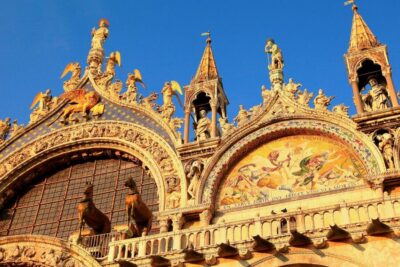
St. Mark Basilica Ticket, Audioguide+History Gallery
Read our review →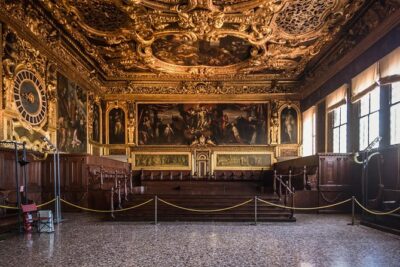
Venice’s Best: Basilica, Doge’s Palace, Gondola & History Gallery
Read our review →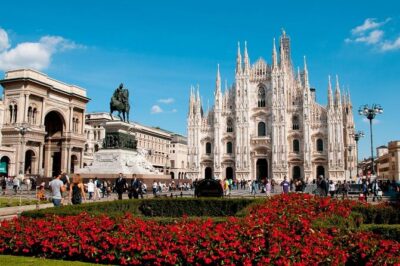
Historic Milan Tour with Skip-the-Line Last Supper Ticket
Read our review →
Rome in a Day Tour with Vatican, Colosseum and Historic Center
Read our review →
Ancient History and Colosseum Underground Tour
Read our review →Browse the lists this tour appears in