
Reviewed · HERCULANEUM TOURS
Pompeii and Herculaneum Small Group Tour with an Archaeologist
Pompeii and Herculaneum are two cities frozen by the same eruption, yet they feel totally different once you’re inside the ruins. This tour is interesting because it connects both sites with an archaeologist-led walk, plus practical transport so you do not waste your day hunting down directions.
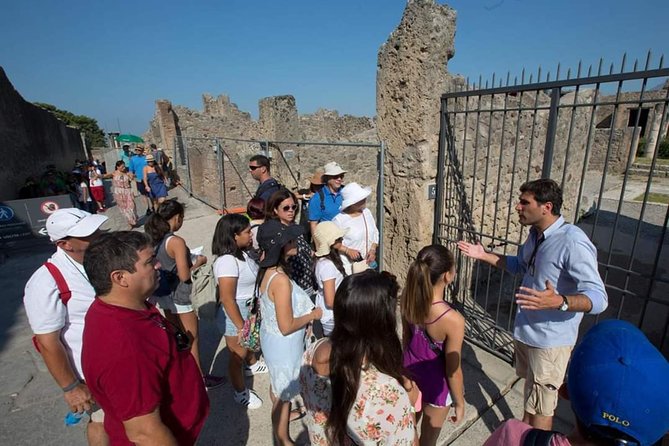
I especially like the small group size (max 20) and the included headsets, which makes it easy to hear your guide without getting stuck behind someone’s camera. I also love that the tour is built around the big, understandable highlights, so you get meaning fast instead of just wandering.
One drawback to consider is time. Pompeii is huge, and with a full-day plan you might feel slightly rushed if you prefer slow, linger-in-every-room exploring, and lunch is an extra decision since meals are not included.
Key points before you go
- Skip-the-line entry for both Pompeii and Herculaneum helps you start strong.
- Two guided blocks (about two hours in each site) makes the day manageable.
- Headsets for everyone mean you can stay close to the action and still hear the story.
- Train or minibus transfer keeps the link between sites from becoming a whole project.
- Archaeologist-led walking turns houses, baths, and theaters into everyday life, not just stone.
- Lunch is on your own, with a scheduled break that some people love and some people find less exciting.
Pompeii and Herculaneum, same disaster, different vibe
If you only visit Pompeii, you get the famous big drama: Forum life, markets, theaters, and the dense city grid. If you only visit Herculaneum, you get something more intimate and well-preserved, with homes and public spaces that can feel almost close enough to touch. This tour gives you both angles in one day, which is a smart use of time.
What really matters is not just that you see ruins. It is how quickly your guide helps you understand what you are looking at. Pompeii can feel like a maze until someone puts the pieces together, like how streets connect to forum buildings, or why baths and theaters mattered socially. Then Herculaneum shifts the mood, and you spend more time reading domestic details and architecture you could easily miss on your own.
More of Pompeii:
- Pompeii: Entry Ticket and Guided Tour with an Archaeologist
★ 4.8 · 19,459 reviews - Pompeii: Entry Ticket with Optional Audio Guide
★ 4.2 · 12,360 reviews - From Naples: Pompeii Ruins & Mount Vesuvius Day Tour
★ 4.3 · 11,459 reviews
Small group logistics: meet-up points and why they matter
This is an English-language tour with a maximum of 20 people. That size keeps things from turning into a herd, and it helps your guide manage questions as you walk.
Your meeting point depends on where you start:
- Pompeii option: Porta Marina Superiore
- Naples and Rome option: Starhotels Terminus
- Sorrento option: Piazza Angelina Lauro
This matters because your route changes. People starting in Pompeii use the included Circumvesuviana train plan to reach Herculaneum. People starting in Naples, Rome, or Sorrento use a modern minibus with the guide for the transfer.
Pompeii first: the tour structure that avoids confusion
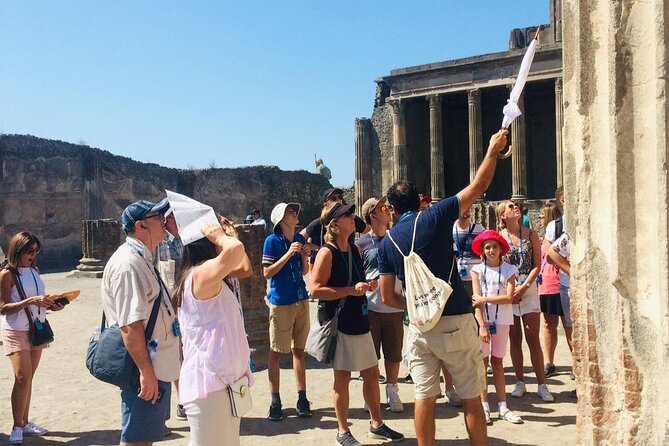
You start with guided time in Pompeii for about two hours, focused on the main anchors of the city. A tour like this is not trying to squeeze every single corner into one day. Instead, it takes you through the most readable parts, where the layout makes sense and the architecture tells the story.
Expect to begin in the morning and work through a sequence that goes from public life to private homes and major entertainment. You will also get admission tickets included, and the plan skips the ticket lines so you are not burning your energy on queues.
The Pompeii stops and what to notice at each one
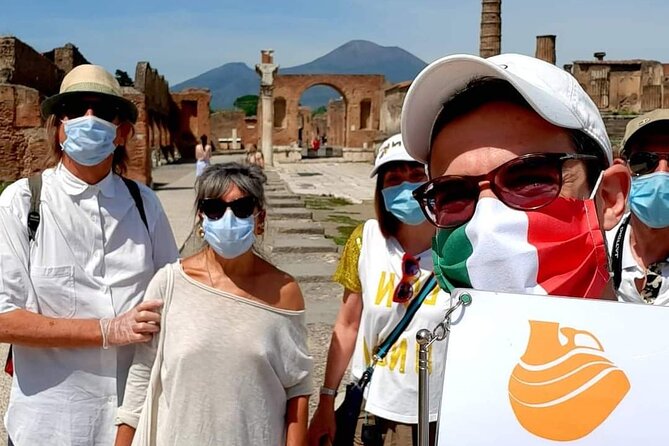
Here is how the Pompeii walk is set up, and what you should actually pay attention to during each segment.
More of Herculaneum:
- Pompeii: Small-Group Tour of Pompeii and Herculaneum
★ 4.8 · 867 reviews - From Naples: Pompeii & Herculaneum with Archaeologist Guide
★ 4.8 · 665 reviews - From Naples: Pompeii, Herculaneum, & Vesuvius Full-Day Tour
★ 3.9 · 602 reviews - Day Trip of Pompeii, Herculaneum and Vesuvius from Naples
★ 4.5 · 547 reviews
Basilica and the covered public world
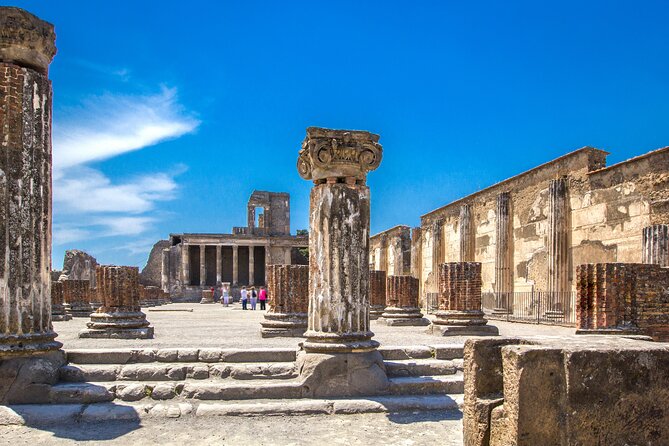
You start with Basilica, an open portico where merchants and other activities happened. Even in ruins, you can spot how it functioned as a social and commercial shelter. Think of it as the city’s built-in meeting space.
Forum square: Foro de Pompeya
Next is Foro de Pompeya, the ancient main square. This is where it helps to think in terms of civic life. The forum is not just a big open area, it is the city’s stage for decisions, announcements, and power.
A walk along the main street
Then you walk through the main street of Pompeii. Do not treat this like empty movement. Streets were the city’s timeline, showing where people shopped, walked, and turned corners into neighborhoods and businesses.
House of Menander: a luxury home with serious art
You get a stop at the House of Menander, one of Pompeii’s richest residences. This is the kind of house where details tell you a lot about status and taste, especially in decoration and layout. If mosaics and wall paintings are your thing, this stop is a good early payoff.
Granaries of the Forum: storage, design, and daily systems
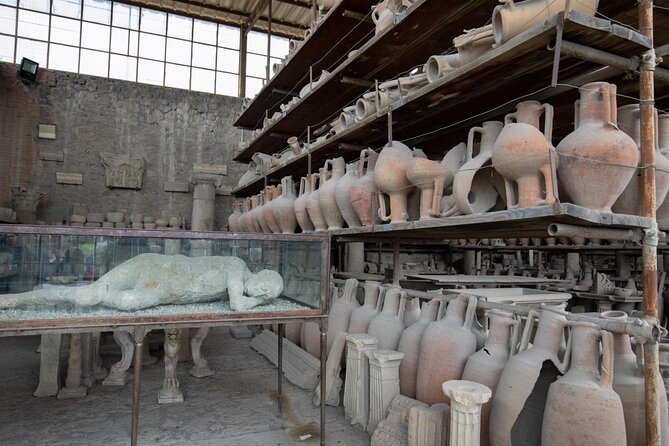
The granaries of the Forum include marble tables and baths for fountains that adorned entrances. It also features casts related to eruption victims, plus details like a dog and a tree. This is a sobering stop, but also a surprisingly practical one. It helps explain how a city stored food and managed space.
Stabian Baths: the oldest thermal complex
At Stabian Baths, you see a vast complex between key crossroads and major streets. Baths were a core part of Roman social life, not just hygiene. Even if you only have a short visit, you can understand how different zones worked by following where entrances would have led.
Lupanar: Pompeii’s famous brothel
The Lupanar stop is the most recognizable name on the list. It is also a chance to understand how adult entertainment was built into the city’s economy. The murals and room arrangement are what make this one memorable.
House of the Faun: big private life
House of the Faun is one of the largest and most impressive private residences in Pompeii. This is where the scale alone helps you grasp how wealthy Pompeians lived. Look for layout cues, thresholds, and the way space was organized for daily flow.
Odeon, Teatro Piccolo, then Teatro Grande
The final Pompeii stops focus on entertainment architecture:
- Odeon, Teatro Piccolo: the smaller theater stop
- Teatro Grande: the major theater
These stops teach you how crowds gathered and how performances shaped communal identity. If you like Roman engineering and public space, the theaters are a strong final chapter before you head to Herculaneum.
Lunch break: how to handle the scheduled stop
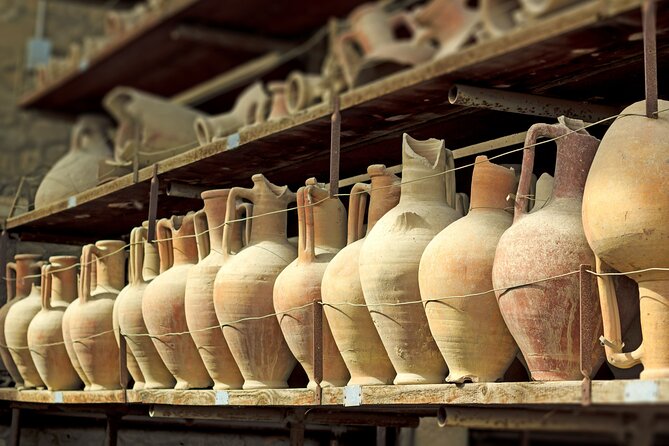
After Pompeii, there is a short lunch break with meals not included. In practice, this can be a make-or-break moment for the day. The tour includes a mall stop for lunch to avoid a gauntlet of tourist traps near the archaeological area, and the mall offers multiple options including traditional pizza places.
Still, if you want the vibe to stay fully archaeological, consider packing a simple meal so you can eat faster and keep your momentum. Either way, use the break wisely. The Herculaneum portion is where time feels especially valuable, because the details can hit harder when you are not hungry or distracted.
Switching cities: how the transfer actually works
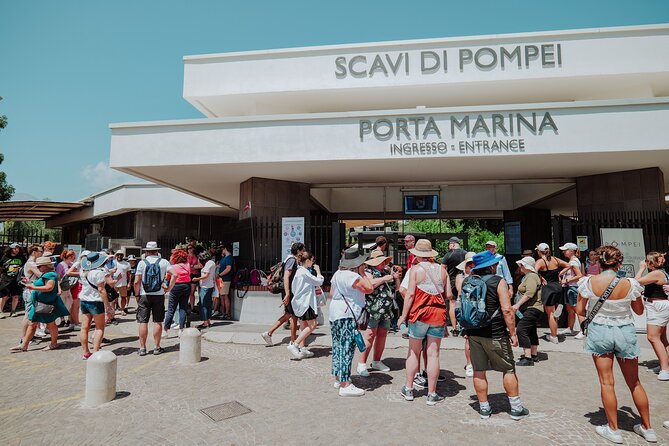
How you get to Herculaneum depends on where you start.
If you start in Pompeii
You use an included Circumvesuviana train ticket. The ride is about 30 minutes plus a 10-minute walk. That is a straightforward, local way to do it, and it keeps the transfer from eating your entire morning.
If you start in Naples, Sorrento, or Rome
You go with the guide by modern minibus directly to the Herculaneum site. This is the easiest option logistically, especially if you do not want to figure out station timing.
In both cases, you will have a guided arrival flow. The guide leads you directly to the ticket office at Herculaneum, which is the point where skip-the-lines matters most.
Herculaneum: smaller site, sharper experience
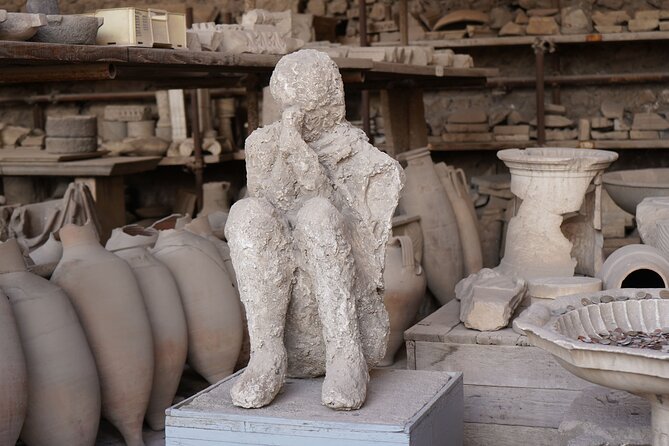
Herculaneum visit time is about two hours with your archaeologist guide. The big difference is how preserved details feel. This site tends to reward people who look at domestic architecture, small public spaces, and how rooms connect.
Admission is included, and you start right at the ticket office. People arriving by minibus drop near the entrance. People arriving by train walk about 10 minutes from Ercolano Scavi station.
The House of the Deer: peristyle statues as the clue
The House of the Deer gets its name from marble statues of stags or deer found in the peristyle. This is a good stop for pattern recognition. If you look for where art sits in the layout, you start understanding how rooms were meant to impress.
La Terrazza di M. Nonio Balbo: patronage made visible
La Terrazza di M. Nonio Balbo connects to M. Nonius Balbus, a major benefactor. The long inscription on the funeral altar is part of the story, showing how public honors and influence worked.
College of the Augustales: religion and public culture
This building is thought to be a center of the cult of Emperor Augustus, tied to local leadership structures. For me, this stop is useful because it explains how politics and religion mixed inside everyday buildings.
Casa del Rilievo di Telefo and suburban thermal access
Casa del Rilievo di Telefo is unusual, including private access to the adjoining Suburban Thermae to the south. That detail helps you understand how elite life could be wired directly into leisure infrastructure.
Partem Domus lignea, Casa del Tramezzo di Legno: the wooden partition
Partem Domus lignea focuses on an elegant wooden partition that remained. This kind of architectural survival is exactly what makes Herculaneum special, because it helps you picture how spaces looked before the eruption, not just after it.
House of the Skeleton: names that come from findings
House of the Skeleton is named from human remains found in 1831. It is a heavy stop, but it also shows how later discoveries shape how we label and interpret rooms.
Central Thermae: men and women baths
The Central Thermae were built around the beginning of the 1st century AD and divided into men’s and women’s baths with separate entrances. If you like the social logic of Roman cities, this is a clear example of how routine was structured.
House of the Black Salon: carbonized doorposts and luxury feel
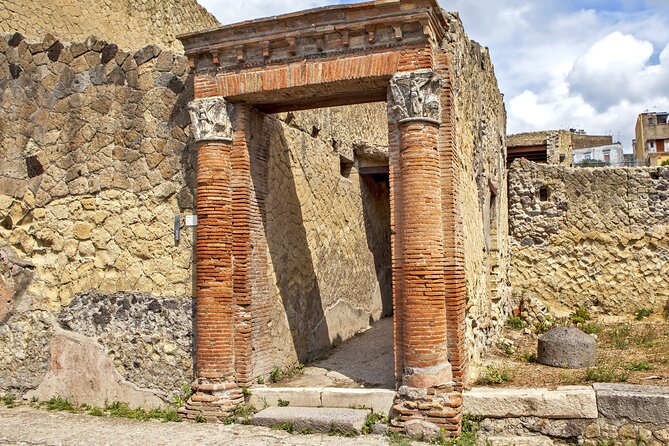
House of the Black Hall is one of Herculaneum’s more luxurious mansions. You still see carbonised remains of doorposts and lintel at the monumental entrance. It is one of those moments that makes the past feel close because the “evidence” still looks physical.
Casa Sannitica and the atrium-galley layout
Casa Sannitica shows an arrangement typical of the Samnites, including an atrium skirted by a gallery with Ionic columns. Frescoes decorate rooms, and the layout helps you understand local architectural identity.
Casa del Bel Cortile: a courtyard design instead of an atrium
Casa del Bel Cortile has a courtyard with a stairway and a stone balcony instead of an atrium. That is a great reminder that “a house layout” was not one-size-fits-all, even within Roman culture.
House of the Grand Portal: frescos and charred wooden traces
Finally, House of the Grand Portal sits in the center of the archaeological area. You see collonnati, frescos everywhere at Herculaneum, plus charred remains of wooden parts. This stop ties the domestic story together.
What the archaeologist guide adds, beyond facts
The biggest praise across this tour is not just that people learn facts. It is that the sites turn into lived spaces.
Archaeologist guides like Michele, Diego, Paulo, Antonio, Gianni, Tomas, and Alfredo come up in feedback for making Roman life click. The common thread is storytelling that connects buildings to how people actually moved through them, shopped, bathed, attended performances, and lived in homes.
You will also have time for questions, and headsets help keep that back-and-forth from turning into chaos. If you are the kind of person who stops to ask why something looks the way it does, this format fits.
Pacing reality check: the trade you make for seeing both sites
You are getting both Pompeii and Herculaneum in one day, which is the appeal. The trade is limited time at each location. Pompeii is huge, and even with a two-hour guided sweep, you may feel you barely touched it.
On Herculaneum’s side, two hours can feel perfect because the site is smaller and the details are dense. Still, the walk is structured, so you cannot expect long, free-form meandering.
Also, headsets are included, and that is a win for hearing the guide. If you run into occasional audio issues, it is usually easier to adjust within the group rather than get frustrated and fall behind.
Value: how $77.09 can make sense
At $77.09 per person, the value depends on what you would otherwise do on your own.
This price bundles several expensive pain-points:
- admission to both sites
- guided time in Pompeii and guided time in Herculaneum
- headsets
- the coordinated transfer plan (minibus or train)
Even if you only compare entrance fees, Pompeii is listed at 20 euros for adults and Herculaneum at 16 euros for adults, and both are included. The guide time plus transportation is what you are paying for after that, and that is where a lot of people feel the difference.
Where the value can feel less “worth it” is if you would rather slow down at Pompeii for longer. In that case, this tour is a highlights plus education day, not a full independent deep dive.
Who should book this Pompeii and Herculaneum small-group day
This is a strong fit if you:
- want to see both sites in one day
- like guided context, especially for buildings like baths, theaters, and houses
- prefer a plan that skips the ticket line and reduces decision fatigue
- enjoy asking questions while you walk
It may not be ideal if you:
- hate any sense of time pressure
- want long museum-style wandering
- need a very specific pace due to mobility or visual needs
The tour notes it is not recommended for visually impaired participants unless accompanied by a dedicated personal assistant.
Should you book this Pompeii and Herculaneum tour?
Book it if you want a structured, archaeologist-led day that gets you oriented fast and covers the most important parts of both Pompeii and Herculaneum. The combination of skip-the-line entry, headsets, and a real transfer plan is what makes the day feel smooth, and the stops are designed to teach you how the city functioned, not just what survived.
Skip it or plan differently if you know you need lots more time in Pompeii. Pompeii is enormous, and two hours passes quickly. If that is you, pair this with a separate Pompeii day later, or choose a plan that gives more breathing room.
FAQ
How long is the Pompeii and Herculaneum tour?
The tour runs about 6 to 11 hours, depending on your departure option and transport route. The guided visit is roughly two hours in Pompeii and about two hours in Herculaneum.
Where do I meet the archaeologist guide?
Meet-up points depend on where you start: Porta Marina Superiore for the Pompeii option, Starhotels Terminus for Naples and Rome, and Piazza Angelina Lauro for Sorrento.
What transport is included between Pompeii and Herculaneum?
If you start in Pompeii, you use an included Circumvesuviana one-way train ticket to Herculaneum, about 30 minutes plus a short walk. If you start in Naples, Sorrento, or Rome, you travel with the guide by modern minibus.
Are admission tickets included?
Yes. Admission tickets for Herculaneum and Pompeii are included, and the Pompeii side uses Pompeii express entry.
Is lunch included?
Meals and drinks are not included. There is a quick lunch break available between the two sites at your own expense.
Is this tour suitable for visually impaired visitors?
It is not recommended for visually impaired participants unless accompanied by a dedicated personal assistant.
Reviewed lately around Pompeii
- Explore Pompeii with an Archaeologist★ 5.0 · 511 reviews
- From Sorrento: Pompeii Half-Day Skip-the-Line Tour★ 4.6 · 541 reviews
- Day Trip of Pompeii, Herculaneum and Vesuvius from Naples★ 4.5 · 547 reviews
- Pompeii Skip-the-line Tour with Archaeologist Guide★ 5.0 · 559 reviews
- Day Trip of Pompeii, Sorrento and Positano from Naples/Salerno★ 5.0 · 560 reviews
- Pompeii Private Tour with an Archaeologist and Skip The Line – 3 hours★ 5.0 · 564 reviews
- 3 Days in Sorrento, Capri & Pompeii: la Dolce Vita★ 4.0 · 595 reviews
- Sorrento & Pompeii Guided Day Trip from Rome with Optional Pickup★ 4.5 · 598 reviews
Herculaneum Tours, compared.

Herculaneum: Skip-the-Line Guided Tour with Archaeologist
Read our review →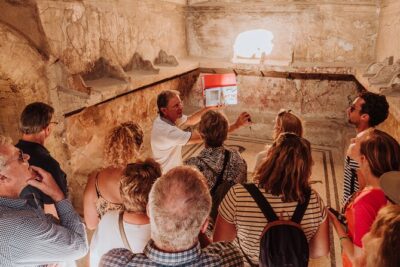
Herculaneum Small Group Tour and Ticket With an Archaeologist
Read our review →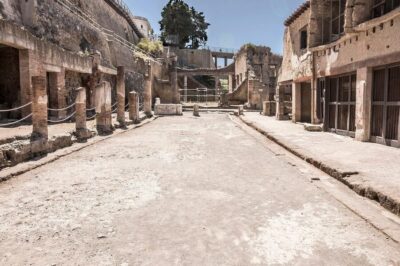
Herculaneum: Skip-the-Line Entry Ticket with Audio Guide
Read our review →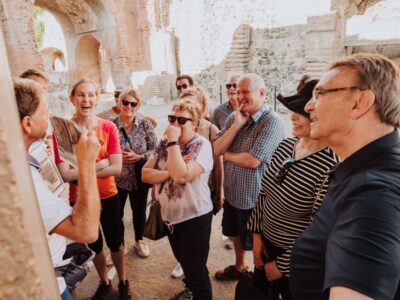
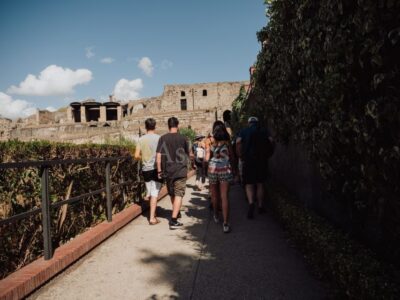
Pompeii & Herculaneum with Archaeologist Guide
Read our review →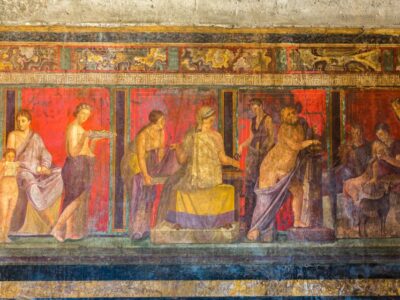
Pompeii, Herculaneum, & Vesuvius Full-Day Tour
Read our review →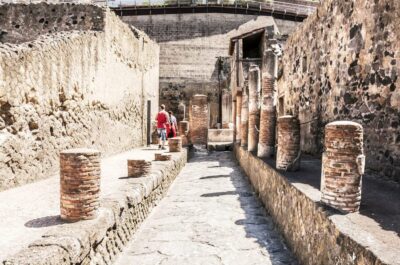
Ercolano: Herculaneum Entry Ticket with Optional Audio Guide
Read our review →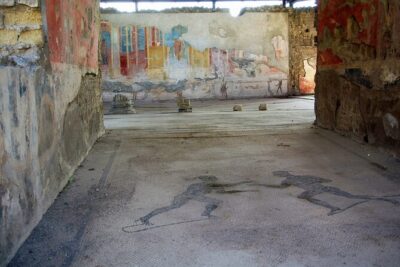
Day Trip of Pompeii, Herculaneum and Vesuvius from Naples
Read our review →Browse the lists this tour appears in