
Reviewed · WALKING TOURS
Palermo No Mafia walking tour: discover the Anti-mafia culture in Sicily
Palermo’s anti-mafia story is written into the streets, not staged for tourists. This walk traces how Cosa Nostra tried to control life in the city, and how ordinary people, judges, and shopkeepers fought back, one neighborhood landmark at a time, with anti-mafia history in plain sight.
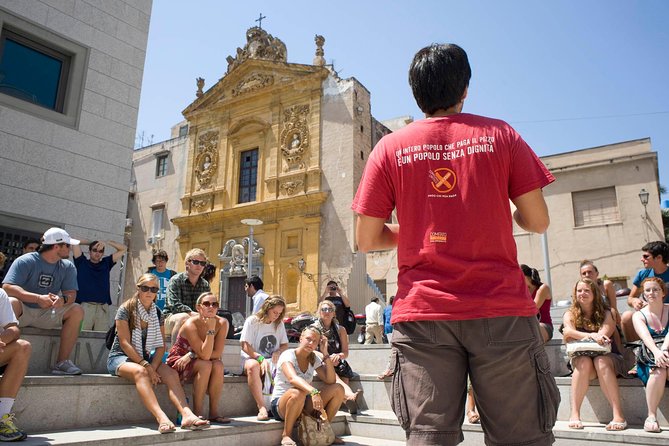
I really like two things. First, you get up close to major sites such as Teatro Massimo and Palermo Cathedral while your guide connects the dots between religion, politics, and organized crime. Second, the tour anchors its message in today’s resistance, including a stop for gelato where you can see the Addiopizzo NO pizzo callout. On tours I have taken like this, guides such as Sylvia tend to answer questions clearly and keep the story moving.
One thing to plan for: the topic can feel heavy, and there is some standing around while explanations happen, especially around the memorials and civic buildings, so comfortable shoes matter.
Key highlights worth showing up for
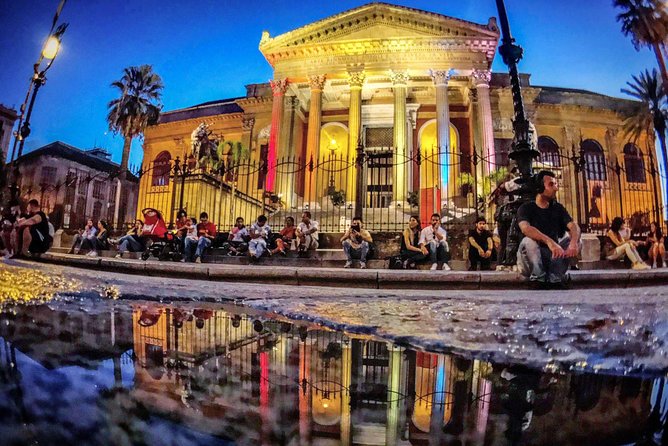
- Teatro Massimo and the city’s rebirth story, including its connection to Godfather III and Palermo moving past Mafia violence
- Wall of Legality, 70 meters long, with faces of mafia victims turned into street art memories
- Piazza della Memoria by the courthouse, a memorial dedicated to judges and prosecutors killed by the Mafia
- Cappadonia Gelati on the Cassaro, where the NO pizzo sticker reflects the Addiopizzo anti-extortion campaign
- Small group size (max 15) for better Q and A and a calmer pace
- A solidarity contribution tied to Addiopizzo local work, not just sightseeing
Why this anti-mafia tour tells Palermo’s real story
If you only know the Mafia from movies, Palermo will feel different after this walk. Not because it becomes less dangerous, but because it becomes more human. You start to see how control worked in everyday life, how fear was turned into routine, and how people learned to say no.
This tour is called Palermo No Mafia for a reason. It focuses on the civic and community side of the struggle: judges, prosecutors, politicians, churches, and shopkeepers. You get the sense that anti-mafia culture is not a slogan. It’s a habit, passed along when people refuse to cooperate, speak up, or support grassroots efforts like Addiopizzo.
Also, the tone is practical. You are not asked to memorize names like a pop quiz. Instead, you get a framework for understanding what you see later in Palermo, from official buildings to street scenes and the city’s loud market life.
More Walking Tours in Palermo
- Palermo: NO Mafia Walking Tour
★ 4.8 · 2,431 reviews - Palermo Original Street Food Walking Tour by Streaty
★ 5.0 · 2,105 reviews - Palermo: Street Food and History Walking Tour
★ 4.9 · 1,294 reviews
Price, time, and small-group size that feel like real value
At about $39.30 per person for roughly 3 hours, you are paying for more than a guided walk. You are paying for a local guide who can explain how the anti-mafia movement works in Palermo, and why specific places matter.
The small group helps. With a maximum of 15 travelers, the walk does not feel like a rushed line through monuments. It’s also easier to ask questions if something hits a nerve, or if you want clearer context on what pizzo is and how it affected shopkeepers and daily routines.
A nice bonus is that many stops are free, so you are not constantly stopping to buy tickets. And because the tour includes a small solidarity contribution linked to Addiopizzo, your money is doing a little more than paying for narration.
Getting oriented fast, starting at Teatro Massimo area and ending near Fontana Pretoria
The meeting point is P.za Giuseppe Verdi, 455, 90133 Palermo. You start in the center of the action, close to Teatro Massimo, and you finish in the old-town area around Fontana Pretoria (Piazza Pretoria).
You will walk through parts of Palermo that feel lived-in, not staged. That matters for this specific topic. Anti-mafia stories land better when you see them in the same streets where people still shop, argue, pray, and go about their day.
What to bring is simple:
- Comfortable shoes. You will be on foot for the full loop.
- If rain moves in, plan on needing an umbrella and a dry jacket, since weather changes do happen in Sicily.
Stop 1: Teatro Massimo, Godfather III vibes, and the rebirth story
Teatro Massimo is one of Palermo’s biggest landmarks, and your guide uses it as a starting point. Yes, it is famous because of a dramatic scene tied to The Godfather III, but the tour uses that cinematic link to pivot into something more important: how the theater also symbolizes the city’s rebirth after decades of Mafia violence.
Why this stop works: it gives you a contrast. You see a beautiful cultural monument, and then you learn how Palermo used public life, art, and civic identity to move away from fear. The guide frames it so the Mafia is not treated like a cool story accessory. It becomes a force the city resisted.
Practical note: this is an early stop, so it’s a good time to get your bearings. If you are the type who likes understanding the “why” before you enjoy the “what,” you will appreciate this start.
A different Palermo day to consider:
- Palermo: Hop-on Hop-off Bus Tour 24-hour Ticket
★ 3.9 · 2,410 reviews - Segesta, Erice and Salt Pans Full-Day Excursion from Palermo
★ 4.2 · 1,791 reviews - Palermo: Teatro Massimo Opera House Guided Tour
★ 4.5 · 1,573 reviews - From Palermo: Monreale and Cefalù Half-Day Trip
★ 4.2 · 1,354 reviews
Stop 2: Wall of Legality, 70 meters of faces you cannot ignore
Next comes the Wall of Legality, described as the longest wall painting in Italy, at about 70 meters long. Instead of abstract symbolism, it includes the faces of known Mafia victims. It is part of an urban renovation project, so the message is literally painted onto the city’s renewal.
This is one of the stops where you should slow down. Even if you love taking photos, give yourself a minute to look. You are not just collecting a picture. You are seeing public memory made visible.
What makes it valuable for you: it turns a distant idea into something direct. Once you have seen the wall, it becomes easier to connect later stops about judges, prosecutors, and civic resistance. The city is telling you: these weren’t faceless statistics.
Market stop: the old open-air market and the pizzo pressure on shopkeepers
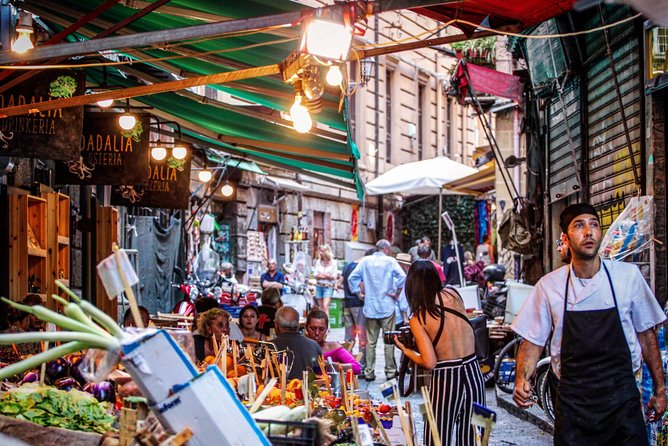
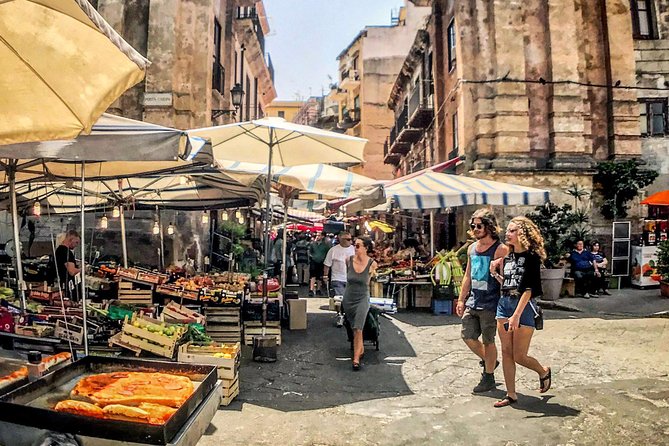
After the wall, you move into an old open-air market area. This part is louder and more chaotic, on purpose. Your guide uses it to explain the relationship between the Mafia and shopkeepers.
This is where the tour shifts from memorials to everyday pressure. You start to understand how extortion, intimidation, and compliance could affect a stall owner, a family business, and local life. The point is not to shock you. It is to show the system, and how anti-mafia culture grew partly through refusing that system.
For some people, this stop is the emotional peak. For others, it is the most relatable. Either way, it helps you read Palermo like a place where power tried to control people, not just buildings.
Stop 3: Palazzo di Giustizia and Piazza della Memoria
At the Palazzo di Giustizia, the walk brings you to Piazza della Memoria, by the court house. This area is a memorial dedicated to judges and prosecutors killed by the Mafia.
This is not the kind of stop you rush. The guide’s focus here is on accountability and courage. When you hear how judges and prosecutors were targeted, the earlier anti-mafia themes stop feeling abstract. They become real choices made under real risk.
A small drawback to consider: civic buildings and memorials can mean periods where you are mostly standing and listening. If you prefer walking-only narration, keep that in mind. On the bright side, the clarity of the explanation often compensates for the slower pace.
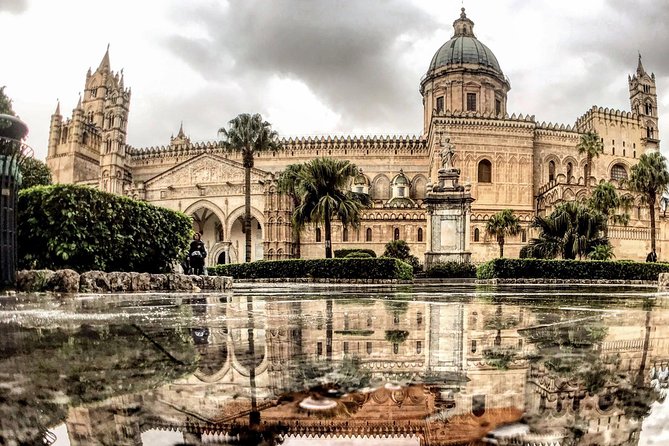
Stop 4: Palermo Cathedral and the Catholic Church story
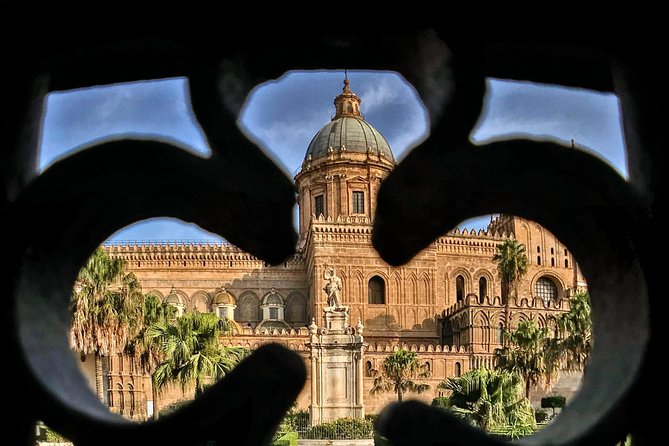
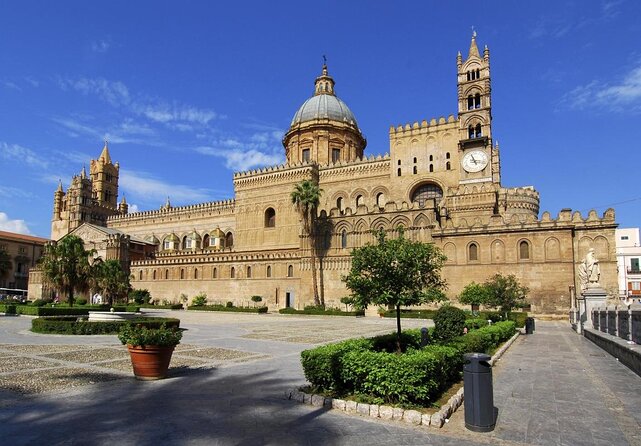
Then you reach Cattedrale di Palermo, the striking Arab-Norman Cathedral. Here, your guide talks about the relationship between the Catholic Church and the Mafia.
This stop matters because it adds complexity. Organized crime does not operate in a vacuum. Institutions, communities, and power structures interact. The guide’s goal is to show how anti-mafia efforts worked inside society, not just outside it.
If you like history that connects religion, politics, and public life, you will likely enjoy this segment. It also helps you understand why Palermo’s anti-mafia movement is not only about police actions. It is also about moral and social resistance.
Stop 5: Cappadonia Gelati on the Cassaro and the Addiopizzo NO pizzo signal
Along the Cassaro, you find Cappadonia Gelati with an orange sticker in the window. That sticker signals that the owners have said NO to paying extortion, also called pizzo. Your guide connects this to the grassroots anti-extortion effort promoted by Addiopizzo.
This is one of the most practical stops on the route. You learn the concept, then you can support it with a simple choice at a local business. It’s hard to make this kind of message feel real unless it shows up in a normal, friendly setting like gelato.
Expect a short break and a chance to buy something if you want. It is a good moment to regroup, and it keeps the walk from becoming only heavy.
Stop 6: Palazzo Pretorio, Palermo City Hall, and two political realities
The final civic stop centers on Palazzo Pretorio, connected to the Municipio di Palermo (City Hall). Your guide explains that this building’s history includes both corrupted politicians and also those who fought against the Mafia.
That contrast is the point. Palermo is not presented as a simple good-versus-evil story. The tour shows how corruption and resistance can sit in the same civic system. You leave with a more adult understanding of how power works.
Also, because this stop is tied to the seat of government, it reinforces something you have been hearing all along: anti-mafia culture is not just private courage. It involves public institutions, legal systems, and community pressure.
Ending near Fontana Pretoria: turn the walk into a full old-town plan
The tour ends in the heart of Palermo old town, near Fontana Pretoria. This is a smart place to finish because you can keep moving right away, without feeling like you need a separate trip.
Your guide also offers tips for what to eat next and how to continue exploring Sicilian specialties. If you want to build on the themes of the tour, this is where you can shift back to a lighter mood. Grab a bite, take the main squares in, and keep your mind on what you learned, not just what you photographed.
A helpful mental trick: use Fontana Pretoria as a transition point. Before it, you were learning about coercion and resistance. After it, you can enjoy Palermo’s architecture and street life with better context.
Who should book this walk, and who should adjust expectations
Book this tour if you want more than surface-level Mafia stories. It suits you if you like:
- walking and learning at the same time
- real-world context, especially how communities respond to extortion
- an anti-mafia focus that explains tactics and public resistance
- a small group setting where you can ask questions
It may feel less ideal if you want an art-focused, purely historical tour. This walk aims at civil resistance and anti-mafia culture first. You should also be ready for some standing and listening, particularly at memorial and civic stops.
If you are traveling with kids, the tour can still work, but it helps to be prepared for serious topics. The best approach is to ask your guide to frame the story in a way that fits your child. Some guides, like Sylvia, are praised for making the information clear and age-adjusted in tone.
About Addiopizzo and the solidarity contribution
One detail I appreciate: the tour includes a solidarity quote, a small contribution to Addiopizzo local NGO. That turns the experience into more than educational tourism. You are supporting the local anti-extortion work that the tour is discussing.
And because one of the tour’s most visible moments is the NO pizzo sticker at a gelato shop, it feels coherent. You see the idea in the street, you hear the reasoning, then you support it directly in a small, understandable way.
Should you book Palermo No Mafia?
Yes, I think you should book it if you want to understand Palermo as a living city that resisted organized crime through institutions and daily choices. The combo of landmark context, memorial stops, and a real-world refusal sign at Cappadonia Gelati makes the story stick.
It’s especially worth it for first-time visitors who want a fast, organized introduction to Cosa Nostra and the anti-mafia movement without romanticizing violence. With English guidance, a max of 15 people, and strong overall ratings (a 4.8 average from 1011 bookings shown in the tour data), it’s a well-timed 3-hour investment that helps you explore the rest of Palermo with your eyes open.
If you prefer tours that are light and purely scenic, pick another walk. If you want meaning, not myths, this one is a solid choice.
FAQ
How much does the Palermo No Mafia walking tour cost?
It costs $39.30 per person.
How long is the tour?
The tour lasts about 3 hours.
Is the tour offered in English?
Yes, the tour is offered in English.
What is the group size limit?
The tour has a maximum of 15 travelers.
Do I get a mobile ticket?
Yes, the tour includes a mobile ticket.
What is included in the tour price?
It includes a local guide and a small solidarity contribution to Addiopizzo local NGO.
What is not included?
Hotel pickup and drop-off and lunch are not included.
Where do I meet the guide, and where does the tour end?
You meet at P.za Giuseppe Verdi, 455, 90133 Palermo PA, Italy. The tour ends near Fontana Pretoria at Piazza Pretoria, 90133 Palermo PA, Italy.
What should I wear or bring?
Comfortable shoes are suggested. If the weather is rainy, an umbrella and a dry jacket would be necessary.
Can I get a full refund if my plans change?
Yes. You can cancel up to 24 hours in advance for a full refund. If you cancel less than 24 hours before the start time, the amount paid will not be refunded.
Reviewed lately around Palermo
- Palermo’s Delight: Unleash the Secrets of Pizza and Gelato Making★ 5.0 · 497 reviews
- Palermo: Street Food and Local Market Tasting Tour★ 4.9 · 540 reviews
- Palermo: UNESCO World Heritage Sites Guided Walking Tour★ 4.8 · 548 reviews
- Palermo: Small Group Night Street Food Tour★ 4.8 · 589 reviews
- Palazzo Conte Federico★ 5.0 · 650 reviews
- Palermo: Private Custom Walking Tour with Local Guide★ 4.7 · 661 reviews
- Palermo: Pizza and Gelato Cooking Class with Dinner and Wine★ 4.9 · 951 reviews
- Palermo: Agrigento and the Valley of the Temples Day Tour★ 4.2 · 1,240 reviews
Walking Tours, compared.
Guided Walking Tour & Last Supper Visit with Ticket
Read our review →

Rialto Bridge & Offbeat Unusual Venice Walking Tour
Read our review →
Private 3 hrs Venice Tour: St Mark’s, Walking tour & Boat tour
Read our review →
Skip the line: Uffizi and Accademia Small Group Walking Tour
Read our review →Browse the lists this tour appears in