
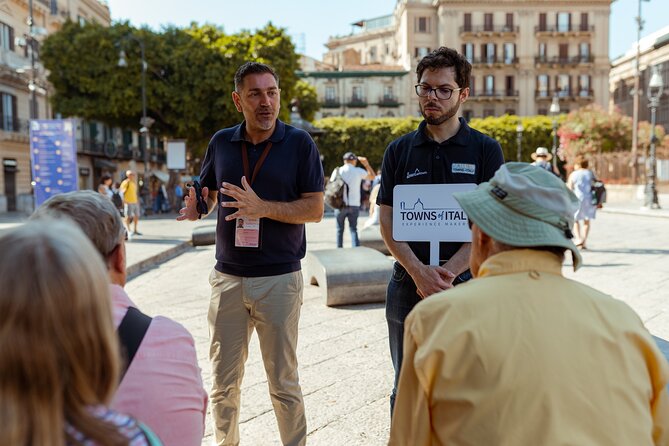
Reviewed · WALKING TOURS
Discover the Charm of Palermo: A 3-Hour UNESCO Sites Walking Tour
Palermo is one of those cities where styles overlap like they are gossiping with each other. In just 3 hours, you’ll connect UNESCO sites with the street-level scenes that make Palermo feel real, not museum-only.
I especially like the mix of architecture you’ll see in motion, from Norman shapes to Arab details and baroque showmanship. I also like that the tour ends with a proper Sicilian sweet, plus you get the chance to step inside the Cathedral of Palermo.
One thing to plan for: most of the star site you’ll hear about, the Palatine Chapel, is presented from the outside on this route, and other palace interiors may require extra ticketing.
Key highlights at a glance
- Norman-Arabic architecture in street form, not just on postcards
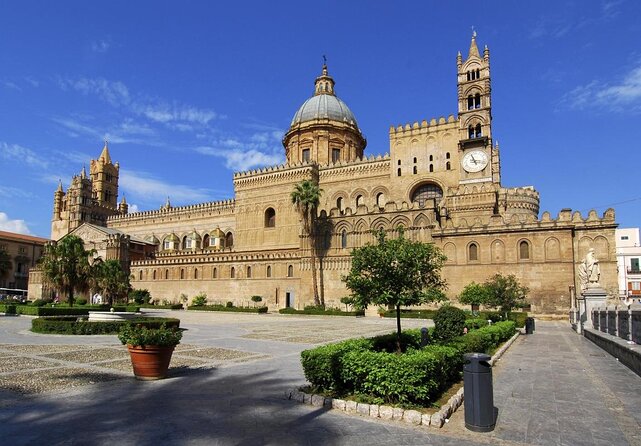
- Cathedral entry included, so you see the Norman-era core up close
- Palermo’s markets and fountains, built into the walking route
- Greek-Byzantine La Martorana, with services tied to ancient languages
- Piazza Pretoria and Quattro Canti, baroque drama you can measure in stone
- Small group size (max 20), which makes questions actually work
Why Palermo’s UNESCO blend works in a 3-hour walk
Palermo is famous for a reason, it’s a city where empires and faiths left layers. This tour moves through those layers fast, but it’s not a blur if you listen, and your guide does a good job turning facts into street sense.
You’ll walk through major squares, churches, and historic street corridors, with stops that explain why each place looks the way it does. It’s a smart choice when you want to understand the city early, so your later wandering feels purposeful, not random.
The pace is active, and you’ll be outside for plenty of it. If you’re sensitive to crowds and traffic noise, keep your expectations set for a lively central-core walk in the middle of a working city.
More Walking Tours in Palermo
- Palermo: NO Mafia Walking Tour
★ 4.8 · 2,431 reviews - Palermo Original Street Food Walking Tour by Streaty
★ 5.0 · 2,105 reviews - Palermo: Street Food and History Walking Tour
★ 4.9 · 1,294 reviews
Getting oriented fast, from Via Volturno into the historic core
The tour starts at Via Volturno 44, and it loops back to the same meeting point at the end. That round-trip setup is helpful in a city where figuring out the best “home base” can take a full day.
From the first blocks, you’re in the kind of Palermo where grand buildings are next to daily life. Even the small detours to places like open-air market areas make the architecture feel connected to how people actually live.
Most tours like this work best if you come with one mindset: ask questions at each stop. The good guides, like those named in feedback such as Valeria, Peter, Fabio, Renata, and Simone, tend to answer beyond the headline facts, like what to notice while you walk on your own later.
Teatro Massimo and Galleria delle Vittorie: opera glory meets faded commercial ambition
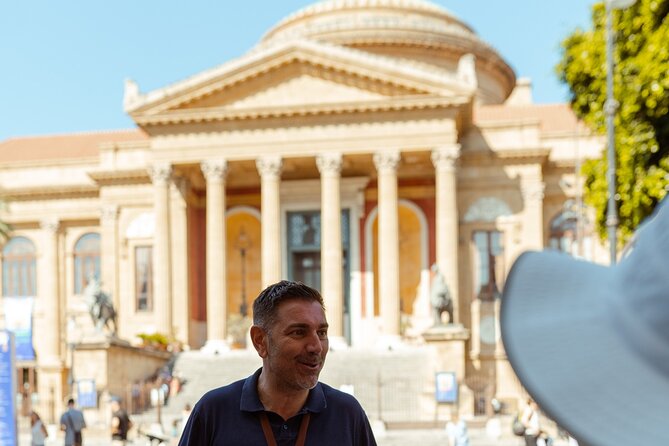
Your first major landmark is Teatro Massimo Vittorio Emanuele, Palermo’s iconic opera house. It’s described as the biggest in Italy and among Europe’s largest at the time of opening, and it’s also famed for excellent acoustics. Even standing near it, you can feel how designed this place is for sound and spectacle.
Just around the corner is the Galleria delle Vittorie, originally built as a commercial mall. Over time it deteriorated, and restoration has been attempted, so it’s a reminder that not every grand idea survives neatly. If you like seeing cities in mid-story, this stop gives you that angle.
This section is also a useful transition. You go from monumental culture to the more complicated reality of urban change, which is very Palermo.
Via Bandiera and Piazza Caracciolo: markets, street rhythm, and what to taste later
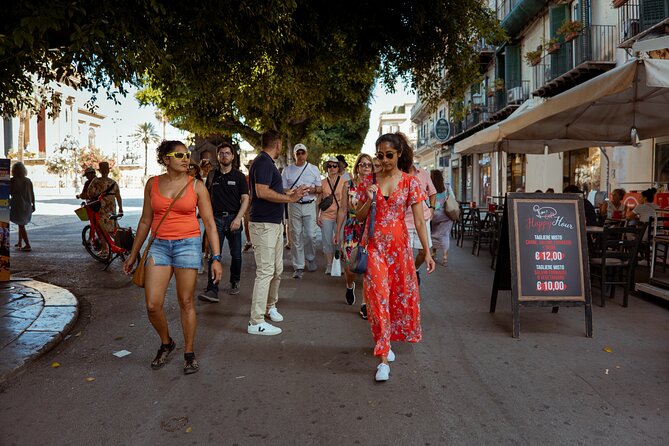
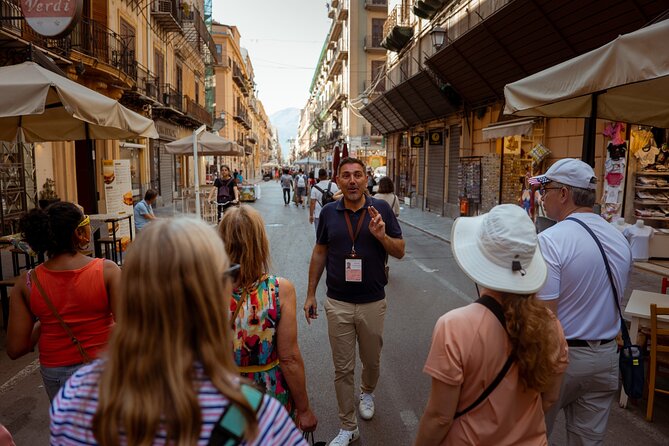
Crossing through via Bandiera you hit the energy of an open-air market area. It’s not a staged market, it’s everyday food and everyday foot traffic, and your guide helps you read what you’re seeing.
Next up is Piazza Caracciolo, a market area that winds through alleys and side streets. The name la Bucceria comes from a French word for butcher shop, which is a neat way to connect today’s snacks to older city planning.
If you’re a foodie, this is where you’ll start building your own plan for the rest of the trip. The key is not to overload your stomach during the tour, but to note what you like and ask where locals go after you’ve had time to walk.
A different Palermo day to consider:
- Palermo: Hop-on Hop-off Bus Tour 24-hour Ticket
★ 3.9 · 2,410 reviews - Segesta, Erice and Salt Pans Full-Day Excursion from Palermo
★ 4.2 · 1,791 reviews - Palermo: Teatro Massimo Opera House Guided Tour
★ 4.5 · 1,573 reviews - From Palermo: Monreale and Cefalù Half-Day Trip
★ 4.2 · 1,354 reviews
San Domenico and the Garraffo Fountain: faith, legend, and baroque flair
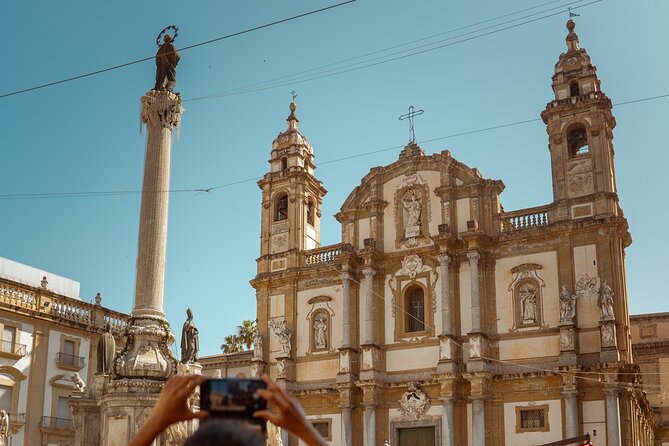
Chiesa di San Domenico is a major stop in the historic center, and it’s right in a square that makes it feel like it dominates the view. It’s also described as a kind of Pantheon of illustrious men of Sicily, which adds meaning beyond the architecture.
A separate layer of interest comes from Palermo’s reputation for organized crime and the way cities symbolize resistance. In the tour framing, San Domenico is even positioned as a symbol in the fight against the mafia, which is the kind of context that helps you understand why certain monuments matter here.
Then you’re guided to the Garraffo Fountain in Piazza Marina, down the ancient Cassaro street, now Via Vittorio Emanuele. The fountain is baroque, and it’s an easy stop to appreciate in a few minutes, because you can spot the style in how it’s composed and set into the square.
Short stops like these are a strength of this route. They keep the tour from becoming only “big buildings,” and they teach you where the city likes to pause for beauty.
Palermo Stock Exchange and Palazzo delle Finanze: money history in a stone frame
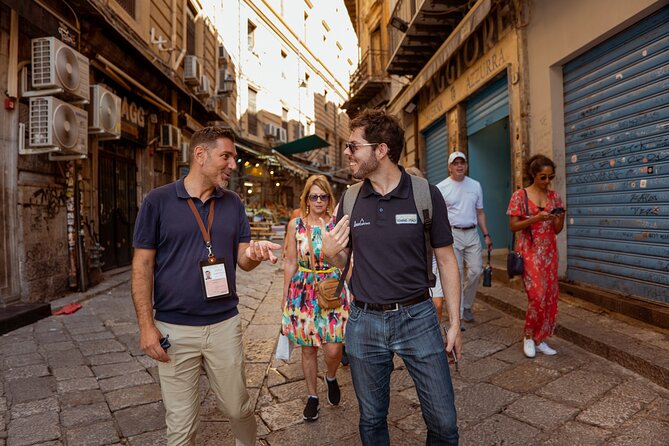
You’ll also pass the Palermo Stock Exchange, which operated until 1997 when city institutions were unified into the single Italian Stock Exchange. The tour explains that trading started in 1845 and that it was the second most important in the Kingdom of the Two Sicilies after Naples.
The site connection is Palazzo delle Finanze, where the exchange lived for about a century. That’s a good reminder that economics built real landmarks, even when we mostly talk about palaces and churches.
If you like social history, this is one of the spots that helps you understand Palermo as a working city, not only an artistic one.
The descent of the Judges to La Martorana: names, courts, and ancient-language worship
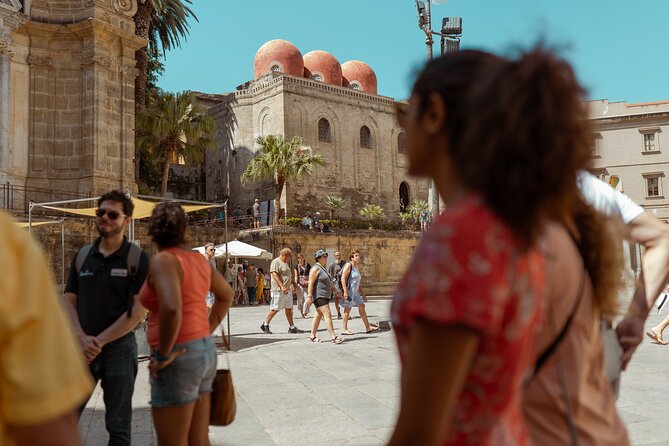
One of the most story-driven walk segments is the descent of the Judges, called calata dei giudici. The name links to the Judges of the Praetorian Court, who once lived there near monastery of S. Caterina, and the guide connects it to how civil and criminal cases were handled in ancient Palermo.
You also learn how those judges were elected by the king on the viceroy’s proposal, and that their office lasted one year. It’s compact political history, served as street naming.
Next is Santa Maria dell’Ammiraglio, commonly called La Martorana. This church connects to the Greek admiral George of Antioch, with construction dates given as 1143 to 1185. The tour also highlights something unique: the church is associated with Greek-Byzantine clergy who officiate in ancient Greek or Albanian, and it belongs to the Eparchy of Piana degli Albanesi of the Italo-Albanian Catholic Church.
That’s the kind of detail that makes a stop stick. It turns the church from a pretty landmark into evidence that multiple cultures kept their practices alive in Palermo.
Piazza Pretoria and Quattro Canti: baroque geometry you can actually see
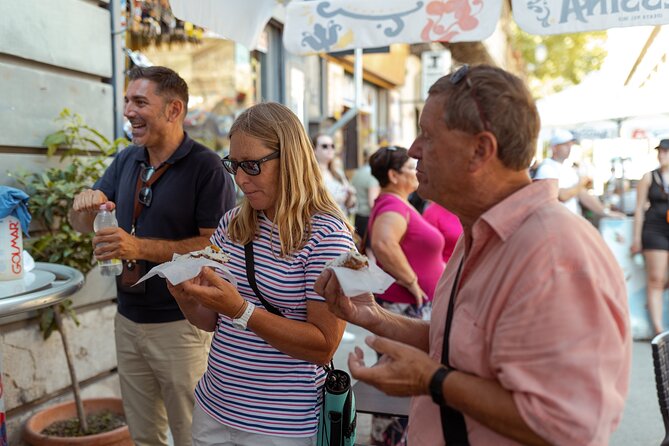
From La Martorana, you head toward Piazza Pretoria, near Kalsa. This is one of those places where you instantly understand why it’s popular.
The fountain story is classic smart-city history. It was originally created for the garden of don Luigi de Toledo in Florence, and Palermo’s plot had been a garden belonging to the nuns of San Domenico al Maglio before it was obtained in 1551. The fountain commission went to the Florentine sculptor Francesco Camilliani, student of Baccio Bandinelli.
Next you reach Quattro Canti, also known as Piazza Vigliena, described as Palermo’s most spectacular and popular spot. The four buildings were built between 1608 and 1620, and sculptures and decorations were completed in 1663. It’s baroque timing in stone, and it helps you see how the city planned its major crossroads.
If you want a single photography stop that rewards attention, this is it. Take a few photos, then watch how the street looks from each corner. The guide’s explanation helps you see why the square is designed the way it is.
Cathedral of Palermo: Norman roots with Arabic and later layers
Cattedrale di Palermo is the big ticket inside this tour, because admission is included. The cathedral is framed as Norman architecture in Sicily, built in 1184 by the Normans as a reconverted Christian church on the site of a Muslim mosque over a previous Christian basilica.
What I love here, and what you’ll get from a guide, is how the cathedral tells multiple stories at once. You’ll hear about architectural competition with Monreale, and the explanation makes sense of why the building feels slightly overbuilt in the best way.
You’ll also learn about the stratification of styles: Gothic and medieval additions, Arabic influence, and later neoclassical changes. The tour mentions an Arabic passage from the Koran engraved on a column, which is exactly the kind of specific detail that helps you spot what matters when you step inside.
Set aside a few minutes to slow down inside. Even if the tour moves on schedule, this is the one stop where you’ll benefit from lingering slightly to look at surfaces and layout.
Villa Bonanno and the mosaics story behind the garden
Not every UNESCO-related stop is a cathedral. Villa Bonanno is a garden always open, described as built in 1905 by mayor Bonanno and located in Victory Square behind the Palazzo dei Normanni.
This is where you get to see Palermo’s taste for combining nature with art objects. Statues and busts of famous people of Palermo are mentioned, plus you learn about Roman patrician houses discovered nearby with mosaics.
Two mosaic references show up clearly: mosaics of the seasons and Orpheus, which are now kept in the National Archaeological Museum. That’s useful because it gives you a follow-up plan. If the mosaics caught your eye, you’ll know what to look for if you visit the museum later.
The fountain next to the villa, with a monument to Philip V, is also mentioned. Your time here is short, so it’s a “taste” stop, not a full garden picnic.
Palazzo dei Normanni: the Arab-Norman story you came to hear
Your final major landmark is Palazzo dei Normanni, also called the Royal Palace. It’s described as chronicling Palermo’s history from early Punic settlements to later eras.
Here’s the UNESCO anchor: the tour focuses on Arab-Norman art through the Cappella Palatina, which is mentioned as one of the rooms you can visit and is described as a World Heritage Site since 2015. Admission to the palace interiors is noted as not included, so plan for this stop to be more about orientation and explanation than a guaranteed full interior experience.
If you want more than a quick look, you’ll likely need extra planning or tickets on your own. But even without entering, the guide’s framing makes you understand what you’re looking at and why this complex matters.
Food included, and how to use it without losing your appetite
One of the smartest value points is the included Sicilian treat, listed as cannolo or granita. It’s not just a snack. It’s also a chance to pause, reset, and learn how Palermo likes to sweeten the day.
The guides named in feedback, including Valeria and Simone, are repeatedly praised for making the tour feel connected to food choices. If your guide gives suggestions on where to try more pastries or where to sit for a real granita later, write them down. That follow-through is what makes a short tour pay off across multiple days.
Price and pace: is $31.88 good value for Palermo UNESCO sites?
At $31.88 per person for about 3 hours, this price starts looking reasonable once you see what you actually get. You have a licensed English speaking guide, multiple major landmarks, and Cathedral entry included, plus the cannolo or granita.
The other advantage is route efficiency. Palermo’s historic center is dense, and without help you can spend time figuring out what connects to what. This tour compresses a lot of major themes, Norman roots, Arab influence, baroque planning, and lived-in street culture, into a single half-morning.
The pace is active, and the tour is designed to cover territory without eating your whole day. Feedback also points out that guides manage the pace well and keep breaks in mind, including shade when the weather is warm.
The trade-off is that some of the most intricate interiors, like the Palatine Chapel mosaics, may not be the full inside show. So think of this as an orientation tool plus a meaningful cathedral visit, not a museum crawl where every room is open.
Who should book this walking tour, and who should consider alternatives
This is ideal if you want a strong starting point on day one, especially if it’s your first time in Palermo. It’s also great if you like architecture but don’t want to spend hours researching before you even arrive.
I’d also put it on your list if you care about local context, like how Palermo’s history connects to politics, faith, and everyday street naming. The street-level stories about judges, courts, and symbolic monuments make this tour feel like it’s teaching you how the city thinks.
If you want maximum time inside churches and palaces, you might be happier adding extra tickets after the tour. This route is packed, and the trade-off for speed is that not every interior can be visited deeply.
A quick heads-up before you go: weather, crowds, and bathroom reality
The tour takes place regardless of weather, so bring layers and plan for rain if it’s forecast. Palermo can also be busy, and traffic can feel close to pedestrians in parts of the center.
For restrooms, you’ll want to plan ahead. Even on a short tour, finding a clean bathroom can take time in the old streets, and the walk keeps you moving.
Should you book this Palermo UNESCO Sites walking tour?
Yes, if your goal is a smart introduction that helps you navigate Palermo with confidence. I like that you get the Cathedral of Palermo inside, plus a route that connects architecture to the city’s daily rhythm in markets and squares.
Book it especially early in your planning window, since this tour is typically booked about 36 days in advance. Small group size also helps, and the consistent praise for guides like Valeria, Peter, Fabio, Renata, and Simone is a good sign that the tour is built around strong local storytelling.
If you’re planning to go deep into the Palatine Chapel mosaics and you only care about interior viewing, you may need a follow-up plan. But as a “get your bearings fast” UNESCO walk with real Palermo flavor, it’s an excellent use of a half-day.
FAQ
What is the duration of the Palermo UNESCO walking tour?
The tour lasts about 3 hours.
What is included in the price?
It includes a licensed English speaking guide, the walking tour itself, a Cathedral of Palermo entrance, and a typical Sicilian cannolo or granita.
Is the tour ticketed for the Cathedral and other monuments?
Cathedral entry is included. Other entrances are listed as not included, so you may need to plan separately if you want to go inside specific places beyond what the tour covers.
Where does the tour start and end?
It starts at Via Volturno 44, 90138 Palermo PA, Italy and ends back at the same meeting point.
Does the tour run in bad weather?
Yes. The tour takes place regardless of weather.
Are there any rules for pets or service animals?
Service animals are allowed, but pets are not permitted on the tours.
Reviewed lately around Palermo
- Palermo : Private Custom Walking Tour with a Local Guide★ 4.5 · 237 reviews
- Palermo: Markets and Monuments City Center Walking Tour★ 4.9 · 238 reviews
- Palermo Sicilian Street Food Tour: Small Group with a Local★ 4.8 · 259 reviews
- Palermo, tour tra monumenti unici e mercati colorati★ 4.9 · 271 reviews
- Sicilian Cooking Class★ 5.0 · 289 reviews
- Palermo: Norman Palace and Palatine Chapel Tour with Tickets★ 4.7 · 298 reviews
- Discover Palermo in 3 hours. Art, history, markets and street food★ 5.0 · 352 reviews
- Palermo: Guided City Walking Tour w/Customizable Itinerary★ 4.6 · 390 reviews
Walking Tours, compared.
Guided Walking Tour & Last Supper Visit with Ticket
Read our review →
Rialto Bridge & Offbeat Unusual Venice Walking Tour
Read our review →
Private 3 hrs Venice Tour: St Mark’s, Walking tour & Boat tour
Read our review →
Skip the line: Uffizi and Accademia Small Group Walking Tour
Read our review →Browse the lists this tour appears in