Reviewed · ROME TOURS
Welcome To Rome Experience
Welcome To Rome is interesting because it turns Rome’s past into a hands-on, audio-and-visual experience, with projections and interactive exhibits that make the city’s layers feel easier to grasp. I love the pre-purchased mobile ticket for saving time, and I also like that the show uses audio, video, and 3D models in a way that works for both adults and kids.
One thing to consider: the whole experience is about one hour, and it moves briskly through eras. If you want a deep, slow, lecture-style history session, this is more of a strong overview than a full course.
Quick hits before you go
- Pre-purchased mobile ticket helps you skip the friction and get to the show
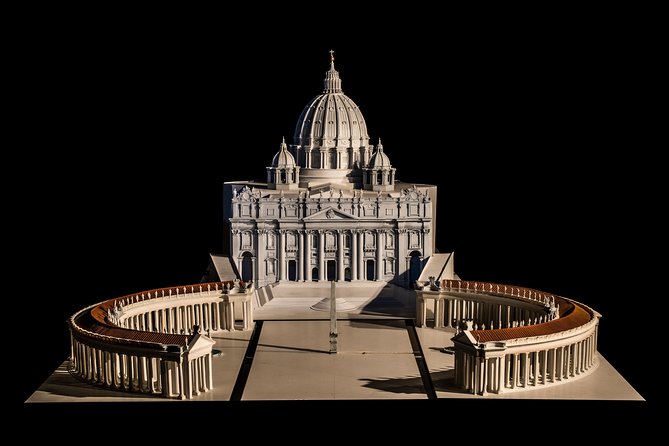
- 3D reconstructions help you picture how key buildings looked in earlier eras
- Audio and video pacing keeps the story moving without long pauses
- City-center location with access near public transport makes it easy to fit in
- Multiple showings daily means you can choose a time that fits your day
- Short and family-friendly for many ages, but very young kids may struggle to stay engaged
Welcome To Rome: what the multimedia show is really like
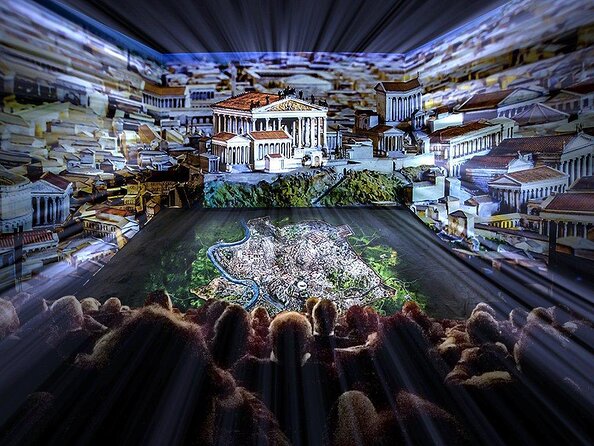
Welcome To Rome Experience is a time-efficient way to get your bearings in Rome. Instead of starting your trip with only ruins and plaques, you start with a storyline that explains how the city evolved, then you see the visual proof of that evolution in 3D projections, models, and film.
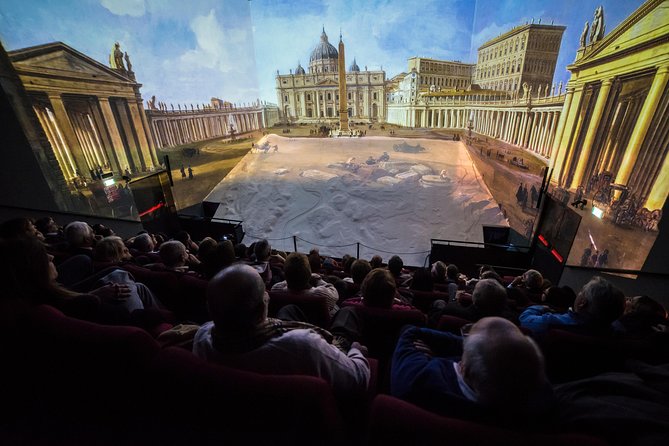
The format is designed to keep you active. You do not just sit in a dark room for the entire time. You move through small viewing areas where you watch dioramas and reconstructed scenes, then you finish with a longer seated film segment. That shift matters. It gives your feet a break right when attention tends to wander.
This is also a strong choice if you like your history organized by eras. The experience walks you through how Rome changes over time, and it includes an early step that most people do not think about: the city’s physical beginnings.
More from a Rome stay:
- Colosseum, Roman Forum & Palatine Guided Tour
★ 4.7 · 63,148 reviews - Vatican Museums, Sistine Chapel & St Peter’s Basilica Guided Tour
★ 4.5 · 39,149 reviews - Rome: Colosseum, Palatine Hill and Roman Forum Guided Tour
★ 4.8 · 32,814 reviews
Price and value for $21.77 per person
At about $21.77 per person for roughly one hour, this is not a “cheap fun thing” and it is not a high-ticket museum either. It sits in the middle, and the value is in how quickly you get context.
Here’s why I think it can be worth it:
- You pay for an orientation lesson, not just entertainment.
- You get a story that you can use immediately as you walk Rome for real.
- You get pre-purchased admission, which helps you avoid wasting your limited first-day energy.
If you are spending a full day hopping between major sites like the Roman Forum, Palatine Hill, and the Colosseum, you will appreciate having a mental map of what you are seeing. Several visitors describe how the show made it easier to imagine layouts and building styles once they reached those landmarks.
If you are the type of person who wants every historical detail, you might feel the time is short. But for most people, the goal here is clarity, not depth.
The one-hour flow at Corso Vittorio Emanuele II
Everything centers on Stop 1: Welcome To Rome, held at Corso Vittorio Emanuele II, 203, 00186 Roma (RM). The experience is offered in English, and the duration is listed as about 1 hour.
While the exact timing can vary by session, the experience generally follows this pattern:
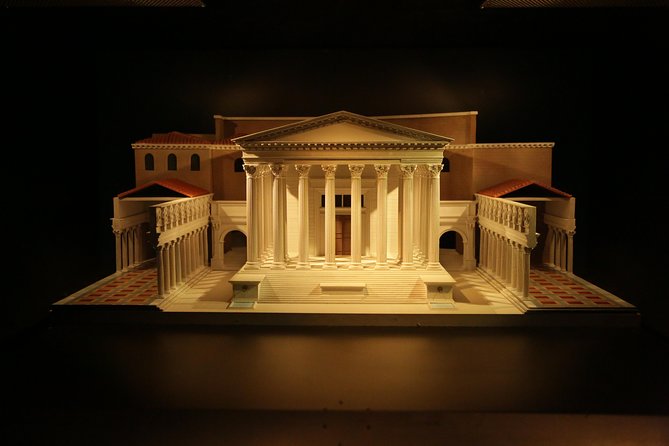
- You go through a set of small rooms where you stand and watch projected scenes and scale reconstructions.
- You use an audio system while you watch these segments.
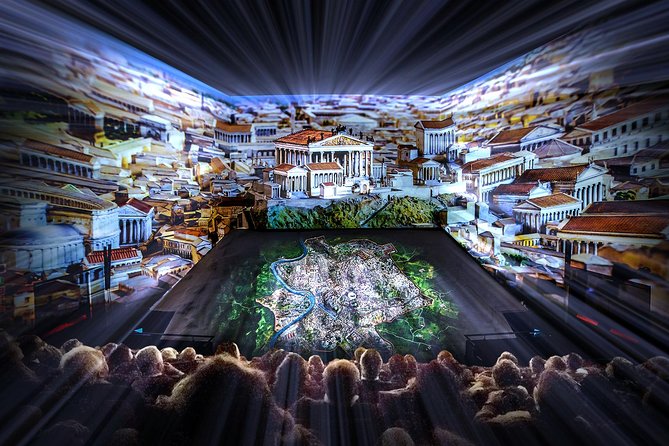
- You then move into a main theatre-style area to watch the longer film portion, which is about the time you can sit down and recover.
That “stand, watch, listen, then sit” rhythm is practical for families. It also explains why it works as a first stop. You are not exhausted by a long day of walking, and you are not yet too overwhelmed by the sheer amount of Rome.
What you see: volcanoes, city shape, and building eras
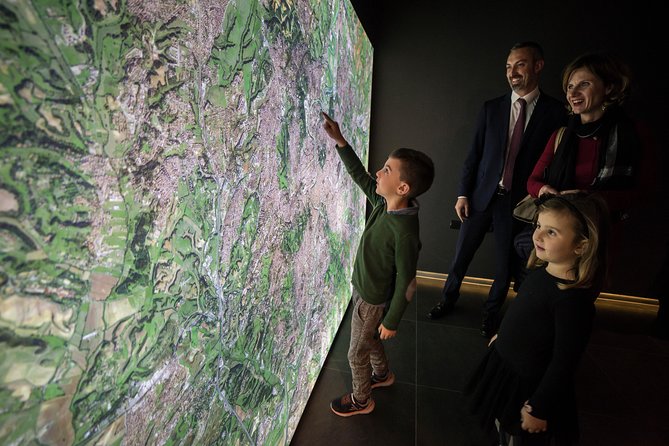
One of the standout parts is that the story starts with the land itself. Instead of jumping straight into emperors, it includes a brief geological explanation about Rome’s early landscape. The show then builds outward from there, walking through how the city develops architecturally over time.
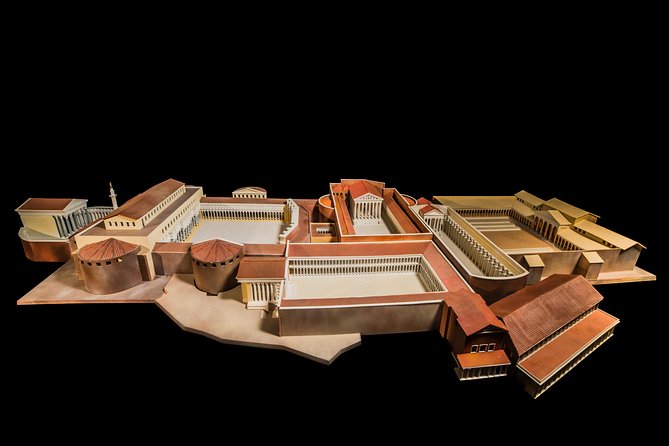
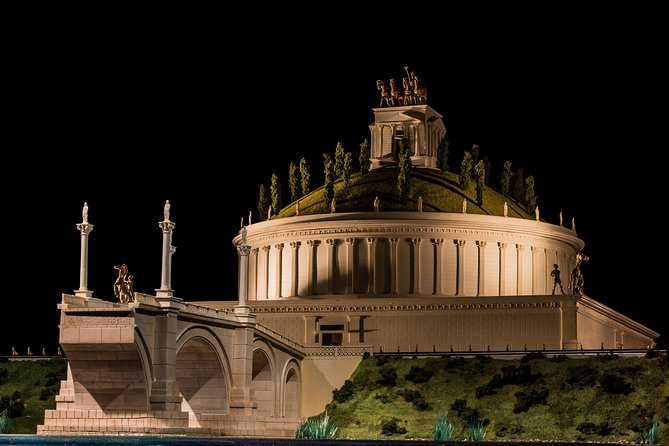
You also get visual comparisons of what survives today versus what once stood there. People often love this “then and now” approach because it trains your eye. When you later look at ruins, you start thinking in 3D: what stood where, what the walls might once have looked like, and how the space would have felt.
A different Rome day to consider:
- Rome: Guided Tour of Colosseum, Roman Forum & Palatine Hill
★ 4.7 · 27,897 reviews - Rome: Colosseum, Roman Forum and Palatine Hill Guided Tour
★ 4.5 · 23,903 reviews - Rome: Pantheon Fast-Track Ticket and Official Audio Guide
★ 4.3 · 21,008 reviews - Rome: City Sightseeing Hop-on Hop-off Bus with Audioguide
★ 4.0 · 16,045 reviews
The 3D and audio pieces
The show uses audio and video in an interactive-feeling way. In the small-room sections, you will be equipped with audio so the narration matches what you are seeing. If anything goes wrong, staff are mentioned as available to help replace a radio and get you back on track.
That is worth knowing because it is usually a minor hiccup. Still, it helps to be ready to check your device early in the session rather than waiting until the story has already moved on.
Why this is a great first stop (and how to use it after)
This experience is most powerful when you treat it like a preface, not a standalone attraction. The best plan is to go early in your trip, when everything is new and you still have the energy to connect the dots.
After you watch the show, you will likely find it easier to:
- picture how major Roman sites fit together in one broader city story
- recognize architectural shifts by era, instead of seeing each ruin as separate
- imagine streetscapes and monument appearances, not just what is left behind
That matters because Rome can feel like a pile of incredible fragments until you understand the progression. Once you have that timeline in your head, walking the city becomes less confusing and more satisfying.
One practical tip: after the show, pick one or two nearby sites you want to focus on that day. If you try to “see everything,” the new context can be hard to absorb. Use the show’s timeline as your guide rail.
Family fit: who will enjoy it, and who might find it tough
Welcome To Rome is built for families. The audio-video mix, the interactive exhibitions, and the 3D visuals make it more engaging than a straight lecture.
In particular, kids who enjoy visuals tend to do well. Many people highlight their children enjoying the audio and the 3D reconstructions, with ages around elementary and early teens often finding the pace just right.
That said, it is not a cartoon, and the content can feel detail-heavy for younger children. If you are bringing very young kids, plan for shorter attention spans and consider bringing something simple to help them stay focused.
Also, be aware that you will spend time standing in the small-room stations, then you will sit for the film. Comfortable shoes help. If you want the cleanest energy experience, arrive rested and ready to stand for short stretches.
Scheduling: show times, last entry, and location logistics
The show runs with multiple showings daily, which is a big advantage in Rome, where plans change and lines happen. It also helps you match the experience to your energy level, like doing it before a busy day of ruins.
You should plan around the last entry being one hour before closing. Since the show has a set start time for each session, don’t treat it as an open-ended stop.
As for getting there, it is in a city-center address on Corso Vittorio Emanuele II and it is described as being near public transportation. That makes it a good option when you do not want to waste time figuring out complicated logistics.
If you are trying to squeeze in multiple activities, this one is short enough to work as a “setup stop” between longer tours and museum time.
Accessibility and practical comfort notes
The experience allows service animals. It also notes that most people can participate, so it is generally positioned as broadly accessible in the sense of normal participation.
One comfort note from participant feedback: some sessions are described as feeling cold, and the main space can vary in comfort. I’d bring a light layer, especially if you’re visiting during cooler months.
Finally, if you care about restroom quality as part of your planning, keep your expectations flexible. A few participants flagged issues with maintenance in the facility. That is not something you can fully control, but it is worth considering if you have a sensitive schedule.
Should you book Welcome To Rome?
I think you should book Welcome To Rome if:
- you want a fast, structured overview of how Rome changes over time
- you like 3D reconstructions that help you picture ruins as whole buildings
- you are bringing kids or a mixed-age group and want something visual instead of text-heavy
- you are going to visit major sites next, like the Forum or Colosseum area, and want context first
I’d skip it or at least think twice if:
- you are already comfortable with Roman history and want deep detail for a longer time slot
- you know your group dislikes being on their feet in short viewing stations
- your group needs lots of seating and extended breaks between segments
If you are trying to get the most Rome “payoff” per hour on your first day, this is a smart, low-risk way to do it. You get a timeline you can carry into the streets, then you spend the rest of your trip actually exploring.
FAQ
How long is the Welcome To Rome Experience?
The experience lasts about 1 hour.
Is the experience offered in English?
Yes, it is offered in English.
Do I get a mobile ticket?
Yes, the ticket is mobile.
Where is the experience located?
It is at Corso Vittorio Emanuele II, 203 – 00186 Roma (RM).
Are there multiple showings daily?
Yes, there are multiple showings daily.
What time is the last entry?
The last entry is one hour before closing.
Can I get a full refund if I cancel?
Yes, cancellation is free if you cancel up to 24 hours in advance for a full refund.
Reviewed lately around Rome
- Colosseum, Palatine Hill and Roman Forum with Guided Tour★ 5.0 · 500 reviews
- Exclusive Golf Tour Private VIP with Local & Gelato o Wine★ 5.0 · 500 reviews
- Rome Trastevere Pasta Making Class with Eating Europe★ 5.0 · 505 reviews
- Rome by Night Walking Tour★ 4.5 · 506 reviews
- Rome: Colosseum Express Tour with Forum & Palatine Access★ 4.5 · 511 reviews
- Rome Food Experience Max 6 People Group Tour | w/Private Option★ 5.0 · 516 reviews
- Rome: Papal Audience Experience with Pope Leo XIV★ 4.8 · 518 reviews
- Rome: Escorted Papal Audience Experience with Entry Ticket★ 4.4 · 518 reviews
Rome Tours, compared.

Colosseum, Roman Forum & Palatine Guided Tour
Read our review →
Vatican Museums, Sistine Chapel & St Peter’s Basilica Guided Tour
Read our review →
Colosseum, Palatine Hill and Roman Forum Guided Tour
Read our review →
Guided Tour of Colosseum, Roman Forum & Palatine Hill
Read our review →
Colosseum, Roman Forum and Palatine Hill Guided Tour
Read our review →
Pantheon Fast-Track Ticket and Official Audio Guide
Read our review →
City Sightseeing Hop-on Hop-off Bus with Audioguide
Read our review →