

Reviewed · AUDIO TOURS
Trieste Bus Tour with Audio Guide
This Trieste bus loop is interesting because it gives you a fast, sea-level to hill-top overview of the city, with an audio guide that talks as you pass each landmark. You end up with a mental map you can actually use later.
I particularly like the air-conditioned comfort on a modern bus and the audio guide in English, German, Italian, and Spanish. The hop-on, hop-off style also means you can stop when something catches your eye, not just when the bus schedule says so.
One consideration: the hop-on hop-off freedom depends on seats on the next bus, and the Miramare area involves walking time. If you have mobility limits, plan your Miramare visit carefully.
Key highlights you should know
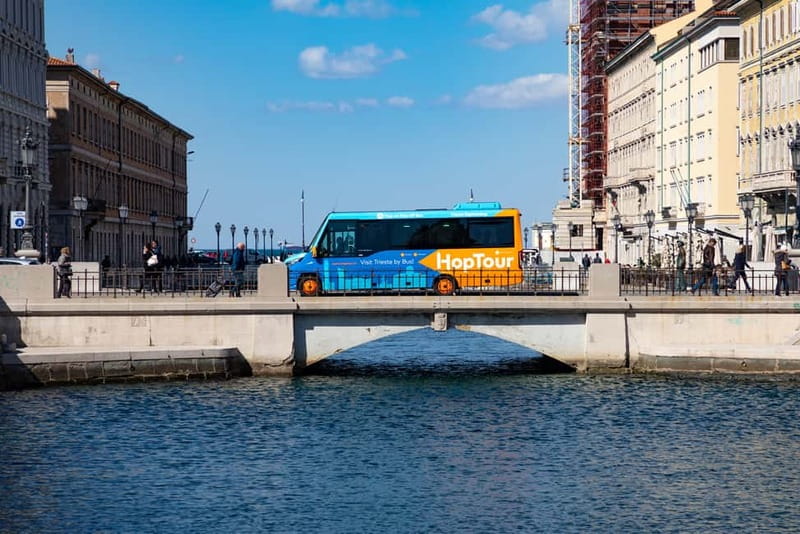
- Audio guide synchronized to the route so you learn what you are seeing, not what you saw earlier
- Hop-on hop-off flexibility, with a ticket valid for 24 hours
- Classic Trieste waterfront to hilltop views, from Molo Audace to San Giusto and beyond
- Comfort perks like an air-conditioned bus, USB charger, and on-board help
- Photo-rich stops such as the Roman Theatre area and the Miramare Castle frontage
- Pet policy is simple: pets are allowed only with a muzzle
Trieste’s best “first-day map” from Molo Audace
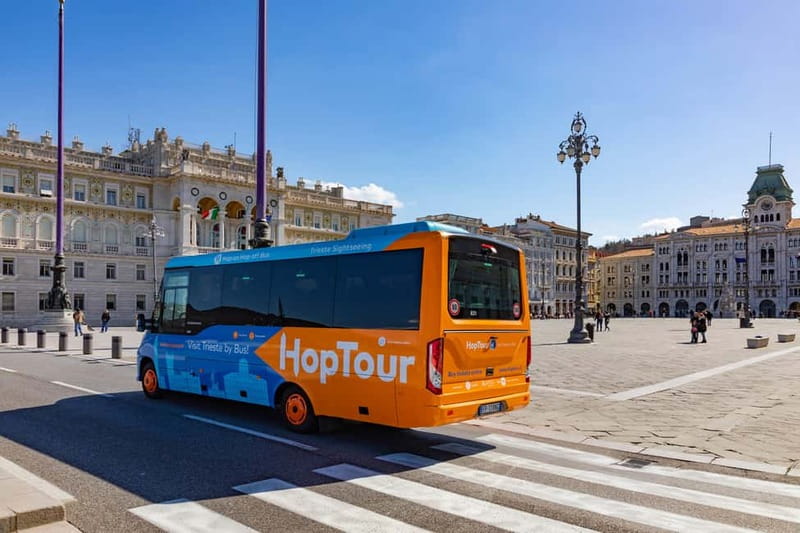
If Trieste is new to you, this tour is a smart move. The city can feel a bit layered at first, with sea power on one side and old architecture and churches climbing upward. This bus tour keeps you moving while still giving you context, so you understand what you are looking at instead of just collecting photos.
I like that it starts right where Trieste announces itself: Molo Audace. This pier was built on the wreck of an older ship, which is such a Trieste detail, gritty and historic at the same time. You get the city’s ocean setting immediately, then the route gradually climbs into the mix of Roman, maritime, and Central European influences.
The 90-minute loop: what you will see, in the order that matters
The ride runs about 1.5 hours, but your ticket is valid for 24 hours, which is where the real value comes in. In practice, this means the tour works as an overview first, then as transportation between neighborhoods later, if you want to stretch your time.
The starting and ending point is the same: the bus begins at Molo Audace, in front of Piazza Unità d’Italia. From there, you follow a route that sweeps through the waterfront, historic center, major squares, and the San Giusto hill area, then continues toward Barcola and Miramare.
Here’s how the experience tends to land, stop by stop.
Molo Audace and the Mandracchio shore, where Trieste’s sea story starts
You’ll pass Molo Audace and then head along the waterfront toward Mandracchio and Unita d’Italia Square. This is the part of Trieste that makes it feel different from many Italian cities. Instead of turning inward, the city keeps looking outward to the Adriatic, and you can see it in the monuments and the streets built to face the water.
Expect the audio guide to set the tone with background that connects specific spots, like how the pier’s location ties to older maritime history. It is the kind of information that makes later walks more satisfying.
Salone degli Incanti and the Nazario Sauro shoreline, modern life by the sea
As you move along the water, you’ll get to Salone degli Incanti in the area near Eataly (via the Nazario Sauro shore). This stretch is useful because it shows you how Trieste blends formal historic spaces with today’s food and market life. Even if you do not go inside anywhere, you get a clearer idea of where the city’s public spaces actually are.
From here, the route continues toward the older center.
Ottaviano Augusto Street, the Lighthouse area, and La Lanterna Baths
On Via Ottaviano Augusto, you will see the lighthouse and La Lanterna Baths. This is one of those photo stops that feels more like a shoreline landmark than a single monument, and that matters. Trieste has a habit of making the coastline itself feel like the main stage, and the lighthouse is part of that story.
If you’re the type who likes to orient visually, watch the coastline and note how the streets curve away from it.
Campo Marzio area, Maritime Museum, and the Sea Museum zone
The route passes through the Campo Marzio area and includes the Sea Museum zone. You do not need to commit to a ticketed museum visit to benefit from this part. The bus tour helps you place maritime culture into geography, so if you later decide to go inside, you already know what to look for and where the museum sits relative to the waterfront.
This is also where the bus feels practical, because you are sitting while moving between places that would be tiring to reach on foot in one stretch.
Roman Theatre area and Santa Maria Maggiore, classic Trieste in layers
When the bus reaches the Roman Theatre area, you start seeing the city’s older, stone-and-empire side. The itinerary includes Teatro Romano Street, which links nicely to Santa Maria Maggiore Church and the Roman Theatre setting.
This segment is great for a first visit because you get that “wait, Trieste has Roman roots here” feeling without having to research beforehand. The audio guide helps connect the dots.
Serbian Orthodox Temple of Saint Spyridon and the Maria Teresia area
Trieste is famous for its cultural variety, and this tour puts one key example on your route: the Orthodox Serbian Temple of Saint Spyridon, in the area around Saint Spiridione Street and Maria Teresia. This stop is one of the best moments for me, because it shows how the city’s identity was shaped by different communities over time.
If religious architecture interests you, use this as a benchmark. Later, when you visit churches or synagogues in the region, you’ll notice the differences more easily because you already have this point of reference.
Piazza Vittorio Veneto and Piazza della Borsa, then up toward San Giusto
You’ll pass Piazza Vittorio Veneto and then reach Piazza della Borsa, which is a natural pivot in the tour. These squares help explain Trieste’s role as a port city tied to trade, money, and logistics, not just tourism.
From there, you move toward Piazza Carlo Goldoni and the San Giusto area. The route includes Saint Giusto Hill, where you will see San Giusto Castle and Church.
This hill stop is where the bus tour really earns its keep. From below, you might not grasp how important that elevated zone is. From the audio guide, you learn why it mattered, and you can also decide if you want to hop off and spend time there.
Carducci Boulevard and Oberdan Square, then Piazza della Libertà
As you continue, you pass Carducci Boulevard and reach Oberdan Square near the tram station area. Then comes Piazza della Libertà, tied to the train station area.
These are useful stops because they connect Trieste’s historic center with how people actually move today. If you are planning day trips next, or you’re arriving by train and need a layout, these sections help you build a route plan.
Old Port hydrodynamics area, Barcola pine forest, and the seaside breaks
One of the best stretches is around the Old Port and then onward to Barcola. The tour includes a pass by the Central Hydrodynamics of the Old Port of Trieste and then continues toward the Pinewood of Barcola and Barcola Beach.
This is where you should slow down mentally. Trieste’s beaches and pine areas feel like they belong to a different mood than the downtown squares. Even if you do not get off, the audio guide frames the setting so it does not feel like a random coastline stretch.
Miramare Castle area, plus the Barcola shoreline connections
You will reach Miramare Castle along the Miramare Boulevard route, including the Barcola Crossroads and the Barcola seafront area (with the Topolini Baths zone mentioned on the route). Miramare is the big headline sight on this half of the loop.
Here is the practical note that matters: the Miramare stop can mean a walk of about 700 meters to the castle area. On a hot day, or if you’re traveling with someone who tires easily, that walking time affects how much you can enjoy. If Miramare is a top priority for you, consider planning to hop off early enough and keep your visit tight.
Greek Orthodox Church of Saint Nicholas and the return to Molo Audace
Near the end, the route includes Greek Orthodox Church of Saint Nicholas and then returns toward Libertà Square (train station area) and finally back to Molo Audace and Piazza Unità d’Italia.
This final part works as a wrap-up. By now, the audio guide has done its job, and you start noticing patterns: how squares connect to streets, how the port influences what comes where, and where you might want a longer walk later.
How the synchronized audio guide works when you are on the move
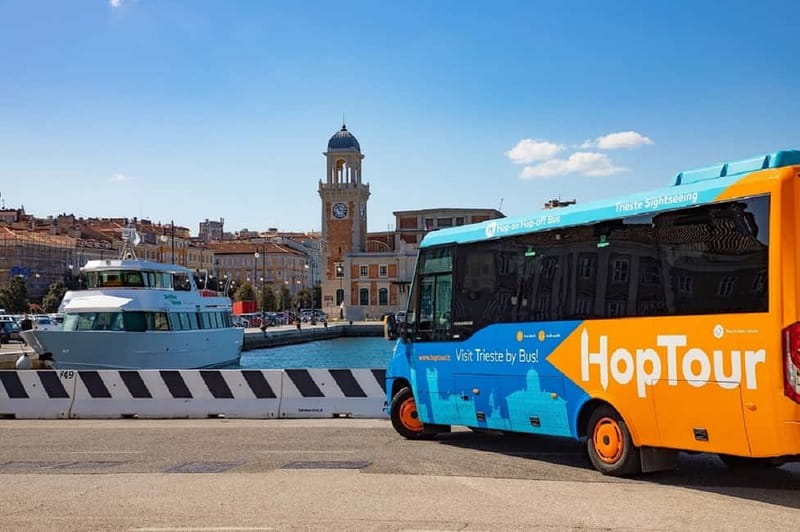
The audio guide is included and available in Italian, English, German, and Spanish. It is synchronized with the route, so the timing matters. You are not sitting through a lecture unrelated to the view outside your window.
In practice, this means the bus becomes both transportation and a structured city walk, minus the walking strain. You can also use it as a planning tool. For example, once you hear the context behind the Roman Theatre area or the Orthodox temple, you know what to look for when you stop on your own later.
I also appreciate that the bus includes on-board assistance. When you are figuring out hop-on hop-off timing, staff guidance is what prevents little confusion from turning into lost time.
Hop-on hop-off logistics that affect your day
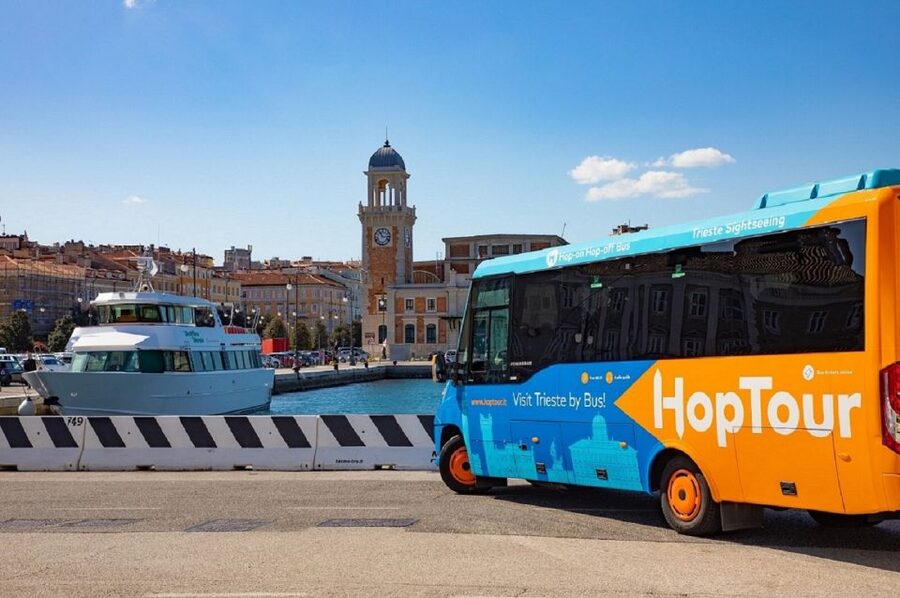
This tour is not “one-and-done.” You can hop off and then catch the next bus if there is a seat. The ticket is valid for 24 hours, but seat availability depends on the bus timing for the course you booked.
Here is the best way to use that:
- If you want the most flexibility, start earlier rather than later.
- Build your stops around how long you want to linger at the hill and at Miramare.
- When you hop off, be ready to re-board and confirm with staff when you get back on, since there can be a need to let the guide know you are returning.
You might also receive a free map that helps you follow the stops and times. Even if your phone map works, a printed map makes it easier when you are tired or the streets are busy.
Comfort perks that make Trieste easier in real life
This is an air-conditioned bus, which matters in Trieste because you might arrive on a day when the sun makes old stone and waterfront walks feel long.
Added practical bonuses:
- USB charger on board
- Modern, comfortable seating
- Staff support during the route
If you are traveling with older relatives, a bus loop like this is often the difference between seeing the city at a reasonable pace and spending the day wishing you had sat down sooner.
Price and value: why $19 can be a smart deal
At $19 per person, the value comes from more than just the sightseeing. You get:
- A full loop overview in about 1.5 hours
- An audio guide in four languages
- The ability to keep using the ticket over 24 hours
- Hop-on hop-off transportation between a lot of key areas
Entrance fees are not included for the monuments and attractions. So if you are expecting museum tickets to be covered, plan to buy those separately.
Even so, this is often a good deal when you treat it like a fast “orientation pass.” Once you know where the Roman area, the San Giusto hill zone, and the Miramare waterfront segment are, you can choose the few stops worth paying for and skip the rest.
Where this tour shines, and where it might not fit
This bus tour shines if you want:
- A first-visit overview of Trieste without heavy walking
- A clear city layout to guide later independent exploring
- Comfortable sightseeing in heat or on days with questionable visibility
It might be less ideal if:
- You want a long, unhurried Miramare castle visit, because the walking distance from the stop can cut into time
- You need guaranteed seats at specific hop-off points later in the day, since seat availability depends on the next bus
Who should book this Trieste bus tour
Book it if:
- Trieste is your first stop in the region and you want quick orientation
- You like structured information while you travel
- You want an easy way to see the main landmarks without planning a complicated route
Consider another approach if:
- Miramare Castle is the only must-see and walking time is a deal-breaker
- You prefer fully independent touring with no timed audio narrative
Should you book this Trieste Bus Tour with Audio Guide?
Yes, if you want a straightforward, air-conditioned way to get your bearings fast and learn what you are seeing as you go. The audio guide quality and the overall organization make it a practical first day plan, especially for a city that mixes port life, Roman remnants, and hill views.
I would book it with two strategies in mind: start earlier if you want to take advantage of hop-on hop-off over the day, and plan Miramare with walking time in mind. If you do that, this tour becomes more than a ride. It becomes your map, your context, and your shortcut to deciding what deserves your next walk.
FAQ
How long is the Trieste bus tour?
The duration is 1.5 hours, but starting times depend on availability.
How much does the Trieste bus tour cost?
The price is $19 per person.
Where do I board the bus?
You board at the Molo Audace pier, in front of Unità d’Italia Square.
Where does the tour end?
The tour ends back at the meeting point at Piazza Unità d’Italia.
Is an audio guide included, and what languages are available?
Yes. The audio guide is included in English, German, Italian, and Spanish.
Can I hop on and hop off the bus?
Yes. You can hop off at stops and take the next bus if there is a seat.
Is the ticket valid for more than one ride?
Yes. The ticket is valid for 24 hours.
Are entrance tickets to sights included?
No. Entrance tickets to attractions and monuments are not included.
Are pets allowed on the bus?
Pets are allowed only if wearing the muzzle.
Audio Tours, compared.
Pantheon Fast-Track Ticket and Official Audio Guide
Read our review →
Pompeii: Entry Ticket with Optional Audio Guide
Read our review →
La Fenice Opera House Entry Ticket with Audio Guide
Read our review →
St. Peter’s Basilica & Dome Entry Ticket & Audio Tour
Read our review →
Cathedral & Brunelleschi’s Dome Ticket & Audio App
Read our review →
Michelangelo’s David Priority Ticket & Audio App
Read our review →
Uffizi Priority Ticket & Masterpieces Audio App
Read our review →
City Sightseeing Hop-On Hop-Off Bus with Audio Guide
Read our review →Browse the lists this tour appears in