
Reviewed · WALKING TOURS
Trastevere and Rome’s Jewish Ghetto Half-Day Walking Tour
Rome is a city of layers, and this tour lets you walk through a few of them in one smooth, story-led loop. I love how it connects ancient Rome (right at Largo di Torre Argentina) to what came later in the same streets, and I love that you get a local-feeling stroll through Trastevere in the early evening.
You’ll also benefit from a small group setup, usually with very entertaining guides, and names like Irene and Jeannette show up often in past groups. The one thing to weigh is that some interior access depends on the church schedule, so the plan is strong, but the exact door-open moment is not 100 percent guaranteed.
Key takeaways (before you go)
- Largo di Torre Argentina sets the tone, with ruins and the Julius Caesar assassination site in the background
- Piazza Mattei and Fontana delle Tartarughe give you a quick, beautiful visual pause while you learn context
- Tiber Island crossing adds river views and bridge viewpoints, with the synagogue area along the way
- Santa Maria in Trastevere may include an interior visit, based on opening hours
- A small group (max 15) plus headsets makes it easier to hear the guide on winding streets
- The walk ends at Campo de’ Fiori, a natural launch point for dinner and a stroll after
Why Trastevere and the Jewish Ghetto Fit Together so Well
Trastevere and the Jewish Ghetto are usually treated like separate Rome stops, but walking between them makes the city feel more human. You see where people lived, prayed, worked, traded, and socialized, and you get that sense of Rome moving today on top of Rome that came before.
The big win for me is the pacing. This is long enough to feel like a real introduction, but not so long you’re exhausted before dinner. And since the start time is 6:00 pm, the neighborhoods often feel lively without being at their most chaotic.
Also, because it’s guided, you don’t just spot landmarks, you understand why they’re there. You’ll learn what sits below street level in the Roman center, then you’ll connect that to later centuries, including medieval, Renaissance, and baroque eras.
More Walking Tours in Rome
- Rome: Trastevere & Campo de Fiori Street Food Walking Tour
★ 4.9 · 2,768 reviews - Rome: Paranormal Night Walking Tour & Secret Backstreets
★ 4.9 · 1,921 reviews - Rome by Night Walking Tour – Legends & Criminal Stories
★ 4.5 · 1,003 reviews
Meeting at Largo di Torre Argentina, Caesar in the Same View
Your tour begins at Largo di Torre Argentina, a square famous for ancient Roman ruins and the assassination site of Julius Caesar. Before you even start walking, your guide sets the stage with archaeology and city context, which matters because you’ll keep seeing “the same spot” from different time periods as you go.
This is also a practical advantage. If you’re staying near central Rome, you can use this tour to mentally map the area fast. If you’re farther out, it’s still a smart way to get oriented because the route is built around landmarks you can recognize later.
One helpful detail is that the guide focuses on what’s under your feet. It’s Rome at walking height, with the remnants of older layers visible enough that you can actually picture how the city changed.
Piazza Mattei and Fontana delle Tartarughe: Beautiful Stops With Real Context
Once you leave the start square, you head into the neighborhood via Piazza Mattei. This is a great moment to slow down because the tour gives you both the geography and the meaning of the streets around it.
Then you reach Fontana delle Tartarughe, the fountain with three different kinds of colored marble. It’s one of those Rome details that you might rush past on your own, but here it becomes a story prompt, with talk about the fountain’s past and how the square relates to the Jewish quarter’s history.
Even if you’re not a fountain person, this stop works because it breaks up the walking with something you can see clearly. And it keeps the tour from becoming only dates and names.
Isola Tiberina and the Synagogue Area, Framed by the River
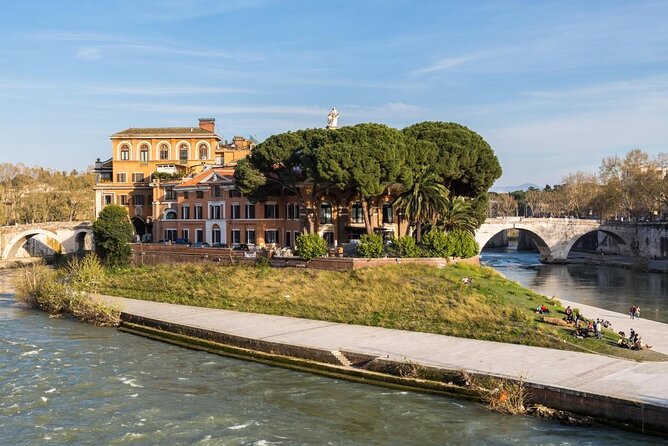
After the first historic chunk, the route crosses toward Isola Tiberina, Tiber Island. Crossing the river by foot gives you the kind of views you remember later, with bridges and multiple layers of the city spread out at once.
As you move, you’ll pass the synagogue area, and you’ll see the Synagogue of Rome exterior. Since the interior visit of the synagogue is not part of this tour, this is your best chance to connect the building to the neighborhood’s story without needing an extra ticket or timed entry.
Trastevere is the destination, but Tiber Island acts like a transition. It’s a visual reset, and it helps you understand why Rome’s geography matters, especially in an area where water routes shaped movement and daily life.
A different Rome day to consider:
- Colosseum, Roman Forum & Palatine Guided Tour
★ 4.7 · 63,148 reviews - Vatican Museums, Sistine Chapel & St Peter’s Basilica Guided Tour
★ 4.5 · 39,149 reviews - Rome: Colosseum, Palatine Hill and Roman Forum Guided Tour
★ 4.8 · 32,814 reviews - Rome: Guided Tour of Colosseum, Roman Forum & Palatine Hill
★ 4.7 · 27,897 reviews
Trastevere at Night: Santa Maria in Trastevere (Interior Depends)
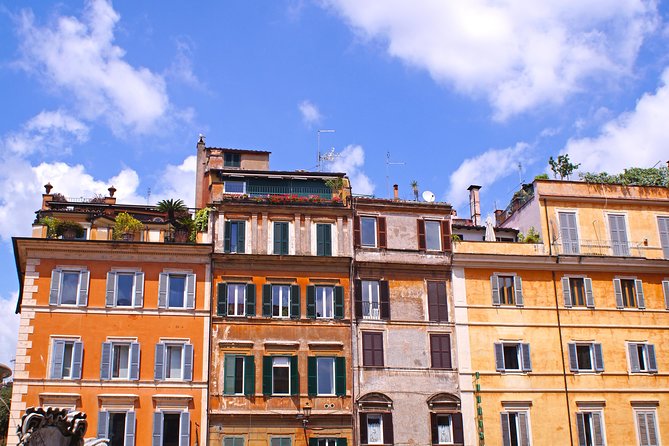
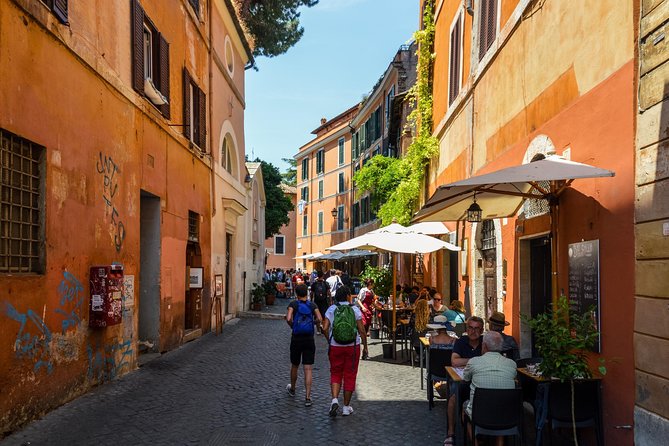
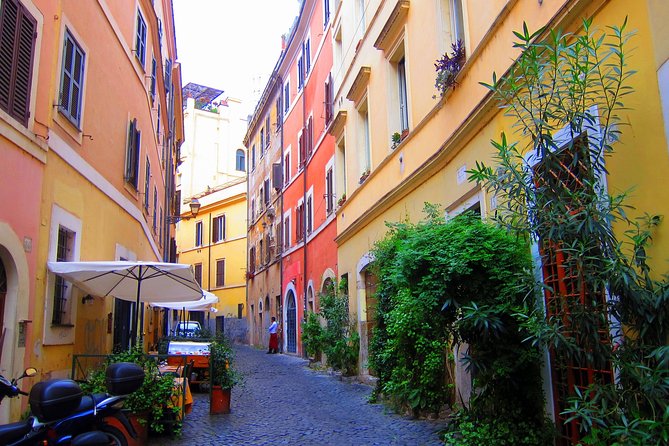
When you arrive in Trastevere, the mood changes fast. Streets get narrower, the pace often feels more local, and you’re moving through a quarter known for artists, authors, and evening life.
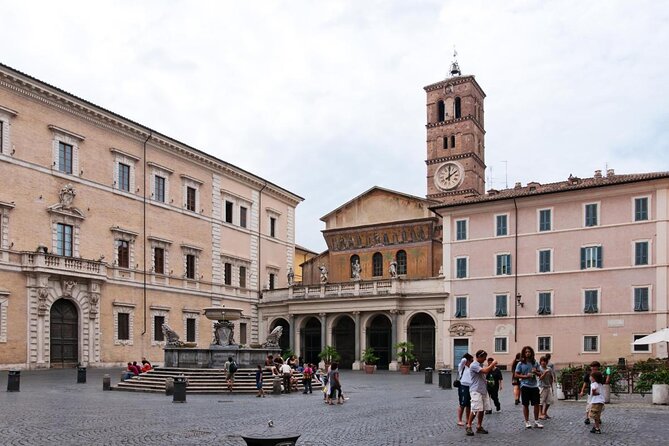
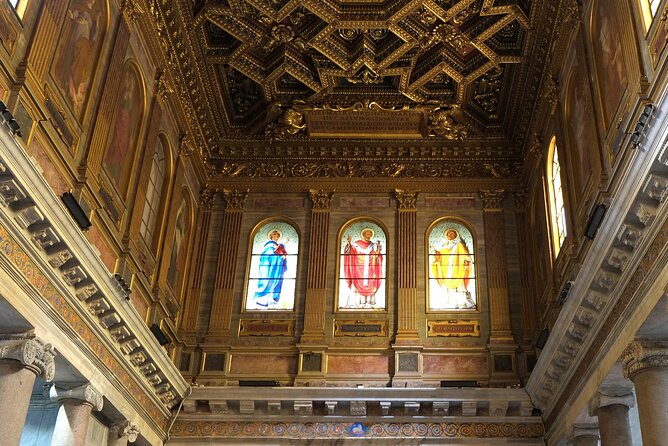
A key moment here is Santa Maria in Trastevere. This tour includes an interior visit if the church schedule allows it, so plan your expectations with that in mind. If the church is open, you’ll have a chance to experience one of Rome’s oldest churches, with roots going back to the 340s AD.
Even when interior access is limited, the stop is still valuable because the guide helps you look beyond the obvious. You’ll connect the church’s importance to how Trastevere became part of Rome’s everyday fabric.
Practical note: churches can be cool and quiet compared to outside streets. If you tend to get cold easily, bring a layer.
Ponte Sisto and the Walk Back Toward Campo de’ Fiori
After Trastevere, the group crosses back over the river on Ponte Sisto. This is a satisfying “moving viewpoint” segment, because you get more skyline and bridge perspectives while the guide keeps linking what you see to the city’s changing eras.
You’ll also pass by Palazzo Farnese along the route. The interior of Palazzo Farnese is not included, so don’t expect a palace visit here, but seeing the building from outside still gives you a feel for Renaissance-era Rome’s scale and ambition.
Then you finish at Campo de’ Fiori, one of Rome’s busiest squares. Ending here is smart because it’s easy to continue your evening on your own, whether you want a quick coffee stop, a relaxed walk, or a proper meal nearby.
If you like to keep plans flexible, Campo de’ Fiori is a good ending point. You’re not forced into a strict next step, and you can choose what fits your mood.
What the Best Guides Do During This Walk
The most praised part of this experience is not one single landmark, it’s the guides. Guides often get singled out for being funny, engaging, and able to answer questions without sounding rehearsed.
Names that show up frequently in strong past experiences include Irene, Jeannette, Paolo, Claudio, and James. More important than the name is the style behind the scenes: a leisurely pace, lots of story, and a focus on turning visible streets into understandable history.
If you want to make this tour even better, go with questions in your head. Ask about what you’re seeing below street level, how neighborhoods changed across centuries, or how daily life worked for different communities. When a guide is truly good, they’ll connect your questions back to the route smoothly.
Headsets, Small Group Size, and Why It Matters on Uneven Streets
This is designed for a maximum of 15 people, which is one of the reasons it tends to feel comfortable instead of crowded. Smaller groups mean you’re more likely to hear the guide clearly and less likely to get lost behind a sea of shoulders.
Headsets are included, which is a big deal in Rome. Streets can be noisy, and Trastevere especially can get lively, especially toward evening. With headsets, you spend less effort asking people to repeat themselves and more time listening and looking.
The tour also calls for moderate physical fitness, so keep in mind there’s walking involved on uneven sidewalks and real city pavement. It’s not a “sit and admire” experience, but it’s not a grueling hike either.
Price and Value: Is $66.38 Worth It?
At $66.38 per person, you’re paying for guided context, a structured route, and headsets. You’re also paying for the fact that you won’t waste time trying to figure out how all these pieces connect yourself.
In practical terms, value comes from three places here:
- You get help seeing what’s important, not just what’s famous
- You cover two neighborhoods that most people visit separately
- You get a guided intro that can shape where you go next for the rest of your trip
If your schedule allows only one “neighborhood story” tour, this is a smart candidate because it covers Caesar-era setting, Jewish Ghetto history, and the Trastevere evening vibe in a single flow.
If you’re already confident about Roman archaeology and want total freedom, you could DIY it. But most people find that the guide makes the places feel less like random stops and more like a coherent story.
Timing Tips for a 6:00 pm Start
Starting at 6:00 pm is one of the tour’s sneakiest advantages. It often means cooler air for walking, and it can line up with when Trastevere starts to feel like Trastevere, not just a daytime postcard.
That said, your best results come from arriving a few minutes early and being ready to locate the guide quickly. Some past groups have had frustration with meeting spot confusion, including waiting longer than expected. Rome is full of similar-looking corners, so give yourself buffer time.
Also, evening light can be tricky for photos in narrow streets. If you care about pictures, plan to take them during the clearer sightline moments, like river crossings and squares, rather than right on the busiest sidewalks.
A Realistic Note on Interiors and What If It’s Closed
The tour includes an interior visit of Santa Maria in Trastevere, but it’s subject to the church schedule. That’s normal for church-based sightseeing in Rome, and it doesn’t mean the tour is weak.
What it means for you is simple: if you’re the type who hates uncertainty, mentally reframe this as a tour of streets and stories with a possible bonus interior moment. When the church is open, it’s extra. When it’s not, you still get the guided walk and the key sights around it.
The synagogue experience is similar but cleaner. You’ll see the synagogue exterior, and an internal visit is not part of this tour.
Who Should Book This Tour (and Who Might Want a Different Plan)
This tour is a great fit if you:
- Want an evening plan that’s more than a “look around” stroll
- Like history that you can connect to real streets you can revisit later
- Prefer small groups and good audio with headsets
- Enjoy food nearby and want ideas before you pick a restaurant
It may be less ideal if you:
- Need an entirely guaranteed interior church stop
- Want minimal walking on uneven surfaces
- Get frustrated if the group pacing feels slower than a fast-paced “tick the box” tour
If you’re traveling with teens or even younger kids, a slower pace can be helpful, as long as they handle standing and walking. It’s also a solid first Rome orientation tour if you want to understand where you are in the city’s structure.
Should You Book This Trastevere and Jewish Ghetto Walking Tour?
I think you should book if you want a guided evening through two districts that are often visited in isolation. The route makes sense, the group size is comfortable, and the headsets plus storytelling style tend to turn the walk into something memorable.
I’d skip it only if you dislike walking tours or if you’re specifically hunting for synagogue interiors, because that part is exterior-only here. If you’re comfortable with that and you want the city explained in plain terms while you enjoy Trastevere’s evening energy, this is a strong choice.
FAQ
Where is the meeting point and what time does the tour start?
The meeting point is Largo di Torre Argentina, 00186 Roma RM, Italy. The start time is 6:00 pm.
How long is the walking tour?
It runs for about 3 hours.
Is the tour offered in English?
Yes, the tour is offered in English.
Do you visit the synagogue inside?
No. The tour includes an exterior visit of the Jewish Ghetto synagogue.
Is the church interior visit included?
You will visit Santa Maria in Trastevere, and the interior visit is subject to the church schedule.
What is included in the tour price?
The tour includes a professional guide and headsets.
What is not included?
Food and drinks are not included. The internal visit of the synagogue and Palazzo Farnese are also not included.
Can I get a full refund if I cancel?
Yes, you can cancel for a full refund if you cancel up to 24 hours in advance of the experience start time.
Reviewed lately around Rome
- Rome: Private Customizable 3-Hour Golf Cart City Tour★ 5.0 · 229 reviews
- Papal Audience Experience with Pope Leo XIV★ 4.5 · 230 reviews
- The Three Tenors in Rome – Nessun Dorma★ 4.5 · 231 reviews
- Discover Rome in a Day – Private Driver Tour★ 5.0 · 231 reviews
- Rome: Colosseum, Roman Forum & Palatine Hill Group Tour★ 4.7 · 232 reviews
- Rome Airport Transfer – Private Luxury Service with Driver★ 4.5 · 231 reviews
- Fast track: Vatican Museums, Sistine Chapel Guided and St. Peter’s Basilica Tour★ 4.5 · 232 reviews
- Moonlight Rome: Night Walking Tour of Roman Highlights★ 5.0 · 232 reviews
Walking Tours, compared.
Guided Walking Tour & Last Supper Visit with Ticket
Read our review →

Rialto Bridge & Offbeat Unusual Venice Walking Tour
Read our review →
Private 3 hrs Venice Tour: St Mark’s, Walking tour & Boat tour
Read our review →
Skip the line: Uffizi and Accademia Small Group Walking Tour
Read our review →Browse the lists this tour appears in