
Reviewed · VENICE TOURS
Tour of The Real Hidden Venice
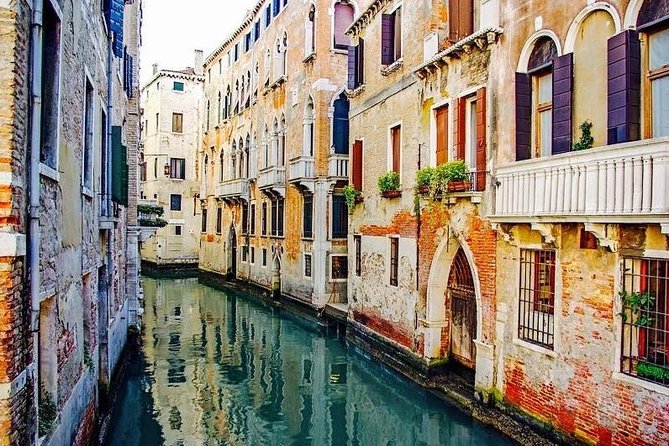
Venice is famous for St. Mark’s and Rialto photos. This tour is interesting because it sends you into the quieter districts first, so the city feels lived-in, not like a theme park. You’ll start in Campo San Geremia in Cannaregio and end near Rialto Bridge, so you still finish in the big sights zone.
I especially love the small group size (max 15), because it’s easier to hear your guide and ask questions. I also like that you mix famous landmarks with lesser-known stops, including the Jewish Quarter, the Tintoretto church area, and old gondola-maker workshops.
One possible drawback: it’s a walking tour with several short standing moments for stories, and one church stop requires tickets not included. If you need a lot of moving at all times, you might feel a little “park and listen” fatigue.
Key Things to Know Before You Go
A quieter route first, then Rialto at the end
Small group experience with room for questions
Stop mix includes art, Jewish history, canals, and working- Venice details
Madonna dell’Orto church stop has admission ticket not included
Some day-trippers may face the Venice access fee on certain dates
Mostly free stops, plus a city map included
Why This Quiet-Venice Route Feels Worth Your Time
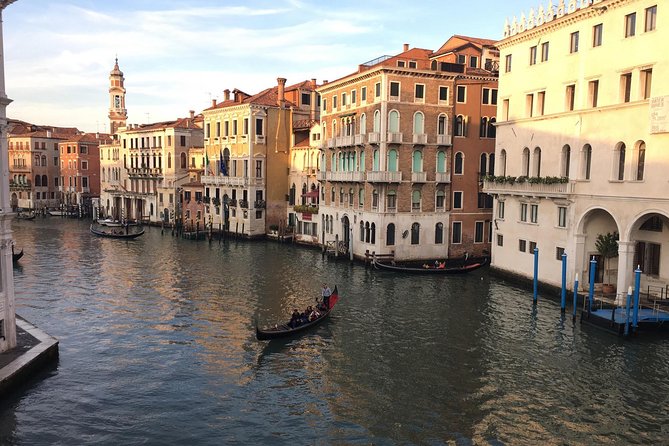
This is the kind of Venice walk I like best. You’re not rushing from one postcard to the next. You’re moving through neighborhoods where daily life still shows up in the details, like how people cross bridges, pause in a campo, and pass by small businesses without turning it into a performance.
The tour starts in Cannaregio, then crosses into the Jewish Quarter. That shift alone makes it feel like you’re seeing more than the usual “main streets only” itinerary. And you end at Rialto, so you don’t feel stranded far from everything people want to see.
I also appreciate that the guide is local. In the reviews, names like Nico, Giovanni, Mateo, Sebastiano, and Georgia come up again and again, and the common thread is that they explain what you’re looking at in plain language. They connect the past to what’s still around today, from street-level details to bigger stories about Venice’s city life.
More from a Venice stay:
- Venice: Doge’s Palace Reserved Entry Ticket
★ 4.6 · 42,716 reviews - Venice: Grand Canal Gondola Ride with App Commentary
★ 4.1 · 18,908 reviews - Boat Trip: Glimpse of Murano, Torcello & Burano Islands
★ 4.3 · 15,699 reviews
Price and What You’re Actually Buying for $47.16
At $47.16 per person for about two hours, you’re paying for three things: a focused walking route, a guide who can make sense of the maze, and access to stops that are easy to miss on your own. A self-guided walk might cost less, but you’d have to research the meaning behind places like the Jewish Quarter origin of the word ghetto, the gondola-factory setting, and why specific bridges and buildings earned nicknames.
You also get a city map per person and local taxes included. That doesn’t sound dramatic, but it reduces decision-making on the spot. The map helps, especially in Venice where “just follow the signs” can still leave you turned around.
Two small budget notes to keep in mind:
- The Chiesa della Madonna dell’Orto stop lists admission ticket not included. So you might pay for entry there, depending on what you want to see.
- On certain dates, people staying outside Venice and visiting for the day may need a €5 access fee. Plan for that if it applies to your situation.
Where You Start: Campo San Geremia in Cannaregio
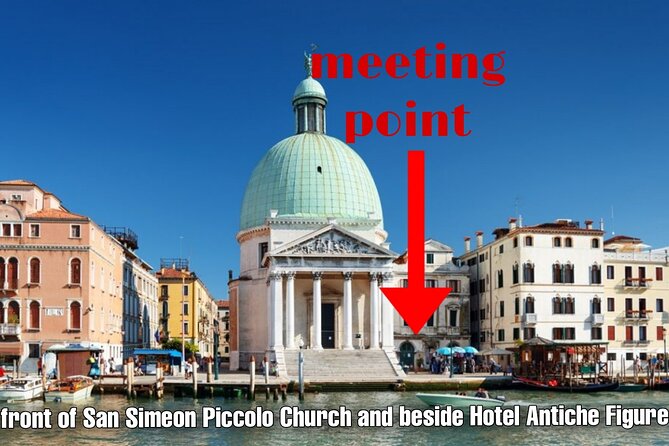
The walk kicks off at Hotel Antiche Figure on Santa Croce, Fondamenta San Simeon Piccolo. From there, you’re guided toward Campo San Geremia, a square in a tucked-away part of Cannaregio.
This start matters. Campo life is one of the best ways to understand Venice beyond the big attractions. Here, you’ll learn the funny story of what makes this campo special. It’s the kind of detail that changes how you look at the street corners and small facades you would otherwise scroll past.
There’s also an early shift in atmosphere. Cannaregio feels calmer than the busiest tourist corridors, and the guide’s job is to help you notice why. You’ll cross quiet footbridges and start training your eyes for Venetian details, not just views.
The Ghetto Ebraico Area: History You Can See in the Streets
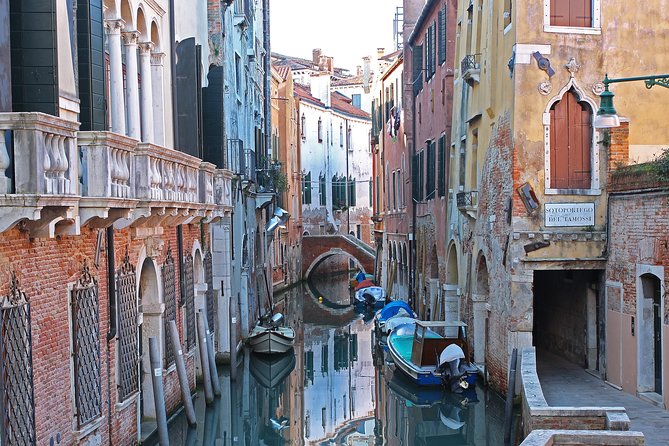
Next you cross into the Jewish Quarter, sometimes called Ghetto Ebraico. This is where the tour earns its name in a practical way. You’re not just told that history happened here. You’re walked through a neighborhood where the city’s layout and landmarks help explain why it mattered.
You’ll hear about the origin of the word ghetto, and the guide connects it to what you’re seeing around you. Even if you already know a bit, hearing it on the ground makes the story feel more concrete.
I like that this isn’t treated like a museum stop. It’s a neighborhood pass-through, with context. If you’re the kind of traveler who cares about how people lived, not just what rulers did, this segment tends to land well.
A different Venice day to consider:
- Venice: La Fenice Opera House Entry Ticket with Audio Guide
★ 4.6 · 11,742 reviews - Doge’s Palace & St. Mark’s Basilica with Terrace Access Tour
★ 4.7 · 10,697 reviews - Venice: Burano, Torcello & Murano Boat Tour w/Glassblowing
★ 4.4 · 10,245 reviews - Venice: Murano and Burano Boat Tour with Glass Factory Visit
★ 4.2 · 9,527 reviews
Chiesa della Madonna dell’Orto: Tintoretto Art Plus a Strange Local Detail
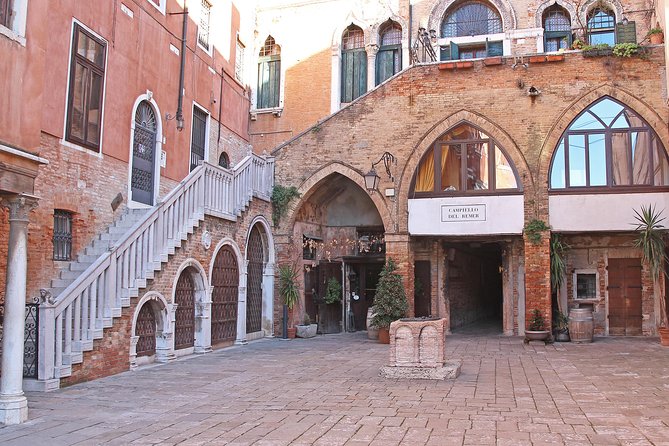
Then comes the church stop: Chiesa della Madonna dell’Orto. The tour highlights it for its Tintoretto paintings, and it also points you to an unusual, practical feature, the original floor of Venice in front of the church.
That combination is smart. Art attracts attention, but the floor detail is the kind of thing that anchors the visit in daily reality. Venice isn’t only a skyline. It’s also layers of stone, flooding history, and building choices that affect how the city functions.
One caution: the church stop lists admission ticket not included. If you’re hoping to see everything inside, budget a little extra time and money for that entry.
Palazzo Mastelli del Cammello, aka Camel House
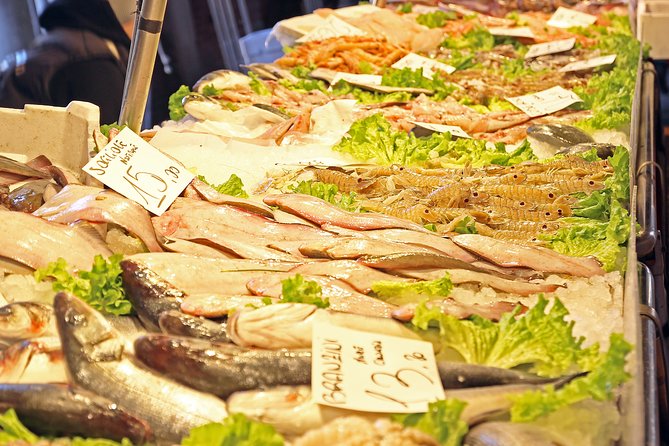
At Palazzo Mastelli del Cammello, you’ll learn the legend behind the nickname Camel House. This is another spot that works best when a guide points out the reason the building earned that reputation.
Why it’s worth a stop: Venice loves storytelling. People name things based on appearance, rumors, and local jokes, and those names help you remember what the place is. Without a guide, you might understand the facade is old, but miss why it became famous in the first place.
This short segment gives you that “wait, that detail is meaningful” feeling. It also breaks up the walk so you’re not only thinking about big history.
Squero dei Muti: Seeing an Old Gondola Workshop Without the Noise
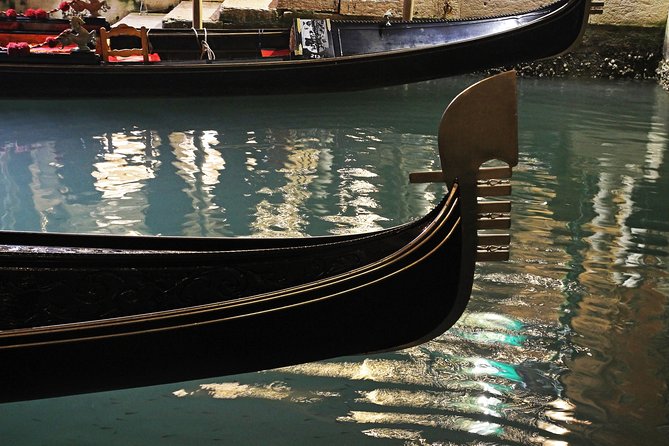
Next is Squero dei Muti, described as an old gondola factory. This is one of those stops that feels more real than the usual gondola-photo loop.
Venice isn’t only about the gondola as a tourist activity. It’s about the craft behind it, and you’ll get to see the setting where the work used to happen. Even if you never ride, understanding the workshop side helps explain why gondolas and their production are woven into Venetian identity.
In reviews, the high praise often points to guides making these “off-the-main-road” places click. The gondola workshop segment is a good example of that.
Ponte Chiodo to Rialto: Bridges as Time Capsules
Then you move through the bridge area, including Ponte Chiodo, noted as the original bridge of the Venetian Republic. Even if you don’t know the dates, you’ll get the sense that bridges in Venice are not just transportation.
They are strategy. They define neighborhoods. They change movement patterns. And in Venice, where water controls routes, a bridge can be a big deal.
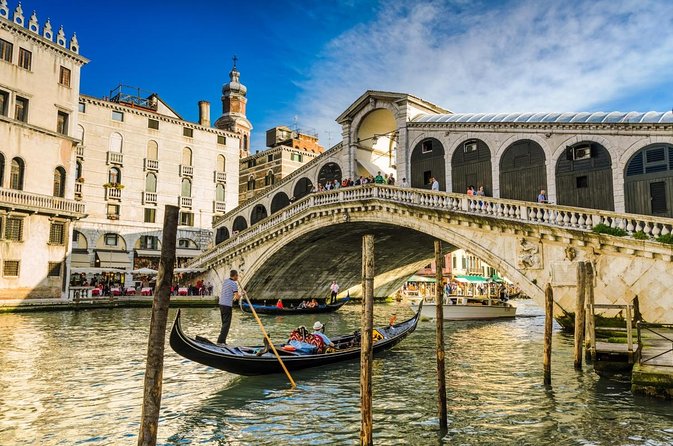
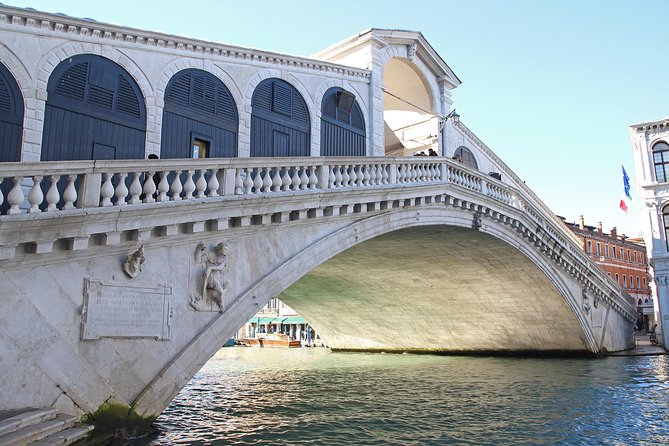
From there, you reach Ponte di Rialto, the tour’s major star at the end. The guide explains stories, legends, and traditions tied to the first bridge built on the Grand Canal. This is where you’re back in the center of things, but you’re not arriving cold. You’ve built context by seeing calmer canals and craft locations first.
And one more practical point: you’ll likely take pictures here, but don’t expect the quiet vibe. Rialto is busy. The trick is to use the time well, soak in the views, then step back into side streets right after the tour ends.
Campo San Giacomo di Rialto and Mercato di Rialto: The City’s Old Engine
Before you fully settle into the Rialto area, you’ll stop at Campo San Giacomo di Rialto, described as the first lived island of Venice. That stop is fascinating because it ties the story to settlement, not just monuments.
Then comes Mercato di Rialto, the old trade center of the Venetian Republic, often tied to the idea of La Serenissima. Trade shaped Venice’s power. Ships, markets, and money determined what people could build and protect.
If you’re the type who wants more than architecture and art, these two stops help you understand why Venice grew where it did. They give you the “why” behind the “look.”
Group Size, Guide Styles, and Why Reviews Mention Names
This is a maximum 15 traveler experience. That size is where walking tours work best. You’re less likely to get lost behind a big cluster, and the guide can manage pace without leaving everyone behind.
In the reviews, guides are praised for being interactive and fun. Names like Nico and Sebastiano show up with comments about humor, local pride, and good recommendations after the tour. I also like that guides often address practical Venice questions during the walk, such as how the city functions day to day, not only big historical events.
Still, there’s one consideration worth stating plainly. Some tours with multiple short stops can include longer listening moments. If you’re tired or you prefer nonstop movement, try to keep your energy up before the start time. Bring water, and wear shoes you can handle on stone and bridge crossings.
How to Make the Most of It After the Tour Ends at Rialto
The tour ends near Rialto Bridge, which is a gift. You’re positioned where you can keep going without planning a second transport step. Use the end point as your launch pad, not as the final destination.
Here’s what tends to work well right after:
- Wander a bit on nearby streets before you head toward the bigger crowds again.
- If you want a food break, look for the quieter lanes near your route rather than the most obvious front-row spots.
- Use the city map you get with the tour to pick a direction and commit for 30 to 45 minutes.
Because the walk teaches you how Venice “flows,” it’s easier to navigate once you’re on your own.
Who This Tour Fits Best
This works well if you:
- Want to see Venice neighborhoods beyond St. Mark’s and the busiest lanes
- Like history that connects to what you can actually see nearby
- Prefer small groups and Q and A moments
- Are okay with about two hours of walking across a very bridge-heavy city
It may be less ideal if you:
- Need minimal standing and constant motion
- Really only want the absolute top highlights and nothing else
- Have limited walking tolerance, since the route includes bridges and multiple stops
It also suits couples, solo travelers, and families who can walk steadily. Kids must be accompanied by an adult, per the tour rules.
Should You Book The Real Hidden Venice?
Yes, I think you should book it if your goal is to understand Venice as a living city, not just a backdrop for photos. The route through Cannaregio, the Jewish Quarter, and the walk back toward Rialto Bridge gives you a smarter balance of quiet streets and famous landmarks.
Choose it especially if you value a guide who can turn small details into meaning. The stop choices, from Squero dei Muti to the bridge stories, are exactly the kinds of things that feel hard to find alone without doing a lot of homework.
Just check the two practical points before you go: the Madonna dell’Orto admission not included, and whether your travel dates trigger the €5 access fee for day visitors staying outside Venice. If those are fine, this tour is a strong way to start your Venetian days with better context and fewer crowds.
FAQ
How long is the tour?
The walking tour is listed as about 2 hours.
How many people are in the group?
For the group tour, the tour has a maximum of 15 travelers.
Where does the tour start and where does it end?
It starts at Hotel Antiche Figure near Santa Lucia, with the meeting point at Santa Croce, 687 Fondamenta San Simeon Piccolo. It ends near Rialto Bridge (Ponte de Rialto).
Is the tour offered in English?
Yes. The tour is offered in English.
What is included in the price?
The tour includes pickup in front of Hotel Antiche Figure, a city map per person, a local guide, local taxes, and the 2-hour walking tour.
Is admission included for every stop?
No. The stop at Chiesa della Madonna dell’Orto lists admission ticket not included.
Is there a Venice access fee on some dates?
On certain dates, some visitors staying outside Venice who plan to visit for the day may be required to pay a €5 access fee. The applicable dates and exemptions are listed on the official site linked in the tour details.
What is the cancellation policy?
You can cancel for a full refund up to 24 hours in advance. If you cancel less than 24 hours before the start time, the amount paid is not refunded. The experience also notes it requires good weather and may be rescheduled or refunded if canceled due to poor weather.
Reviewed lately around Venice
- Venice Sunset Cruise by Typical Venetian Boat with Prosecco★ 5.0 · 505 reviews
- Murano: Glass Blowing Demonstration and Artistic Glass Gift★ 4.6 · 507 reviews
- Venice Islands: Murano Glass & Burano Colors Guided Visit★ 4.5 · 510 reviews
- The Majestic Teatro La Fenice: Guided Tour in Venice★ 4.3 · 513 reviews
- Real Venetian Kayak – Tour of Venice Canals with a Local Guide★ 4.5 · 518 reviews
- Venetian Carnival Mask Making Class in Venice, Italy★ 4.5 · 525 reviews
- Half Day Murano and Burano Island Tour by Private Boat★ 4.5 · 529 reviews
- Venice Trilogy: Murano, Burano & Torcello by Lagoon Boat★ 4.5 · 532 reviews
Venice Tours, compared.
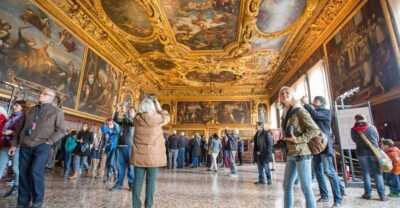

Grand Canal Gondola Ride with App Commentary
Read our review →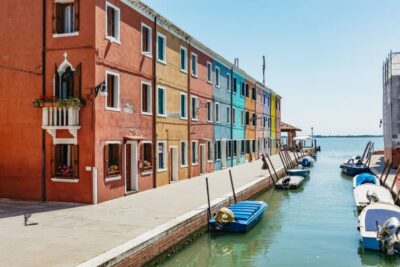
Boat Trip: Glimpse of Murano, Torcello & Burano Islands
Read our review →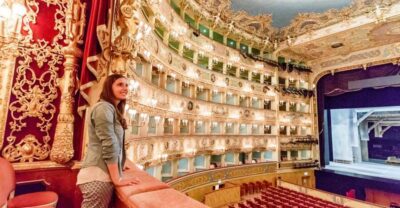
La Fenice Opera House Entry Ticket with Audio Guide
Read our review →
Doge’s Palace & St. Mark’s Basilica with Terrace Access Tour
Read our review →
Burano, Torcello & Murano Boat Tour w/Glassblowing
Read our review →
Murano and Burano Boat Tour with Glass Factory Visit
Read our review →
Murano, Burano and Torcello Half-Day Sightseeing Tour
Read our review →Browse the lists this tour appears in