
There is something special about seeing Roman ruins with a tight, timed route instead of wandering until your feet quit. I like that this tour builds in guided context right where you’re standing, and I also like the headsets, so the guide’s explanations actually land while you look up at the architecture. The main drawback is simple: you will walk, stand, and climb stairs on uneven ground, so bring the right shoes and expect a workout.
If you pick the live-guided option, guides like Laura and Patrizia are highlighted for being engaging and quick with answers. If you choose the optional arena floor, you add a big, memorable moment, but you should still expect a structured route and a fixed time inside each area.
Key things that make this tour worth your time
- Timed entry for the Colosseum, Forum and Palatine, booked about a month in advance on average
- Headsets included on guided tours, so you hear every point without leaning in
- Small group size capped at 25, with the option to choose a group size for a more personal feel
- Optional arena floor access, selected at booking for extra impact
- A smart route that strings together triumphal arches, main streets, the Forum, and Palatine viewpoints
- Focused duration at about 3 hours, leaving the rest of your day open
Why this Colosseum and Forum route hits the sweet spot
This is not a slow, eat-at-a-cafe kind of history trip. It is a concentrated circuit through the power heart of ancient Rome, built around the places you most want to stand inside, look across, and connect into a bigger story.
You get a guided backbone, with stops that match how the city worked. You start with triumph symbolism, move into spectacle at the Colosseum, then step into the Roman Forum where government life played out. After that, you shift to Palatine Hill, where the emperors lived and where the views help you picture the scale.
I also like that the tour is built to keep you moving. At roughly 3 hours, you avoid the trap of spending your whole day in one area and then feeling too tired to enjoy the rest of Rome.
More ways into the Colosseum:
- Colosseum, Roman Forum & Palatine Guided Tour
★ 4.7 · 63,148 reviews - Rome: Colosseum, Palatine Hill and Roman Forum Guided Tour
★ 4.8 · 32,814 reviews - Rome: Guided Tour of Colosseum, Roman Forum & Palatine Hill
★ 4.7 · 27,897 reviews
Meeting at the Arch of Constantine, then ending on Palatine Hill
The tour starts at the Arch of Constantine, at Piazza del Colosseo. That matters more than it sounds. You are placed between the Colosseum zone and Palatine Hill, which keeps the route logical and helps you avoid backtracking.
You end at Palatine Hill, Via di S. Gregorio, 30, with the tour finishing around Palatine. That ending point can be a plus. After the tour, you can keep walking and sightseeing without needing to squeeze in a separate bus or metro just to get near your next stop.
The tour does not include hotel pickup or drop-off. You will be using public transportation and walking the connection.
Price and value: why the ticket fee can make sense
The price listed is $59.28 per person for about 3 hours, in English. The big value is not only the entry. It is how the timed access plus guidance reduces friction.
You are getting timed entry to the Colosseum + Forum & Palatine. The value for the ticket portion is listed at €18 per person, or €24 per person if you add arena access. There is also a reservation fee included, noted as €2 per person. On top of that, the guided tour includes headsets, so the guide can speak clearly while you navigate crowds and uneven steps.
There is one more practical value point: you are limited to a fixed visit window. That’s good when your goal is to see a lot without losing an entire morning to lineups and ticket confusion.
Entering the Colosseum: timed access plus the optional arena floor
The Colosseum stop is about 30 minutes, and it includes admission ticket access. The whole point of timed entry is to reduce the time you spend stuck at the entrance. You will still find crowds, but you should spend more of your time inside and less time waiting outside.
Then there is the optional arena floor. If you select it at booking, you get access that turns the experience from viewing the structure to standing closer to where the action once happened. The tour description frames the Colosseum as the iconic symbol of Rome and the place associated with gladiators, and the arena option is what makes that feel more immediate.
What to watch for: the Colosseum can decide to close unexpectedly in inclement weather. The experience notes that you would be offered a change of date or a full refund if that happens. Plan to have at least one flexible day in Rome.
More from a Rome stay:
- Vatican Museums, Sistine Chapel & St Peter’s Basilica Guided Tour
★ 4.5 · 39,149 reviews - Rome: Colosseum, Roman Forum and Palatine Hill Guided Tour
★ 4.5 · 23,903 reviews - Rome: Pantheon Fast-Track Ticket and Official Audio Guide
★ 4.3 · 21,008 reviews - Rome: City Sightseeing Hop-on Hop-off Bus with Audioguide
★ 4.0 · 16,045 reviews
Stop-by-stop: what you actually get at each major place
This tour packs a lot of named stops into a short window. That is both the strength and the challenge. The strength is that it keeps you oriented. The challenge is that you cannot linger like you would on an unstructured visit.
Arch of Constantine: the victory framing
You start with Arco di Constantino, described as the largest Roman triumphal arch, celebrating Emperor Constantine’s victory at the Battle of the Milvian Bridge. It’s located between the Colosseum and Palatine Hill.
Practical payoff: triumphal arches teach you how Romans celebrated power in stone. Seeing it first helps the later stops make more sense.
Colosseum: stand where the story is loudest
At the Colosseum, you get a guided walk that helps you understand what you’re looking at instead of just photographing walls. You are there for about 30 minutes with the admission included.
The guide time matters here. Some people love this tour because the guide keeps the experience organized and points out what to notice. One downside to consider: with a set group pace, the time spent at each point can vary. If you prefer lots of open exploration with zero structure, you might find any longer pause frustrating.
Roman Forum: the government core in ruins
Next is the Roman Forum, about 20 minutes. The tour describes it as the heart of ancient Rome, surrounded by ruins of important government buildings where Roman public life centered.
This is the stop where context really pays off. The Forum can look like a pile of stone if you’re not given a map in your head. A good guide turns it into a layout: where speech-making and decision-making likely happened, and how the city’s major routes fit together.
Piazza del Colosseo and Via Sacra: the route of triumph
You also pass through Piazza del Colosseo, a square named after the Colosseum. The description notes it includes Meta Sudans and the Colossal statue of Nero. Then you walk Via Sacra, described as the main street of ancient Rome, leading from the Capitoline Hill through the Forum to the Colosseum, and connected with Roman Triumph processions.
This is where you start seeing the city as movement, not just monuments. The street route helps you connect Colosseum spectacle to Forum politics. Even if the buildings are partly gone, the directions and the “why here” story comes through.
Via dei Fori Imperiali: a big straight view down the forums
Via dei Fori Imperiali is described as a scenic boulevard connecting Piazza Venezia with the Colosseum, and it showcases monumental ruins of the forums of Caesar, Augustus, Nerva, and Trajan.
Practical payoff: even in a few minutes, it gives you scale. Rome’s power often feels concentrated in one location, and this helps you see how many layers of authority were built adjacent to each other.
Rostra: the speakers’ platform
You stop at I Rostri (the Rostra), remains of a platform used during republican and imperial periods for orations delivered by magistrates and other speakers.
If you care about “who talked to whom,” this stop is a highlight. It shifts the Forum from monuments to people and speech.
Temple of Venus and Roma, plus the imperial arches and temples
Then you work through a cluster of religious and political symbols:
- Tempio di Venere e Roma (Temple of Venus and Roma), noted as dedicated to Venus Felix and Roma Aeterna, described as one of the largest temples in Ancient Rome and located near the Colosseum on the Velian Hill.
- Arco di Tito (Arch of Titus), a single-arch triumphal monument on the northern slopes of the Palatine Hill, commemorating Emperor Titus and the Siege of Jerusalem.
- Tempio di Antonino e Faustina, described as an ancient temple later turned into the church of San Lorenzo in Miranda.
These stops are shorter, but they do something important: they add layers. Rome was not only about fights and speeches. It was also about gods, ceremonies, and political legitimacy drawn in stone.
Palatine Hill and the Circus Maximus view
Finally, you reach Palatine Hill for about 20 minutes. It’s described as the site of the city’s foundation and former palatial homes of emperors, with panoramic city views.
And then you get a short look at Circo Massimo from the Palatine Hill viewpoint. The description calls it a spectacular view down to the arena where Romans cheered for charioteers.
This ending works because it changes your perspective. You go from ruin close-up to city-scale understanding.
Guides, headsets, and the pace that makes or breaks the day
The tour caps at 25 travelers, and it also notes that you can choose group size for a more personalized experience. That matters. Smaller groups tend to move faster through crowds, and guides can manage breaks without losing the whole schedule.
The headsets are a huge comfort and clarity factor on guided tours. You do not have to crowd the guide to hear everything. In hot Rome, that makes a difference, because you can look around without constantly turning your head.
The best experiences in the reviews share a pattern: guides who explain clearly, answer questions, and manage heat with practical stops. Names that came up include Alberto, Laura, Patrizia, Donatella, Sylvia, and Alessandra, with multiple notes about keeping groups in shade and taking cooling or photo breaks.
Balanced note: one negative review complained about being kept in the same spot too long near a dark entrance. That is a reminder to set expectations for a structured group walk. If your ideal day is constant movement and constant new viewpoints, check whether you prefer a more flexible format.
Also, language clarity can vary. One review mentioned English with a strong accent that was harder to follow. If you are sensitive to that, the headset audio helps, but your best move is to arrive with patience and use the headset volume you can comfortably understand.
Weather, closures, and restoration during special periods
This experience is marked as requiring good weather. In inclement weather, the Colosseum may close unexpectedly, and you should expect a change of date or a refund.
There is also a note about Jubilee-era restoration, meaning some monuments may be under restoration and the route or visuals could be affected. That’s not something you can control. The practical mindset is to treat the day as “Roman ruins and stories,” not as a guaranteed perfect postcard view of every structure.
Who should book this tour, and who should think twice
This tour is best for you if you want guided orientation in a short amount of time. You will appreciate it most if you like standing in major locations and learning why they mattered.
You should think twice if you:
- hate stairs and uneven ground, since the description calls out extended walking and several staircases
- want a long, slow, pick-your-own pace visit where you can linger for an hour at one spot
- booked expecting a self-guided experience but selected the guided option (or vice versa)
One more practical distinction: this experience offers both guided tour options and audio-guided options depending on what you choose. Guided tours use headsets for the live guide. Audio options involve a smartphone app and your own earphones, which means you need your phone charged and ready.
Should you book this Colosseum, Forum and Palatine timed-entry tour?
Yes, you should book this if you want a well-paced primer across the Colosseum, the Forum, and Palatine Hill, with the added bonus of headsets and a tight time commitment. The route makes it easier to connect monuments into one story, and the optional arena floor is a meaningful upgrade if you like standing in the place where the action happened.
Skip or swap to a different style if you do not handle stairs well or if you want total freedom to roam without stops and set timing. And whatever you choose, do yourself a favor and bring good shoes, water, and realistic expectations for crowds at one of the world’s most visited sites. Rome rewards you, but it also tests your calves.
Reviewed lately around Rome
- Rome: Private Customizable 3-Hour Golf Cart City Tour★ 5.0 · 229 reviews
- Papal Audience Experience with Pope Leo XIV★ 4.5 · 230 reviews
- The Three Tenors in Rome – Nessun Dorma★ 4.5 · 231 reviews
- Discover Rome in a Day – Private Driver Tour★ 5.0 · 231 reviews
- Rome: Colosseum, Roman Forum & Palatine Hill Group Tour★ 4.7 · 232 reviews
- Rome Airport Transfer – Private Luxury Service with Driver★ 4.5 · 231 reviews
- Fast track: Vatican Museums, Sistine Chapel Guided and St. Peter’s Basilica Tour★ 4.5 · 232 reviews
- Moonlight Rome: Night Walking Tour of Roman Highlights★ 5.0 · 232 reviews
Colosseum Tours, compared.
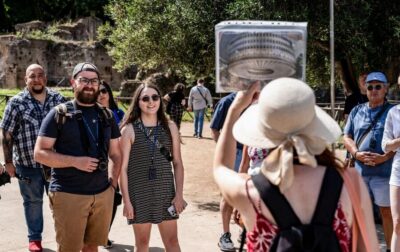
Colosseum, Roman Forum & Palatine Guided Tour
Read our review →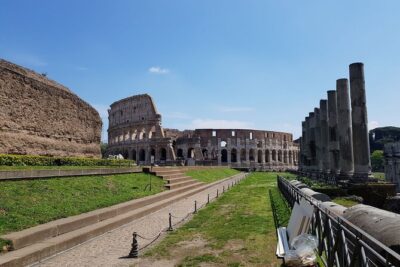
Colosseum, Palatine Hill and Roman Forum Guided Tour
Read our review →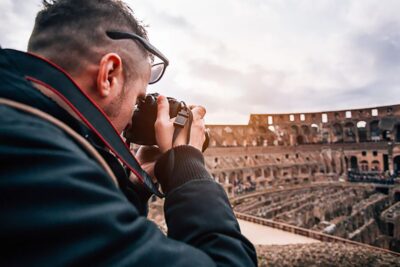
Guided Tour of Colosseum, Roman Forum & Palatine Hill
Read our review →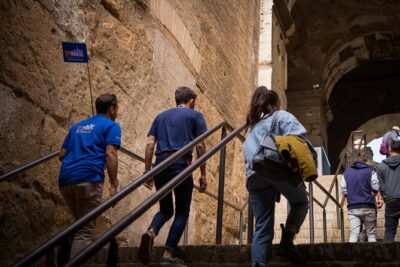
Colosseum, Roman Forum and Palatine Hill Guided Tour
Read our review →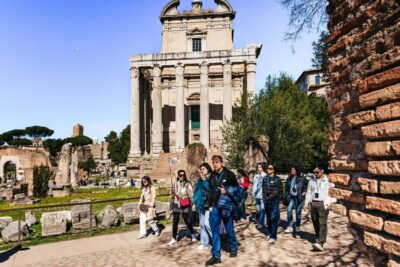
Colosseum, Forum & Palatine Hill Tour & Optional Arena
Read our review →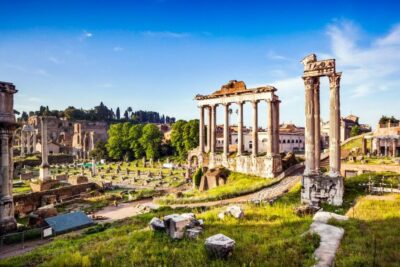
Colosseum, Roman Forum, Palatine with Multimedia Video
Read our review →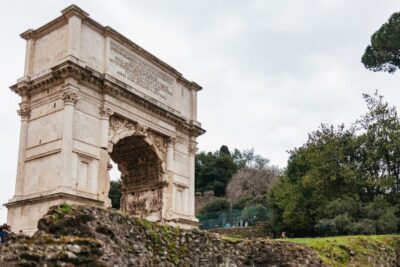
Colosseum, Palatine Hill & Roman Forum Guided Tour
Read our review →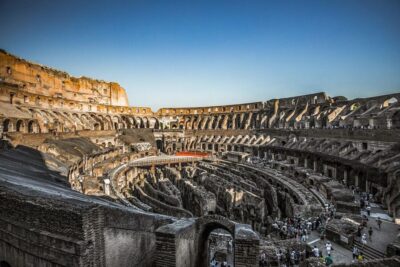
Colosseum: Underground and Ancient Rome Tour
Read our review →Browse the lists this tour appears in