
Reviewed · SYRACUSE TOURS
Syracuse: Neapolis Archaeological Park Small Group Tour
Syracuse at Neapolis Archaeological Park is one of those places where you can almost hear the past. This 1.5-hour walking tour strings together the Ear of Dionysius and the Greek Theater so the ruins feel like a living story, not isolated rocks. The only real tradeoff is the tour is guided in Italian, so plan around language if you do not read or speak it.
I love that you do more than look. You get stops that explain why these spaces mattered, from quarry cuts in Temenite Hill to the Roman amphitheater that came later. If you want the ruins with no pacing and lots of wandering time, this is not that kind of experience, but it is a strong “best hits” intro.
Key takeaways
- Ear of Dionysius inside the Latomie: a famous grotto tied to legend and real ancient quarry work.
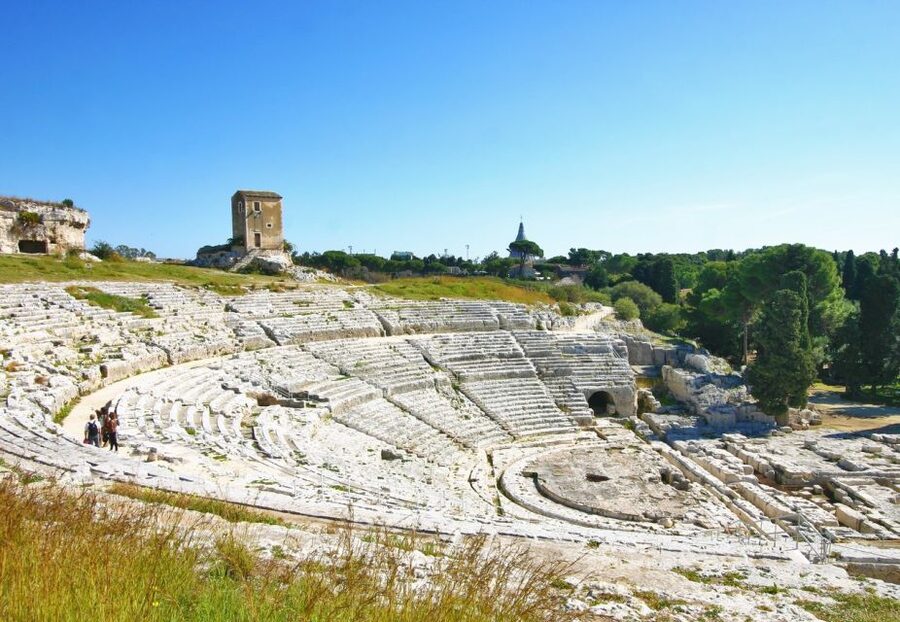
- Greek Theater with bay views: a perspective you cannot fake from the ground level.
- Temenite Hill rock-cut settings: you see the landscape shaped by human hands, not just monuments.
- Latomie del Paradiso and Grotta dei Cordari: both are quarry stops, but each has its own angle.
- Finishes with Roman remains: altar of Hieron II and the Roman amphitheater help tie the Greek and Roman chapters together.
- Shared group or private tour: choose the vibe, and you may get radio receivers on larger shared departures.
Neapolis Archaeological Park in 90 Minutes: the smart Syracuse hit list
Syracuse can eat up your time fast. Ortigia is the obvious focus, but if you also want the ancient city built by the Greeks and reshaped by the Romans, Neapolis is where you go. This tour packs the headline sites into a walk that is short enough to fit most itineraries, without feeling like a rushed drive-by.
At $26 per person for about 1.5 hours, you are paying mostly for guided interpretation and access to the flow of the site. If you are the type who reads plaques but still wants the “why it matters” layer, that guide time is what you are buying. If you prefer to wander slowly and look things up as you go, you can visit the park on your own, but you would miss the connective tissue.
The best part is how the stops build momentum. You start with the quarry world, then the Ear, then the theater, and you finish with the altar and Roman amphitheater. In other words, you move through ancient Syracuse in the order your brain likes, not just in the order the pathways happen to curve.
More of Syracuse and Ortigia:
- Syracuse: Boat Trip of Ortigia Island and Sea Caves
★ 4.7 · 937 reviews - Syracuse: Boat Tour with Captain Mirko, Snorkeling & Caves
★ 4.7 · 746 reviews - Tour of the island of Ortigia and exploration of sea caves with baths.
★ 5.0 · 668 reviews
Starting at Largo Anfiteatro, then walking into the ancient city
Your tour starts at the entrance gate of Neapolis Archaeological Park, and the meeting point can vary depending on what option you booked. In practice, the listed starting locations include Largo Anfiteatro, 2. Either way, plan to arrive a few minutes early so you can check in and get your head in the right place before you start climbing between levels.
Once the group is together, you head into the core monuments on foot. This matters because Neapolis is not just one big open field. It is a connected set of Greek and Roman spaces built into and around Temenite Hill, so the walking is part of the story.
You also get a licensed guide (and the live guide is in Italian). Some departures, especially very small shared groups, may include explanations in two languages, but Italian is the baseline. If you know you want English guidance, it is worth asking when you book which language setup you will get.
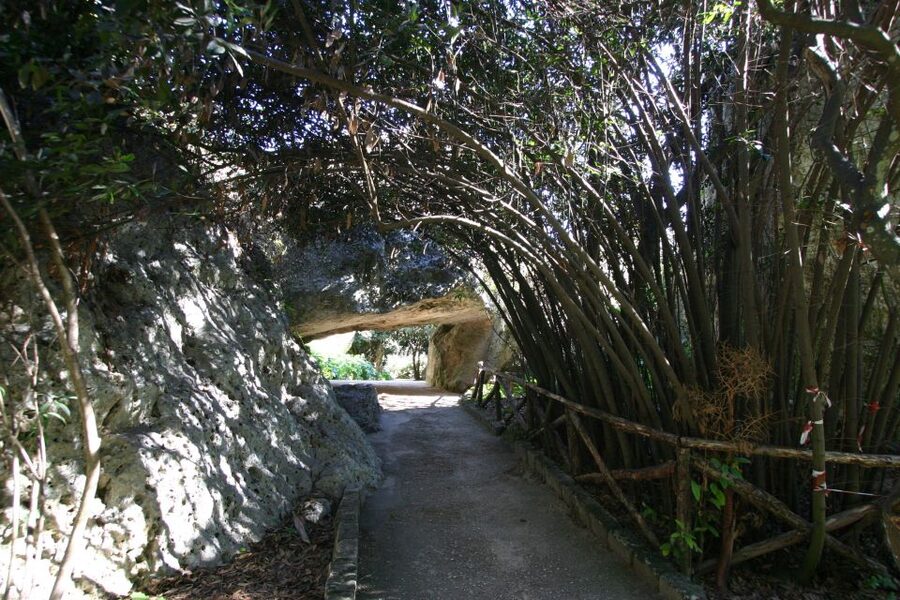
Latomie del Paradiso: the quarry that turns into a place to pause
The tour begins with Latomie del Paradiso, often described as an ancient stone quarry with beautiful local flora. The key idea here is that you are not just seeing ruins. You are seeing the raw material and the work that shaped the city’s monumental look.
The guide spends about 15 minutes here. That time is enough to understand the site beyond the postcard angle. You can notice how the rock cuts create corridors and small pockets of shade, and how that geometry affects your movement through the area.
One practical point: quarry environments can feel cooler in the shade, but they can also get slippery or uneven depending on weather. If you are traveling in warm months, bring water and save energy for the later theater views, where the sun can feel more exposed.
Grotta dei Cordari: another rock-cut stop with a different feel
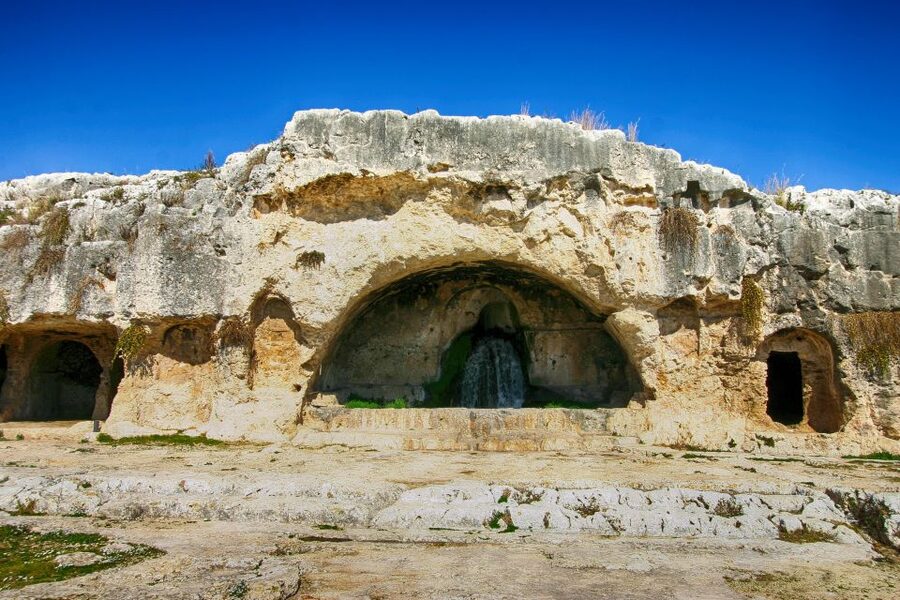
Next you visit Grotta dei Cordari for another 15 minutes with guided explanation. Since this is also tied to the quarry setting, it can sound repetitive if you are just scanning names. But the value is that the guide helps you notice changes in how the rock was used and how the space functioned.
You are basically training your eye. Once you understand how the rock-cut work created these cavities, the Ear of Dionysius stops making sense only as a quirky legend. It becomes the next chapter in the same stone-carving world.
If you are short on time in Syracuse, this mid-portion of the tour is where you earn the later wow moments. Skipping it and jumping ahead usually leaves you wondering why the site is so acoustically and architecturally clever.
A different Syracuse day to consider:
- Siracusa: Ortigia Boat Tour with Marine Grotto
★ 4.7 · 617 reviews - Siracusa: Ortigia & Sea Caves Speedboat Tour with Swim Stop
★ 4.9 · 499 reviews - Boat tour of Ortigia Island and sea caves
★ 5.0 · 407 reviews - Catania: Syracuse, Ortigia, and Noto Tour with Brunch
★ 4.6 · 404 reviews
The Ear of Dionysius: legend, acoustics, and what to try with your own voice
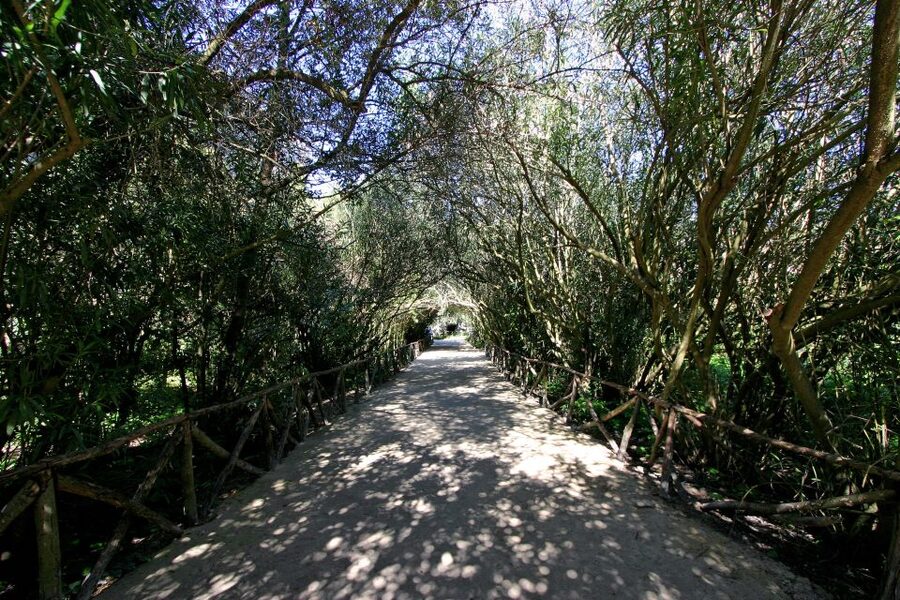
Then comes the stop most people came for: the Ear of Dionysius, inside the quarry area. This is listed as a guided visit of about 15 minutes. The tour focuses on why this grotto is famous, both for its unusual shape and for the way sound carries.
What you should do is simple. When the guide tells you about the echoes, try it once. Speak or clap softly and listen for the way the sound bounces back. Even if you do not go full science mode, the experience of hearing the space respond is memorable because it turns a ruin into a performance.
You also get context connecting the Ear to the broader ancient setting. That is what makes it more than a single attraction. It helps you connect the quarry origins with the myth-making that followed.
The Greek Theater on Temenite Hill: views plus real stage logic
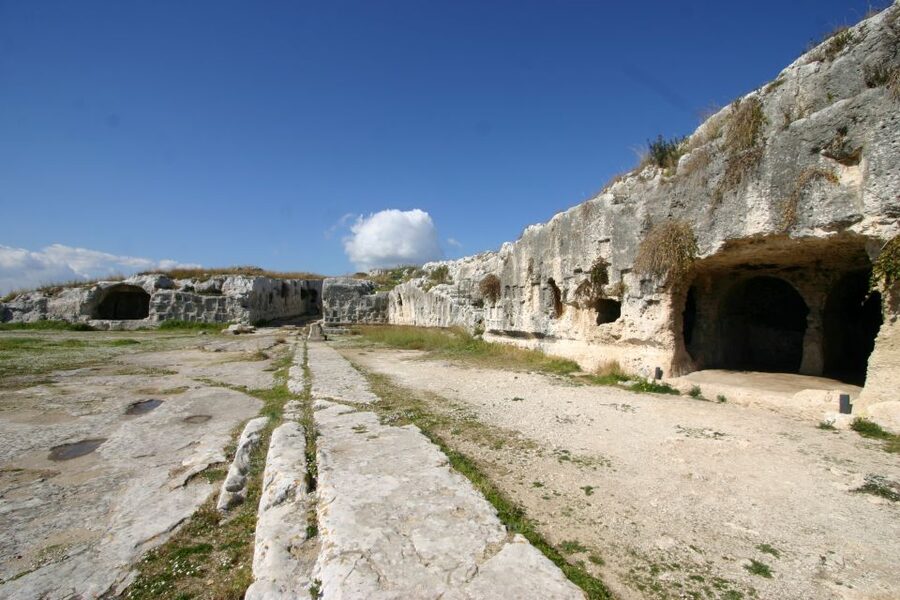
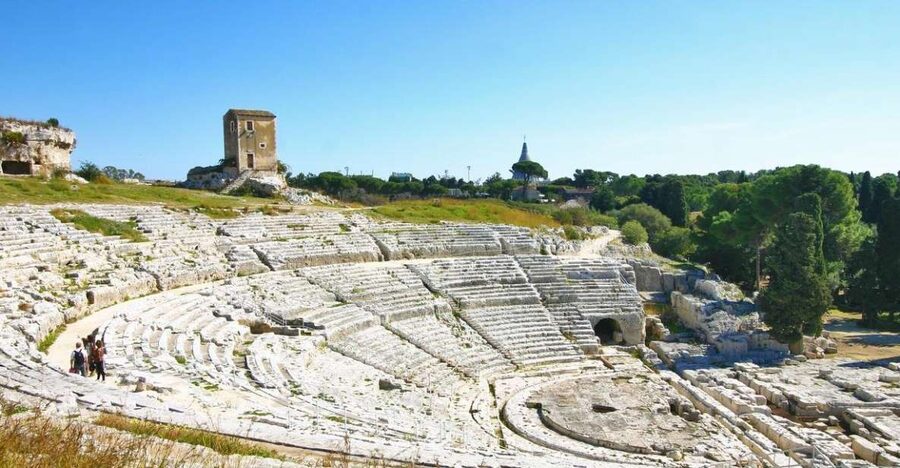
After the grotto portion, you move to the Greek Theater, guided for about 30 minutes. This is where the tour earns big value for people who like to understand how people lived and staged events.
You get the classic elements: the theater carved into the rock on Temenite Hill, and a chance to take in the views of Syracuse’s bay from the theater. Those views matter because a Greek theater was not just for sitting and watching. It was built to frame the world.
If you like good photo spots, this is your moment. But do not treat it like a quick picture line. Take a breath, look outward, then look back at the architecture. The guide’s explanations are most useful when you can connect what you are seeing to why it was built there.
Photo stop and the altar that anchors the Greek era
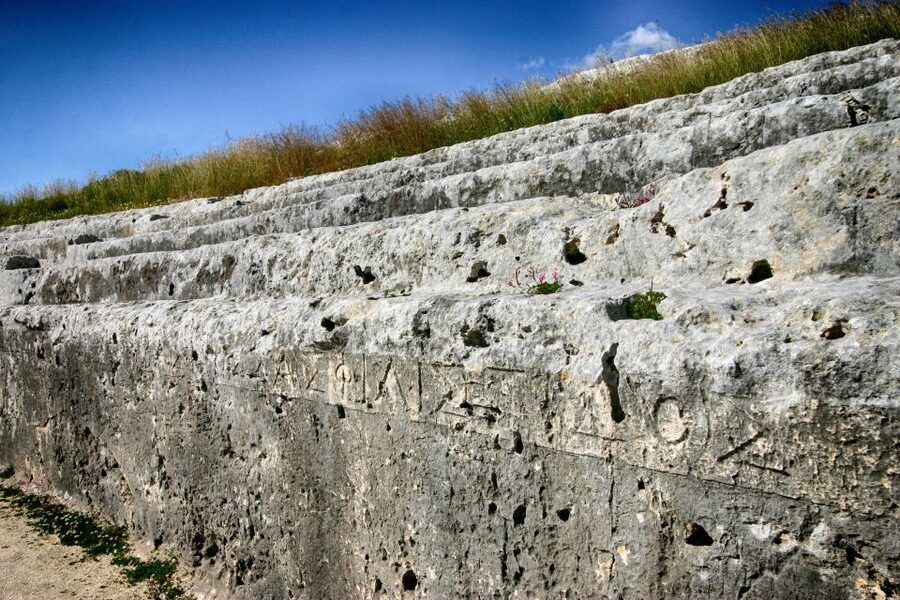
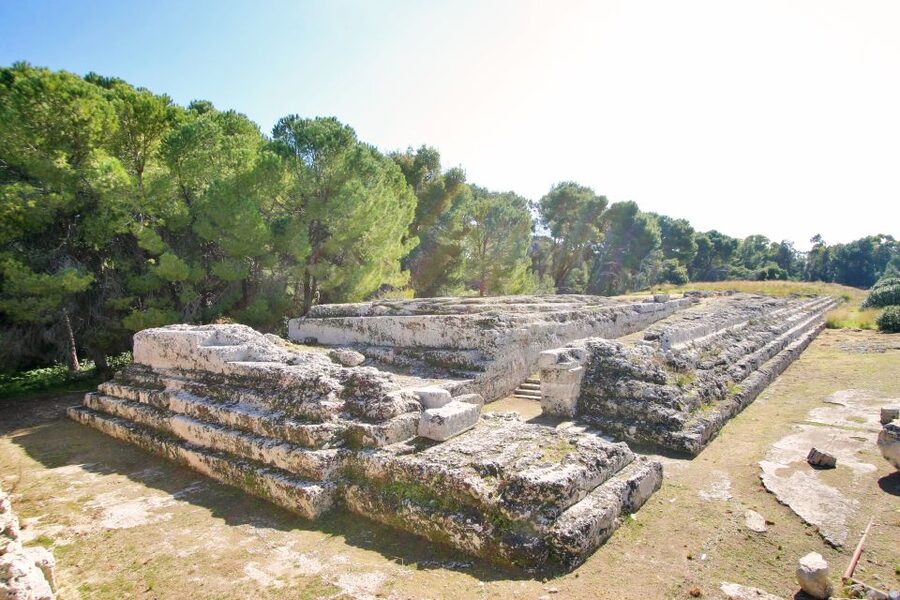
After the theater, you have a short photo stop that gives you a breather without cutting the flow. Then you move to the Altar of Hieron II, visited with guided time of about 10 minutes.
This stop can be easy to overlook if you do not have context. An altar is not as dramatic as a theater, and it does not dominate a view the way the Ear does. But it helps complete the picture of sacred and civic life in ancient Syracuse.
In practice, this is a quick but meaningful transition. You go from performance space to religious-political space, and then you are ready for the Roman chapter.
Altar of Hieron II to the Roman Amphitheater: a quick course in takeover and adaptation
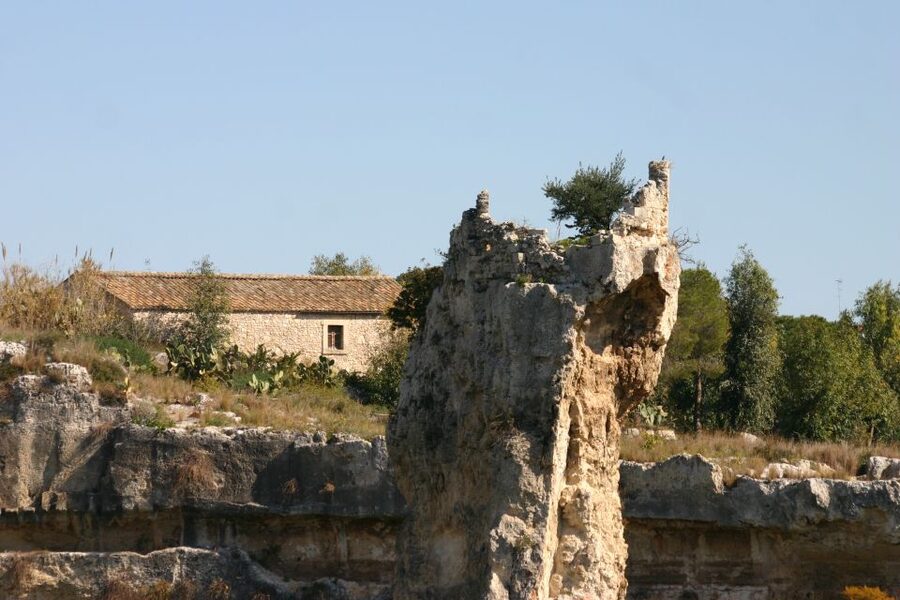
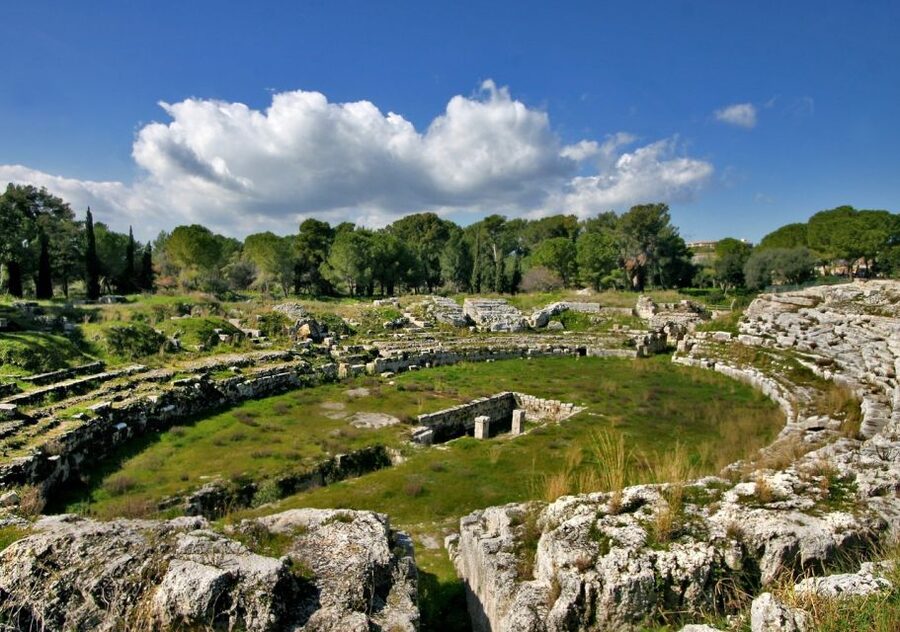
The tour finishes with the Syracuse Roman Amphitheater, guided for about 15 minutes. This is the Greek-to-Roman shift in one walkable arc.
What I like about ending here is how it gives you a sense of continuity. The Romans did not erase everything. They built their own identity onto the existing bones of the city. If your brain likes clean timelines, the order of stops makes that process easier to grasp.
There is also a small reality check to keep in mind. Access or portions of sites can sometimes change based on what is open on the day. When that happens, a guide on-site can help the group make the best of what is available, instead of everyone standing around hoping a door reopens.
Shared group vs private tour: choose your pace, then match your expectations
You can book this tour as a shared group or a private tour. The shared format can be great if you want a social vibe and you like hearing others ask questions. It can also come with radio receivers, but only in the large shared group option.
Radio receivers are worth it if you care about hearing every explanation clearly, especially in outdoor areas where voices carry unevenly. In smaller groups, you may simply hear fine without them, and the guide can respond quickly.
Private tours tend to fit families, couples, or anyone who wants slower pacing and more back-and-forth questions. The tour length stays around 1.5 hours, but private can feel less like a fixed script.
Language is the biggest expectation to manage. The tour guide is in Italian, and very small groups may include two languages. If you want guaranteed English throughout, you should confirm during booking, since the tour data here lists Italian as the live guide language.
Price and value at $26: what you are really paying for
$26 for about 90 minutes may sound modest for a guided archaeological walk. The value comes from the combination of interpretation and the specific “headline stops” packed into one route.
If you go without a guide, you can absolutely roam Neapolis and look. But you will miss how the park connects quarry life to myth, and how Greek civic space transitions into Roman adaptation. That is the main reason this kind of tour is worth it, especially on a short Sicily trip.
Also, the pacing is practical. One and a half hours is long enough to cover the major monuments and still short enough not to drain your day. Reviews tied to this format consistently point to that balance, where you learn a lot without feeling trapped in a long museum-style lecture.
On the other hand, if you are the type who wants to linger for an hour at one spot, this might feel a bit structured. It is not designed for deep solo wandering. It is designed for a strong first pass that leaves you with clear next steps for exploring further.
Who this tour suits best in Syracuse
This tour is a smart match if you:
- want a guided introduction to Neapolis without committing to a full half-day
- love Greek and Roman stories, especially the way myths and architecture tie together
- enjoy photo stops but still want you and your camera pointed at the right places
- prefer a smaller group experience where questions are easy to ask
It can also work well for mobility needs since it is wheelchair accessible. Still, you will be walking through outdoor paths on uneven ground, so bring practical shoes and keep expectations realistic.
If you are traveling with kids, the short guided blocks (roughly 10 to 30 minutes each) help break up attention. And if your group includes someone who hates reading signs, the guide can do the heavy lifting.
Booking verdict: should you do this Neapolis tour or go it alone?
Book this tour if you want the simplest path to understanding the most important pieces of Neapolis, especially the Ear of Dionysius and the Greek Theater with bay views. For $26 and about 1.5 hours, you are paying for clarity, pacing, and a guide who can connect the sites into one story.
Skip it or go on your own if your travel style is ultra self-directed. If you plan to spend hours photographing and reading every sign slowly, a guided “best hits” route might feel too structured.
My practical advice: do this early in your Syracuse ancient-site time. After you get the guide’s map in your head, you will be better at choosing what to revisit on your own.
FAQ
How long is the Syracuse Neapolis Archaeological Park tour?
The tour duration is listed as 1.5 hours.
Where do we meet for the tour?
The meeting point may vary depending on the option you book, and the listed starting locations include Largo Anfiteatro, 2. Your exact meeting location is tied to the option selected.
Can I choose between a shared group and a private tour?
Yes. You can choose between a shared group or a private tour.
What language is the live guide?
The live tour guide is Italian. In rare cases of very small shared group tours, the explanation could be in two languages.
Are entry tickets included?
Entry tickets are included if you select the option that includes them.
Are radio receivers provided?
Radio receivers are available only for the large shared group tour option.
What should I bring, and how flexible is cancellation?
Bring a passport or ID card. The activity also offers free cancellation up to 24 hours in advance for a full refund.
Reviewed lately around Syracuse
- From Catania: Neapolis of Syracuse, Ortygia, and Noto Tour★ 4.7 · 234 reviews
- Syracuse, Ortigia and Noto walking tour from Catania★ 5.0 · 273 reviews
- Syracuse: Ortigia Sunset Cruise with Aperitif★ 4.8 · 291 reviews
- Syracuse: Street Food Walking Tour in Ortigia with Tastings★ 4.9 · 293 reviews
- Syracuse: Coast and Sea Caves Full Transparent Boat Tour★ 4.8 · 330 reviews
- Syracuse: Ortigia Island and Sea Caves Boat Tour with Drinks★ 4.6 · 337 reviews
- Syracuse: Pillirina, Ortigia, and Sea Caves Tour by Boat★ 4.6 · 348 reviews
- Siracusa: Ortigia & Sea Caves Speedboat Tour with Swim Stop★ 4.9 · 499 reviews
Syracuse Tours, compared.
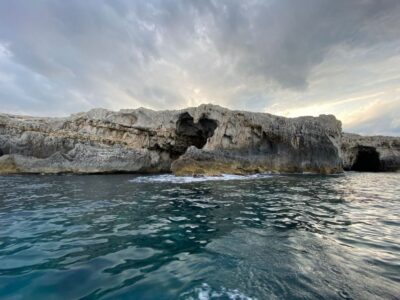
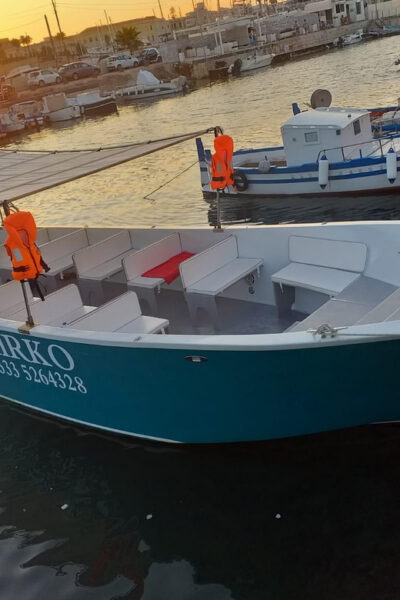
Boat Tour with Captain Mirko, Snorkeling & Caves
Read our review →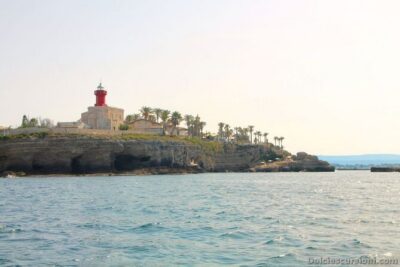
Tour of the island of Ortigia and exploration of sea caves with baths.
Read our review →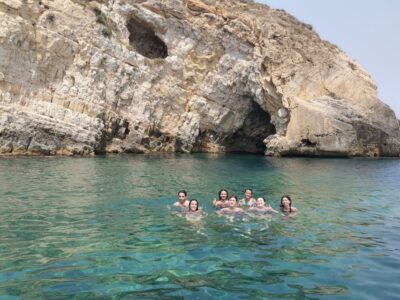
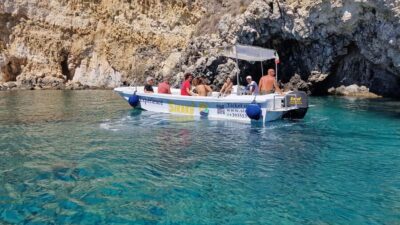
Siracusa: Ortigia & Sea Caves Speedboat Tour with Swim Stop
Read our review →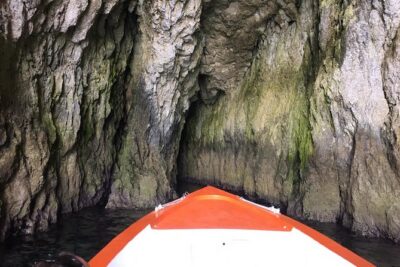

Browse the lists this tour appears in