Reviewed · ROME TOURS
Rome:Palatine Hill Roman Forum Experience & Multimedia Video
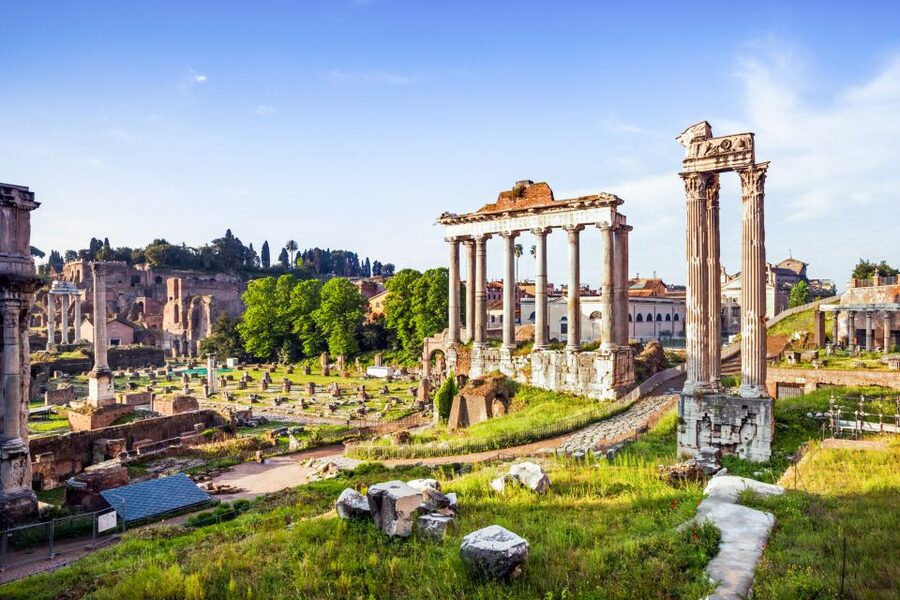
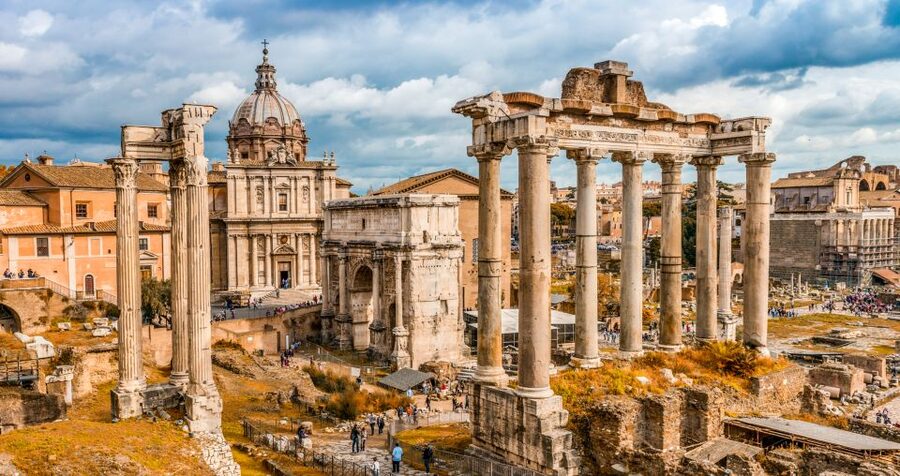
Rome’s Roman Forum and Palatine Hill can feel like a pile of great stones unless you get your bearings fast. This experience starts you with a 30-minute Ancient Rome multimedia video, then lets you explore the ruins on your own, with ticket access to a stack of special sites.
I especially like how the video helps you connect what you see on the ground to what used to stand there, and how it clarifies the Forum’s layout and purpose. I also like the value in the pass, because you’re not just paying for two big ticket areas, you’re also getting entry to Palatine Museums and several specific highlights on Palatine Hill.
One possible drawback: the meet-up location and entrance instructions take a little attention. You redeem your voucher at Touristation Aracoeli, then you do not go straight to the Roman Forum entrance, so if you show up late or follow the wrong signs, you’ll waste time.
Key highlights you will actually feel
- 30-minute multimedia video first, so the ruins make sense while you’re walking
- Roman Forum plus Palatine Hill with self-paced time, not a rushed guided script
- Multiple Palatine special sites included, like House of Livia and Domus Tiberiana exhibition rooms
- Panoramic viewpoints from Palatine Hill, including sightlines toward the Colosseum
- English city walking tour at 10:00 covering Navona Square, Pantheon, and Trevi Fountain
A smart start: the 30-minute Ancient Rome video that gives you bearings
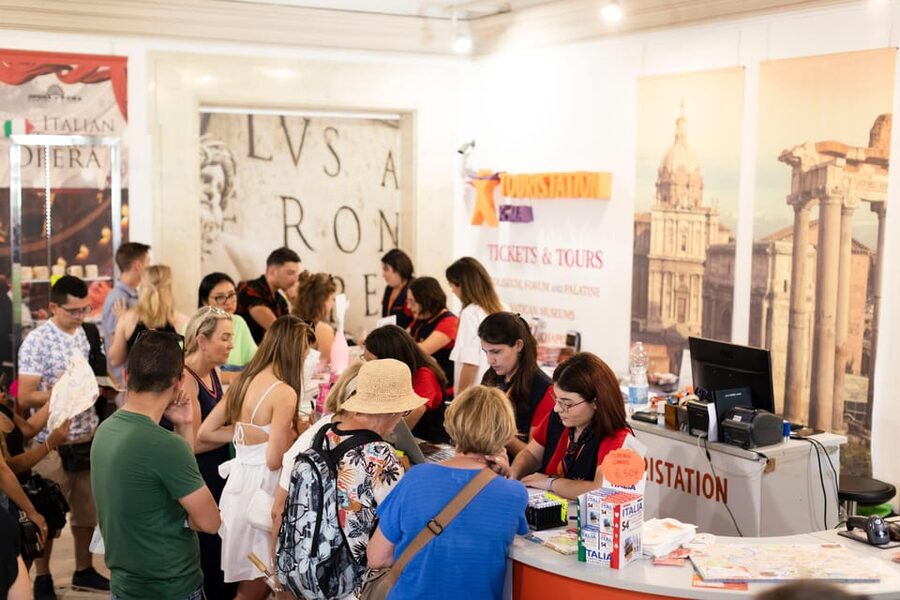
The best part of this experience is the warm-up before you hit the stones. You exchange your voucher at the Touristation Aracoeli office, then you sit through a 30-minute multimedia video about Ancient Rome. The format is designed to help you visualize what you’re about to walk through, including how spaces fit together on and around the Forum.
This is the difference between walking around and understanding what you’re walking around. The Forum was not one temple or one palace, it was a working stage for politics, daily civic life, and public ceremony. The video makes the scale and geography feel less confusing, so when you get out into the open air ruins, you can focus on the big moments instead of trying to decode where everything is.
It’s also a good length for a first-timer. People often skip tours because they fear lectures. This is short enough that you stay alert, and long enough that you don’t feel lost afterward.
More from a Rome stay:
- Colosseum, Roman Forum & Palatine Guided Tour
★ 4.7 · 63,148 reviews - Vatican Museums, Sistine Chapel & St Peter’s Basilica Guided Tour
★ 4.5 · 39,149 reviews - Rome: Colosseum, Palatine Hill and Roman Forum Guided Tour
★ 4.8 · 32,814 reviews
Touristation Aracoeli office meet-up and finding the right way in
Timing matters here. Your booking time refers to when you go to the Touristation Aracoeli office, located at Piazza d’Aracoeli, 16. The key practical point: you do not report at the Roman Forum entrance. You’re supposed to swap your voucher at the office first, and then follow the instructions you receive for entering the sites.
Look for the meeting spot details. The area you’re looking for has a fountain under restoration and orange flags outside. That’s your “you’re in the right place” clue.
In the real world, this is where a lot of tours accidentally lose people. The district around Piazza d’Aracoeli is busy, signage can be unclear, and a short walk can turn into a long one when you’re trying to find the correct doorway at the exact right minute. My advice is simple: arrive a bit early, double-check that you’re at the office, and do not start walking toward the Forum entrance until you’ve completed the voucher exchange.
Also note the names on your booking must match the ID documents you bring. If the names do not match, access to Roman Forum and Palatine Hill will not be guaranteed. Bring passports or ID cards for everyone in your group.
Roman Forum at your pace: where everyday Rome met big politics

After the office part, you go straight into the experience of the Roman Forum on your own schedule. This is a huge help, because the Forum is best when you can stop and re-start. You might want to linger at one corner to stare at details, then speed up through another section when you already get the idea.
The Forum was the heart of Roman public life. You’ll feel it in how the ruins cluster: places that once held speeches and arguments are right next to spaces connected to religion and ceremony, and the remains of major monuments appear like signposts on a route you can follow.
One of the most meaningful things you can do is pace yourself around what you care about:
- If you like politics and power, focus on the major state areas and civic buildings.
- If you like ordinary people’s routines, look for the locations where everyday Roman life intersected with official business.
- If you like storytelling, treat it like a movie set, and let the visual cues from the video guide your path.
You can also use the fact that you’re going independently to adjust for the day’s crowd level. Some areas get thick with groups. When that happens, step aside, take a breath, and move to the next cluster of ruins. This pass is set up for that kind of flexible wandering.
Julius Caesar’s tomb area and other Forum inclusions you should plan for
This ticket gives you access to a set of key parts of the Forum experience, plus specific related sites. Some of these are limited by day.
For example:
- House of Augustus is closed on Mondays.
- Curia Julia is only open on Mondays, Saturdays, and Sundays.
Curia Julia is one of those “this is the real deal” places for Roman political imagery. If your visit lands on a day when it’s open, make it a priority. If it’s closed, you’ll still get plenty of Forum structure, but it’s worth knowing you might not access everything every day.
You will also want to prioritize the area connected with Julius Caesar, including the tomb site. This is one of those emotional anchors in the Forum. Standing there gives you a shortcut into Roman history: you stop thinking of the Forum as a collection of ruins and start thinking of it as a place where decisions and turning points happened.
While you walk, try to keep your attention on the transitions from one area to the next. The Forum’s story is not just individual monuments. It’s how they relate, how public space got repurposed over time, and how the city used these same zones again and again.
Practical note: there can be plenty of walking with limited shade. Bring water. Even if you see little points of interest, you’ll still want energy for the “slow stops,” which are where the Forum becomes memorable.
A different Rome day to consider:
- Rome: Guided Tour of Colosseum, Roman Forum & Palatine Hill
★ 4.7 · 27,897 reviews - Rome: Colosseum, Roman Forum and Palatine Hill Guided Tour
★ 4.5 · 23,903 reviews - Rome: Pantheon Fast-Track Ticket and Official Audio Guide
★ 4.3 · 21,008 reviews - Rome: City Sightseeing Hop-on Hop-off Bus with Audioguide
★ 4.0 · 16,045 reviews
Palatine Hill: the foundation of Rome and the views toward the Colosseum
If the Roman Forum is about public life, Palatine Hill is about origins and power. This hill is described as the foundation of Rome, and the experience reflects that theme. You’re right near the centermost of the Seven Hills of Rome, so you get the sense that the city’s core was never far from your feet.
What I love about Palatine Hill is the mix of intimacy and scale. You’re walking through areas tied to major emperors and kings, but you also get open-air perspective. When you reach the viewpoints, the view does more than provide a skyline photo. It makes you grasp what “central Rome” means. On a clear day, you can catch sightlines that include the Colosseum, which is a fun way to connect your walk to a much wider ancient map.
Also, the hill gives you a natural break from the Forum crowds. People sometimes rush through Palatine because it feels like a second site. But if you give it time, it becomes a calmer companion to the Forum. You can linger over details without feeling like you’re constantly moving with a group.
My practical tip: plan your Palatine time like you plan your best meal. You don’t need to rush. Spend time in the zones that feel meaningful, then finish with the view areas while the light is good for pictures.
Palatine’s included special sites: Houses, museums, and underground textures
This ticket doesn’t treat Palatine Hill as a single stop. It gives you access to a group of “special sites,” which matters because they each tell a different part of the story.
Here are the major inclusions you should look for on your ticket:
- Palatine Museums
- House of Augustus (closed on Mondays)
- House of Livia
- Domus Tiberiana exhibition rooms
- Neronian cryptoporticus
- Aula Isiaca / Loggia Mattei
- Santa Maria Antiqua
- Ramp of Domitian
- Oratory of the Forty Martyrs
- Curia Julia (day dependent: open Mondays, Saturdays, and Sundays)
The key thing to understand is that these are not just “extra rooms.” They help you build a layered picture of Roman life. A house tells you about status, daily routines, and decoration. Underground passages like the cryptoporticus help you understand how buildings were engineered and repurposed across centuries. Religious spaces like Santa Maria Antiqua and the Oratory of the Forty Martyrs show how Roman sacred space didn’t vanish, it changed hands and meanings.
If you have limited time, choose based on what you want to feel most:
- Want to feel elite domestic life? Prioritize House of Augustus and House of Livia.
- Want atmosphere and architecture? Aim for Domus Tiberiana exhibition rooms and the cryptoporticus.
- Want the power-and-religion overlap? Don’t skip Santa Maria Antiqua and the connected oratory.
When you combine these with the Forum, it’s easier to see the same city from two angles. One angle is public and official. The other is private, imperial, and architectural.
Timing your visit: how long to plan and how to avoid getting tired
This experience is valid for 1 day, and you choose a start time for the office visit. You will do the multimedia video first, then you explore Roman Forum and Palatine Hill independently.
How long should you plan? If you want to do more than a fast walk-through, give yourself at least 3 hours, and ideally more if you love details. People often find it tough to cover everything because Palatine Hill is not a single corridor, it’s a whole set of zones, and the included special sites add variety.
The other real-world factor is effort. Rome ruins are on uneven ground and require steady walking. There are some fountains, but not enough to count on. Bring water and take breaks when you need them.
Also, plan your day around the 10:00 city walk if you want it. The included English walk covers Navona Square, Pantheon, and Trevi Fountain every day at 10:00. That means your Palatine and Forum schedule can’t ignore the morning. If you’re a fan of stacking must-sees, this combination can work well. If mornings are hard for you, you might prefer to treat it as a separate optional bonus.
The included English city walking tour at 10:00: good intro to Rome’s icons
The package includes an English guided walking tour of the most important central sights: Navona, Pantheon, and Trevi Fountain. It runs daily at 10:00, in English, with that specific route.
This matters because it gives you a modern anchor day. Roman Forum and Palatine Hill can make the city feel like an archaeological bubble. Then you step out into Navona, see the Pantheon, and end at Trevi Fountain, and suddenly the ancient story connects to what you can still experience today.
I also like that this tour is structured. Even if you prefer solo wandering at the ruins, it’s nice to have a guided primer for the big landmarks where you might not naturally know the order or significance.
One more small note: there’s mention of an excellent guide in this overall experience, and one named guide, Benjamin, has been specifically praised for humor and problem-solving. You should still consider the guide component as variable, but it’s comforting to know the level of instruction can be high when you get the right match.
Price and value: what you’re paying for, and why it can be fair
The listed price is $32 per person, for an experience that includes entry to Roman Forum and Palatine Hill plus additional services. Here’s the value lens that helps you decide:
- The Roman Forum and Palatine Hill ticket is €18 with reservation.
- The difference you pay is for the added items, including the multimedia video, assistance to the Forum entrance, and the included city walking tour.
So you’re not just buying “admission.” You’re paying for the part that makes the admission easier and more meaningful: a visual primer, help at the start, and a connected city walk in English.
Is it the cheapest way? Maybe not. But it can be a better deal than trying to piece things together yourself when you factor in the multimedia start and the morning tour add-on. And because it’s self-paced at the ruins, you’re not paying for hours of someone leading you in a straight line. You get autonomy, which is a big deal at major sites.
One extra consideration: this experience is non-refundable. That’s worth remembering if you’re booking far in advance and your plans might shift.
Who should book this Forum and Palatine experience
This is a great match if you want:
- A guided-feeling start (the video) without locking you into a full guided walk all day.
- Access to a broad set of Palatine sites, not just the most famous stop.
- A day plan that can include central Rome icons through the 10:00 English walking tour.
It’s less ideal if you want a fully guided deep lecture while you walk through every monument. This is built for independence after that initial multimedia introduction and entrance assistance.
Also, if you have mobility concerns, the experience notes it is wheelchair accessible. That said, you’ll still want to read the ground reality once you’re there, because ancient sites involve outdoor walking.
Should you book? A practical decision guide
I’d book this if you like structured context but you want freedom once you’re standing in the Forum. The up-front multimedia video is short, useful, and often the difference between seeing ruins and really understanding them. The included Palatine special sites also help you get more than one “type” of experience in the same day.
Skip it or reconsider if you strongly prefer a live guided tour throughout the ruins, because after the initial video and assistance, you’re on your own. And be sure you can handle the meet-up instructions at the Touristation Aracoeli office, because that start step is essential to avoid time-wasting confusion.
If you’re aiming for value and you want Rome’s ancient center to click quickly, this is a smart way to do it.
Reviewed lately around Rome
- Colosseum, Palatine Hill and Roman Forum with Guided Tour★ 5.0 · 500 reviews
- Exclusive Golf Tour Private VIP with Local & Gelato o Wine★ 5.0 · 500 reviews
- Rome Trastevere Pasta Making Class with Eating Europe★ 5.0 · 505 reviews
- Rome by Night Walking Tour★ 4.5 · 506 reviews
- Rome: Colosseum Express Tour with Forum & Palatine Access★ 4.5 · 511 reviews
- Rome Food Experience Max 6 People Group Tour | w/Private Option★ 5.0 · 516 reviews
- Rome: Papal Audience Experience with Pope Leo XIV★ 4.8 · 518 reviews
- Rome: Escorted Papal Audience Experience with Entry Ticket★ 4.4 · 518 reviews
Rome Tours, compared.

Colosseum, Roman Forum & Palatine Guided Tour
Read our review →
Vatican Museums, Sistine Chapel & St Peter’s Basilica Guided Tour
Read our review →
Colosseum, Palatine Hill and Roman Forum Guided Tour
Read our review →
Guided Tour of Colosseum, Roman Forum & Palatine Hill
Read our review →
Colosseum, Roman Forum and Palatine Hill Guided Tour
Read our review →
Pantheon Fast-Track Ticket and Official Audio Guide
Read our review →
City Sightseeing Hop-on Hop-off Bus with Audioguide
Read our review →