
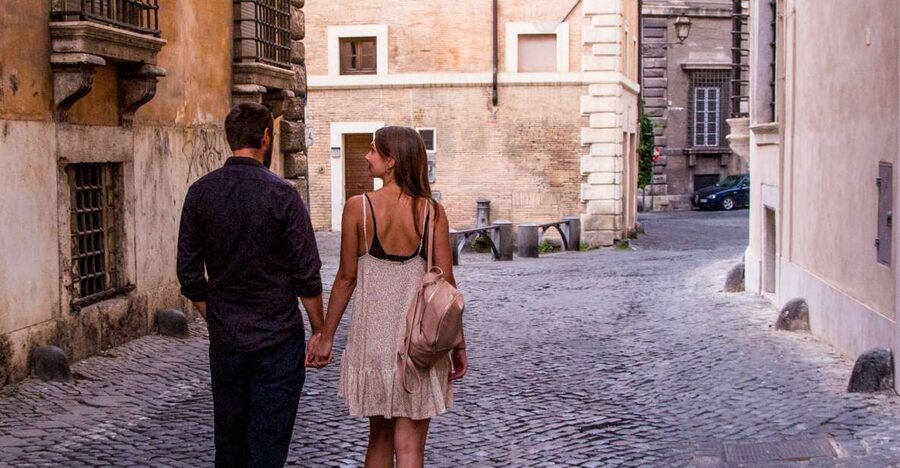
Reviewed · WALKING TOURS
Rome: Jewish Ghetto Walking Tour
Rome’s Jewish Ghetto is interesting because it layers stories on top of stories, with ancient landmarks sitting right next to places tied to more recent history. I love the story-first guiding that turns street corners into scenes, and I love the way the route connects Jewish life with mainstream Roman sites you recognize. The main drawback is simple: this is a 2.5-hour walking tour, so wear shoes you can trust.
You meet at Foro Traiano 84, near Trajan’s Column, then your guide steers you into a part of the city that usually stays off most first-timer routes. Guides like James and Angela are repeatedly praised for making the subject feel understandable, personal, and actually fun, even if you are not a history person.
By the time you reach Tiber Island, the tour has shifted gears in the best way, from ancient medicine stories to WWII-era rescue history. If you like tours where the guide does more than recite facts, this one fits your style.
Key Things You’ll Notice on This Jewish Ghetto Walk
- Trajan’s Column start that instantly gives you Roman context before you hit the Jewish quarter
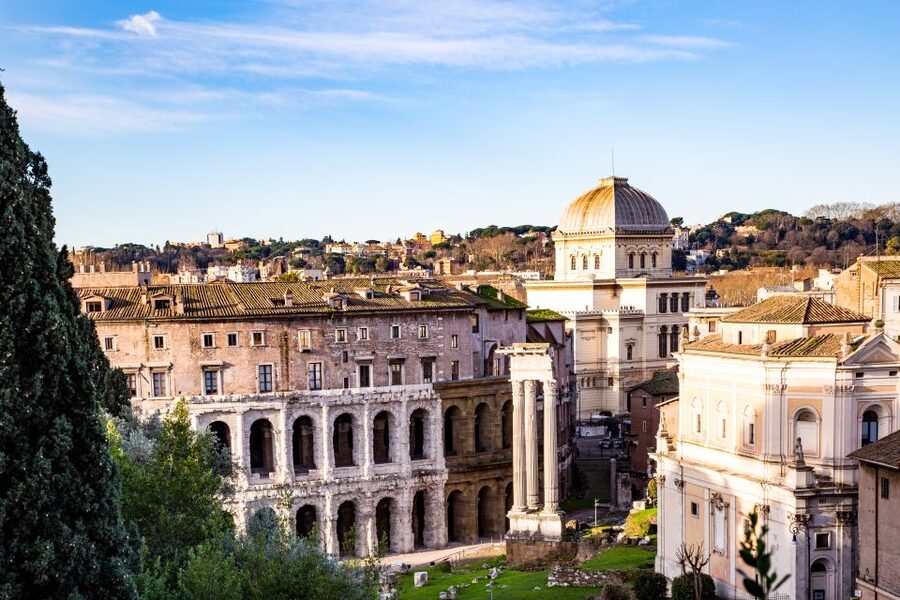
- The Theater of Marcellus stop, older than the Colosseum, with details that make it feel real
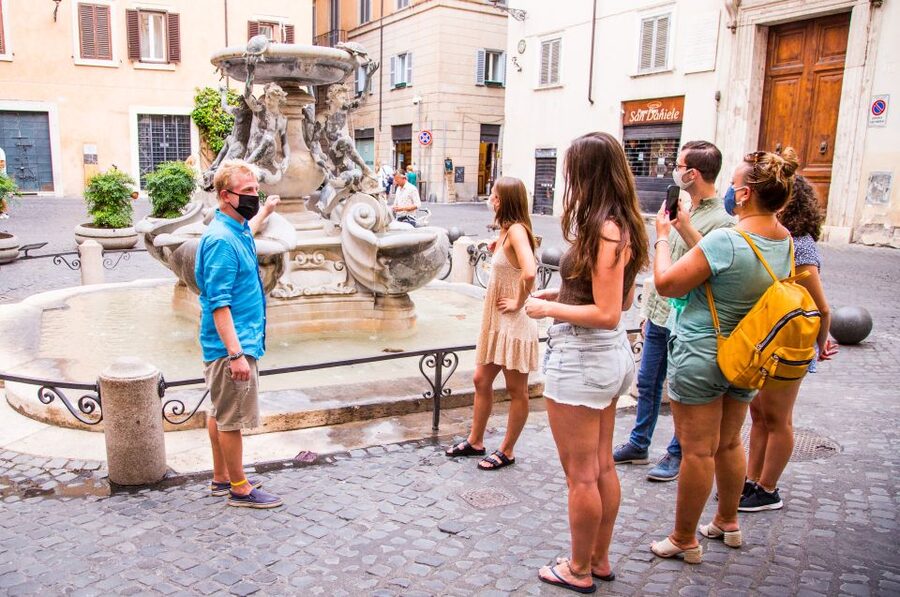
- Piazza Mattei and the Turtle Fountain plus the romance story attached to it
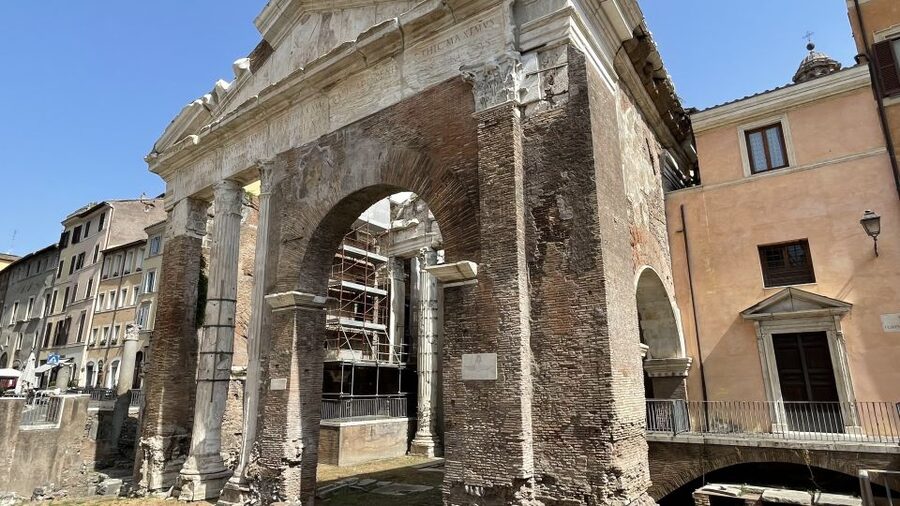
- Portico d’Ottavia and surviving structures that show how old Rome is still around today
- Kosher gelato or coffee as a timed break, not a random detour
- Tiber Island finish with WWII hospital rescue stories and the Asclepius site now a church
Where the Jewish Ghetto Tour Fits Best in Your Rome Plan
This walk gives you something Rome does well, the sense that past and present are sharing the same sidewalk. The Jewish Ghetto area is not just a museum lesson. It’s a living neighborhood, with big landmarks and small streets that help you understand how communities held on through centuries of change.
I like that the tour is built like a timeline you can walk. You start with ancient Rome infrastructure, then move through Jewish Ghetto landmarks, and finally end on Tiber Island where the stories jump from antiquity into WWII. That arc keeps your brain engaged, because you are constantly comparing eras.
If you have already toured the major classics like the Colosseum area, this is a strong “second layer” day. It also works for mixed groups, because the guide can switch gears between Roman architecture and Jewish history without losing the thread.
More Walking Tours in Rome
- Rome: Trastevere & Campo de Fiori Street Food Walking Tour
★ 4.9 · 2,768 reviews - Rome: Paranormal Night Walking Tour & Secret Backstreets
★ 4.9 · 1,921 reviews - Rome by Night Walking Tour – Legends & Criminal Stories
★ 4.5 · 1,003 reviews
Meeting at Foro Traiano (Trajan’s Column): Setting the Scene
Your tour meets at Foro Traiano 84. Look for an orange Roman Vacations sign. This matters because the Forum area has multiple entrances and many people milling around, especially during peak hours.
Starting near Trajan’s Column is a smart move for first-timers. You’re in the center of ancient Rome’s storytelling machine, and your guide can quickly explain the setting before you start weaving through the later neighborhood. It also helps you understand why certain buildings and street alignments feel the way they do.
Plan to arrive a few minutes early. The tour cannot wait for late arrivals, and missing the start means you won’t get a substitute slot.
Theater of Marcellus: When You Get to See Ancient Rome Up Close

One of the tour’s early stops is the Theater of Marcellus. This site is famous for being older than the Colosseum, and the guide uses that fact to frame the whole Roman story. Even if you have seen big amphitheaters, you’ll notice how theaters and civic buildings shaped daily life differently.
This stop is only about 20 minutes, so it’s not a long archaeological lecture. Instead, you get the key context that helps you look at the architecture the right way. You learn what to look for, then you move on, so the time stays efficient.
Practical tip: bring water and a hat if it’s bright. Rome’s open spaces can bake you fast, and this part of the route may have less shade than later streets.
Piazza Mattei and the Turtle Fountain: A Love Story With Teeth
Next, you’ll spend time at the Fontana delle Tartarughe, the Turtle Fountain in Piazza Mattei. This stop is popular because it has a story attached to it, the kind of unrequited love tale that turns a decorative fountain into local legend.
The fountain is small enough to miss if you’re wandering on your own. With a guide, you slow down just enough to notice the details and understand why people talk about it. That is the real value here. You don’t just see a landmark. You learn how it fits into the neighborhood’s folklore and identity.
This stop is also a good chance to catch your breath before you continue deeper into the Jewish quarter.
A different Rome day to consider:
- Colosseum, Roman Forum & Palatine Guided Tour
★ 4.7 · 63,148 reviews - Vatican Museums, Sistine Chapel & St Peter’s Basilica Guided Tour
★ 4.5 · 39,149 reviews - Rome: Colosseum, Palatine Hill and Roman Forum Guided Tour
★ 4.8 · 32,814 reviews - Rome: Guided Tour of Colosseum, Roman Forum & Palatine Hill
★ 4.7 · 27,897 reviews
The Jewish Ghetto Streets: 2,000 Years Told Through Buildings and Memory
This is the heart of the experience. You’ll walk through the Jewish Ghetto area and learn how the neighborhood changed across Roman rule, later political pressures, and the long path toward resilience.
You’ll also pass the last remaining piece of the wall that kept the community in this area for centuries. That kind of detail hits harder than dates on a page, because you can connect the policy of separation to something physical you can point at. It makes the past feel less abstract.
The guide also brings in the Great Synagogue of Rome. You’ll hear the story and historical context as you pass it. A note for your expectations: this tour is designed as a walking overview, so you should not assume you’ll go inside.
If you care about entering the synagogue itself, plan that as a separate add-on on a day when you can match it to opening hours and your personal interests.
Portico d’Ottavia: Ancient Rome’s Built-in Social Life
Portico d’Ottavia is one of those places where Roman design does its quiet work. You get a sense of how covered arcades shaped movement, commerce, and community. This stop is about 15 minutes, but it’s timed well, because you’re transitioning from the emotional weight of ghetto history into a more architectural phase.
Your guide helps you see the difference between viewing a structure and understanding why it mattered. The portico gives you a clue about how space was organized in everyday life, not just for ceremonies or elite events.
Shade is another practical angle. Arcades and porticos can give you a brief cool-down, especially helpful in warmer months.
Gelato Break With a Jewish Twist: Kosher Gelato or Coffee
This tour includes a stop at a gelateria for homemade kosher gelato or coffee. It’s not just a snack. It’s a chance to reset and keep the group pace comfortable.
Because it’s included, you don’t have to do the planning math mid-tour. You also get a small cultural detail that reinforces the theme of Jewish continuity, not just Jewish history.
If you are sensitive to long lines for popular gelato spots, pay attention to the timing. On a walking tour, the guide generally schedules the break so you don’t lose too much momentum.
Crossing Toward Tiber Island: The Oldest Functioning Bridge Moment
After the ghetto area, you cross onto Tiber Island via the oldest functioning bridge in Rome. That line alone makes people perk up, because it signals the continuity of infrastructure. Then the guide layers in stories that make that continuity feel human.
You’ll get the WWII hospital saving-people stories connected to this area. It’s the kind of history that turns a postcard island into a place with moral weight. You’ll also hear about Asclepius, the temple associated with healing traditions, and how that site is now a church.
Finishing on Tiber Island is a smart way to close. The walk ends with a change in mood, where you are no longer just scanning buildings. You’re hearing how belief, medicine, and survival all crisscross the same geography.
Pacing and What to Bring for Comfort in Real Roman Weather
This tour lasts 2.5 hours. That means you need to treat it like a real walk, not a “light stroll.” Wear comfortable shoes. If you’re with teenagers, it also helps that many guides use a story style that keeps attention from wandering.
The packing list is straightforward and useful:
- comfortable shoes
- sun hat
- umbrella
- sunscreen
- weather-appropriate clothing
- reusable water bottle
One more dress note matters in Rome. If you end up near churches where covering bare shoulders is required, bring something light you can use quickly.
Also know the tour proceeds in all weather conditions. If rain is in the forecast, don’t count on a dramatic change of plans. Bring the umbrella and go.
Price and Value: What You’re Paying For at $65
At $65 per person for a 2.5-hour guided walk, the value comes from three things that matter in Rome.
First, you’re paying for a live English guide who connects multiple eras and landmarks into one storyline. Most “see this, then that” tours run out of oxygen fast. This one tries to keep the thread by linking Roman architecture, Jewish Ghetto history, and the ending on Tiber Island.
Second, you’re not only sightseeing. You’re getting an included refreshment, homemade kosher gelato or coffee. In practical terms, that reduces extra spending and keeps you from hunting for food mid-walk.
Third, the route hits a set of recognizable anchors for first-timers while still delivering the focused neighborhood experience people come to Rome for. Theater of Marcellus, Turtle Fountain, Portico d’Ottavia, the Great Synagogue area, and Tiber Island are a mix you’d struggle to stitch together as well on your own.
If you are the type who likes tours where you can ask questions and the guide answers with details, this price usually feels fair. If you want to sit and look, this will feel more active than you might expect.
Who Should Book This Tour (and Who Might Skip It)
This tour is a great match if you:
- want a structured walk through the Jewish Ghetto with clear context
- like story-driven guiding, the kind that makes places feel connected
- want both Roman landmarks and Jewish Ghetto history in one go
- appreciate a planned break for kosher gelato or coffee
It might be less ideal if you:
- need a very minimal walking day
- strongly want interior access to specific sacred buildings during the same outing
- prefer purely recreational pacing with no heavier WWII and persecution stories
For mixed groups, it can work well because the guide can balance architecture and community history without turning it into a lecture.
Should You Book This Rome Jewish Ghetto Walking Tour?
If you want a meaningful Rome experience that’s still practical, I’d book it. The itinerary is tight, the stops are well-chosen, and the ending on Tiber Island gives you a powerful final note. The included kosher gelato or coffee is a nice bonus that keeps energy up.
Do it if you enjoy guides like James and Angela who tell the story in a way that sticks. If you are the kind of person who wants to ask questions, you’ll likely feel like the guide has room for that.
One last decision trick: if you are visiting during a sensitive time like late Friday afternoon, consider timing your schedule so the experience matches your expectations. That kind of timing detail can matter for the flow of a visit.
If you’re ready to see Rome with fresh eyes, especially through the lens of the Jewish community and ancient Roman sites, this tour is a solid bet.
FAQ
Where is the meeting point?
The tour meets at Foro Traiano 84. Look for an orange Roman Vacations sign.
How long is the walking tour?
It lasts about 2.5 hours.
Is the tour guide speaking English?
Yes, this is a live tour with an English-speaking guide.
What is included in the price?
The price includes the tour guide and kosher gelato or coffee.
What should I bring, and are there any clothing rules?
Bring comfortable shoes, a sun hat, an umbrella, sunscreen, weather-appropriate clothing, and a reusable water bottle. If you visit churches during the tour, you’ll need a cover for bare shoulders.
Does the tour run in bad weather, and what if I’m late?
The tour proceeds in all weather conditions. Tours cannot be delayed for late arrivals, and no refunds are given for late arrivals or missed tours.
Reviewed lately around Rome
- Rome: Private Customizable 3-Hour Golf Cart City Tour★ 5.0 · 229 reviews
- Papal Audience Experience with Pope Leo XIV★ 4.5 · 230 reviews
- The Three Tenors in Rome – Nessun Dorma★ 4.5 · 231 reviews
- Discover Rome in a Day – Private Driver Tour★ 5.0 · 231 reviews
- Rome: Colosseum, Roman Forum & Palatine Hill Group Tour★ 4.7 · 232 reviews
- Rome Airport Transfer – Private Luxury Service with Driver★ 4.5 · 231 reviews
- Fast track: Vatican Museums, Sistine Chapel Guided and St. Peter’s Basilica Tour★ 4.5 · 232 reviews
- Moonlight Rome: Night Walking Tour of Roman Highlights★ 5.0 · 232 reviews
Walking Tours, compared.
Guided Walking Tour & Last Supper Visit with Ticket
Read our review →

Rialto Bridge & Offbeat Unusual Venice Walking Tour
Read our review →
Private 3 hrs Venice Tour: St Mark’s, Walking tour & Boat tour
Read our review →
Skip the line: Uffizi and Accademia Small Group Walking Tour
Read our review →Browse the lists this tour appears in