
Reviewed · CYCLING TOURS
Highlights of Rome Bike Tour (Including Jubilee Sights)
Rome is huge. What makes this bike tour interesting is how it compresses a lot of the city into a tight circuit, so you can get your bearings fast without spending your whole day in transit. It runs about 3 hours and keeps the group small.
I especially like the mix of stops. You roll from the Jewish Ghetto to big-name sights like the Pantheon and Trevi Fountain, then out toward Imperial Rome monuments. I also like the practical setup: you get a helmet, bike rental, and a handy way to stash valuables on the bike.
The main thing to consider is how Rome rides feel. Cobblestones and busy streets mean you should wear grippy shoes and be ready for a steady pace, even though the route is described as flat overall.
Quick hits before you book
- A first-timer Rome shortcut that hits major sights plus one neighborhood people often skip.
- Short ride, short stop rhythm so you keep moving but still get time for photos and quick exploring.
- Valuables handled for you with a front bike pouch and back rack.
- Small group size with a maximum of 14 people, which helps the guide manage traffic and spacing.
- Guides with strong storytelling are a recurring theme, with names like Daniele, Nico, Stefano, Elena, and Sahrah getting praise for making sites feel alive.
- Some entry isn’t included at certain stops, so you should expect to pay for a few admissions if you want to go inside.
Why This 3-Hour Rome Bike Loop Feels Like a Best-Of
This tour is built for momentum. You start in central Rome and spend the day in “see it, learn it, move on” mode. That matters in a city like Rome, where lines, long walks, and random detours can quietly eat your vacation.
The “small-group” part is not marketing fluff. With a max of 14 people, the guide can adjust the ride so no one gets stranded behind at a corner or swallowed by a crowd. In the feedback, people repeatedly mention feeling safe and not rushed at the stops, which is the exact sweet spot for a short highlights tour.
And the itinerary does something smart: it avoids only sticking to the usual postcard loop. You get the Jewish Ghetto area, then you hit the Piazza Navona and Pantheon zone, and after that you work your way through the Roman Forum area and big Imperial monuments. It’s a good way to build a mental map before you plan museums and longer walks later.
More Bike Tours in Rome
- Rome EBike Tour: Appian Way, Catacombs & Roman Aqueducts
★ 5.0 · 1,766 reviews - Rome: Top Highlights & Hidden Gems Tour by Cannondale E-Bike
★ 4.9 · 1,760 reviews - Rome: Appian Way, Catacombs, & Roman Aqueducts E-bike Tour
★ 4.9 · 1,421 reviews
The Start at Via dei Delfini, and What You Need to Know First
You meet at Via dei Delfini 35, and the tour ends back at the same point. You’re asked to arrive 15 minutes early, and you’ll get confirmation at booking.
What matters most for your comfort is what you bring and how you ride. Rome streets can be uneven, and cobblestones show up more than you might expect. The tour notes also say pregnant women are strongly discouraged due to cobbled streets, and that’s a practical safety call, not a technicality.
For most people, the tour is described as rideable and approachable. Kids can come too, but only if they’ve been riding for a while, are comfortable in a group, and can navigate different surfaces. If you’re traveling with kids, you should include their height at reservation so you get a correctly sized bike.
The Bike Setup: Helmet, Storage, and Choosing Your Pace
You get bike rental, plus a helmet and a front pouch and back rack. That storage detail is more useful than it sounds. Rome is full of little needs, water, a phone charger, a light layer, and you do not want to carry those in your hands while you’re also trying to move with the group.
The tour also emphasizes choosing a bike to suit your pace and budget. In the ride feedback, the option for e-bikes comes up more than once. Some people say they didn’t technically need one, but others use the extra assist to keep the pedaling comfortable.
Here’s my practical take: if your legs tire easily, or you’re traveling with jet lag, an e-bike is a low-stress way to keep the day fun instead of turning it into a workout. If you’re confident on regular bikes, Rome is flat enough for many riders to pedal comfortably.
Stop-by-Stop: Jewish Ghetto to Imperial Rome Monuments
This is a classic “see Rome from multiple angles” route. The stops are mostly designed for outside viewing, short explanations, and quick photo breaks, with one or two places where you might decide if it’s worth paying for entry.
A different Rome day to consider:
- Colosseum, Roman Forum & Palatine Guided Tour
★ 4.7 · 63,148 reviews - Vatican Museums, Sistine Chapel & St Peter’s Basilica Guided Tour
★ 4.5 · 39,149 reviews - Rome: Colosseum, Palatine Hill and Roman Forum Guided Tour
★ 4.8 · 32,814 reviews - Rome: Guided Tour of Colosseum, Roman Forum & Palatine Hill
★ 4.7 · 27,897 reviews
Stop 1: Antico Quartiere Ebraico (Rome’s Jewish Ghetto)
You start in the Antico Quartiere Ebraico, the Jewish Ghetto of Rome. This area is described as small, but packed with layers of archaeological and cultural heritage. It’s religious and historic at the same time, and that mix gives you more than just pretty streets.
The timeline is key. The ghetto was created in 1555 by order of Pope Paul IV, and residents were required to live there and to carry a distinctive sign of belonging. Even though you’re only there briefly, it’s the kind of stop that reshapes how you think about Rome, because it connects ancient city life with much more recent history.
Practical note: this is a viewing and explanation stop, not a long wander. If you want deeper exploration later, you now have a direction for where to go on your own.
Stops 2 and 3: Campo de’ Fiori and Piazza Navona
Next you hit the Piazza zone: Campo de’ Fiori, then Piazza Navona.
Campo de’ Fiori is lively in a very Rome way. During the day it’s linked to market energy, with flower, fruit, and vegetable trading. At night it turns into restaurant and terrace territory, with people lingering.
Then comes Piazza Navona, built on the remains of the Stadium of Domitian. You get a Baroque masterpiece feeling, but you’re standing inside a shape that echoes an ancient stadium perimeter from around 86 AD. That contrast is what makes this stop work well on a bike tour, because you can see the layers quickly and still feel the story.
One drawback to flag: admission for Piazza Navona is not included. Also, the square can get crowded depending on time of day. If you’re sensitive to tight spaces and noise, aim for earlier hours when you can.
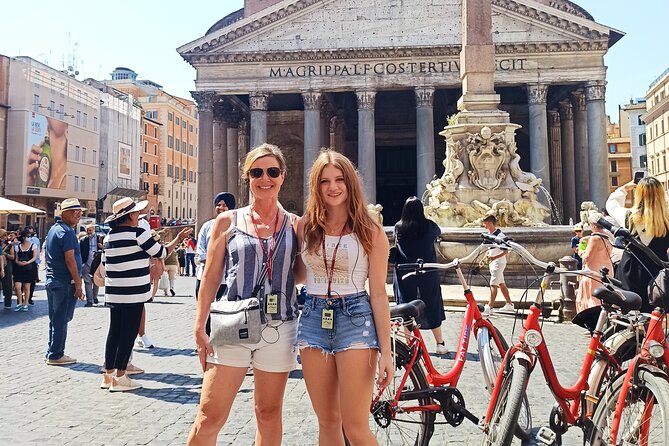
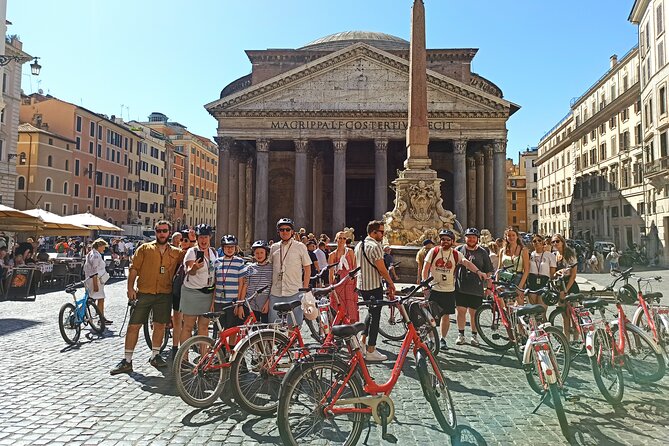
Stop 4: Pantheon
The Pantheon is a must-stop because it makes architects and history fans both happy. The tour frames it as inspiration, with harmony of lines and geometry that has fascinated people for centuries.
The backstory starts with 27 BC, when Marcus Vipsanius Agrippa commissioned a temple dedicated to all the gods. That timeline also helps you connect the building to the larger Roman idea of power, religion, and public life.
Admission isn’t included for this stop. Even if you don’t go inside, seeing it from the right angle helps you understand why it keeps showing up in art and architecture references. It’s one of those places where a short stop can still change your day.
Stop 5: Chiesa di Sant’Ignazio di Loyola
This stop is described as a view, explanation, and pictures of the church from outside. That means you get context without the time commitment of entry.
It’s a smart inclusion because it broadens your Rome beyond “one monument after another.” You get religious architecture in the mix, and the quick explanation helps you notice details you’d otherwise miss while riding past.
If you want more interior time, plan to return later, but as part of a 3-hour highlights push, this works.
Stop 6: Tempio di Adriano
Next you see the Tempio di Adriano, a building connected to Emperor Hadrian and Vibia Sabina. The idea is that the structure was meant to honor Hadrian’s wife after her death, and she was later deified in 136. Construction wrapped up around 145 A.C., with the dedication carried out by Antoninus Pius.
Even if you have limited time, the quick stop helps you understand the Roman habit of turning political relationships into lasting architecture. The result is less about wandering and more about learning what you’re looking at.
Admission is free at this stop, which makes it an easy win.
Stop 7: Trevi Fountain
Then it’s Trevi Fountain, and yes, it’s crowded. But the point of the stop is more than the famous photo. The fountain is fed by the terminal part of the Vergine aqueduct, the only ancient aqueduct continuously in use to this day, at least as the tour describes it.
That connection to water infrastructure is what I like here. You see a spectacle, then you learn the practical reason it exists: Rome’s engineering kept feeding public life for a very long time.
Admission is free for the stop, so you’re not adding extra ticket costs just to admire the fountain. You do, however, need patience and space awareness, since this is one of the most photographed points in the center.
Stop 8: Trajan’s Forum
You get a view and explanation of Trajan’s Forum and the Imperial Forum. This is a big step for anyone who only thinks of Rome as colosseum and fountains. Forums were the administrative and public heartbeat, and this stop nudges you into that mindset.
The time here is designed to be just enough. Fifteen minutes for a ride-by and explanation can’t replace a long forum day, but it does make a later self-guided walk feel more meaningful, because you know what you’re looking for.
Admission is free for the stop.
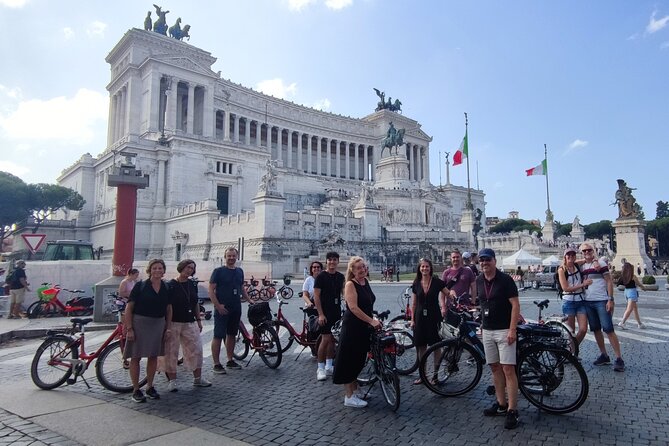
Stop 9: Piazza Venezia and the Ancient City
At Piazza Venezia, the tour frames it as a place shaped by renovations in the 19th and 20th centuries for the Monumento a Vittorio Emanuele II. That matters because it reminds you Rome is constantly being reworked, not preserved in a museum box.
From here, you also get a look at the ancient city context. Even a short stop gives you a better sense of where the old Rome sits relative to newer monuments.
Admission is free.
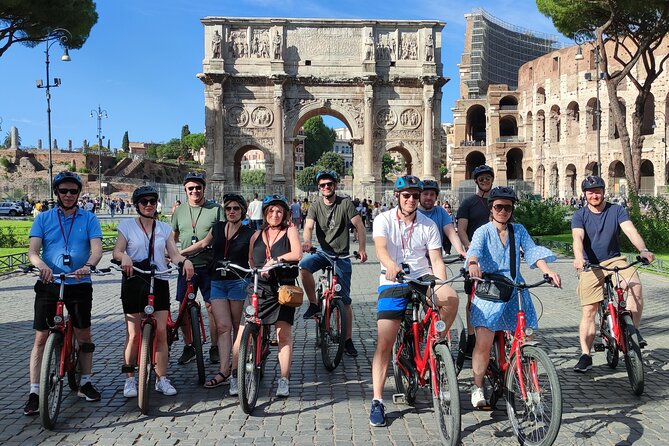
Stop 10: Arch of Constantine
Next is the Arch of Constantine, presented as the largest surviving honorary arch, and a synthesis of Constantinian propaganda. The tour notes the triumph it celebrates, Constantine defeating Maxentius on 28 October 312 A.D.
This is a great place for a short explanation because the arch is not just stone decoration. It’s messaging carved into the city, and once you know what it’s celebrating, the details make more sense.
Admission is free.
Stop 11: Circo Massimo
You finish with Circo Massimo, the Circus Maximus, described as the largest public entertainment building in antiquity. It’s also tied to early city legend, including the Rape of the Sabine Women.
The stop is eight minutes, and it’s the kind of ending that works. You’re not ending at a single building. You’re ending on a large setting that makes you picture how Romans lived in public, even when you only spend a short time looking.
Admission is free.
What Makes the Tour Special: The Ride-Stop Balance
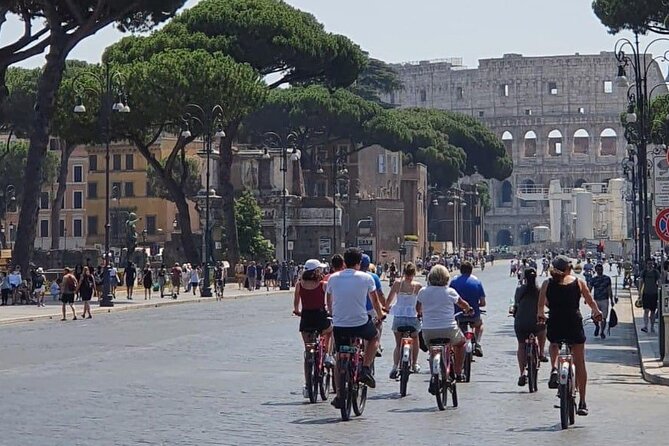
A lot of highlights tours feel like you’re sprinting from landmark to landmark. This one aims for a smoother rhythm: ride a bit, stop briefly, listen, look, then roll on.
In the feedback, people mention a balance between riding and stops, with some guides pausing longer when needed so people could take photos or walk a little. That matters because Rome crowds can be unpredictable. If the guide keeps the group together without turning the day into a chase scene, everyone enjoys it more.
Safety also comes up. People call out feeling safe in Rome traffic, and guides seem to do frequent regrouping. That’s crucial when you’re riding bikes around other moving vehicles and pedestrians.
The Main Tradeoffs: Crowds, Hearing, and Road Surface
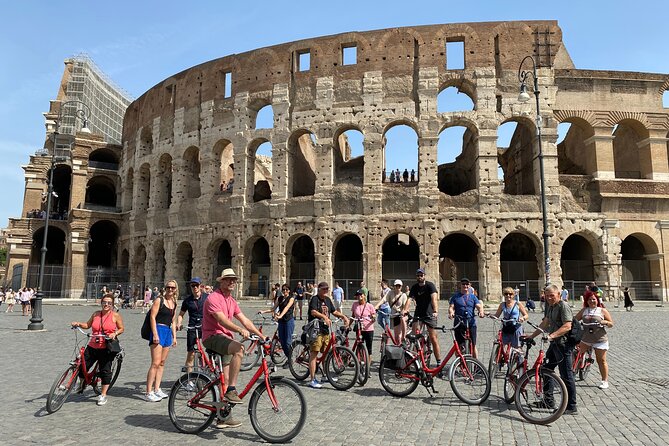
This is not a quiet, museum-only day. It’s a street ride through the heart of the city, so you should expect crowds at popular points like Trevi Fountain and the Piazza Navona area.
Road surface is the other tradeoff. Rome has cobblestones. One negative experience describes slick cobbles during a crowded Friday evening and a rider taking a fall while stopping. The lesson is simple: if you’re booking around a major event night, or you’re not confident stopping on uneven stone, consider choosing a calmer day and wearing shoes with good grip.
A smaller practical issue also pops up: hearing the guide through headsets while riding can sometimes be tough. The fix is easy, listen at stops, and don’t panic if a few words blur while you’re moving. You’ll still get the big points.
Finally, one piece of feedback says one guide did not go deep enough for their taste. That’s rare, but it’s a reminder that tour depth can vary by guide. If you want very detailed Roman history at every stop, plan to supplement after with a book or a longer guided walk later.
Guides: Humor, Storytelling, and Keeping Everyone Together
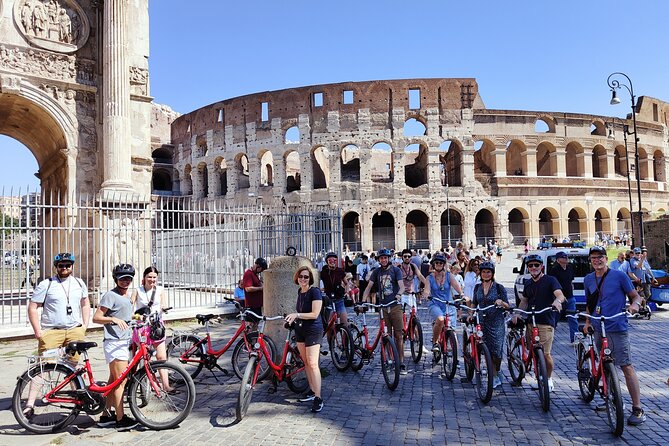
One of the strongest repeated themes is guide quality. Names like Daniele, Nico, Niko, Stefano, Elena, Sahrah, Marika, Mat, Alessandro, and Arvin show up across feedback tied to humor, clear explanations, and great energy.
What that usually means in real life is this: you’ll understand not just what you’re seeing, but why it mattered. People also mention guides tailoring pacing so nobody gets left behind, which is a huge deal when you’re riding bikes and navigating crowds.
If you’re the type who likes your monuments with context, this tour format helps. You get short doses of story as you pass through the city layers, not one long lecture at the end.
Price and Value: Is $54.44 Worth It?
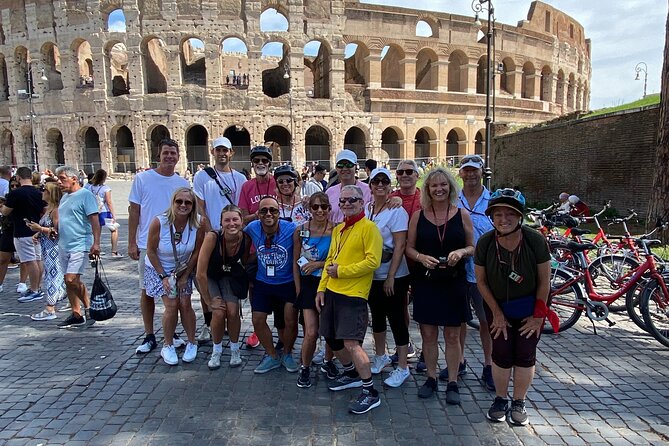
At $54.44 per person for about 3 hours, this tour is priced like a true “time saver.” You’re paying for bike rental, helmet, and guided routing across multiple sites in one afternoon or morning.
What you are not paying for is the full cost of admissions. Some stops are free to view, while others do not include ticketed entry. So the real value depends on how many sites you plan to enter. If you mainly want the outdoor highlights and quick explanations, you should feel the value quickly because the cost stays predictable.
The other part of value is comfort. Many people like that the tour handles the bike logistics, and you just focus on seeing. Plus, with a small group, you avoid the “big bus tour” vibe.
If you can only do one guided activity early in your Rome trip, this is the kind that often pays off later by helping you choose what to return to, and what to skip.
Who Should Book This Bike Tour (and Who Might Pass)
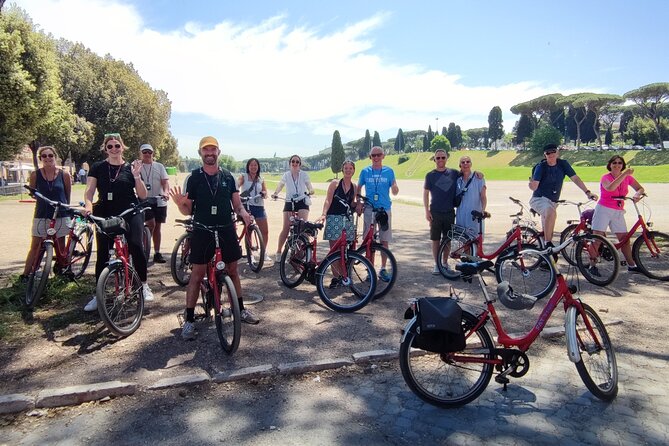
This tour is a good fit if you:
- want a fast overview of central Rome and its main layers
- like bike touring but don’t want a full day of heavy effort
- prefer short explanations that help you remember what you see
- want a guided day that leaves room for gelato, wandering, and additional visits later
You might think twice if you:
- strongly dislike cobblestones or crowded squares
- are pregnant and not comfortable with cobbled streets
- want lots of ticketed indoor time, since several major stops list admission as not included
Quick Practical Tips for a Smooth Ride
- Wear grippy shoes. Cobblestones are not just uneven, they can be slick.
- Bring sunscreen or a hat for sunny days, and waterproof layers if rain is expected. The tour notes are clear about weather-ready clothing.
- If you’re traveling with kids, reserve the correct bike size by including height, and only join if they’re comfortable riding in groups on different surfaces.
- If your day is sensitive to crowds, aim for earlier timing rather than peak evening chaos around major squares.
Should You Book This Rome Bike Tour?
If you want a highlights day that covers both the big names and a more unusual start in the Jewish Ghetto area, this is an easy yes. The ride structure, small group size, and bike convenience help you see more with less hassle than a walking-only plan.
I would book it if you’re early in your trip and need a map in your head. The stops connect into a coherent picture of Rome from different eras, and the quick context makes later exploration feel less random.
I would hesitate only if you know you will struggle with cobblestones, you need lots of indoor ticket time, or you’re planning to ride on a very crowded event evening. Choose your timing wisely, and this tour becomes one of the best ways to start Rome on your terms.
FAQ
How long is the Rome Bike Tour?
It runs about 3 hours.
What is included in the price?
You get a local tour guide, bike rental, and a helmet. You also get a front bike pouch and back rack for your belongings.
Are tickets for the stops included?
Some stops are free, and some are not included. For example, the Jewish Ghetto stop and several other viewpoints list admission as free, while Pantheon, Piazza Navona, and Chiesa di Sant’Ignazio of Loyola list admission as not included.
Where do we meet for the tour?
The meeting point is Via dei Delfini, 35, 00186 Roma RM, Italy.
Can children join the tour?
Kids are welcome as long as they have been riding for a while, are comfortable in a group, and can navigate riding on various surfaces. All participants under 18 must be accompanied by an adult.
Is this tour recommended for pregnant women?
Pregnant women are strongly discouraged from joining bike tours due to cobbled streets.
What is the cancellation policy?
You can cancel for a full refund up to 24 hours in advance. If you cancel less than 24 hours before the start time, the amount paid is not refunded.
Reviewed lately around Rome
- Rome: Private Customizable 3-Hour Golf Cart City Tour★ 5.0 · 229 reviews
- Papal Audience Experience with Pope Leo XIV★ 4.5 · 230 reviews
- The Three Tenors in Rome – Nessun Dorma★ 4.5 · 231 reviews
- Discover Rome in a Day – Private Driver Tour★ 5.0 · 231 reviews
- Rome: Colosseum, Roman Forum & Palatine Hill Group Tour★ 4.7 · 232 reviews
- Rome Airport Transfer – Private Luxury Service with Driver★ 4.5 · 231 reviews
- Moonlight Rome: Night Walking Tour of Roman Highlights★ 5.0 · 232 reviews
- Fast track: Vatican Museums, Sistine Chapel Guided and St. Peter’s Basilica Tour★ 4.5 · 232 reviews
Cycling Tours, compared.

Rome EBike Tour: Appian Way, Catacombs & Roman Aqueducts
Read our review →
Top Highlights & Hidden Gems Tour by Cannondale E-Bike
Read our review →
Appian Way, Catacombs, & Roman Aqueducts E-bike Tour
Read our review →
Rome City Small Group Bike Tour with quality Cannondale EBike
Read our review →
Tuscany Bike Tours Through the Chianti Hills with Wine Tasting
Read our review →
Rome by Night – Ebike Small Group Tour – Food and Wine (Option)
Read our review →
Appian Way E-bike Tour with Catacombs, Aqueducts & Food
Read our review →
Browse the lists this tour appears in