

Reviewed · TRAPANI TOURS
Guided tour of the Trapani Salt Pans and Salt Museum
This experience is interesting because the work of making salt is still visible, right where it happens, in the Trapani salt pans. I love that the tour is run by the Culcasi family, with salt workers for four generations, so you get real continuity instead of a staged demo. I also love the tasting, including fragrant fleur de sel variations made from their production. The one drawback to plan for is the walking, it is a basic-fitness, 1-hour hike along uneven ground.
Part of the fun is the sensory mix, sea views and pale salt under bright Sicilian light, with pink pools and gray clay tones you would not expect. You’ll walk through the WWF reserve area, and you can even touch salt collected from the production tanks with your hands.
In the second half you switch gears from nature to archives, with an ancient salt museum inside an old farmhouse plus a look at an ancient mill from the 1400s. If you want to stretch your time, the day can end with an aperitif and/or dinner, with a view that makes the whole salt story feel even more grounded.
Key Things To Know Before You Go

- Culcasi family tour: This is the only tour offered by the Culcasi family, so the focus stays on their methods and their history.
- Salt work, not just photos: You collect and touch salt during the walk, which makes the process feel physical.
- WWF reserve setting: You move through an area with protected plants and birds, so the salt pans double as a real habitat.
- Tasting with Slow Food style: You sample flavored fleur de sel from a Slow Food Presidium, plus other salts from their production.
- Museum in an old farmhouse: The salt museum and the ancient mill from the 1400s are built into the family story and the site itself.
- Good value for a short visit: At about 75 minutes, you get two experiences plus tastings, without needing a whole day commitment.
Why Trapani Salt Pans Feel Like a Living Industry
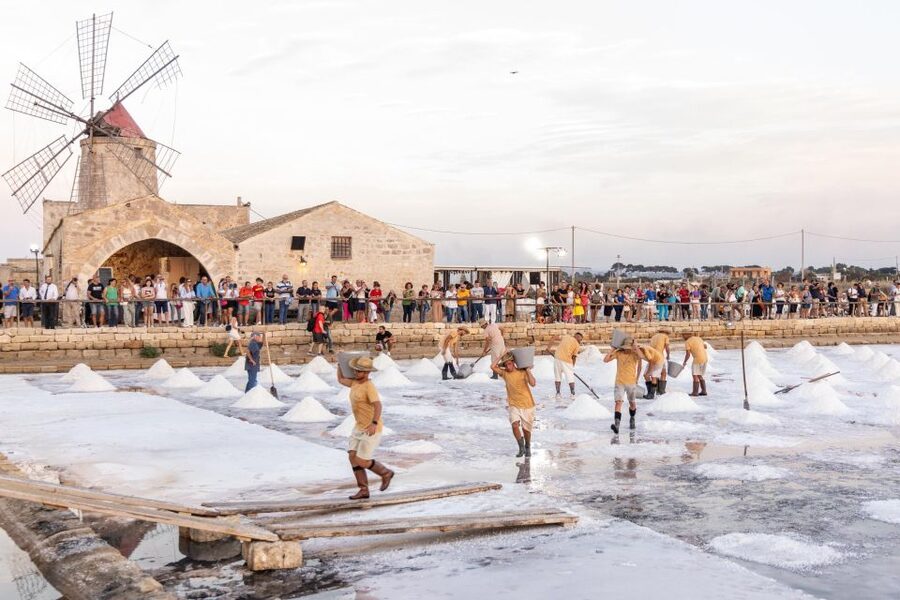
Most Sicily shore stories are about towns, beaches, and churches. This one is different. The Trapani salt pans show the sea turned into food seasoning through patience, timing, and craft you can actually see. Even if you know nothing about salt production, you quickly grasp that it is not a single step. It is weather, channels, evaporation, and careful harvesting.
I like tours like this because the setting does the teaching. The color changes across the pans tell you what is happening, and the guide can point out how seawater becomes salt as you walk. The result is a small dose of science that still feels human.
You are also supporting a working tradition. The tour highlights salt workers for four generations, and that family continuity matters here. It is not just history on a plaque, it is a skill passed down.
More Museums in Trapani:
- Vatican: Museums & Sistine Chapel Entrance Ticket
★ 4.5 · 144,003 reviews - Vatican Museums, Sistine Chapel & St Peter’s Basilica Guided Tour
★ 4.5 · 39,149 reviews - Florence: Skip-The-Line Uffizi Gallery Timed Entry Ticket
★ 4.5 · 27,832 reviews
Walking the Salina Culcasi di Nubia in the WWF Reserve
The tour starts with a relaxing walk that doubles as a gentle orientation to the salt pans. You follow the perimeter of the salt pan, so you get long sightlines across the water and salt. That is where you start noticing the palette: white salt in different shades, blue sea, gray clay, and pink-tinted pools. It looks almost unreal until you realize it is all tied to the production stages.
As you move, you reach banks where the water mirrors the sky. This is one of those moments where you just stop and look, because it feels like the pans are reflecting the day back at you. It is also practical. From that point, you understand why evaporation matters, and you can picture where seawater is guided and how it slows down into salt-making conditions.
The walk takes place inside a protected WWF reserve area, with notes about protected plants and birds. If you enjoy nature spotting, you will feel like you are doing more than sightseeing. If you are not a bird person, you will still appreciate that the salt pans are not sealed off from ecology. They are part of a larger environment, and that makes the whole place more than a production yard.
Touch the salt, then understand what you touched
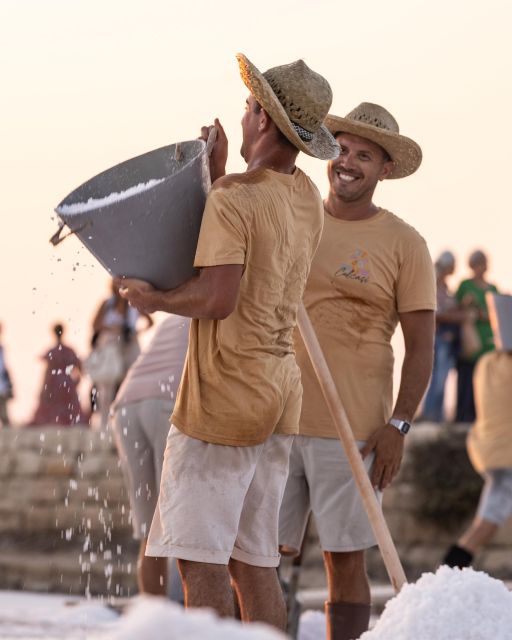
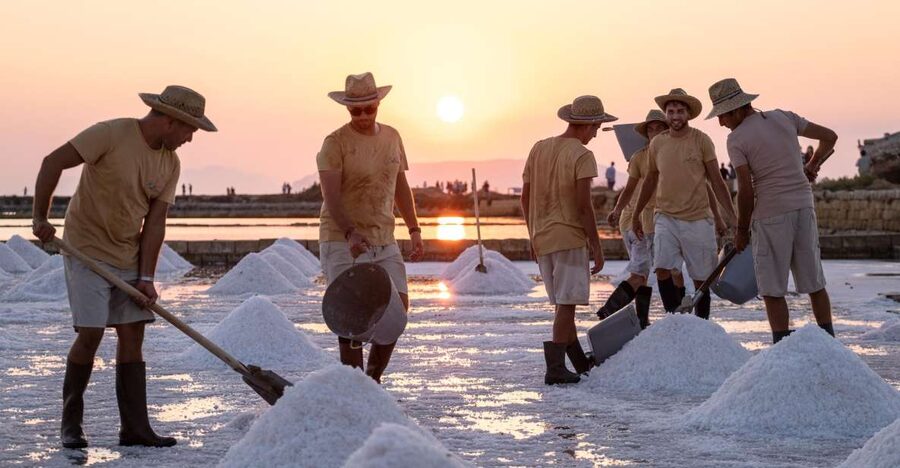
A key moment comes when the guide has you collect salt with your hands from the production tanks. It is simple, but it is memorable because you feel the difference between salt you know from the kitchen and the mineral in its raw, just-harvested form. You also get to follow step by step how seawater becomes the salt everyone recognizes, without turning it into a lecture.
Practical tip: bring comfortable shoes. The path is described as a walk you should be ready to do for about an hour. If you are sensitive to uneven ground, plan ahead and wear grippy soles.
Salt Museum and the 1400s Mill: Where the Family Story Lives
After the walk, you shift indoors into the salt museum. This part is calmer but more detailed. It is guided through an ancient farmhouse setting, so you feel the history as architecture, not just content.
The museum focuses on both the salt pan work and the family behind it. You retrace the tiring effort of working the salt pan, but the emphasis stays on the family that has run the operation across generations. That angle makes the story easier to hold onto. Instead of just learning dates, you start understanding routines and how a place shapes livelihoods over time.
You also visit an ancient mill from the 1400s. The fact that this is part of the experience matters. Salt production is often explained as chemistry and logistics, but mills and older equipment remind you that salt has always required tools to move, process, and make harvest workable.
There is also a practical reason to care about the museum: it helps you connect what you saw outside to what you did not see. Outside, you walked the perimeter and watched where things happen. Inside, you get the narrative that explains why those steps developed and how the family adapted across years.
And because the museum is located in an ancient farmhouse, it connects sea to salt to home base. It is the union of salt and sea in everyday terms, not just a poetic idea.
More from a Trapani stay:
- From Trapani: Cruise to Favignana and Levanzo with lunch
★ 4.2 · 2,286 reviews - Boat Tour Egadi Day discover Favignana and Levanzo from Trapani
★ 5.0 · 1,183 reviews - From Trapani: Favignana and Levanzo Mini Cruise with Lunch
★ 4.2 · 814 reviews - Favignana and Levanzo, Egadi islands tour by boat from Trapani
★ 5.0 · 720 reviews
The Salt Tasting You Should Actually Pay Attention To
The best part of salt tours is usually the tasting, and this one is built into the entry. You get to sample whole salt and fleur de sel, including different aromas linked to the production. The tour also specifically mentions flavored fleur de sel tied to a Slow Food Presidium, which tells you the flavors are not random, they are part of a recognized approach.
I like tastings where you have a chance to compare, not just taste one thing and move on. Here, you can try different types of salt, then connect the flavors to the production choices your guide is describing.
What to do with the tasting
When you taste, pause for a moment and think like a cook. Whole salt changes texture and melt behavior. Fleur de sel is known for a more delicate feel, and the aromatized varieties can shift the whole mood of a simple dish. Even if you do not buy anything, this tasting gives you a mental map for what to look for later in shops.
If you enjoy bringing home edible souvenirs that are not complicated, salt is one of the safest bets. It travels well and lasts. You also get a story to go with it, because the salt you taste is tied to the tanks and the harvest you just saw.
Where You Meet and What to Wear
Meet at Via Salina Chiusa, 1. The meeting point is the ticket office in the forecourt below the windmill. You will find the guide behind the salt sales counter.
For what to wear, plan for comfort and sun. Bring comfortable shoes, a hat, and comfortable clothes. The tour includes about an hour of walking, and you should have a basic fitness level for that hike.
If you are wheelchair using, the tour is listed as wheelchair accessible. Still, I would keep your expectations realistic about uneven salt-pan ground and outdoor access paths. Ask the provider when you book, so you know exactly how the route works for your chair and comfort needs.
Timing, Duration, and How This Tour Fits Your Day
The tour lasts about 75 minutes. That makes it easy to add to an itinerary in Trapani province without it turning into a half-day project. You get two distinct experiences packed into that time, walk plus museum, plus tastings.
At the end, you might have an aperitif with a breathtaking view and/or dinner at the restaurant. That option is worth considering if you like slow pacing. It lets you stay in the place long enough for the scenery to sink in, instead of treating the salt pans as a quick stop.
If you are planning a day around the coast, this tour is a smart counterweight. Instead of another seaside photo session, you get something hands-on and quietly educational. It is also a good pick for people who prefer authentic local work over theme-park history.
Who This Tour Is Best For
This tour works best for:
- People who like hands-on food culture and want to see how ingredients are made.
- Visitors who enjoy nature walks, especially when there is wildlife habitat context in the background.
- Anyone with curiosity about how family-run operations shape a local landscape over generations.
- Foodies who will actually use the tasting ideas at home.
It might not be the best match if:
- You do not want to do any walking at all, because the tour includes a 1-hour hike component.
- You expect a fully indoor experience. Half the value here is outdoors and tactile.
Price and Value: Why $21 Can Make Sense Here
At about $21 per person for a roughly 75-minute guided tour, the value comes from the bundle. You get entry and guided access to both the salt pan walk and the salt museum with the ancient mill. On top of that, you get a tasting of whole salt plus fleur de sel in different aromas, including flavored versions tied to a Slow Food Presidium.
You are paying for guided context, not just admission to a building. The explanation connects the colors and stages outdoors to the tools and family story indoors. In a place like this, that guided link is the difference between looking at tanks and actually understanding what makes the process work.
Should You Book This Culcasi Salt Pans and Salt Museum Tour?
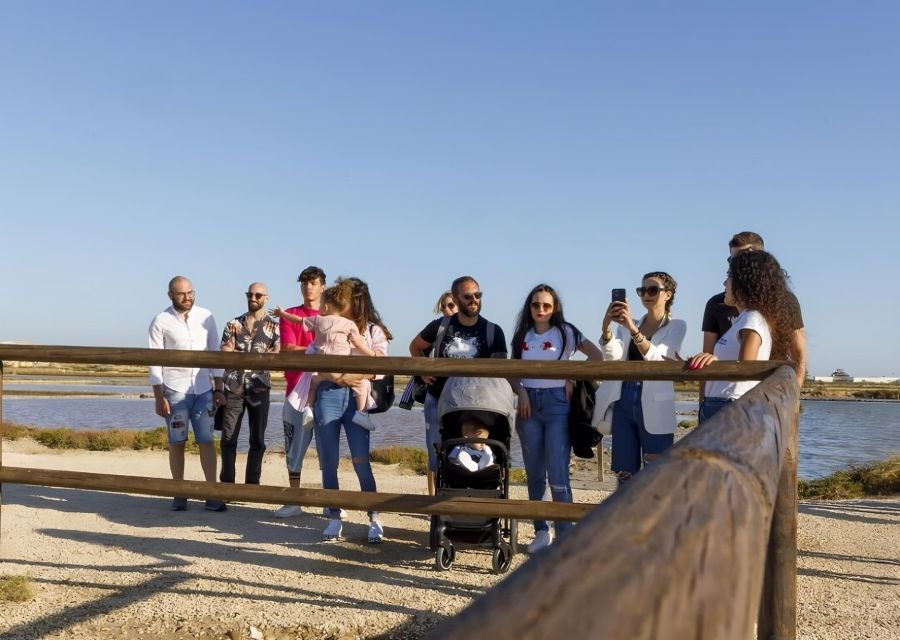
Book it if you want a short, practical, and memorable Sicily experience that feels real. The Culcasi family focus matters, and the combination of outdoor salt-pan walking, hands-on salt interaction, and the indoor museum with the 1400s mill is a strong mix for the time.
Skip or reconsider if you are not comfortable with a basic-fitness hike or you want a fully indoor option. Also be ready for sun and outdoor walking by wearing the right shoes and bringing a hat.
If you are in the Trapani area and you want something different from the usual sightseeing route, this is one of the most direct ways to understand how the sea becomes a kitchen staple.
FAQ
How long is the guided tour of the Trapani salt pans and salt museum?
The tour lasts about 75 minutes.
Where is the meeting point for the salt pans and salt museum tour?
Meet at Via Salina Chiusa, 1. The meeting point is the ticket office in the forecourt below the windmill, with the guide behind the salt sales counter.
What languages is the live guide available in?
The tour is guided in English and Italian.
Is there a salt tasting during the tour?
Yes. The tour includes tasting whole salt and fleur de sel in different aromas from the production.
What should I bring for the tour?
Bring comfortable shoes, a hat, and comfortable clothes.
Can I cancel or pay later when booking?
Free cancellation is available up to 24 hours in advance for a full refund, and you can reserve now and pay later.
Reviewed lately around Trapani
- Mini Cruise to Favignana and Levanzo with lunch on board★ 4.0 · 270 reviews
- Trapani: 2-Hour Salt Flats Tour★ 4.9 · 286 reviews
- Full Day Boat Tour San Vito Lo Capo to Castellammare del Golfo★ 5.0 · 292 reviews
- 8-Hour Boat Tour from Castellammare del Golfo to San Vito Lo Capo★ 5.0 · 357 reviews
- Egadi Islands Tour: Favignana and Levanzo from Trapani★ 5.0 · 607 reviews
- Boat tour to Egadi Favignana and Levanzo islands from Trapani★ 5.0 · 614 reviews
- Favignana and Levanzo, Egadi islands tour by boat from Trapani★ 5.0 · 720 reviews
- Boat Tour Egadi Day discover Favignana and Levanzo from Trapani★ 5.0 · 1,183 reviews
Trapani Tours, compared.
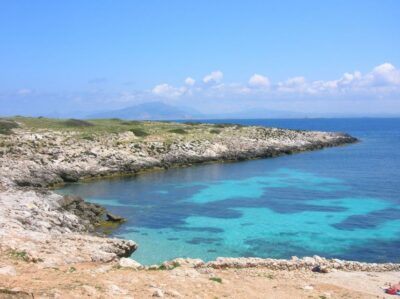

Boat Tour Egadi Day discover Favignana and Levanzo from Trapani
Read our review →

Favignana and Levanzo, Egadi islands tour by boat from Trapani
Read our review →
Boat tour to Egadi Favignana and Levanzo islands from Trapani
Read our review →
Egadi Islands Tour: Favignana and Levanzo from Trapani
Read our review →
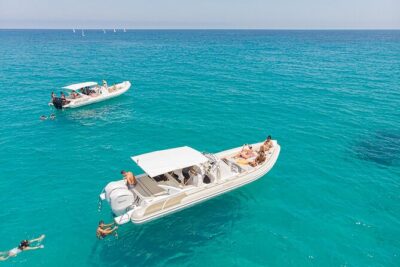
8-Hour Boat Tour from Castellammare del Golfo to San Vito Lo Capo
Read our review →Browse the lists this tour appears in