
Reviewed · WALKING TOURS
Cagliari: Underground Cagliari Walking Tour
Cagliari is a sunlit city on top, but this tour lets you see what happened beneath it. I love the WWII candle-lit tunnel shelter feeling, and I also love how the guides keep the story clear in both languages, with guides like Valentina, Francesca, and Angela praised for pacing and language switching. The one real consideration: it is not fully underground, and some passages can feel tight, so if you have claustrophobia or mobility needs, you should think twice.
The payoff is a smart mix of eras, with Roman remains and Christian-era sacred spaces, plus the darker 20th-century layer. It runs as a half-day walk, usually 2 to 4 hours, and it is priced at $35 per person, which is strong value for three paid-entry underground stops and a guide.
Key things that make this Underground Cagliari tour worth your time
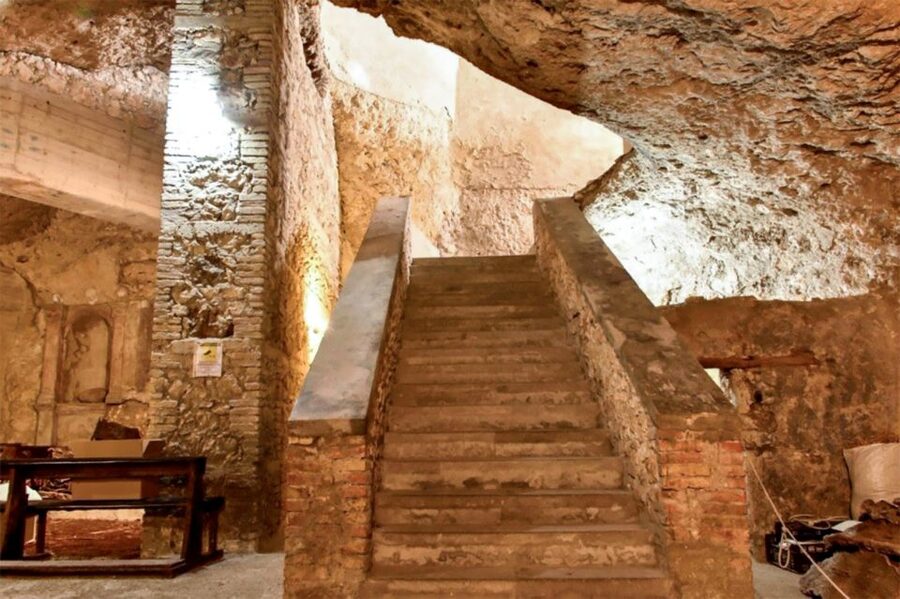
- A 120-meter WWII tunnel shelter used as a bomb shelter during World War II
- Cripta di Santa Restituta frescoes tied to 5th-century religious changes, with water dripping in the background
- Roman ruins under Saint Eulalia (MUTSEU), including a paved Roman road
- Two historic surface neighborhoods in one flow, with walks through Stampace and Marina
- Dual-language guidance (English and Italian) that keeps the explanation going without losing the plot
- Optional add-on choice, either a guided Old Town walk or a wine tasting with snack
What makes Cagliari’s underground feel different from a typical “tour in caves”
Most underground tours try to impress you with darkness and mystery. This one does something smarter: it uses the underground spaces to explain how Cagliari changed over centuries, including the stuff people in the 5th century thought mattered, and what people in the 1940s had to survive.
I like that the route is built around recognizable places you might actually hear about on the surface. You start moving through the districts of Stampace and Marina, then you drop into spaces that make the city’s layers feel real. Instead of treating the underground like a theme park, you get context for why these sites exist where they do.
And yes, the setting matters. One stop is described as a private candle-lit tunnel, so even if you usually hate the “hurry along” style of group tours, this is the kind of place where you naturally slow down. The emotional tone is different too. WWII history has weight, even when you only see part of it.
More Walking Tours in Cagliari:
- Cagliari: Walking Tour of the Old City
★ 4.8 · 560 reviews - Milan: Guided Walking Tour & Last Supper Visit with Ticket
★ 4.7 · 5,409 reviews - Naples: Street Food Walking Tour with Local Guide
★ 4.8 · 4,256 reviews
Tour timing, meeting details, and why comfort shoes matter
Plan for a 2 to 4 hour experience, depending on which sites are available during opening hours. You are also doing a bit of walking outside, including short transfers between areas. So this is not a “sit still while the guide talks” tour.
The activity notes say to arrive 10 minutes early, and that the meeting point can vary depending on the option you book. Practically, that means you should check your exact confirmation before heading out.
Parking can be annoying in Cagliari. At least one group shared that finding parking was almost impossible, so give yourself extra buffer time. If you are driving, I would aim for public transport or a plan B nearby, so you do not start the tour stressed.
Bring comfortable shoes. The tour is not suitable for wheelchair users and it is not listed for people with visual impairments, so movement and footing matter.
Stop 1: The WWII tunnel shelter under the Salesian school
Your first underground chapter is the tunnel shelter used during World War II. The tour describes a 120-meter long private tunnel shelter beneath a school, used as a bomb shelter. That detail alone makes the story hit harder than a generic “war tunnel” label.
Even if you already know the general history of air raids in Europe, the physical experience changes it. You can see how a community prepared a nearby underground space, and you get the atmosphere of a private candle-lit tunnel. That setup is intentional. It makes the space feel human-scale, like a place people used, not just a prop someone installed for visitors.
What I recommend you do here is listen for the guide’s way of connecting function to place. You are not only looking at a passageway. You are learning how Cagliari adapted when danger came close, and how the city stored safety beneath everyday buildings.
If you are the kind of person who gets anxious in enclosed spaces, take this seriously. The tour is not marketed as claustrophobia-friendly, and one of the main underground components is a tunnel.
Stop 2: Stampace to Marina, a short surface walk that keeps the story moving
Between the underground stops, the tour walks you through old districts, including Stampace and Marina. The itinerary timing calls out short walks, but the value is big: it helps you understand where you are in the city without getting lost.
I like this format because it prevents the experience from turning into three disconnected “cool basements.” Instead, you keep a sense of geography. You get to feel the layout of Cagliari’s historic center while you carry the underground history in your mind.
Also, these are neighborhoods where you can start to pick up local street rhythm. Even on a half-day schedule, you are not only learning facts. You are getting bearings for your next day in town.
More from a Cagliari stay:
- Cagliari: Devil’s Saddle Boat Tour with Spritz and Chips
★ 4.9 · 1,193 reviews - Cagliari: Boat Tour with 4 Swim Stops, Snorkeling & Prosecco
★ 4.9 · 865 reviews - Cagliari: Boat Tour, 4 Stops, Swim, Snorkeling, & 1 Spritz
★ 4.8 · 539 reviews - Cagliari: Zodiac Boat Tour, 3-4 SwimStops, Wine & Snorkeling
★ 4.9 · 500 reviews
Stop 3: The crypt of Santa Restituta and those 5th-century layers
Next comes the Cripta di Santa Restituta, guided for about 40 minutes. This is where the tour slows into the kind of sacred space that makes you pay attention to small details.
You learn the crypt’s connection to the 5th century, including the idea of pagan worship in that era. That is a big theme: religious transition. The guide’s job here is to connect what you see on the walls to the timeline, and to explain how sacred meanings can shift without erasing the old physical marks.
The tour description highlights frescoes that still stand, and the sensory detail that you can hear damp dripping water as you study the site. That water sound is not just atmospheric. It is part of why these underground spaces preserve paintings and surfaces differently than open-air sites.
If you want the most out of this stop, focus on two things: (1) how the guide explains what the frescoes represent, and (2) how the site’s underground setting changes what you think you are looking at. You are not in a museum case. You are in a room that still feels conditioned by time and moisture.
Stop 4: MUTSEU and the underground Roman ruins under Saint Eulalia
Your final underground stop is the MUTSEU (Museo del Tesoro e Area Archeologica di Sant’Eulalia), again guided for about 40 minutes. The highlight here is the archaeological area connected to Saint Eulalia, with Roman ruins you can see underground.
The itinerary notes include a paved Roman road. That single detail is a big deal because it is concrete evidence of how people moved and lived. You are not just looking at broken pieces that might have once existed. You are seeing an actual paved route, which makes the Roman city feel immediate.
This is also where the tour’s structure really pays off. You start with WWII shelter function, then move to crypt-era sacred meaning, and end with Roman infrastructure. The underground spaces stop being “cool rooms,” and start becoming a timeline.
If you like your history chronological, this one works. If you prefer history as atmosphere, it also works. Either way, you are finishing with an anchor in physical remains.
Optional add-on: Old Town guided walk vs. wine tasting and snack
After the main underground route, you get to choose what happens next.
Option A: Guided walk through the Old Town
If you add the Old Town option, the tour continues with a guided walking segment through the historic center highlights, still with your guide. This is the easiest way to turn a half-day into a more complete Cagliari orientation.
It is also a smart choice if you want to connect the underground sites to what you see on top. You can look at the surface streets with a new understanding of why certain areas have the presence they do.
Option B: Wine tasting and snack
The other choice is a wine tasting and snack. This can be a nice way to unwind after three underground stops, especially if you want something simple rather than another long walking block.
One important heads-up from experience shared in feedback: in at least one case, the tasting was described less like a full tasting flight and more like a single glass of wine with Sardinian snacks. So if you are expecting a big, multi-pour tasting experience, you might be happier choosing the Old Town walk.
Price and value: why $35 makes sense for this specific mix of stops
At $35 per person, this tour is competitively priced for what you actually get: a guide in both English and Italian, entry fees for three underground sites, and built-in interpretation that connects WWII, late antiquity, and Roman remains.
A lot of walking tours charge similar money but include zero paid access. Here, paid access is part of the experience. That changes the value equation, especially for underground sites that can be closed or limited.
The guide quality also seems to be a major strength. Multiple people praised guides for clear English and good pacing, including names like Carlo, Valentina, Francesca, and Fredrico. One group even appreciated that the guide did not rush them and that the explanation mixed modern and ancient history instead of treating them like separate events.
Language flow: how dual English and Italian can affect the group feel
The tour runs in dual language English and Italian, which is listed as part of what is included. That means the guide will switch languages during the experience.
In practice, I think this is a good choice if you want a single guide voice for the full storyline and you are okay with occasional pauses as the explanation shifts. One piece of feedback noted that a larger group might have preferred separate English and Italian guides, but the overall theme is that the switching itself is handled well.
If you are traveling with someone who strongly prefers one language, it is worth knowing that the tour is not designed as two fully separate tours. You can still enjoy it, but expectations help.
Who this tour suits best, and who should skip it
This tour fits best if you:
- enjoy history with real places attached to it
- like guided explanations rather than self-guided wandering
- want a structured half-day plan that covers multiple eras
It is not suitable for:
- people with mobility impairments
- wheelchair users
- people with claustrophobia
- people who are visually impaired
Even though only part of the tour is underground, the enclosed tunnel and the nature of underground access make it a poor match for anyone who needs open, barrier-free movement.
If you have basic mobility and can handle enclosed spaces safely, bring it on.
Should you book Underground Cagliari Walking Tour?
If you want to understand Cagliari in a way that goes beyond the surface, this is a good pick. The combination of a WWII tunnel shelter, a crypt with frescoes, and an underground Roman archaeological area gives you a clear story arc, not just random stops.
I would book it if you:
- have 2 to 4 hours to spare and want paid underground access covered
- enjoy guided interpretation in both English and Italian
- want an optional follow-up (Old Town walk or wine and snack) to finish the day cleanly
I would think twice if you:
- are claustrophobic or uneasy in tight underground spaces
- need mobility accommodations (the tour is not listed as suitable)
- are expecting a big wine tasting program instead of a simpler pour and snack
If you fit the first group, you will come away with that rare travel feeling where the city looks different after you learn what it hides under everyday streets.
Reviewed lately around Cagliari
- Cagliari: Devil’s saddle boat tour, 4 stops and prosecco★ 4.8 · 246 reviews
- Cagliari:devil’s saddle big cruise by boat drink & snack★ 4.9 · 453 reviews
- Cagliari: Old Town Guided E-Bike Tour★ 4.9 · 189 reviews
- Cagliari: Walking Tour of the Old City★ 4.8 · 560 reviews
- Cagliari: Zodiac Boat Tour, 3-4 SwimStops, Wine & Snorkeling★ 4.9 · 500 reviews
- Cagliari: Devil’s Saddle Boat Tour with Spritz and Chips★ 4.9 · 1,193 reviews
- Cagliari: Boat Tour with Snorkeling, GoPro & Sardinian Beer★ 4.7 · 207 reviews
- Cagliari: 2-Hour Guided E-Bike Tour with Coffee★ 4.7 · 240 reviews
Walking Tours, compared.
Guided Walking Tour & Last Supper Visit with Ticket
Read our review →

Rialto Bridge & Offbeat Unusual Venice Walking Tour
Read our review →
Private 3 hrs Venice Tour: St Mark’s, Walking tour & Boat tour
Read our review →
Skip the line: Uffizi and Accademia Small Group Walking Tour
Read our review →Browse the lists this tour appears in