

Reviewed · APPIAN WAY & OSTIA TOURS
From Rome: Ostia Antica Guided Half-Day Trip by Train
Ostia Antica is interesting because it is not just ruins, it is a sense of how Romans lived when ships and warehouses mattered. I love that the small group format keeps you moving without feeling like cattle, and the guide steers you to the places that explain how the port worked and how people spent their days.
My other favorite part is the way the tour makes big set pieces feel personal, especially the Baths of Neptune and the amphitheater. One drawback to plan for is the walking. The site is spread out and there is no wheelchair access, so you’ll want solid shoes and a realistic pace for 3 hours of guided time.
Key Things That Make This Ostia Antica Trip Worth Your Time
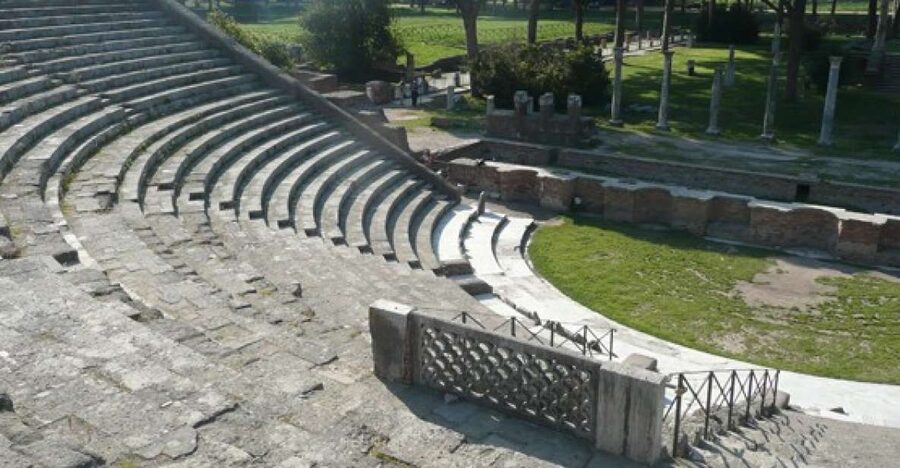
- A working Roman port, not just temples: You walk commercial streets tied to trade and daily routine.
- Four hours total, with train time built in: Rome to ruins by train, then back the same way.
- Baths of Neptune mosaic: The sea god mosaic is the kind of detail you stop and stare at.
- Amphitheater perspective: You can imagine the crowds sitting where about 3,500 spectators once did.
- Forica public washrooms: Marble benches with holes turn a basic site into a very human snapshot.
- Top tier guiding matters here: Names like Rob, Cat, Alberto, Laura, and Catarina kept groups engaged and on track in a huge archaeological park.
Why Ostia Antica Feels Different From Other Big Roman Ruins
If you’ve seen enough Roman stonework, Ostia Antica still hits different. It is set up like a town, with streets you can follow and buildings that suggest how commerce, leisure, and public life fit together. You are touring the former harbor town tied to the Roman Republic, when this area helped keep Rome fed, supplied, and connected.
What I like most is that the tour focuses on everyday living. Yes, you get highlights like mosaics and an amphitheater, but the guide keeps pulling your attention back to ordinary routines: where people ate, where they bathed, how public spaces worked, and how a port city shaped Roman life.
Ostia Antica itself was founded in the 4th century BC and once supported well over 100,000 people. The “rise and fall” story is part of the narration, even if you do not get a deep lesson in all the reasons. You still come away with a clearer picture of why a port town mattered, and why it later stopped being the center of attention.
More Day Trips in Rome
- From Rome: Pompeii, Amalfi Coast, and Sorrento Day Trip
★ 4.6 · 7,031 reviews - From Rome: Pompeii, Amalfi Coast and Positano Day Trip
★ 4.6 · 6,620 reviews - Pompeii, Amalfi Coast and Positano Day Trip from Rome
★ 4.5 · 6,250 reviews
Getting There From Rome: Meeting at Piramide and Riding the Train
The big win for this outing is how easy it is to reach by rail. Your meeting point is Cafe Piramide, near the Piramide Metro stop on Line B, the blue line. When you face the metro station, step to the right side and look for the cafe with white umbrellas outside, visible near the tracks.
From there, you transfer to the train portion with your guide. The total schedule keeps the logistics simple: about 15 minutes on the train to get out to Ostia Antica, then a longer guided stretch on site, then another train return.
Two practical notes you should take seriously:
- The tour ends back in Rome at Piramide Metro Station, around 1:00 PM. After that, if you choose to stay in Ostia, you’ll go back by train on your own, since the return is unescorted.
- You may get help if something goes wrong. If public transport has a strike or an unexpected disruption, a minibus can be provided at no extra cost to move participants to and from Ostia Antica.
Four Hours Total, 3 Hours Guided: How the Day Really Flows
This is a half-day format that is long enough to feel substantial, but short enough to keep you fresh. You get 3 hours of guided touring inside the archaeological area, with train time making the full experience about 4 hours.
The pacing usually follows a pattern:
- Get to the ruins and start with the big story: Ostia as a port city and how it functioned.
- Move through the key zones in a logical route, so you understand what you are looking at instead of just collecting photos.
- Stop for a toilet break with time to grab a snack or drink at the snack bar.
- Finish with time inside the park to continue at your own speed if you want, depending on where the group wraps up.
A small-group limit, up to 12 participants, matters here. Ostia Antica is a large site, and a guide who can keep track of people makes a huge difference. In the best versions of this tour, guides also take mini breaks so you can wander, regroup in the shade, and ask questions without feeling rushed.
Walking Decumanus Maximus: How Street-Level Roman Life Comes Into Focus
A guided route through Ostia Antica is not random. You follow the main thoroughfare, the Decumanus Maximus, and you get pointed explanations tied to the buildings along the way.
This is where the tour earns its keep. At street level, the ruins make more sense. You can stand where merchants and visitors would have moved, and you can picture daily flow. It is not only about what the buildings were, it is about how people moved between them.
Along the street, the guide draws your attention to Roman statues lining the walkways and explains what they might have meant in a city that was both commercial and civic. Even if you are not a classic history buff, you start to connect the dots:
- where trade-related buildings clustered,
- how public-facing spaces felt,
- and why this was not a sleepy village outside Rome, it was part of Rome’s working engine.
You also see preserved remains of spaces tied to daily routine and services, like tavern areas, thermal baths, warehouses, and theaters. The key is interpretation. Without it, you might walk through and think, “Yes, these are Roman buildings.” With it, you start thinking, “This is what people did in and around these places.”
More of the Appian Way and Ostia:
- Rome EBike Tour: Appian Way, Catacombs & Roman Aqueducts
★ 5.0 · 1,766 reviews - Rome: Appian Way, Catacombs, & Roman Aqueducts E-bike Tour
★ 4.9 · 1,421 reviews - Rome:Appian Way E-bike Tour with Catacombs, Aqueducts & Food
★ 4.9 · 1,210 reviews - Rome Underground: Catacombs Tour, Aqueducts and Appian Way
★ 5.0 · 1,007 reviews
Baths of Neptune Mosaic: The Stop You’ll Remember Months Later
If you only remember one highlight, make it the Baths of Neptune. This is the kind of stop where you pause and look up, because the mosaic is a visual anchor for the whole experience.
The description is specific for a reason: the mosaic shows the sea god being drawn by a 4-horse chariot. Standing in front of something like that changes the feeling of the site. You realize this was not only a place of work and crowd noise, it also had tastes for art and spectacle.
Guides also tend to connect the mosaic to the broader idea of baths in Roman life. The baths were a social space as much as a practical one. So even if you care more about streets than art, this stop gives you that human layer.
If you visit in hot weather, pay attention to one practical thing mentioned in real tour experiences: a good guide finds shade when possible and keeps the group comfortable. With an archaeological park, that small bit of “manage the heat” turns into a more enjoyable walk.
The Amphitheater: Imagining a Crowd of About 3,500
Next up is the amphitheater, and it comes with a built-in time machine. When it was first built, it seated around 3,500 spectators, and the guide helps you imagine the roar and the scale.
Even though you are not watching a show, you can do the next best thing: stand in the right places and look at how the seating is laid out. The narration helps you “place” yourself in the stands the way a spectator would have done back around 12 BC, when the amphitheater opened.
This stop works well even for first-time visitors because it gives structure. You get a story beat, then you get the physical setting, then you can picture the energy.
The Forica Public Washrooms: A Surprisingly Human Moment
One of the most memorable parts of the tour is the communal Forica, the public washrooms. The setup is striking: a marble bench with 20 well-spaced holes set along four walls inside a large open room.
This is not a glamorous highlight, but it is a very Roman one. The guide frames it as a snapshot of daily life and public routine, and once you see it, you feel how different it is from private bathroom culture today.
It also changes how you think about a port city. A place like Ostia Antica had to handle crowds, workers, and daily public needs. The Forica is a clean example of Roman practicality meeting public space.
You do not have to be shocked to appreciate the detail. You just have to notice the engineering and the social reality behind it. The tour makes that shift happen.
Time to Explore Ostia After the Tour (Or Head Toward the Beach)
When the guided portion ends, you have choices. You can stay in Ostia Antica and the modern town, or take advantage of the location and head toward the beach.
This is a smart option because the guided route is just part of the day. Ostia Antica is quieter than the headline sites closer to central Rome, and there can be more breathing room after the tour. That means you can linger with your favorite mosaic area, walk a little more slowly, or revisit buildings you want to understand better.
If you want to add the beach, bring what the tour asks for:
- towel
- beachwear
- sports shoes
- comfortable walking shoes
One extra practical tip from winter experiences: the museum inside the site can close early in the winter season, around 1:30 PM. If you plan to include it, you’ll want to check current hours before you rely on it.
Price and Value: Is $58 Worth It?
At $58 per person, this tour is not the cheapest way to see ruins. It is also not priced like a “premium” private experience.
The value comes from what you get in exchange:
- Return train ticket from Rome to Ostia Antica included.
- Entry to Ostia Antica included.
- A live, English-speaking guide for the full guided block.
- Small group size that keeps the experience focused and lets you ask questions.
If you tried to DIY Ostia Antica, you could still see a lot. But you would miss the context that makes the buildings click. The Forica and baths, in particular, become far more meaningful with a guide who connects what you see to daily Roman life.
Also, the guides described in past tours tended to be the difference-maker. You can hear that pattern in the names: Rob, Cat, Alberto, Laura, Catarina, and Angellina. People praised the storytelling, the way guides kept groups moving without losing key stops, and the way they used examples and quick acting to make scenes easier to grasp.
What to Expect From the Guide: Storytelling Plus Smart Logistics
This is one of those tours where the guide quality really shows. The best guiding style here is part history lesson, part on-your-feet explanation.
Many guides described their approach as:
- selecting the key points instead of rattling off everything,
- keeping a steady pace so you cover major areas,
- and adding short, memorable anecdotes that help you visualize daily life.
Some guides went the extra mile with light reenactment moments, which sounds silly until you realize it helps your brain connect objects to actions. When a port city is involved, that matters because the buildings are scattered across a big open area. You need cues to help you “see” the city rather than just identify it.
For logistics, guides also manage group movement and safety across a large site. Some tour experiences noted that the route from the Ostia station to the archaeological area is very short, under 5 minutes, so you are not stuck with a long walk before the fun starts.
Who This Tour Is Best For, and Who Should Skip It
This tour fits best if you want:
- a guided introduction to Ostia Antica in a realistic time window,
- a focus on everyday Roman life at street level,
- and an option to continue on your own afterward.
You may want to skip it if you:
- need wheelchair access, since it is not suitable for wheelchair users,
- rely on baby strollers, since baby strollers are not allowed,
- or you prefer super flexible, no-structure touring, because you’ll be following the group route and timing.
Should You Book This Ostia Antica Half-Day Trip?
I think you should book this if you want a calmer, less frantic Roman ruins day with a guide who turns the site into something you can picture. Ostia Antica rewards attention. With a good guide, you get streets, public life, bathing culture, and crowd spaces in one tight package.
Skip it only if walking a large archaeological park for hours sounds like misery, or if you know you do not care about interpretation and just want to wander. If you’re the type who likes understanding what you’re looking at, this is a very efficient way to do it.
FAQ
How long is the guided portion at Ostia Antica?
The tour includes 3 hours guided time at Ostia Antica, with total duration about 4 hours including train travel.
Where do I meet for the tour?
Meet at Cafe Piramide. It is right in view of the train tracks near the Piramide Metro stop on Line B, the blue line.
Is the train from Rome to Ostia Antica included?
Yes. The tour includes a return train ticket from Rome to Ostia Antica.
Do I need to be back with the guide at the end?
The tour ends back in Rome at Piramide Metro Station around 1:00 PM. If you stay in Ostia, your return train journey will be unescorted.
What stops are included inside the ruins?
You visit major highlights such as the Decumanus Maximus street, the Baths of Neptune, the amphitheater, and the Forica public washrooms.
Is there a restroom break during the tour?
Yes. There is a toilet break with time for a snack or drink at the snack bar.
Is the group small?
Yes. The group is limited to 12 participants.
Are baby strollers allowed?
No. Baby strollers are not allowed.
What should I bring?
Bring comfortable shoes. If you plan to go to the beach, bring a towel and beachwear. Sports shoes are also recommended.
What if there is a transportation strike?
If there is a strike or other unforeseeable issue with public transport, a minibus will be provided at no extra cost to transfer participants to and from Ostia Antica.
More Train Experiences in Rome
- Rome to Pompeii Guided Tour with Wine & Lunch by High Speed Train
★ 5.0 · 1,379 reviews - Ancient Ostia Antica Semi-Private Day Trip from Rome by Train with Guide
★ 4.5 · 579 reviews - From Rome: Day Trip to Venice by High-Speed Train
★ 4.6 · 352 reviews - From Rome: Pompeii and Naples Day Trip by High-Speed Train
★ 4.7 · 234 reviews
Reviewed lately around Rome
- Colosseum, Palatine Hill and Roman Forum with Guided Tour★ 5.0 · 500 reviews
- Exclusive Golf Tour Private VIP with Local & Gelato o Wine★ 5.0 · 500 reviews
- Rome Trastevere Pasta Making Class with Eating Europe★ 5.0 · 505 reviews
- Rome by Night Walking Tour★ 4.5 · 506 reviews
- Rome: Colosseum Express Tour with Forum & Palatine Access★ 4.5 · 511 reviews
- Rome Food Experience Max 6 People Group Tour | w/Private Option★ 5.0 · 516 reviews
- Rome: Papal Audience Experience with Pope Leo XIV★ 4.8 · 518 reviews
- Rome: Escorted Papal Audience Experience with Entry Ticket★ 4.4 · 518 reviews
Appian Way & Ostia Tours, compared.

Rome EBike Tour: Appian Way, Catacombs & Roman Aqueducts
Read our review →
Appian Way, Catacombs, & Roman Aqueducts E-bike Tour
Read our review →
Appian Way E-bike Tour with Catacombs, Aqueducts & Food
Read our review →
Rome Underground: Catacombs Tour, Aqueducts and Appian Way
Read our review →
Appian Way Aqueducts Bike Tour (Catacombs & Lunch Option)
Read our review →
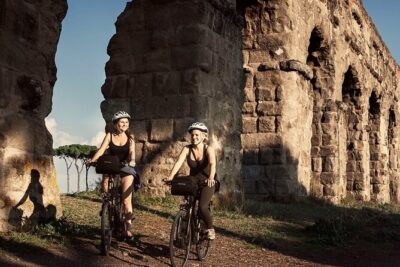
Appian Way, Catacombs and Aqueducts Park Tour with Top E-Bike
Read our review →
Appian Way E-Bike Tour Catacombs, Aqueducts & Picnic
Read our review →Browse the lists this tour appears in