
Reviewed · WALKING TOURS
Florence: Renaissance and Medici Tales Guided Walking Tour
Florence is one of those cities where the street corners feel like plot twists, and this walking tour is built to help you read them. You start with the Medici power story and then walk through the sights like the city is a living textbook.
I especially love how guides such as Michele and Chiara turn famous buildings into understandable scenes, not just photo stops. I also like the practical finish, where you get local advice on where to eat, drink, and shop as your day in Florence starts to take shape.
The one consideration is simple: you’re outside for the whole time, so even with a great story line, you’ll want comfortable shoes and weather-ready clothing for rain or shine.
Key points to look for
- Medici intrigue you can picture, tied directly to real buildings in central Florence
- Duomo-focused storytelling, from Giotto to Brunelleschi’s Dome, with clear “what you’re looking at” context
- Symbol spotting, so coats of arms and decorative choices start to make sense
- A strong orientation walk, ending near the Uffizi so you can plan your next move
- Local recommendations for food, drink, and shopping shared by your guide
- Guides who handle questions well, including when the day is busy or rainy
Why This Florence Medici Tour Feels Like a Story, Not a Script
Florence can overwhelm you fast. One minute you’re staring at a dome, the next you’re trying to remember who Medici was and why anyone should care.
This tour keeps the focus tight by using one main thread: how Florence became a Renaissance engine and how the Medici family shaped it through patronage, politics, and image-making. The result is that you don’t just “see” landmarks, you understand why they matter.
I also like the pacing choices reflected in lots of guide styles, from Chiara’s storytelling flow to Michele’s memorable explanations. It tends to be long enough for real context, short enough that you finish with energy for the rest of your trip.
More Walking Tours in Florence
- Florence: Guided Walking Tour
★ 4.5 · 3,334 reviews - Skip the line: Uffizi and Accademia Small Group Walking Tour
★ 4.5 · 3,135 reviews - Florence: Guided Walking Tour
★ 4.6 · 1,602 reviews
Starting at Florence Free Tour-Tale, Then San Lorenzo Sets the Tone
You meet at Florence Free Tour-Tale, and you’ll spot the guide by a green umbrella in front of the stairs leading to the main entrance of San Lorenzo Church. From there, the walk kicks off in the Piazza di San Lorenzo area, where you get that early lesson: Florence is not one style, it’s a conversation across time.
The Basilica of San Lorenzo is a good “first read” because you can spot a mix of Romanesque and Renaissance character around you. That matters because the tour keeps coming back to how people in Florence used old traditions while pushing new ideas forward.
If your day starts with rain, the route still works. One review notes use of a microphone and earpieces on a busy day, which is exactly what you want when you’re threading narrow streets with a group.
Basilica of San Lorenzo: Learn the City by Looking Closely at Architecture
San Lorenzo is where I’d start if I wanted you to slow down. You’re not being asked to memorize dates here. Instead, you’re learning how to look at buildings and symbols the way locals do.
You’ll get the kind of context that helps you notice the differences in materials, proportions, and details. And once you know what your guide is training your eyes to spot, the rest of Florence gets easier, not harder.
One nice part is that this stop also sets up the bigger themes of the day: power, belief, and civic identity. Even before you reach the Medici structures, the tour helps you understand that Florence built reputations in stone.
Palazzo Medici Riccardi: The Medici Family as Real People, Not a Name Drop
The tour’s Medici storyline is the backbone. You’ll visit the area around Palazzo Medici Riccardi, a key stop for understanding how the Medici dynasty put its stamp on Florence.
This is not just about “they were rich.” Your guide frames it as strategy: who gets funding, whose work gets visibility, and how political influence becomes cultural influence. When you walk near a family palace, it’s easier to see the connection between wealth and the Renaissance ideals that followed.
Michele is one guide example mentioned for making the stories captivating and memorable, and that approach really fits this stop. You want the narrative to land, because the Medici impact shows up indirectly in lots of later sights you’ll see on your walk.
A different Florence day to consider:
- Florence: Skip-The-Line Uffizi Gallery Timed Entry Ticket
★ 4.5 · 27,832 reviews - Tuscany Day Trip from Florence: Siena, San Gimignano, Pisa and Lunch at a Winery
★ 5.0 · 21,634 reviews - Florence: Timed Entrance Ticket to Michelangelo’s David
★ 4.6 · 16,983 reviews - Florence: Michelangelo’s David Skip-the-Line Entry Ticket
★ 4.5 · 12,764 reviews
Florence Duomo Complex, Giotto’s Bell Tower, and Brunelleschi’s Dome
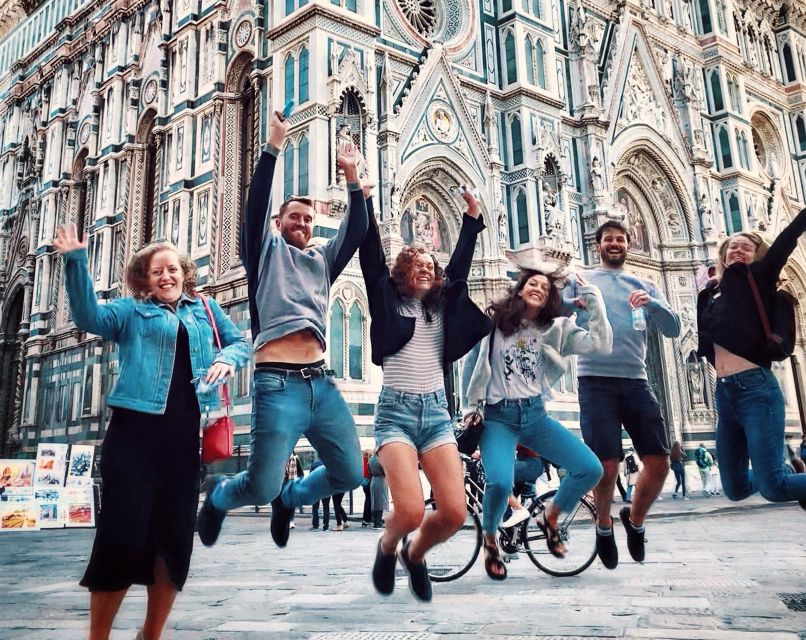
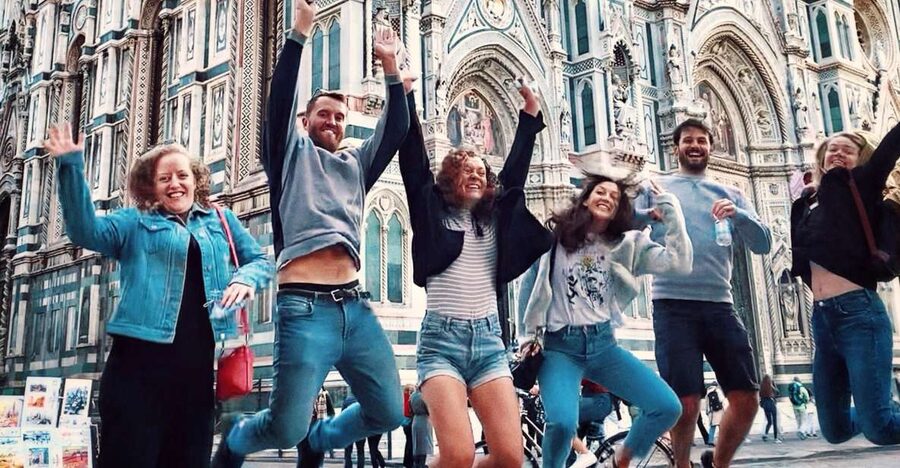
This is the part of the tour where your brain usually goes: I’ve seen these images a hundred times, but now I get what I’m looking at. The walk covers the Duomo complex exterior, then climbs the story up through Giotto’s Bell Tower and toward Brunelleschi’s Dome.
You’ll hear about how the Dome became a kind of engineering and artistic statement. Even if you never step inside the cathedral spaces, you’ll walk away with a better sense of scale and intent.
Here’s why this stop is high value: the Duomo is so famous that people often treat it like a landmark sticker. This tour turns it into a lesson in Renaissance ambition, and that makes every photo you take feel more meaningful.
Also, because the tour is outdoors, you can plan your timing better. You finish the main icon sights during the walk, then decide later if you want closer access on a separate visit.
House of Dante: Where Literature Helps You Read the City
The tour includes the House of Dante area. This stop is important because it expands the Renaissance idea beyond visual art and architecture.
Dante represents language, thought, and culture. When the tour connects him to the Renaissance spirit, the city stops feeling like one big museum and starts feeling like a place that produced ideas people carried for centuries.
If your group includes people who care less about architecture, this stop often balances the day. It also helps you keep the “why” in your head as you transition from religious and civic power into the more political centers later.
Palazzo Vecchio and Piazza della Signoria: Power on Display
Next you move into the civic heart with Palazzo Vecchio and Piazza della Signoria. This part of the walk helps you see Florence as a political stage, where art and symbolism were tools, not decorations.
Palazzo Vecchio is tied to Florence’s ruling identity, so you get the sense that the city’s leaders weren’t just governing. They were branding the city, shaping public perception, and using art to reinforce authority.
Your guide also explains symbols along the way, so the square stops being random sculpture and starts becoming a coded message. That’s one of the tour’s best tricks: it trains you to look at details you’d normally skip.
Loggia dei Lanzi: Sculpture With Political Clues
At the Loggia dei Lanzi, you’re still in that “message in the details” mode. This stop makes sense after Piazza della Signoria because it gives you a place to focus on how sculpture can function like visual storytelling.
The loggia setting also helps you understand how public art was meant to be seen and understood in a civic space. You’re not just observing from afar. You’re learning how the city used public display to shape memory and legitimacy.
Even if you aren’t a sculpture person, you’ll appreciate the guidance here because the tour explains what to notice. That turns “standing in a pretty spot” into a more satisfying experience.
Ponte Vecchio: Ending the Main Arc With a Bridge That Means Something
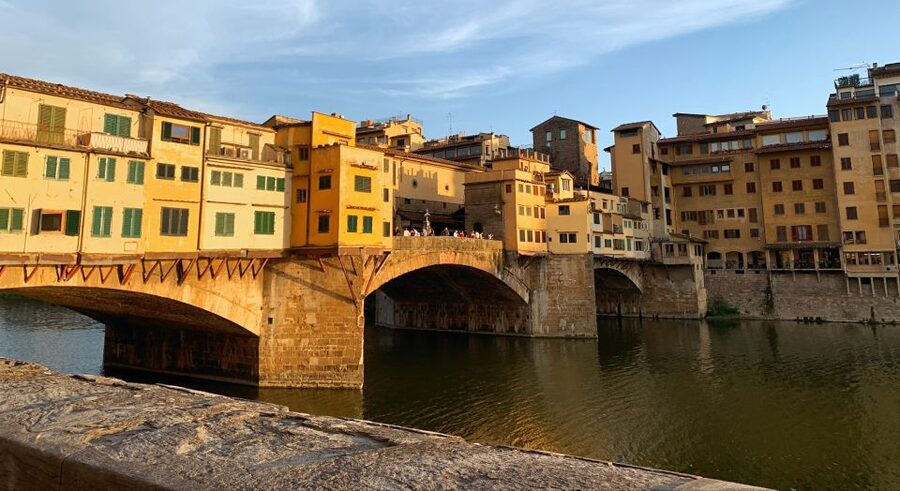
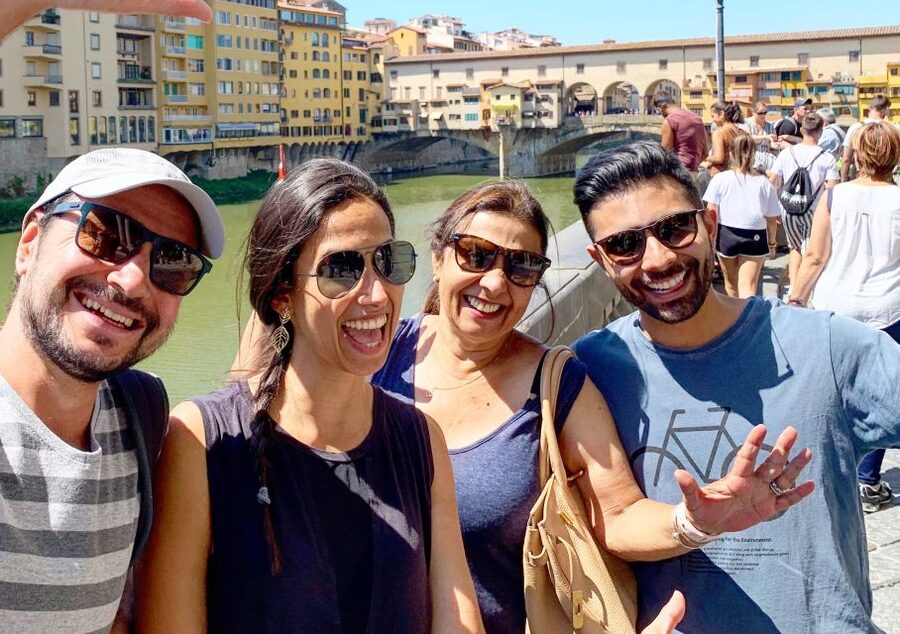
You walk over to Ponte Vecchio, the iconic bridge that’s practically a Florence postcard. But the tour doesn’t let you treat it as only scenery.
This is where you connect the Renaissance-era influence to a lived city. A bridge like this is not only about views, it’s about movement, trade, and continuity. When your guide ties Ponte Vecchio into the day’s bigger narrative, it stops feeling like a detour and starts feeling like a finish line.
Plus, it’s a good moment to breathe. After lots of history and stone-reading, the bridge gives you space to absorb the city’s vibe and plan your next stop.
Finishing Outside the Uffizi Gallery: Your Best Next Step
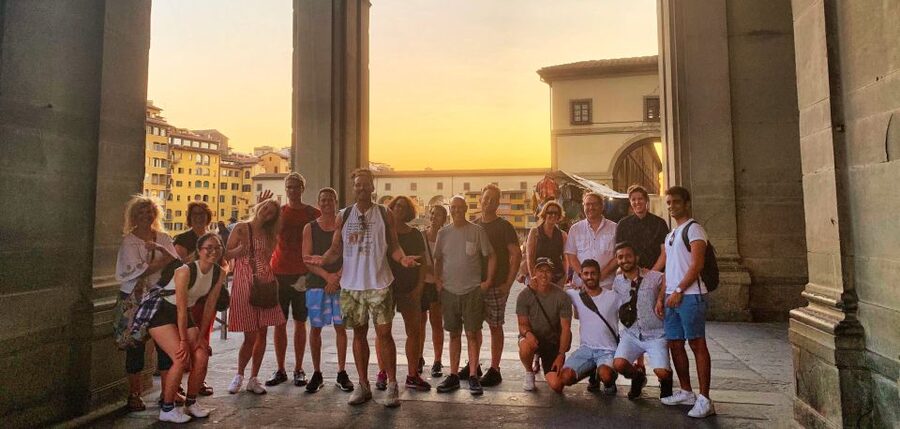
The tour ends outside the Uffizi Gallery. That ending placement is smart because you’re not stranded in one random neighborhood, you’re placed near one of Florence’s biggest museum anchors.
And the guide’s local advice matters here. You’ll get recommendations on where to eat, shop, and drink like a local, which is exactly what you need once you’ve burned through your morning or early afternoon walking.
One practical tip: because your time is limited, you can use this tour as your “orientation day.” If you decide you want to add museum time, you’re already set up to make that choice quickly.
Price and Value: What $2.36 Gets You, and What You Still Owe Your Guide
The listed price is $2.36 per person, but it’s really part of a pay-what-you-think model. I’d treat that figure like the booking entry fee, not the full value of the experience.
The tour’s value comes from the guide doing the heavy lifting: turning dozens of landmarks into one coherent storyline, then adding practical advice at the end. That’s why so many people gave these guides strong marks for storytelling and for answering questions clearly.
Also, bring cash if you can. One review specifically notes keeping cash for tipping the guide, and another mentions that even when you pay a small amount to book, tipping is part of how the free-tour style stays fair.
If you want the best value, schedule this early. A good orientation walk can make the rest of your Florence days more efficient, less guesswork, and more fun.
Who This Tour Suits Best (And Who Might Want Something Else)
This tour fits best if you want a structured Florence introduction. It’s ideal for first-time visitors, couples, and families with teens, because the story thread stays clear even when you’re not spending time inside every building.
It also works well if you love Renaissance art and want the context, but hate standing in front of a monument with only a basic plaque. Your guide’s explanation of symbols and the Medici storyline gives you something to carry into later museum visits.
If you hate walking, or you want a mostly indoor day with timed museum tickets, this may not match your style. But for most people, the pace is a good trade, especially since it’s short enough to still enjoy Florence afterward.
Should You Book This Florence Renaissance and Medici Walking Tour?
If this is your first trip to Florence, I think it’s an easy yes. You get a fast, story-driven orientation that connects the Medici dynasty to the city’s biggest icons like the Duomo complex, Giotto’s Bell Tower, and Brunelleschi’s Dome, then you end near the Uffizi with practical local guidance.
Book it if you want to understand what you’re seeing, not just check boxes. Skip it only if you already know Florence well and prefer a self-guided route where you control every stop without explanations.
FAQ
Where is the meeting point for the Florence Renaissance and Medici walking tour?
Meet at Florence Free Tour-Tale. Look for the green umbrella in front of the stairs that lead to the main entrance of San Lorenzo Church.
How long is the tour?
The tour is listed as 2 hours, and the guided walking tour portion is described as about 2.25 hours.
Which languages are available?
The live tour guide speaks Spanish and English.
Is the tour wheelchair accessible?
Yes, the tour is listed as wheelchair accessible.
Does the tour run rain or shine?
Yes. The tour takes place rain or shine.
What should I bring?
Bring comfortable shoes, a camera, water, and clothing appropriate for the weather.
Can I reserve and cancel if plans change?
You can reserve now and pay later, and there is free cancellation up to 24 hours in advance for a full refund.
If you tell me your travel month and how many days you have in Florence, I can suggest the best order to pair this walk with Duomo, Galleria dell’Accademia, and the Uffizi.
Reviewed lately around Florence
- Florence: Uffizi Gallery Tickets with Optional Audio Guide★ 4.1 · 503 reviews
- The Best of Florence Walking Tour in a Small Group★ 5.0 · 503 reviews
- Premium Pasta and Gelato Cooking Class in Florence★ 5.0 · 508 reviews
- Tuscany Vespa Tours Through the Hills of Chianti★ 5.0 · 515 reviews
- Pasta and Tiramisu Cooking Class with optional Local Market Tour★ 5.0 · 515 reviews
- Walking Food Tour of Florence with Tastings and Wine★ 5.0 · 518 reviews
- Florence Vintage Bike Tour – guided, small group or private option★ 4.5 · 524 reviews
- Skip-the-Line Accademia Guided Visit: David Secrets and Beyond★ 4.0 · 525 reviews
Walking Tours, compared.
Guided Walking Tour & Last Supper Visit with Ticket
Read our review →

Rialto Bridge & Offbeat Unusual Venice Walking Tour
Read our review →
Private 3 hrs Venice Tour: St Mark’s, Walking tour & Boat tour
Read our review →
Skip the line: Uffizi and Accademia Small Group Walking Tour
Read our review →Browse the lists this tour appears in