

Reviewed · VATICAN TOURS
Rome: Vatican Pass plus Top Attractions and Transport
This experience is interesting because you get Vatican fast-track entry bundled with a Roma sightseeing pass plus Rome transport, then you can use it at your own pace for 72 hours. It is a smart setup for a short visit, especially when the Vatican and Rome’s big-name ruins run like clockwork.
I especially like two things. First, the Omnia Vatican Card is built around skipping the worst general-admission lines for the Vatican Museums and the Sistine Chapel. Second, the package adds both a hop-on hop-off bus and a public transport travel card, so you spend less time figuring out how to move between areas.
The main drawback is practical: you still need to manage voucher pickup and timed reservations for several major sites. If you treat those like optional extras, you can lose time and end up paying for tickets anyway.
At a Glance: What You’re Really Buying
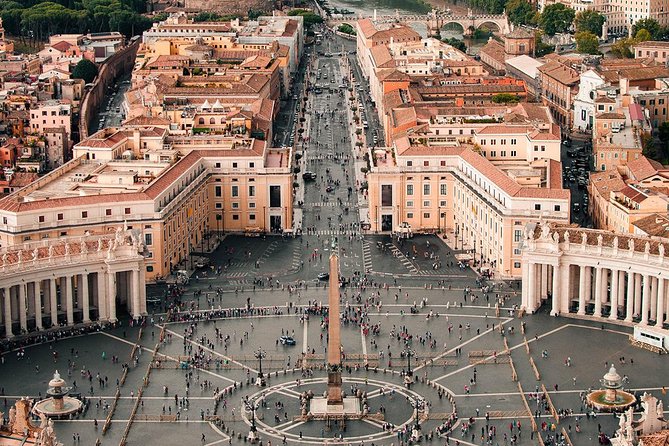
- Vatican line relief: Fast-track entry into the Vatican Museums plus Sistine Chapel timed access
- 72-hour sprint: Both cards run for 72 hours starting at first use, so you need a plan early
- Two major freebies (Roma Pass): General admission to two chosen top attractions, others discounted
- Transport tools: Unlimited public transport plus a hop-on hop-off bus with many stops
- Lots of museums, but selective value: Many discounted entries can be worth it if you batch them efficiently
- Reservations are the make-or-break: A handful of top stops need booking, including Borghese
How the Omnia Vatican Card and Roma Pass work together
You start by redeeming a voucher into two separate things: the Roma Pass and the Omnia Vatican Card. Once you use them the first time, both cards are valid for 72 hours, so day one matters.
Here’s the key idea for your planning: the Omnia card is your fast-track tool for the Vatican area, while the Roma Pass is your “choose your two” value play across Rome. If you focus on the Vatican and only one or two Rome stops, the discounts might not feel like a bargain. If you stack several paid attractions into your 3-day window, the math usually improves.
Also, keep your expectations realistic about what “pass” means in Italy. The cards cover admission, but they do not replace every timed entry system. Several famous places require reservations, and for those, your schedule needs to match your slot.
More of the Vatican:
- Vatican: Museums & Sistine Chapel Entrance Ticket
★ 4.5 · 144,003 reviews - Vatican Museums, Sistine Chapel & St Peter’s Basilica Guided Tour
★ 4.5 · 39,149 reviews - Rome: Vatican Museums, Sistine Chapel & Basilica Tour
★ 4.3 · 13,872 reviews
Vatican Museums and Sistine Chapel: timed entry you can actually use
The Vatican portion is the headline. You get fast-track entry for both the Vatican Museums and the Sistine Chapel, with time set aside for each part of the visit. Expect about 2 hours for the Sistine Chapel and around 3 hours for the Vatican Museums.
What makes this stage worth it is not just the art. It is how much energy you save when you do not start with a long general admission shuffle. Once you are inside, you can focus on the experience: move through rooms at your pace, stop when something hits you, and avoid feeling like you are always late.
Practical tip: give yourself breathing room at the start. Even with timed entry, security and interior crowds can still slow you down. If you have a strict plan for the rest of the day, schedule Vatican for an earlier slot and keep a rest break or a simpler sightseeing stop after.
San Giovanni in Laterano and the Scala Sancta stops
This is a great contrast to the Vatican machine. St. John Lateran is Rome’s official ecclesiastical seat of the Pope, and it is also described as one of the oldest basilicas in Western Europe, built in 324 AD. If you like seeing the “other big churches” in Rome, this one delivers.
You also get the nearby cloister, which is described as a quiet place that works well when you need a pause. The highlights listed for this stop are specific and memorable: Cosmatesque interior design, a baroque façade and architecture, twelve large Apostles sculptures from early 18th-century baroque artists, and the Holy Steps (Scala Sancta).
A small bonus: Omnia pass holders can redeem a free audio-guide worth €10 by showing the pass at the entrance. That can help if you want more context without hiring a separate guide.
The main consideration here is that this is still a timed, ticketed stop inside your card schedule. If you arrive right at a stressed moment, you may feel rushed, so treat it like an important church visit, not a quick photo break.
Foro Romano and Palatine Hill: ruins that reward your pace
Ancient Rome is where Rome starts to feel like a real place instead of postcards. The Foro Romano and Palatine Hill combination is built for wandering: ruins and old buildings that used to sit over busy streets and market life.
With the Roma Pass, you can get general admission for free to two chosen major attractions. Depending on your selection, this area may be one of your included top stops. Either way, the important detail is that the big classics can require reservations, so do not assume it is always walk-up.
What I like about this stop is the sense of layered time. You are not looking at one “thing,” you are reading a whole neighborhood. The pillars, the churches tucked into older street levels, and the cobbled lanes create a scene where you naturally slow down and look closer.
The drawback is obvious but worth saying plainly: crowds plus heat plus stone can drain you fast. Build this into a morning or late afternoon plan, and pack water.
A different Vatican day to consider:
- Vatican Museums & Sistine Chapel Skip-the-Line Entry Ticket
★ 4.4 · 13,838 reviews - Rome: Vatican Museums, Sistine Chapel & Basilica Tour
★ 4.7 · 13,217 reviews - Skip-the-Line Group Tour of the Vatican, Sistine Chapel & St. Peter’s Basilica
★ 4.5 · 12,779 reviews - Rome: Vatican Museums & Sistine Chapel Guided Tour
★ 4.3 · 12,117 reviews
Borghese Gallery: the one reservation you should not skip
If you pick Galleria Borghese, you are signing up for a strict schedule. The info here is clear: pre-reservation is mandatory, and it is strongly recommended to book at least 10 days in advance. You can even place the reservation even if you have not collected your card yet, as long as you use the Roma Pass holder name.
This is a make-or-break stop for many people, because it is one of Rome’s most famous museum experiences and it sells out. The value of the pass depends on your ability to lock in your slot early.
Why this is still worth considering: the Borghese experience is the kind that benefits from a calm, focused visit. You get a timed window, then the museum works like a sequence instead of a mad dash.
The catch is simple. If you miss the booking, you can lose the attraction value of your pass for that museum and end up paying separately. Treat this like a fixed appointment, not a flexible activity.
Castel Sant’Angelo and Carcer Tullianum: Tiber-side and Roman underworld
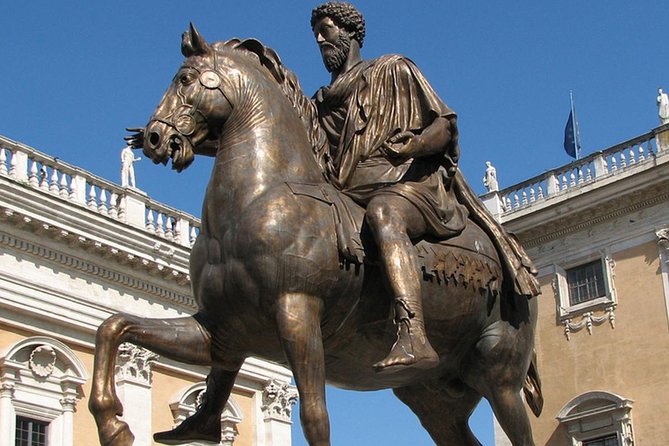
Two very different stops make this segment interesting. Castel Sant’Angelo is described as an ancient fortress and mausoleum on the bank of the Tiber, with a highlight that includes the Hall of Urns holding Hadrian’s ashes. Plan on about 2 hours to take it in.
Then there is Carcer Tullianum, one of the most fascinating Roman monuments tied to the prison period. It is a darker stop, but the payoff is the feeling of being inside a story that shaped real power and fear.
Both of these are listed as included admission moments in the program, and Castel Sant’Angelo is also flagged as a reservation-required attraction. So for these, you want your timed plans aligned first, then build surrounding visits.
If you want a balanced Rome day, combine one of these with a museum stop on the same side of town. It cuts down on transit churn, and you avoid that “all day in buses” feeling.
Capitoline Museums: Michelangelo’s hilltop museum complex
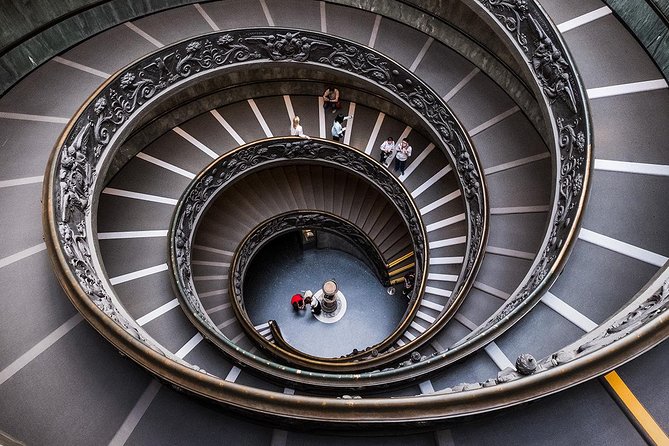
The Capitoline Museums sit on Capitoline Hill and are presented as a strong mix of art and archaeology. The founding detail matters: they were established in 1471 when Pope Sixtus IV donated important bronze statues and sculptures for the Roman people. That origin helps you understand why this place feels like both museum and public space.
The layout is also described in a very specific way: the museums sit within three historic buildings and a piazza designed by Michelangelo. Inside, the highlight list is concrete enough to help you decide what you want to prioritize: the Capitoline She-wolf, the Hall of Tapestries, a Chapel, and the Courtyard.
The value angle here is that this museum set covers a lot of Roman ground without forcing you to choose between art-only or ruins-only. If you like archaeology, you will likely feel satisfied. If you prefer art, there is plenty to keep your attention too.
Your consideration: plan less for this stop if your day is already packed. It can expand, and the hilltop layout makes you want to keep exploring.
More Rome museums with discounted entry: how to make the discounts pay off
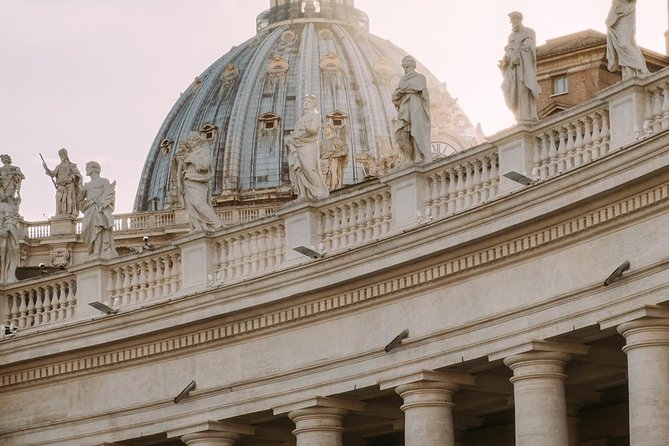
The package includes admission to a long list, and it also includes discounts to additional museums and sights beyond the main two freebies. This is where you can either save money or waste it. The trick is batching.
Here are the included museum stops, and what you should expect from each.
Museo della Civiltà Romana and Museo Nazionale Etrusco di Villa Giulia
Museo della Civilta Romana is included for about 2 hours, and it fits well if you want the bigger-picture feel of Roman life through objects and themes.
Then Museo Nazionale Etrusco di Villa Giulia adds a different angle, focusing on Etruscan material. It is listed for about 1 hour, which tells you how to approach it: treat it like a targeted visit, not a full-day museum marathon.
Museo di Roma, Palazzo Braschi: costumes, ceramics, and what ordinary life looked like
Museo di Roma – Palazzo Braschi is included for about 2 hours and is described as Roman baroque architecture with an eclectic sweep from the Middle Ages to the mid-20th century. The highlight list is practical for choosing what to see: frescoes and mosaics, ceramics and sculptures, costumes and fabrics, paintings from the 17th to 20th century, and even furniture and carriages.
If you like museums that help you picture daily life, this one can connect the dots between eras. Your caution: it can tempt you to over-commit to museum after museum in one day.
Museo Pietro Canonica and Museo Nazionale del Palazzo di Venezia
Museo Pietro Canonica is listed as included for about 2 hours, and Museo Nazionale del Palazzo di Venezia is included for about 2 hours as well.
These can work well as “change of pace” stops after heavy archaeology. Keep them in your schedule only if you still feel curious. If you are already museumed out, you might be better saving time for a walk and a slower lunch area.
Centrale Montemartini and Museo della Repubblica Romana e della Memoria Garibaldina
Centrale Montemartini is included for about 2 hours. Then Museo della Repubblica Romana e della Memoria Garibaldina is included for about 2 hours too.
I like this kind of museum mix because it keeps the story from turning into only classics and emperors. But your best move is to choose one or two “special interest” museums per day, so your brain stays fresh.
Museo Nazionale d’Arte Orientale Giuseppe Tucci and Galleria Nazionale d’Arte Moderna
If you want a break from ancient Rome’s gravity, these are useful.
Museo Nazionale d’Arte Orientale Giuseppe Tucci is included for about 2 hours. Galleria Nazionale d’Arte Moderna E Contemporanea is also included for about 2 hours and shifts you into modern and contemporary art.
This is also a good strategy if the Vatican day wipes you out. You get indoor value without fighting outdoor heat and crowds.
Museo Napoleonico: a change in tone
Museo Napoleonico is included for about 2 hours. This is exactly the kind of stop that can turn a “pass day” into something more memorable, because it is not just another Roman ruin.
Day trips on the same pass: Ostia Antica and Via Appia Antica
You also have two outdoor history choices that are perfect for making the 72 hours feel bigger.
Parco Archeologico di Ostia Antica is included and listed at about 2 hours. It is an archaeological park, so you will likely enjoy it more if you like the idea of Roman streets and built spaces you can walk through.
Then there is Appia Antica (Via Appia Antica), included for about 1 hour. This is short, which is actually good. You can get a taste of the famous way and then stop before your day turns into “just walking because we feel obligated.”
Planning tip: if you want both Ostia Antica and Appia Antica in the same 72-hour window, do it only if you start early and keep transit time in your mental budget.
Getting around Rome with your hop-on hop-off bus and travel card
Transport is a real part of this value. You get a free travel card for unlimited travel on public transport, described as valid on buses and metro trains. You also get a hop-on hop-off bus tour with dozens of stops, including major anchors like the Colosseum and St. Peter’s Basilica.
Here’s how I’d use this in real life. Use the hop-on hop-off bus to get your bearings and to jump between clusters of sights. But do not treat it like a guaranteed connection for reservation times. Some experiences with the bus system can be slower than you want, so build in margin.
Also, do not rely on memory for stop names. One of the practical headaches is that busy bus stop moments can get chaotic. Have your destination stop identified ahead of time, and keep your route map and phone charged.
Finally, remember you are working with a max group size listed as 15 travelers. That can mean a more manageable feel at certain points, but most of your sightseeing is self-driven using the pass.
Time and strategy: how to avoid the common pass pitfalls
With a 3-day card system, you need to behave like a planner, not a wanderer who hopes the universe will line up.
First, reserve your timed sites early. The program flags reservations for key attractions including Sistine Chapel and Vatican Museums, the Colosseum and Roman Forum/Palatine, St. Peter’s Basilica, Carcer Tullianum, Borghese Gallery, and Castel Sant’Angelo. If you wait, you might find you cannot book the slots you want.
Second, plan your first day around the voucher redemption step. You exchange your voucher into the pass cards at redemption centers tied to the Vatican area. The ticket office hours listed are 9:00 AM to 6:00 PM, Monday through Sunday. If you arrive late, you can end up “waiting for day two,” and that wastes a day of your 72-hour window.
Third, batch attractions geographically. Vatican area should be its own cluster. Ancient Rome ruins cluster together. Central museums cluster together. If you keep hopping across the city, even with a travel card, you can lose the whole point of the pass.
Fourth, keep clothing ready for Vatican rules. One common snag is needing to cover up when you are at the Vatican. Before you go, think about having an extra layer or clothing option that works.
Who this is best for, and who should skip it
This package is a good fit if you want big-name Vatican time saved, plus you also plan to hit multiple Rome sites across 3 days. If you enjoy museums and ruins and you are willing to handle reservation requirements, the fast-track angle helps you feel like your days are productive.
It is less ideal if you hate planning. If you want everything to be purely walk-up, the reservation-heavy sites can create frustration. Also, if you only plan to do a small number of paid attractions, some of the discounted entries may not feel like a deal.
It can also be a tricky choice for families depending on ages, since child passes are described as not including the Roma Pass nor a travel card (with travel free for under 10s). In other words, the family math might not match your expectations.
Should you book the Rome Vatican Pass plus Top Attractions and Transport?
Book it if you want a short, structured Rome plan where the Vatican Museums and Sistine Chapel get prioritized with fast-track entry. The transport add-ons, especially the unlimited metro and bus travel card, are what help you keep moving without constantly buying tickets.
Skip it or use a lighter approach if you only care about one or two major sights, or if you know you will not secure required reservations in time. In those cases, buying individual tickets and using public transit directly can be simpler and can save money.
If you do book it, your success checklist is straightforward: redeem early, lock reservations for the big hitters, group your sights by neighborhood, and give the bus a supportive role, not a time-critical one.
Reviewed lately around Vatican
- Rome: St. Peter’s Basilica & Dome Entry Ticket with Audio Guide★ 4.0 · 511 reviews
- Meet Pope Leo XIV at St Peter Square Vatican City★ 3.5 · 530 reviews
- Vatican: Sistine Chapel and Vatican Museums Guided Tour★ 4.3 · 536 reviews
- Skip the Line: Ticket to the Vatican Museum & Sistine Chapel★ 3.5 · 547 reviews
- Private Vatican Museums Tour with Sistine Chapel & St. Peter’s Basilica★ 4.5 · 547 reviews
- Rome: Full-Day Colosseum, Vatican Museums & City Center Tour★ 4.8 · 563 reviews
- Vatican Museums, Sistine Chapel and Basilica Guided Group Tour★ 4.5 · 581 reviews
- Vatican Museums & Sistine Chapel Tour – Small Group Max 10ppl★ 4.5 · 602 reviews
Vatican Tours, compared.
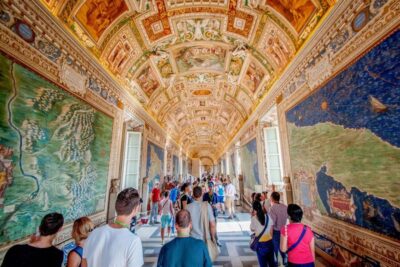
Vatican: Museums & Sistine Chapel Entrance Ticket
Read our review →
Vatican Museums, Sistine Chapel & St Peter’s Basilica Guided Tour
Read our review →
Vatican Museums, Sistine Chapel & Basilica Tour
Read our review →
Vatican Museums & Sistine Chapel Skip-the-Line Entry Ticket
Read our review →Vatican Museums, Sistine Chapel & Basilica Tour
Read our review →
Skip-the-Line Group Tour of the Vatican, Sistine Chapel & St. Peter’s Basilica
Read our review →
Vatican Museums & Sistine Chapel Guided Tour
Read our review →
Vatican Museums & Sistine Chapel Skip-The-Line Ticket
Read our review →Browse the lists this tour appears in