
Reviewed · CITY TOURS
Ferrara: City Highlights Walking Tour with Local Guide
Ferrara has a way of feeling like a real place, not a theme park. This 2-hour walking tour gives you the big sights, but it also explains how the city grew from Middle Ages to Renaissance, so the streets start making sense fast.
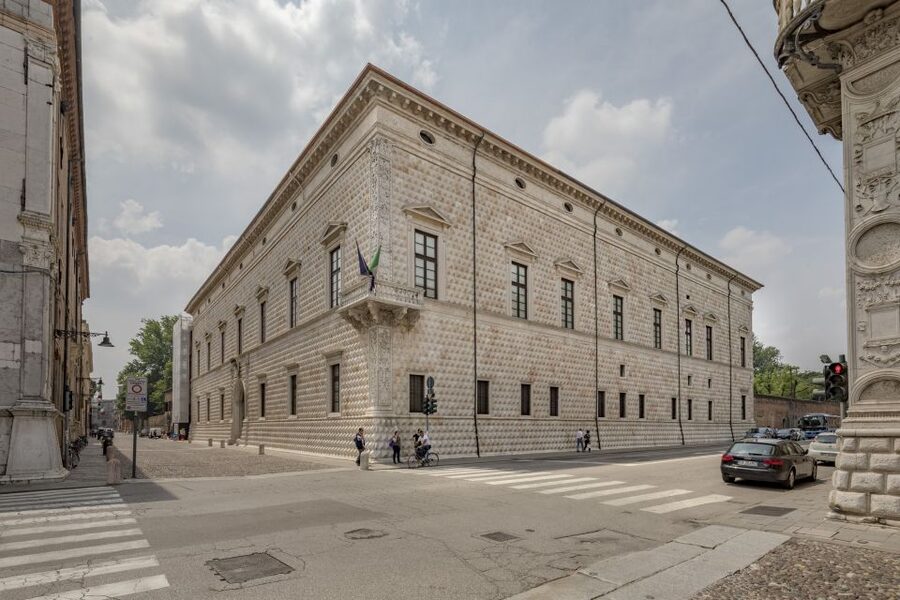
I especially like that you focus on Estense landmarks and their stories, not just photo stops. I also like the stop at Palazzo dei Diamanti, because the geometry of the place matches the “designed city” feeling Ferrara is famous for. One thing to consider: since it is a walking route, wear comfortable shoes and bring an umbrella if rain is in the forecast.
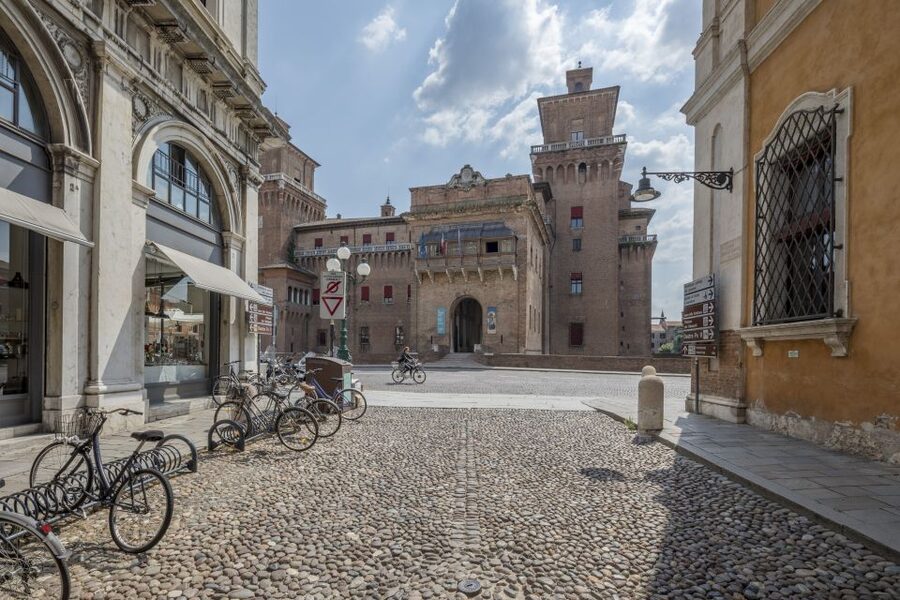
You’ll meet in the courtyard by Estense Castle, then move through the parts of Ferrara that UNESCO-style architecture lovers get excited about, with an Italian guide and an audio guide in Italian to keep everyone moving smoothly. If you want a relaxed pace with clear context, this works well.
Key things to know before you go
- Start at Estense Castle and get the lay of the land before you wander
- Follow the Renaissance thread through Corso Ercole I d’Este and Biagio Rossetti’s work
- See Palazzo dei Diamanti in the heart of the Addizione Erculea expansion
- Get green-space contrast at Massari Park with centuries-old Lebanese cedars
- Visit S.Cristoforo alla Certosa, a Renaissance church inside the monumental cemetery complex
- End at Piazza Ariostea, with Ariosto’s statue and a nice loggia-side finish
Meeting in Estense Castle’s courtyard, then walking into Ferrara’s story
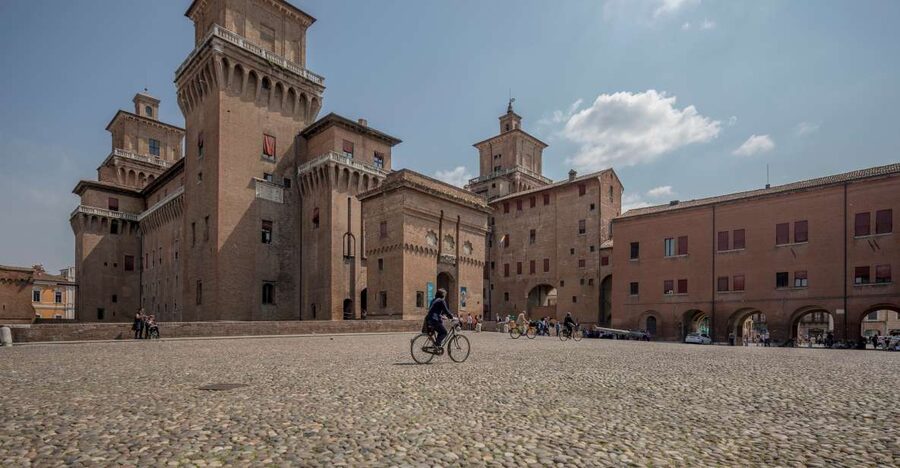
I like tours that help you get your bearings quickly, and this one starts exactly where it should: the courtyard of Estense Castle, near the loggia. From there, the guide can point out the direction of key streets and buildings, so the rest of the walk feels connected instead of random.
You are not just ticking boxes. You begin with the symbol of Ferrara, then you learn how the city’s layout connects medieval power to Renaissance planning. That context matters because Ferrara is compact enough to explore on foot, but it is also layered, so a little guidance turns your wandering into understanding.
Also, this is a tour you can enjoy even if you do not speak much Italian. You get an Italian-speaking guide, plus an audio guide in Italian. That combination helps you keep up with names, dates, and the “why it matters” behind each stop.
Corso Ercole I d’Este and Biagio Rossetti’s Renaissance expansion
One of the smartest choices on the route is how it uses movement. You do not only see buildings, you walk the connections between them, especially the corridor formed by Corso Ercole I d’Este. The idea is simple but powerful: the road links the castle to the north gate of the walls, and it crosses the Renaissance addition commissioned by Ercole I d’Este.
The tour highlights the Ferrarese architect Biagio Rossetti, which is a great way to understand Ferrara’s Renaissance look as something planned, not accidental. Even if architecture is not your main hobby, you can still appreciate what you are seeing because the guide ties it back to the city’s evolution.
A practical note: streets can be a little sun-or-shade mixed depending on the time of day. Bring water if you are sensitive to heat, and keep an eye on weather since the tour suggests an umbrella if rain comes.
Palazzo dei Diamanti, the Addizione Erculea, and why Ferrara feels designed
When you reach the Addizione Erculea area, the tour shifts from “castle and power” to “city planning and style.” This is where Palazzo dei Diamanti comes in, and it is hard not to get your attention on approach. The palace is described as the original Palazzo dei Diamanti, located in the heart of that Renaissance urban expansion planned at the end of the 15th century.
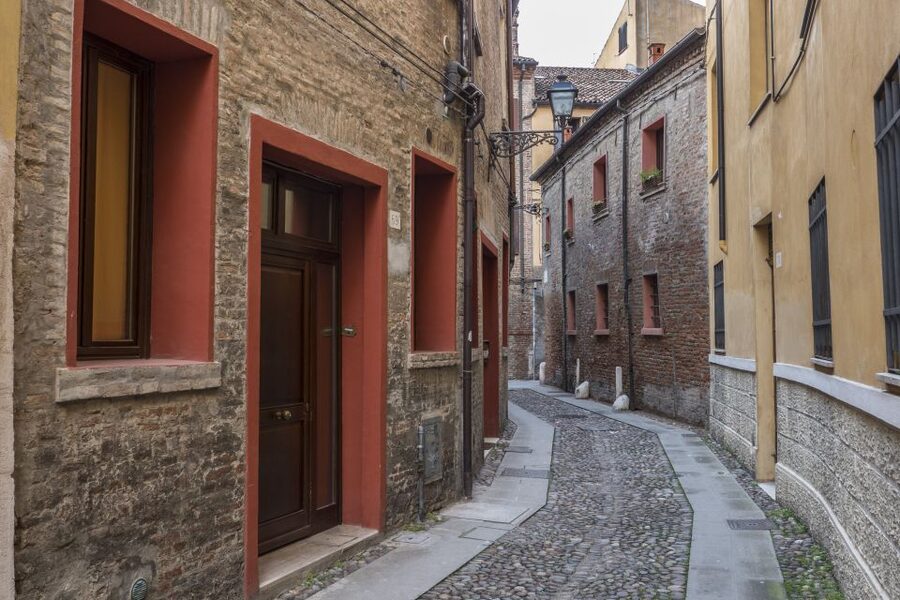
To me, the value here is how the tour explains the expansion conceptually. You hear that Ferrara’s Renaissance growth was not just about one building, it was about shaping neighborhoods and streets. That makes your photos better too, because you know what you are looking at: a designed backdrop for daily life, built around the prestige of the Estense world.
If you are the kind of traveler who likes to understand why cities look the way they do, this stop delivers. If you are chasing only the most famous facade, you might find the best part is the explanation that links the palace to the larger city plan.
Massari Park, Lebanese cedars, and a break from stone
A great walking tour should not be nonstop stone. This one gives you a reset at Massari Park, and it is not just for a quick rest stop. The park is characterized by centuries-old cedars of Lebanon, and the setting faces the University Botanical Garden.
That detail is useful because it tells you what to pay attention to once you arrive. Look beyond the general greenery, and notice the trees and the feeling of age. Ferrara’s charm often comes from that contrast, Renaissance geometry on one side and older, calmer landscape on the other.
You are also close to the University Botanical Garden area, so the park functions like a breathing space between architectural highlights. I like this kind of pacing because it keeps the tour from feeling like a museum route with legs.
S.Cristoforo alla Certosa, a Renaissance church inside a monumental cemetery
Next comes one of the most memorable stops on the route: S.Cristoforo alla Certosa. The description sets it up as a complex that was transformed over time into a Monumental Cemetery, and you get a square in front with elegant arcades that create a strong sense of recollection.
This stop can feel quietly powerful, especially because the tour then includes an internal visit to the Renaissance church. The church is described as an ancient temple of Carthusian monks called to Ferrara by Duke Borso d’Este in the mid-15th century. That timing matters, because it connects religious influence, local politics, and the physical presence of the monastery complex.
The interior visit is a big deal in a two-hour tour. Many short city walks skip interiors entirely, so you gain more depth here without losing time. The only downside is that interiors can feel cooler than outdoors, so if you run warm, you might notice a temperature change when you step in.
Piazza Ariostea and the Ariosto statue under the loggia
You finish in a setting that feels like a proper city-stage: Piazza Ariostea. The tour reminds you of the great poet Ariosto, with a statue towering over the central column, and then it invites you to end the visit under the loggia that flanks the green area.
This ending works because it pulls you back from the cemetery-church mood and returns you to the atmosphere of public Ferrara. You get a final moment to stand still, absorb the space, and compare what you saw earlier: the planned Renaissance streets, the human-scale parks, and the stone identity of the Estense world.
If you like a tour that ends with an easy “okay, I get it now” feeling, this finish helps. It is also a nice place to decide where you want to go next on your own, especially if you want to linger near the greenery afterward.
Price and value: what $17 buys you in Ferrara
At $17 per person for about 2 hours, this tour is priced like a smart add-on to your day rather than a major commitment. You are paying for an Italian-speaking guide, plus an Italian audio guide, and for the fact that you get a structured route through multiple major Ferrara highlights.
Tickets are not included, which is normal for short walking tours. The advantage is that you can decide what you want to pay for separately depending on your interests. If you are the type who hates surprises in your budget, knowing entrance tickets are separate helps you plan calmly.
Where the value really shows up is in the linking theme: medieval to Renaissance, and the role of the Estense family. In a city like Ferrara, that kind of narrative makes the streets feel more meaningful, and it helps your photos stay honest. You are not just collecting images, you are collecting reasons.
How the guide approach affects your experience
The guide is Italian-speaking, and that matters here because you are hearing specific names and references: Ercole I d’Este, Biagio Rossetti, Duke Borso d’Este, Ariosto, and Carthusian monks. You also get an Italian audio guide, which gives you a second channel to catch names if you miss a detail while walking.
I also took note of the guide feedback quality. In particular, I saw praise for Maria Chiara, described as enthusiastic and well-prepared. That kind of feedback is a good sign for a tour like this, because it relies on explanations to turn a compact walk into a satisfying one.
The overall pattern is clear: when the guide can connect details to the big picture, you feel like you learned something, without it turning into a lecture.
Practical tips so you enjoy it more
A few small things can make this tour feel smooth.
- Wear comfortable shoes. Ferrara is walkable, but you still want grip and support.
- Bring an umbrella if rain is possible, since the tour is outdoors for most of the route.
- Use the audio guide in Italian as a support tool. If you prefer, follow the guide’s cues and only use audio when you need a repeat.
- If you care about interiors beyond what is included, plan for entrance tickets separately since they are not part of the package.
One more tip: take a second at each major stop before you start photographing. Ferrara’s highlights work better when you first understand what you are looking at, then you capture it.
Who this Ferrara walking tour is best for
This is a strong fit if you want an easy, structured way to see Ferrara’s key sights in a short window. You do not need to be an architecture expert, because the tour focuses on the city’s evolution and explains why the landmarks matter.
It also works well for:
- Couples and solo travelers who like walking with context
- Travelers who enjoy Renaissance planning and street-level city design
- Anyone who wants a balanced mix of castle, palace, park, and a meaningful church interior
If you only want free time to wander without guidance, you might find a tour limits spontaneity. But if you want the “why” behind Ferrara’s look, the route is built for that.
Should you book this tour?
I think you should book this Ferrara city highlights walk if you want a short, high-impact introduction that connects the dots between Middle Ages and Renaissance. Starting at Estense Castle and ending at Piazza Ariostea gives you a clean arc, and the internal visit to S.Cristoforo alla Certosa is exactly the kind of added value that makes a two-hour tour feel substantial.
Book it with confidence if you enjoy learning from an attentive guide and you are okay walking a few kilometers at an easy pace. Skip it only if you are looking for a purely scenic stroll with minimal explanation, because the real payoff here is the story behind the sights, not just the sights themselves.
FAQ
How long is the Ferrara city highlights walking tour?
The tour lasts about 2 hours.
Where do we meet for the tour?
Meet in the courtyard of Estense Castle, near the loggia.
What is the price per person?
The price is $17 per person.
What language is the guide and audio guide in?
The guide is Italian-speaking, and the audio guide is included in Italian.
Are entrance tickets included for monuments and churches?
No, entrance tickets are not included.
Which attractions are part of the walking route?
The route includes Estense Castle, Corso Ercole I d’Este, Palazzo dei Diamanti, Massari Park, S.Cristoforo alla Certosa, and Piazza Ariostea.
Is there an interior visit during the tour?
Yes. There is an internal visit to the Renaissance church at S.Cristoforo alla Certosa.
What should I bring in case of bad weather?
It is advisable to bring an umbrella in case of rain.
Is the tour wheelchair accessible?
Yes, the tour is wheelchair accessible.
What is the cancellation policy?
You can cancel up to 24 hours in advance for a full refund.
More Walking Tours in Ferrara
- Milan: Guided Walking Tour & Last Supper Visit with Ticket
★ 4.7 · 5,409 reviews - Naples: Street Food Walking Tour with Local Guide
★ 4.8 · 4,256 reviews - Venice Walking Tour and Gondola Ride
★ 3.5 · 3,630 reviews - Venice: Rialto Bridge & Offbeat Unusual Venice Walking Tour
★ 4.2 · 3,538 reviews
City Tours, compared.
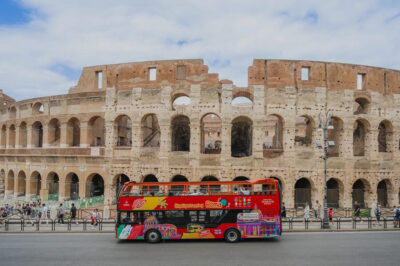
City Sightseeing Hop-on Hop-off Bus with Audioguide
Read our review →
City Sightseeing Hop-On Hop-Off Bus with Audio Guide
Read our review →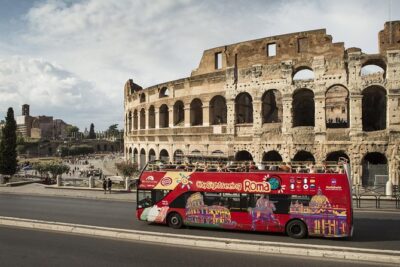
City Sightseeing Rome Hop-On Hop-Off Bus Tour
Read our review →
Fettuccine Pasta Cooking Class in Rome’s City Center
Read our review →
Vatican City: Vatican Museums & Sistine Chapel Entry Ticket
Read our review →
City Sightseeing Florence Hop-On Hop-Off Bus Tour
Read our review →Browse the lists this tour appears in