
Reviewed · CATACOMBS TOURS
The Original Roman Crypts and Catacombs Tour with Transfers
Rome’s underground side is both unsettling and strangely human, and this tour strings together three of its best-known dark interiors in a tight, well-timed 3.5 hour package. I like the skip-the-line advantage and the way the guide ties together what you see in the tunnels, the crypt, and the church above. One possible drawback: expect real walking in narrow underground areas, so this is not the tour to choose if you get nervous in tight spaces.
You’ll start in the busy day-tour hub near Fontana del Tritone and move by private air-conditioned coach between stops, which helps a lot in Rome traffic. Guides like Heather, Alan, Andrea, Paula, and Emiliano Berni are consistently singled out for keeping people engaged, and that matters here because otherwise the sites can feel like they’re just happening to you, not around you.
If you want the quieter feeling, consider the evening after-tours option, which is shorter and timed to avoid the strongest daytime crush. Also read the practical stuff ahead of time: dress code rules, no photos inside, and the fact that Sunday church entry is not always guaranteed.
Key things to know before you go
- Skip-the-line entry for three major Rome underground stops
- Capuchin Crypt visit with audio guidance and time built in to explore
- Domitilla Catacombs with an expert historian guide, focused on early Christians
- Basilica dei Santi Silvestro e Martino ai Monti underlayers, including an underground early Christian chapel
- Private coach transfers plus a small-group feel, up to 25 people
- No photos inside the venues during the tour
Why Rome’s Capuchins and Catacombs work as a guided half-day
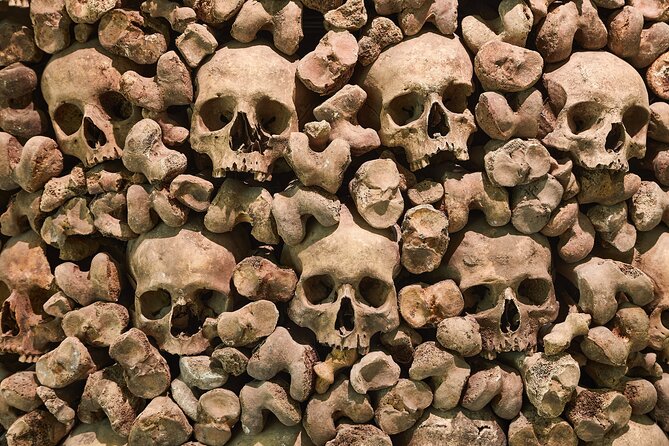
This is the kind of Rome tour that makes sense only when someone gives you the map of what you’re looking at. The Capuchin Crypt is not just a spooky room, it’s an art-filled system built from human bones. The Domitilla Catacombs are not just “tunnels,” they’re burial space, memory, and early worship, all at once.
A guided format also keeps you from getting lost in the weeds. Your guide frames what the tunnels were for, why symbols mattered, and how the underground world connects back to church life above ground. That connection is the real payoff, especially at the final stop, where you’re looking at layers of religious history stacked over ancient Roman ruins.
More of underground Rome:
- Rome: Crypts and Catacombs Underground Tour with Transfers
★ 4.6 · 5,341 reviews - Rome: Catacombs of St. Callixtus Entry Ticket & Guided Tour
★ 4.6 · 3,037 reviews - Rome: Guided Roman Catacombs Tour with Transfers
★ 4.6 · 1,830 reviews
Stop 1: The Capuchin Crypt Museum from the Bone Chapel to audio time
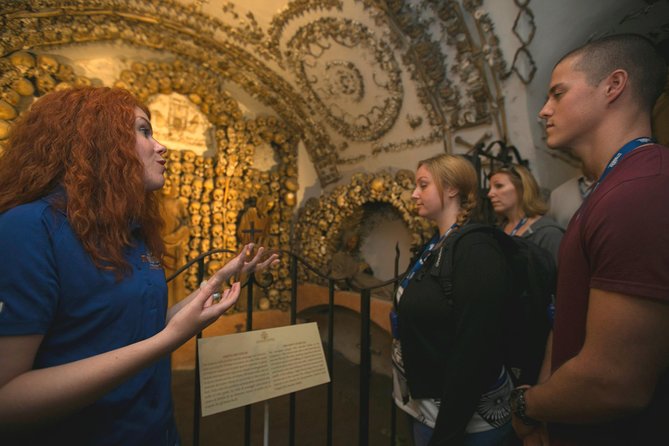
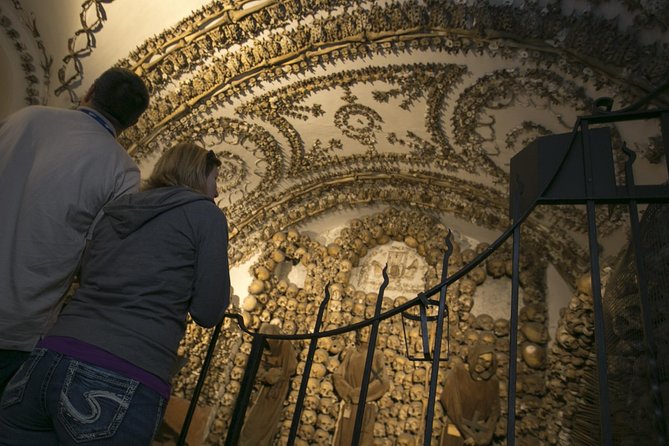
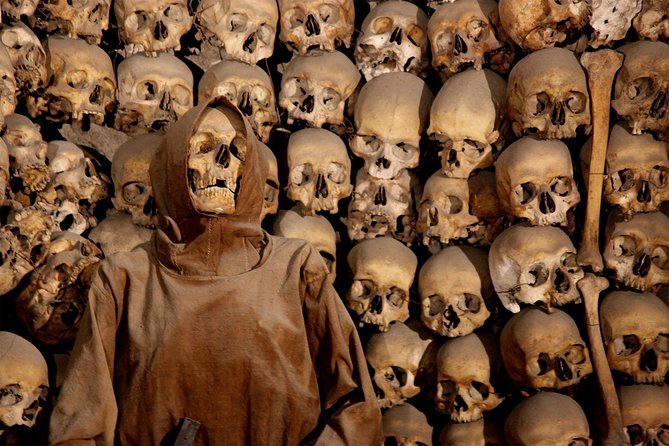
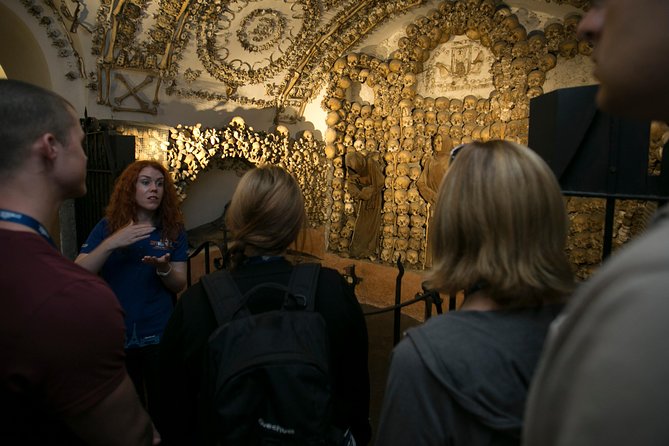
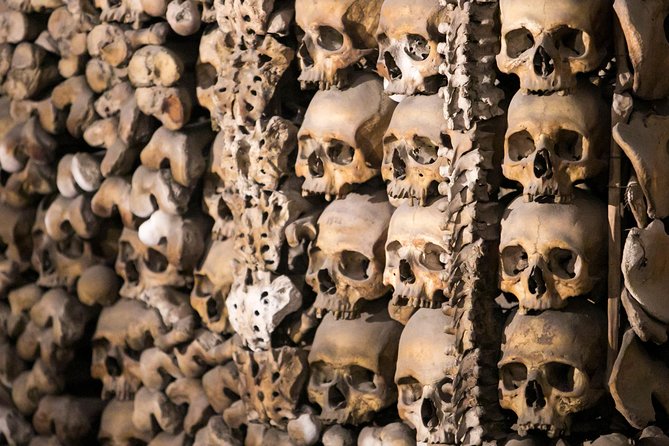
You’ll begin at the Capuchin Crypt and Museum, starting near Piazza Barberini. This is where the tour earns its edge: nearly 4,000 Capuchin monks’ bones were used to create floor-to-ceiling arrangements that earned the macabre nickname Bone Chapel.
Here’s what you should expect on the ground. You are given an audio approach for learning, and you’ll have around 45 minutes to take it in at your own pace within the timed visit. That structure can be a plus if you like to look slowly and replay details. It can also feel different than a fully guided narration stop, so if you expect constant commentary in the crypt room itself, calibrate your expectations.
A practical tip that comes up in the guide feedback: dress warm can matter more than you think in underground spaces. Even when you’re excited, you’ll be standing and moving less than you would on a street-walking tour, and the temperature shift is real.
Also plan for rules. The tour notes that knees and shoulders must be covered for entry into some sites, and no photos are allowed inside the venues during the tour. Bring a light layer, and wear something that meets the coverage rules without feeling like you’re in costume.
Stop 2: Domitilla Catacombs, symbols and burial spaces you can actually picture
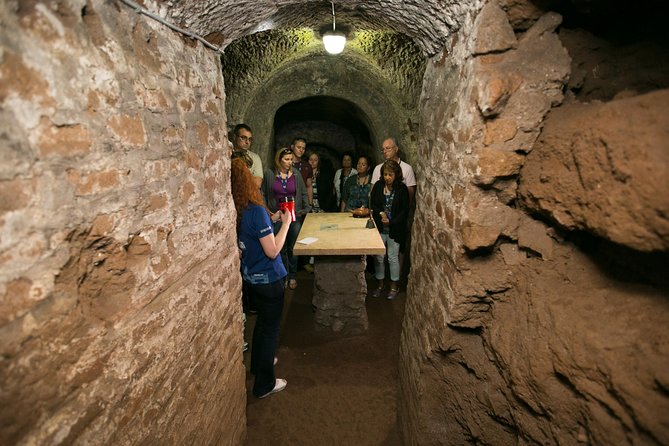
Next comes Catacombe di Domitilla, one of the large catacomb networks in Rome. You descend into corridors carved into soft volcanic rock, and this is where the tour leans hardest on guided explanation.
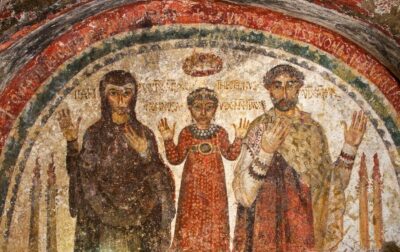
You get about 1 hour here, and the big value is how your guide explains the logic of early Christian burial and worship during persecution. You’re not just seeing graves. You’re seeing a system of early Christian identity expressed through burial practices and iconography, including frescoes and symbols.
Why this matters for your experience: catacombs can feel abstract if you only look at the walls as decoration. With a historian-style guide, those markings become a language. You start noticing the differences between what looks like art and what functioned as a sign, a marker, or a way to remember people.
One more practical point: the tour is meant for visitors with moderate physical fitness. Even if you’re in decent shape, narrow underground paths can make you slow down. If you don’t like close, winding movement, take that seriously before you book.
Stop 3: Basilica dei Santi Silvestro e Martino ai Monti and what’s under the church
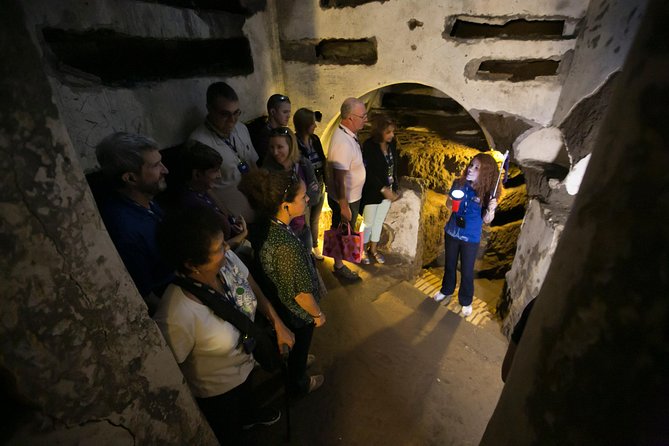
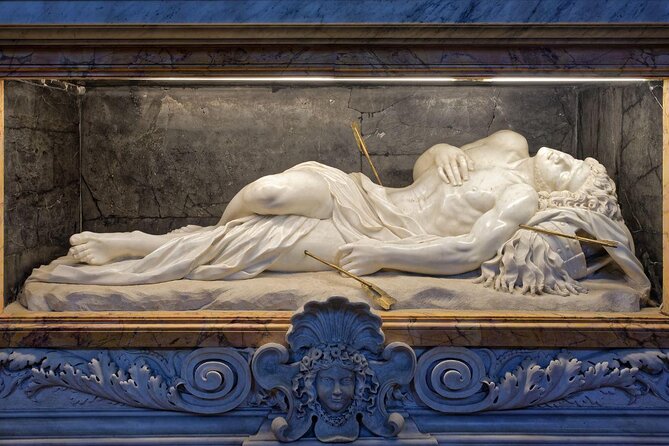
Your final stop is Basilica dei Santi Silvestro e Martino ai Monti, a church that sits on top of ancient Roman ruins. You’re looking at a stack of time: it began in the 4th century, and inside you’ll find Baroque-era frescoes and early Christian elements that connect church life to earlier underground worship.
This stop is built around “layers,” and the underground portion is the memorable piece. After you see the main interiors, you venture beneath the basilica to explore ruins and an early Christian chapel area. The tour description also mentions the remains of a secretive titulus, an early site used for underground Christian worship.
Time here is about 30 minutes, so don’t expect this to replace a long church-and-archaeology day. Instead, think of it as the closure act for the whole story: the catacombs and crypt are not random horror stops, they’re part of how faith used space, memory, and architecture.
One caution from the tour notes: on Sundays, the church visit is not guaranteed because of liturgical activities. If you’re traveling on a Sunday, have a Plan B mindset.
More from a Rome stay:
- Colosseum, Roman Forum & Palatine Guided Tour
★ 4.7 · 63,148 reviews - Vatican Museums, Sistine Chapel & St Peter’s Basilica Guided Tour
★ 4.5 · 39,149 reviews - Rome: Colosseum, Palatine Hill and Roman Forum Guided Tour
★ 4.8 · 32,814 reviews - Rome: Guided Tour of Colosseum, Roman Forum & Palatine Hill
★ 4.7 · 27,897 reviews
What transfers and timing feel like in real Rome conditions
Rome is not a spreadsheet city. Even with a fixed itinerary, you may deal with traffic and crowd flow. This tour uses private air-conditioned coach transfers, which helps you avoid the “hot day, slow walk, late start” spiral that happens with purely foot-based tours.
In the positive guide feedback, people often mention a bus break between parts, which is a big deal for a half-day underground program. The underground stops are tiring in a quiet way, because you’re paying attention constantly. When you get to ride between locations, your brain reboots.
At the same time, a couple of less-great comments point to the risk of tight schedules feeling stressful if you arrive late or if timing slips. So I recommend you do two simple things:
- Arrive at the meeting point near Fontana del Tritone with enough buffer to settle in.
- Treat the tour like a timed appointment, not a casual meetup.
The itinerary duration is about 3 hours 30 minutes for the day tour. If you choose the after-tours option, it starts at 5pm, lasts about 2.5 hours, and ends at Piazza della Repubblica.
Also note the after-hours difference that matters for planning: the basilica ticket is not included in the after-hours option, so the tour content shifts slightly compared to the day format.
Price and value: what you’re really paying for around $66.51
At $66.51 per person, you’re not just buying entry tickets. You’re buying an organized route, a timed underground program, and a guide who connects the dots between sites that could otherwise blur together.
Here’s what’s explicitly included:
- Entrance to the Capuchin Crypt and Museum
- Entrance ticket to the Rome Catacombs
- Entrance to Basilica San Martino ai Monti (for the day option)
- An English or Spanish-speaking guide depending on your selection
- Private coach transfers
- A mobile ticket
That combination is why this tour is often seen as good value for people who don’t want to manage separate lines, navigation, and timed entry rules on their own. Rome’s underground world runs on schedules, and missed access there is frustrating in a way that missed access at a museum upstairs usually is not.
The other value piece is the “you get more story” factor. In the guide feedback, names like Alan and Andrea come up for humor, patience, and clear answers. You’ll get more out of the sites if someone explains the why behind what you’re seeing, especially in Domitilla’s early Christian iconography.
Who this tour is best for (and who should rethink)
This tour is a strong match if you:
- Want an organized Roman Catacombs experience without coordinating multiple independent tickets
- Like history that shows up in objects, symbols, and architecture, not just dates on a plaque
- Prefer small-to-medium groups, since the tour caps at 25 travelers
- Willing to follow rules like no photos and covering knees and shoulders for some stops
It may not fit you if you:
- Have claustrophobia, because parts of this experience involve descending and walking through underground tunnel spaces
- Need a totally relaxed pace, because the tour is built as a timed half-day with set visit windows
- Plan to travel with very young kids, since one of the guide feedback notes it is not for young children
One more reality check: some visitors note the group can still feel large inside tight spaces. Even with a cap at 25, narrow underground corridors can reduce how much your group can spread out. If you hate crowding, consider the after-hours option to reduce daytime pressure.
Guides can change everything, so use their energy
This tour leans on guide quality. The best feedback names specific people and points to clear strengths: Alan, Andrea, Paula, Heather, and Emiliano Berni are praised for keeping people engaged, answering questions, and giving the sites a sense of meaning.
If you get one of those styles, it helps you notice details you might miss on your own, like how Domitilla’s symbols communicate early Christian identity, or how the basilica’s layers connect underground worship to later church life above.
Don’t be shy about asking practical questions while you’re above ground. Underground, you tend to get less time for conversation, because the schedule is tighter and the space is less forgiving.
Should you book the Original Roman Crypts and Catacombs Tour?
Book it if you want a guided, timed route through the Capuchin Crypt, Domitilla Catacombs, and the church-under-ruins experience, with transfers handled for you. With skip-the-line access and included admissions, it’s a good way to spend a half-day making Rome feel different, not just bigger.
Skip it or choose the after-hours timing if you:
- Feel uneasy in enclosed or winding spaces
- Want a slow, no-pressure sightseeing day
- Are traveling on a Sunday and need certainty for the church stop (it can be affected by liturgical activities)
One last tip: wear comfy shoes and bring a layer. In Rome, underground tours reward preparation, and your comfort level is what lets you pay attention to the real story happening on the walls.
FAQ
Where does the tour start and where does it end?
The day tour starts at Fontana del Tritone in Piazza Barberini (00187 Roma) and ends at Basilica dei Santi Silvestro e Martino ai Monti (Vle del Monte Oppio, 28, 00184 Roma). For the after-hours option, it ends at Piazza della Repubblica.
How long is the tour?
The standard day tour is about 3 hours 30 minutes. The after-hours option starts at 5pm and lasts about 2.5 hours.
What’s included in the price?
The tour includes an English or Spanish-speaking guide, entrance tickets for the Capuchin Crypt and Museum, entrance to the Rome Catacombs, and (for the day option) entrance to Basilica San Martino ai Monti, plus transfers in a private air-conditioned coach.
Are tickets included for the Capuchin Crypt and the catacombs?
Yes. Entrance ticket to the Capuchin Crypt and Museum is included, and the Rome Catacombs entrance ticket is included too.
Can I take photos inside the sites?
No. The tour notes that no photos can be taken inside the venues during the tour.
What dress code do I need to follow?
A dress code is required for entry into some of the sites. Knees and shoulders must be covered.
Is this tour suitable if I have claustrophobia?
No. The tour is not suitable for people who suffer from claustrophobia.
Can I cancel for a full refund?
Yes, you can cancel up to 24 hours in advance for a full refund. If you cancel less than 24 hours before the start time, the amount paid is not refunded.
Reviewed lately around Rome
- Colosseum, Palatine Hill and Roman Forum with Guided Tour★ 5.0 · 500 reviews
- Exclusive Golf Tour Private VIP with Local & Gelato o Wine★ 5.0 · 500 reviews
- Rome Trastevere Pasta Making Class with Eating Europe★ 5.0 · 505 reviews
- Rome by Night Walking Tour★ 4.5 · 506 reviews
- Rome: Colosseum Express Tour with Forum & Palatine Access★ 4.5 · 511 reviews
- Rome Food Experience Max 6 People Group Tour | w/Private Option★ 5.0 · 516 reviews
- Rome: Papal Audience Experience with Pope Leo XIV★ 4.8 · 518 reviews
- Rome: Escorted Papal Audience Experience with Entry Ticket★ 4.4 · 518 reviews
Catacombs Tours, compared.
Catacombs of San Gennaro Entry Ticket & Guided Tour
Read our review →
Crypts and Catacombs Underground Tour with Transfers
Read our review →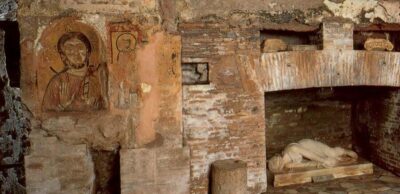
Catacombs of St. Callixtus Entry Ticket & Guided Tour
Read our review →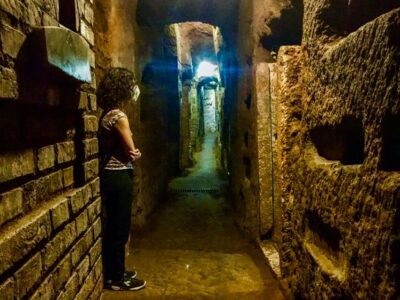

Rome EBike Tour: Appian Way, Catacombs & Roman Aqueducts
Read our review →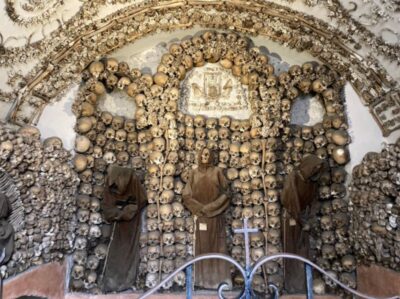
Catacombs and Capuchin Crypt Guided Tour with Transfer
Read our review →
Appian Way, Catacombs, & Roman Aqueducts E-bike Tour
Read our review →Browse the lists this tour appears in