
Reviewed · WALKING TOURS
Haunted Rome Ghost Night Walking Tour
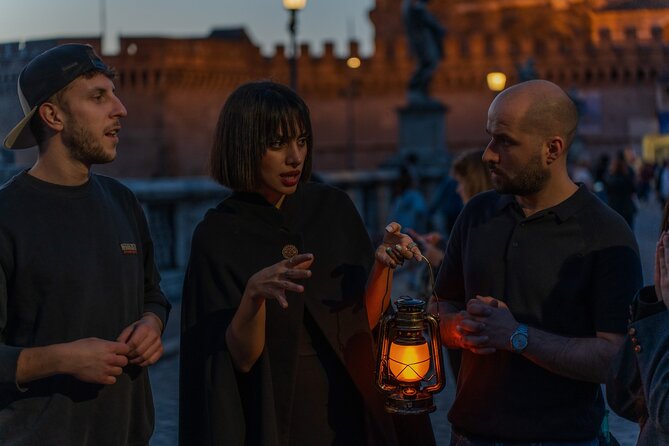
Rome at night has a different mood. This Haunted Rome Ghost Night Walking Tour threads you through the city’s darker past, from busy squares to hushed corners, with stories built around executions, prisons, and eerie legends. It is a smart way to see a lot without frying in the day crowds.
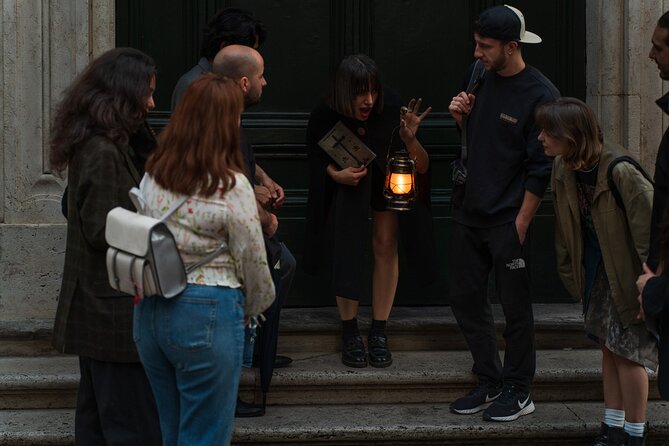
I love how it keeps the energy moving while still covering real places you can point to later, like Campo de’ Fiori and Castel Sant’Angelo. I also love that the guides are consistently praised for the storytelling style, including names like Youssef, Antonio, and Ana, who tend to mix spooky atmosphere with solid place-based explanation.
One thing to consider: you are walking with a group, on city streets, and night noise can make it harder to catch every word. If you know you struggle with road noise, pack a small pair of earbuds to make the experience smoother.
Key things to know before you go
- Night-first route that helps you beat heat and daytime crowds while you cover key sights
- Small group size capped at 20, so it feels manageable and not like a moving herd
- History-led spooky stories (often more sinister than supernatural)
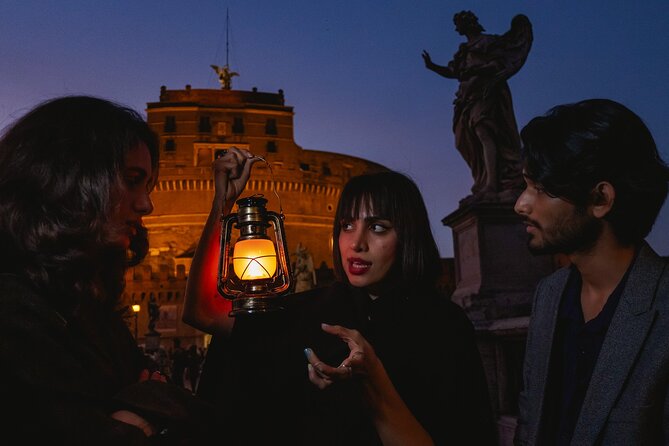
- Iconic stops including Campo de’ Fiori, Ponte Sisto, Via Giulia, and Castel Sant’Angelo
- English guided tour with mobile tickets, plus a private upgrade option
Why this haunted Rome night walk works so well
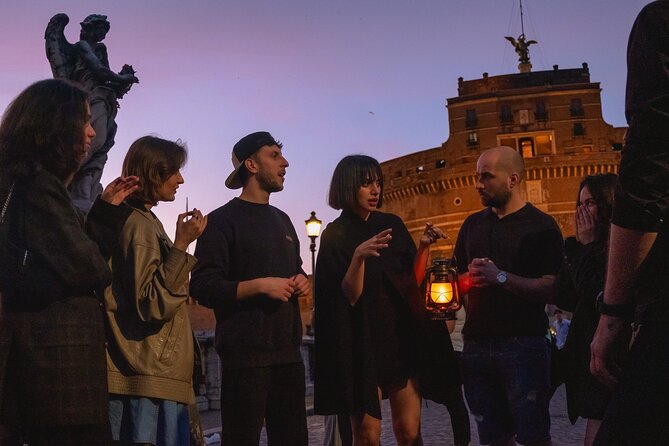
Rome’s famous sights are everywhere in photos. This tour adds something you usually miss, the darker layer underneath everyday streets and church facades. The effect is simple but memorable: you look at the same stones, but now you understand why they gained a reputation.
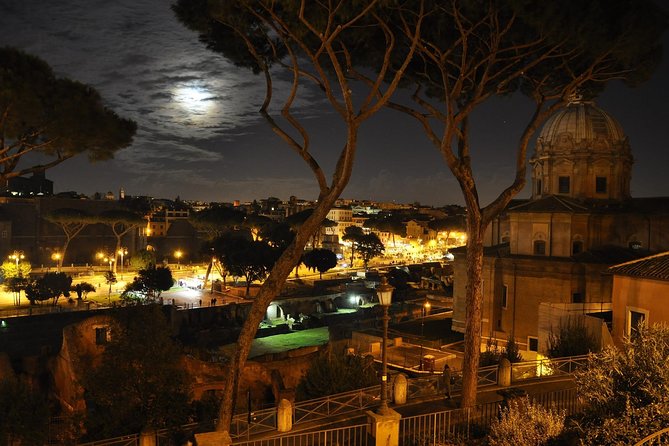
Another big win is timing. A night walk means you are not battling midday sun or peak crowds, and you can start your evening right after dinner plans settle down. The route is also set up for efficient sightseeing. Expect roughly 2 hours, with short stops so you keep moving and still get the story behind what you are seeing.
Finally, this is not about cheesy acting. The best feedback points to entertaining storytelling that stays grounded in what happened in these places, with just enough spine-tingle to feel fun, not gimmicky. That is a great match for first-timers who want something different from the standard sightseeing loop.
More Walking Tours in Rome
- Rome: Trastevere & Campo de Fiori Street Food Walking Tour
★ 4.9 · 2,768 reviews - Rome: Paranormal Night Walking Tour & Secret Backstreets
★ 4.9 · 1,921 reviews - Rome by Night Walking Tour – Legends & Criminal Stories
★ 4.5 · 1,003 reviews
Tour at a glance: price, pace, and group feel
The price is $35.07 per person, and it is framed as good value for a guided walk that hits multiple major locations. You are paying for more than walking time. You are paying for someone to connect landmarks to specific events and legends, so the city becomes easier to remember.
The tour runs for about 2 hours and visits a sequence of stops where each stop is about 10 minutes. That pacing matters. It keeps the stories digestible, and it helps you avoid the slow, stop-too-long problem that can derail a night tour.
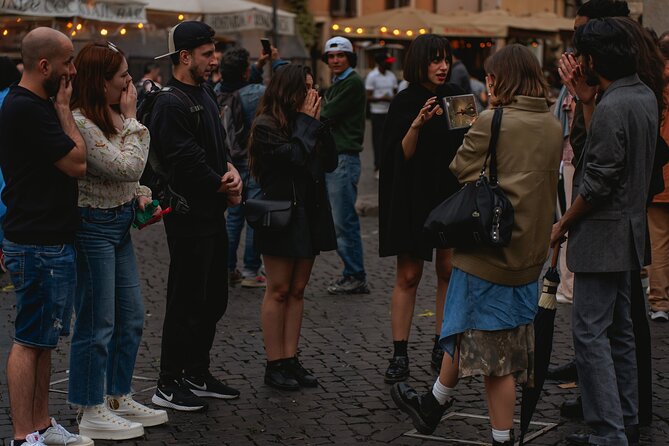
Group size is up to 20 travelers. That is small enough for a guide to keep control and manage questions, and it usually makes the experience feel personal. You will also have a mobile ticket, which keeps things simple if you like to travel light.
Language is English, and the route is near public transportation. That is useful if you want a stress-free start from central Rome, or if you plan to jump back into your evening after Castel Sant’Angelo.
The route, stop by stop: from Campo de’ Fiori to Castel Sant’Angelo

This tour moves through some of Rome’s most recognizable areas, but it uses them like chapters in a single story. You are basically learning Rome by walking its darker geography.
Stop 1: Campo de’ Fiori, where history met the public square
You begin at Campo de’ Fiori, a famous piazza that is now known for bars and restaurants. The spooky twist is what it once represented. Starting here works because the square feels alive, even at night, so the contrast between today’s vibe and the past lands harder.
Practical note: this is a lively neighborhood. Keep your eyes on the guide when you regroup, because it can be easy to get swept along by foot traffic.
A different Rome day to consider:
- Colosseum, Roman Forum & Palatine Guided Tour
★ 4.7 · 63,148 reviews - Vatican Museums, Sistine Chapel & St Peter’s Basilica Guided Tour
★ 4.5 · 39,149 reviews - Rome: Colosseum, Palatine Hill and Roman Forum Guided Tour
★ 4.8 · 32,814 reviews - Rome: Guided Tour of Colosseum, Roman Forum & Palatine Hill
★ 4.7 · 27,897 reviews
Stop 2: Piazza Farnese and a scandalous legend
Next is Piazza Farnese, known for its beautiful look and big-city energy. Here, the stories focus on legend, including a tale that involves a secret passageway and two popes. It is the kind of story that makes you start spotting architecture as more than decoration. You begin to ask, where would people have gone, what route would they have used, and why does this corner feel like it hides something?
Stop 3: Via del Mascherone and Vicolo dei Venti, the quiet defenders
Then you head into Via del Mascherone and Vicolo dei Venti, where you discover madonelles, little Madonna images. The guide connects these to the old idea of protection, including how they were used to stop crime.
This stop is great if you like details you can actually look for while walking. After you learn what to watch for, Rome feels different in a good way, like you are reading street-level symbols.
Stop 4: Ponte Sisto, old bridge, tragic reputation
Ponte Sisto, described as the oldest bridge in Rome, brings the mood darker again. The stories include gruesome pasts tied to accidents, power struggles, theft, and suspicious deaths.
Bridges are perfect for night storytelling because they naturally slow people down. You get a chance to look over the river, then turn the gaze back to the history the guide is pointing out.
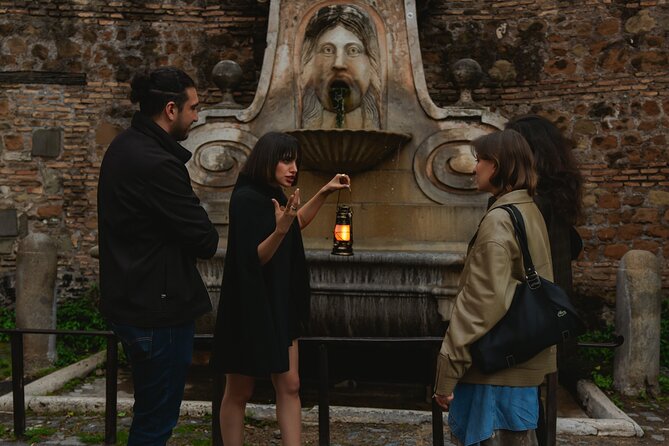
Stop 5: Fontana del Mascherone, the warning fountain
At the Fontana del Mascherone, you get a different type of creep. Instead of ghost imagery, it is a fountain with a warning aimed at anyone who dares to drink.
It is a short stop, but it sticks because it reframes what you thought fountains were for. You stop thinking only in terms of beauty and start thinking in terms of rules, danger, and consequences.
Stop 6: Chiesa di Santa Maria dell’Orazione e morte, where death is part of the decor
This is one of the most striking stops: Chiesa di Santa Maria dell’Orazione e morte. The church is decorated in human remains, which is a reminder that death was not an abstract concept here.
If you have a sensitive stomach about preserved remains, mentally prepare for this. It can be intense in a way that is not scary-movie style, more like reality-history style.
Stop 7: Via di Monserrato, an apartment block with a prison past
Via di Monserrato is now a haunted-feeling apartment block, but it was tied to some of Rome’s worst prisons. This is where the tour becomes especially effective. You see something modern in front of you, and the guide pulls the memory back beneath it.
This stop works well because Rome often feels like layers stacked on top of layers. With the right story, you start understanding how the city transforms without truly erasing.
Stop 8: Chiesa di Santa Maria in Monserrato degli Spagnoli, a spicy story in church clothing
Next is the Spanish church, Chiesa di Santa Maria in Monserrato degli Spagnoli, with a story described as saucy, like something out of a telenovela. It adds variety, so the tour does not stay grim for every single minute.
It is also a good reality check: not every “dark story” is about violence. Some are about power, scandal, and how people used religion and social status like tools.
Stop 9: Via Giulia, when cosmetics can kill
Via Giulia is another standout. The tour connects it to earlier commercial life, including a beauty shop and an especially eerie concept, that cosmetics could kill. Even if you only retain one idea from this stop, it is the kind of unusual hook that makes you remember the street later.
Stop 10: Via dell’Arco dei Banchi and Mastro Titta
Then you are at Via dell’Arco dei Banchi, linked to Mastro Titta, Rome’s most famous executioner. This is one of those stops that turns a name you might hear casually into a real person in a specific place.
From a tour value standpoint, this is big. It is one thing to say an executioner existed. It is another to place him on a street you just walked and show you what kind of world he worked in.
Stop 11: Castel Sant’Angelo, the final warning to sinners
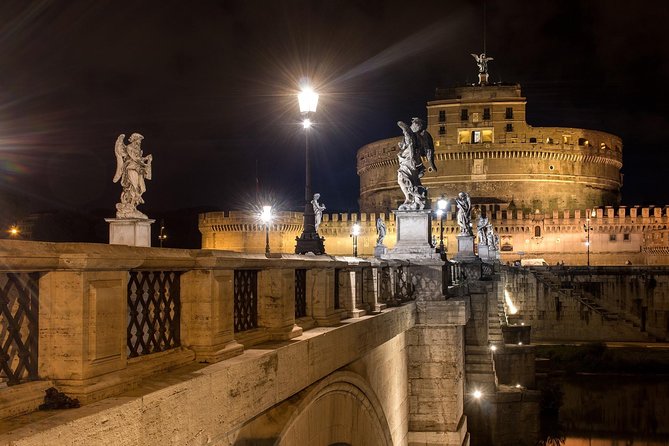
The tour ends at Castel Sant’Angelo, which is tied to the practice of exposing bodies of the executed as warnings. You also get the story of the Cenci family and how it ended.
This is a strong finale because it sits at the intersection of myth and history. When you stand here after dark, it becomes easier to understand why people turned it into a symbol of fear and consequence.
How the guides tell the stories (and what to expect)
The vibe from the strongest reviews is consistent: guides are engaging, often funny, and they keep things entertaining without going full theater. Names that show up with top marks include Yousef, Antonio, Ana, Dominica, Dinara, Sarah, and Simon. That pattern matters, because it suggests the best part of the tour is the way the route is explained, not just the list of stops.
The stories lean more historical-spooky than “ghost hunting.” You get sinister history, legends, and eerie reminders, with plenty of details that make you look at facades and street corners with new questions.
One practical caution comes straight from real feedback. Road noise and group size can make some guides harder to hear at certain moments. This is not a reason to skip. Just plan for it. If hearing clearly matters to you, bring earbuds. And when the guide points out something specific, stop and face them, do not wander.
Who should book this haunted Rome walk
This tour fits best if you want:
- A night plan that avoids heat and peak crowds
- A guided way to understand Rome as more than ancient ruins and postcard views
- A mix of legends plus place-based history
- An experience that works for different “spooky levels,” including families who want something scary enough to feel fun but not so intense that it becomes a chore
It also sounds like it works well across ages. Reviews mention teenagers enjoying it, and kids in the 11 to 13 range liking the stories too. If your family prefers classic ghost scares with special effects, you might want a different type of tour. But if your family likes history with a dark twist, this is a good match.
Where to go after, when you finish at Castel Sant’Angelo
The tour ends at Castel Sant’Angelo, along Lungotevere Castello 50. That is a great landing spot because you can keep your evening going right away. If you want more atmosphere, stick around the river walk area. If you want something easier, you can head back toward your dinner or hotel from there.
Also, ending at Castel Sant’Angelo gives you a natural “wrap up moment.” You get the strongest story, then you are already positioned near one of Rome’s most photogenic night settings.
Should you book the Haunted Rome Ghost Night Walking Tour?
I think you should book it if you like your Rome with a dark side, and you enjoy learning through streets, squares, and specific landmarks. The 2-hour format is long enough to feel like a real evening plan, but short enough that you stay energized. The small group size helps the guide keep the experience smooth, and the consistent praise for guides like Yousef, Antonio, and Ana is a strong sign the storytelling quality is the point.
Skip it only if you want heavy supernatural effects, like live ghosts and theatrical scares. This tour is built more for eerie history and legends than for full-on spook show moments.
If you are visiting in the busier season, consider booking early. This one is commonly reserved about 27 days in advance, and a night walk is exactly the kind of activity that sells out when schedules get tight.
FAQ
How long is the Haunted Rome Ghost Night Walking Tour?
The tour lasts about 2 hours.
What is the price per person?
The price is $35.07 per person.
Is the tour offered in English?
Yes, it is offered in English.
What is the group size limit?
The tour has a maximum of 20 travelers.
Where does the tour start and end?
It starts at Piazza Campo de’ Fiori (P.za Campo de’ Fiori, 00186 Roma RM, Italy) and ends at Castel Sant’Angelo (Lungotevere Castello, 50, 00193 Roma RM, Italy).
Is it more ghost stories or more historical stories?
It is more about the darker, historical side of Rome with spooky stories rather than being a campy ghost show.
Is this tour suitable for families?
Most travelers can participate, and it has been enjoyed by teenagers and kids in reviews, so it is often a family-friendly kind of spooky.
Is free cancellation available?
Yes. You can cancel for a full refund up to 24 hours in advance of the experience start time.
Reviewed lately around Rome
- Rome: Private Customizable 3-Hour Golf Cart City Tour★ 5.0 · 229 reviews
- Papal Audience Experience with Pope Leo XIV★ 4.5 · 230 reviews
- The Three Tenors in Rome – Nessun Dorma★ 4.5 · 231 reviews
- Discover Rome in a Day – Private Driver Tour★ 5.0 · 231 reviews
- Rome: Colosseum, Roman Forum & Palatine Hill Group Tour★ 4.7 · 232 reviews
- Rome Airport Transfer – Private Luxury Service with Driver★ 4.5 · 231 reviews
- Fast track: Vatican Museums, Sistine Chapel Guided and St. Peter’s Basilica Tour★ 4.5 · 232 reviews
- Moonlight Rome: Night Walking Tour of Roman Highlights★ 5.0 · 232 reviews
Walking Tours, compared.
Guided Walking Tour & Last Supper Visit with Ticket
Read our review →

Rialto Bridge & Offbeat Unusual Venice Walking Tour
Read our review →
Private 3 hrs Venice Tour: St Mark’s, Walking tour & Boat tour
Read our review →
Skip the line: Uffizi and Accademia Small Group Walking Tour
Read our review →Browse the lists this tour appears in