
Reviewed · CITY TOURS
Golf Cart Small-Group Guided Tour: Rome City Highlights
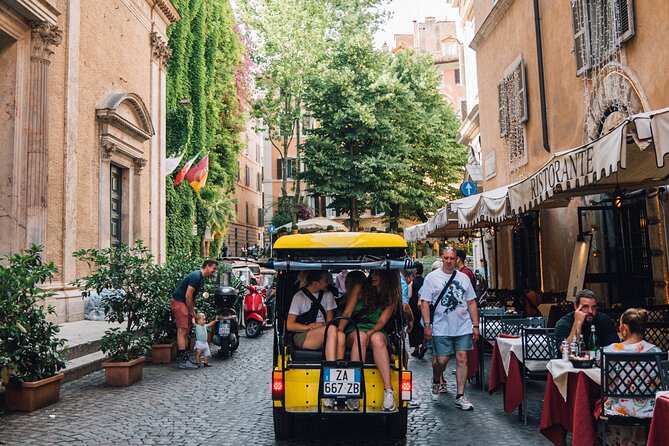
A golf cart highlights tour is a smart match for Rome. You cover real ground on electric carts, then step out for quick looks at the big icons without burning your whole day in traffic and tight sidewalks.
I especially like the headsets, which keep the narration easy to follow, even when you’re stopped near crowds. And I like that there’s a included gelato break and bottled water, so your 2.5 hours has an actual Roman pause built in.
One consideration: the stop times are short, so it can feel a bit rushed if you want deep wandering right then. Also, one rider noted headset trouble for a stretch, so if you’re picky about audio, sit where your earpiece cable and fit feel best.
Key takeaways before you ride
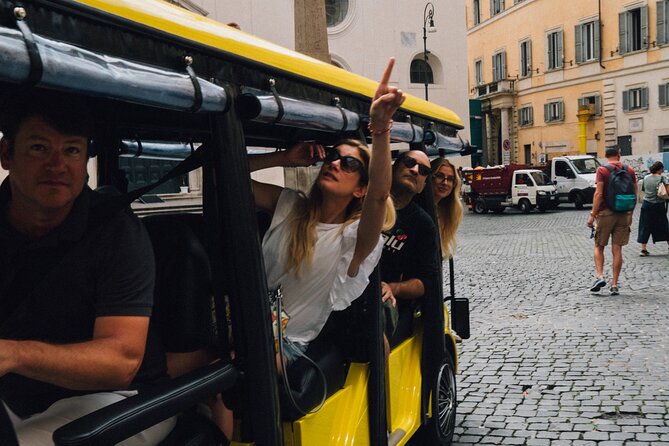
- Headsets for clear English narration while you’re rolling and while you stop
- Small group limit (up to 14), split across at most 2 carts that travel together
- Photo-friendly micro-stops at major hits like Trevi Fountain, Spanish Steps, and Piazza Navona
- Gelato and bottled water included, so you do not have to hunt for a break on the fly
- Stops go beyond postcard Rome, with areas like Largo Argentina and Campidoglio in the mix
Why a golf cart works for Rome’s tight, crowded streets
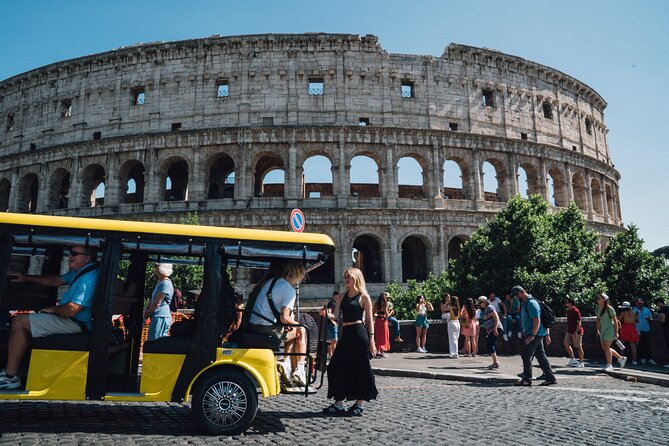
Rome can feel like a puzzle, even when you think you know where you are. The streets are narrow, signs are easy to miss, and it can be tough to find taxis fast if you need more than one. This tour solves a lot of that stress by getting you moving in an efficient loop.
On electric carts, you can see more than you would on foot in the same amount of time. And you still get to step out at the key sights, take photos, and get a feel for where everything sits relative to the rest of the city.
You should still plan to do your own in-depth exploring later. This is a highlights sweep, not a long museum day. The trade-off is speed and clarity, so you come away with a map in your head.
More City Tours in Rome
- Rome: City Sightseeing Hop-on Hop-off Bus with Audioguide
★ 4.0 · 16,045 reviews - City Sightseeing Rome Hop-On Hop-Off Bus Tour
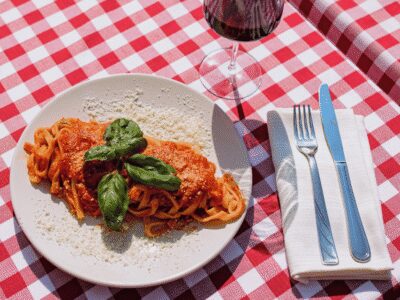
★ 3.5 · 5,446 reviews - Rome: Fettuccine Pasta Cooking Class in Rome’s City Center
★ 4.8 · 2,414 reviews
Price and logistics: what $104 buys you (and what it does not)
At $104 per person, you are paying for guided navigation plus time-saving access to the main monuments. The big value here is the combination: transport on a clean electric cart, a local guide with clear narration, and stops that keep you from zigzagging across the city all day.
What you should not assume: admission is not included for everything. The Pantheon stop is brief, and Pantheon admission is specifically listed as not included. So think of this as a guided orientation, with the option to return later for paid entries if you want.
Also, you are on a shared schedule. Late arrivals can’t be waited on, and you should arrive early. Rome is easy to get lost in, and the office meeting spot is your anchor. If you arrive late, you risk missing the start.
The ride setup: headsets, cart seating, and a two-cart experience
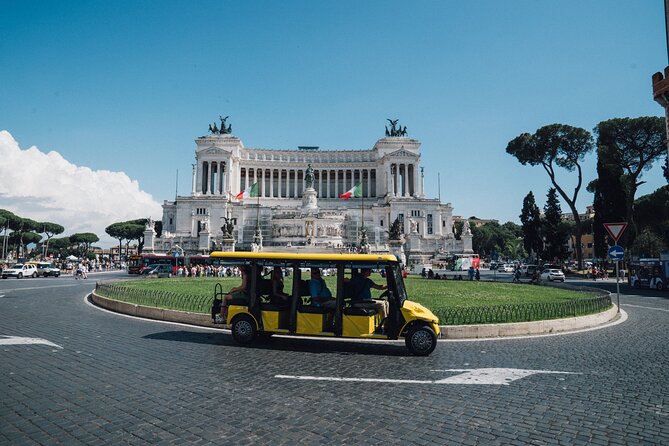
This is a small-group tour with up to 14 travelers, and it can run with up to 2 carts. The carts travel together like connected cars, and everyone listens to the same guide through earpieces.
A few practical points that matter:
- Each cart has 7 seats, so you’re not stuck shoulder-to-shoulder with strangers.
- Sometimes groups who booked together can be asked to separate between the two carts.
- If you’re sensitive to audio, choose a seat where your headset fits comfortably. One rider reported missing some narration when headsets weren’t working for a while, which is rare, but it’s worth noting.
On colder days, one rider mentioned blankets were available, and the tour continued even with rain. Rome weather happens, so it helps to dress in layers.
Start at V. Monterone,19, then roll into the Pantheon area
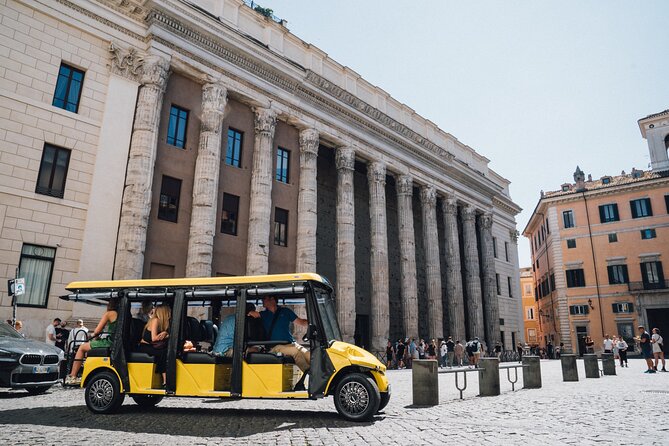
You meet at V. Monterone, 19, 00186 Roma RM, at the central Rome office. From there, you hop onto your electric cart and begin the highlights circuit. The route is designed to get you to the most recognizable sights quickly without wasting time finding streets or fighting parking.
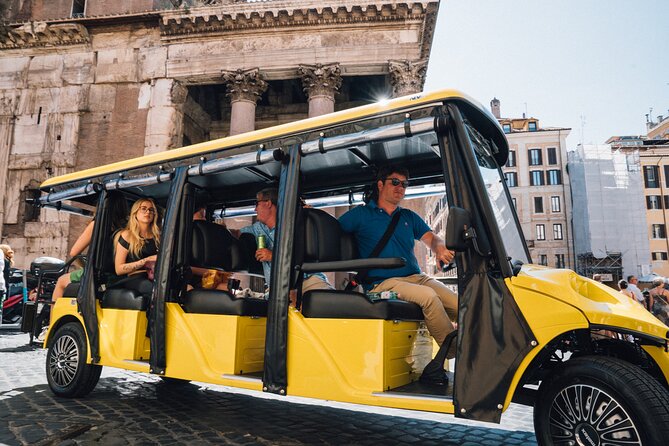
The tour’s opening includes a short stop at the Pantheon area. You get only a brief look, with Pantheon admission not included. That said, it’s still a worthwhile first taste because the Pantheon is one of those places where the scale hits you immediately. Even in just a few minutes, you’ll understand why it has survived for centuries and why it remains a touchstone for Roman architecture.
The goal early on is not deep inspection. It’s orientation. You’re learning where major landmarks sit, what they feel like in person, and what directions you might want to return from later.
More Golf Cart Tours in Rome:
- Rome by Golf Cart Private Tour: Beyond the Landmarks
★ 5.0 · 4,361 reviews - Rome on a Golf Cart Semi-Private Tour Max 6 with Private Option
★ 5.0 · 2,502 reviews - Rome Highlights by Golf Cart Private Tour
★ 5.0 · 2,379 reviews - Rome Highlights City Tour by Golf Cart with Gelato
★ 5.0 · 1,088 reviews
Trevi Fountain: the coin toss stop that doubles as a photo moment
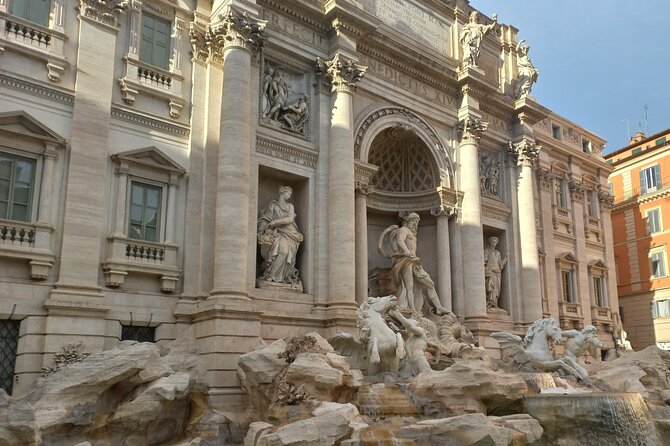
Next up is Trevi Fountain, with about 10 minutes on site. It’s possibly the most famous fountain in the world, and the tour frames it with the basics that make the visit more meaningful: the architect was Nicolo Salvi, and the name connects back to Aqua Virgo, the earlier water supply built in 19 BC by Marcus Vipsanius Agrippa.
The “throw in a coin” moment is fun, but the real value is what you learn while you’re standing there: how the fountain fits into the long Roman water story. You also get enough time for photos, and this is one of the stops where short time still works because the sight is central and instantly readable.
A small practical tip: if you’re trying to take photos without getting swallowed by the crowd, move a few steps to the side while you shoot. The fountain is iconic from multiple angles, and you do not need to stand in the tightest spot to get a strong image.
Spanish Steps and Piazza di Spagna: why the timing works
Then you head to the Spanish Steps and Piazza di Spagna area. You get about 10 minutes here too, which is enough time to walk the steps at your own pace for a bit, stop for photos, and feel the layout of the square.
The tour’s explanation adds context that makes the steps more than a landmark: the 138 steps originally connected the Spanish embassy area to the Holy See at the top church area, Trinità dei Monti. That connection between diplomacy and architecture is one of those facts that changes how you see the place.
If you like people-watching, this is a prime stop. If you hate crowds, still go, but plan to enjoy it in bursts. Ten minutes is short, so your mindset matters. Treat it like a quick snapshot of Rome’s social energy.
Piazza del Popolo: northern gateway energy in a brief pass
At Piazza del Popolo, you get a shorter 5-minute stop. This square is described as a northern gateway, linked to the start of the Via Flaminia, the road north toward Ariminum (today’s Rimini).
This is a stop that can feel small if you expect a long visit, but it works as a “big picture” marker. Even in a few minutes, you get a sense of Rome’s structure, how routes radiate out, and how the city’s ancient planning still shapes what you see today.
Piazza Navona: the stadium shape you can still feel
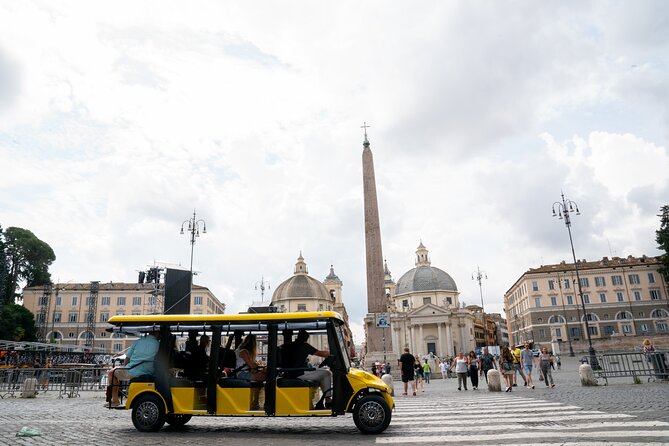
Now you get to Piazza Navona, another quick 5-minute stop. The tour emphasizes why the piazza feels the way it does: it is built on the site of the Stadium of Domitian, a 1st-century AD venue, and the square follows that open arena shape.
The ancient Romans used the place for games, and the tour connects the name to the evolution from “circus” language into something that became Navona. You might not walk away thinking about linguistics, but you will likely notice the shape more after you’ve been told what you are looking at.
One helpful habit here: look for the long sightlines. Even when time is short, you can get a feel for the geometry and why Piazza Navona became a stage for so much activity.
The drive along Via Giulia and the Monti neighborhood
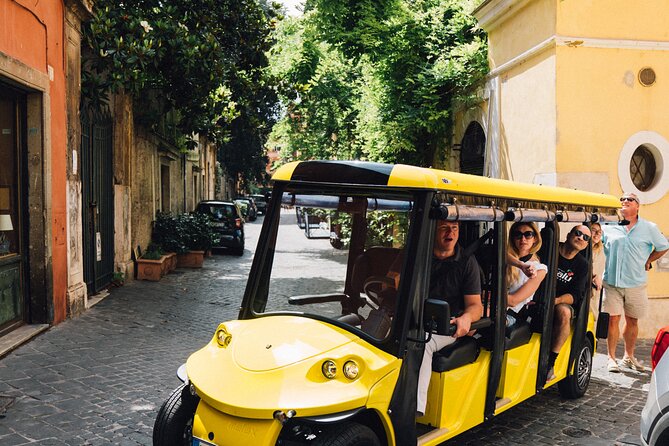
Between major stops, you’ll spend time driving through key neighborhoods. One section includes Via Giulia, described as a street of architectural and historical importance that connects Regola and Ponte Rioni. Another segment is a drive-through of Monti, which is known for a mix of vintage shops, artisans, cobblestones, food, and bars.
This matters because it gives you context for where Rome’s “center” actually lives. Rome is not only monuments. The vibe of the streets around them shapes your experience. The drive helps you mentally place the landmarks into a real neighborhood map.
If you already love planning walking routes, you’ll likely pick up ideas here for where you might want to return on foot after the tour ends.
Largo Argentina: Roman temples revealed by unexpected construction
One of the more interesting stops is Area Sacra di Largo Argentina. You get a brief 5-minute look at the Roman temples of Largo di Torre Argentina.
The tour shares a key story: between 1926 and 1929, demolition for a new neighborhood area unexpectedly revealed a large paved square with remains of four Republican-era temples. That “accident of history” angle adds real depth to what could otherwise feel like random ruins behind fences.
Because your time here is short, your best move is to slow down for a few minutes, look at the layout, and let the guide’s framing do the work. This is the type of stop that makes you want to learn more later, especially if you enjoy seeing how Rome’s past keeps surfacing.
Campidoglio and the grand staircase: Michelangelo’s uniform design
Next is Piazza del Campidoglio, with a 5-minute stop in front of the grand staircase. The tour explains that this square was the first in modern Rome to follow Michelangelo’s criteria of uniform design.
You’re also on Capitoline Hill, where there was once a very ancient village and where temples were dedicated to Roman gods. In a short time, this stop does a good job connecting the city’s layers: the ancient hill, the religious past, and the later planning choices that shaped the public space you see now.
If stairs intimidate you, this stop can be a tricky quick glance spot because the staircase is the draw. But you can still understand the design from where you are. Just plan for a bit of uneven ground and crowd movement.
Piazza Venezia and the Victor Emmanuel II monument moment
At Piazza Venezia, you get another brief 5-minute look. This square is known for the imposing monument to Victor Emmanuel II, often called the Altar of the Fatherland. The tour also notes that the piazza takes its name from Palazzo Venezia, a 15th-century palace tied to Cardinal Pietro Barbo, later donated in 1560 by Pius IV to the Republic of Venice to serve as the embassy seat.
This stop is mostly about scale and context. Even if you do not climb or enter anything, you’re getting a sense of how later Italian national identity was built into Roman ground.
The Monti drive-by to the finish outside the Colosseum
The tour ends at the Colosseum area, outside the monument, at Piazza del Colosseo, 1, 00184 Roma RM. One review tip is worth repeating: ask the driver how to handle your return at the end if you want a smoother path to nearby areas, since you will finish near the Colosseum but not necessarily directly where you want your feet to land for photos.
Finishing outside the Colosseum can be a win if you planned your evening. You can head toward dinner or a night stroll without immediately needing to sort out transport. If you were hoping for a long Colosseum-focused visit, this tour is not that. It’s a highlights route designed to set you up for later.
Gelato break: why it feels like the right kind of included snack
A single gelato per person and bottled water are included. This is exactly what you want on a highlights tour: not a full meal, but a real break that keeps energy up.
One rider mentioned a specific gelato variety choices and called it excellent. Another said the gelato stop was the perfect ending. Your guide and timing determine how smooth this part feels, but in general, the gelato stop gives you a chance to reset, refill water, and ask quick questions.
If you prefer coffee over sweets, you might need to plan that separately. This tour’s included snack is gelato, plain and simple.
Should you book it if you only have one day?
If your Rome time is tight, I think this tour makes a lot of sense. The strongest reason is coverage. In about 2 hours 30 minutes, you see a wide band of major landmarks in a way that helps you build your internal Rome map fast.
It’s also a strong choice for solo travelers. One rider said they were the only participant on their date, which gave them a chance to see a lot quickly. Even when it is not that empty, the max group size stays small enough that your guide is not disappearing into a crowd of 40.
And it’s good on a first day, or even an afternoon when you want to orient yourself before booking longer tours. You’ll likely discover what you want to revisit, such as returning for museum entry or spending more time around fountains and piazzas at a slower pace.
Who this tour fits best
This golf cart tour is best for you if:
- You want high-impact highlights without long walks between far-apart sites
- You like having a guide place landmarks into context with clear narration
- You want a manageable time block, about 2.5 hours
- You prefer small-group pacing and not a chaotic bus vibe
It may be less ideal if:
- You want deep time at one or two major monuments right now
- You hate short stops and would rather focus on a single area
- You’re very dependent on headphones audio, since one review noted a temporary headset issue
Guides: what the best ones seem to do
From the guide names shared in rider experiences, the common thread is delivery. Guides like Francesco, Andrea, Franco, Marco, Leo, Val, Amber, and Claire/Clare were described as funny, engaging, and good at connecting ancient stories to how Rome looks today.
If that matters to you, this format helps. With headsets, you can actually hear the explanation as you move, instead of having to stand around waiting to hear over street noise.
Quick FAQ
FAQ
How long is the Rome City Highlights golf cart tour?
It runs about 2 hours 30 minutes.
What does it cost per person?
The price is $104.00 per person.
Is the tour offered in English?
Yes, the tour is offered in English.
Are headsets included?
Yes. You receive headsets so you can clearly hear the guide.
Is gelato included?
Yes. There is snacks with 1 gelato per person, plus bottled water.
Is admission to the Pantheon included?
No. The Pantheon stop is brief, and Pantheon admission is not included.
Where does the tour start and end?
You start at V. Monterone, 19, 00186 Roma RM. The tour ends outside the Colosseum, at Piazza del Colosseo, 1, 00184 Roma RM.
How many people are in the group, and are there multiple carts?
The tour has a maximum of 14 travelers and may run with up to 2 carts. Each cart has 7 seats.
Is hotel pickup or drop-off included?
No. Hotel pickup and drop-off are not included.
What’s the cancellation rule for a full refund?
You can cancel for a full refund if you cancel at least 24 hours in advance.
Should you book this Rome City Highlights tour?
I’d say book it if you want a fast, well-guided overview with headsets, gelato, and stops at the big monuments plus a couple of deeper stops like Largo Argentina and Campidoglio. It’s a strong value when you treat it as your orientation day, then build a second day plan around what you liked most.
Skip it if you want long timed entries or deep museum-style time at a single site. This is about seeing the city’s highlights in motion, then using the rest of your Rome days to linger.
Reviewed lately around Rome
- Colosseum, Palatine Hill and Roman Forum with Guided Tour★ 5.0 · 500 reviews
- Exclusive Golf Tour Private VIP with Local & Gelato o Wine★ 5.0 · 500 reviews
- Rome Trastevere Pasta Making Class with Eating Europe★ 5.0 · 505 reviews
- Rome by Night Walking Tour★ 4.5 · 506 reviews
- Rome: Colosseum Express Tour with Forum & Palatine Access★ 4.5 · 511 reviews
- Rome Food Experience Max 6 People Group Tour | w/Private Option★ 5.0 · 516 reviews
- Rome: Papal Audience Experience with Pope Leo XIV★ 4.8 · 518 reviews
- Rome: Navona Square Underground Ticket with Audio Guide★ 4.0 · 518 reviews
City Tours, compared.
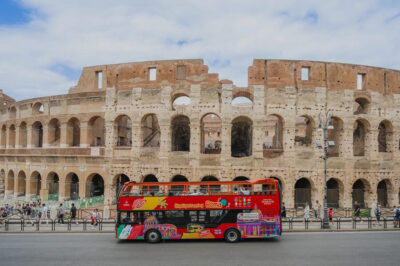
City Sightseeing Hop-on Hop-off Bus with Audioguide
Read our review →
City Sightseeing Hop-On Hop-Off Bus with Audio Guide
Read our review →
City Sightseeing Rome Hop-On Hop-Off Bus Tour
Read our review →
Fettuccine Pasta Cooking Class in Rome’s City Center
Read our review →
Vatican City: Vatican Museums & Sistine Chapel Entry Ticket
Read our review →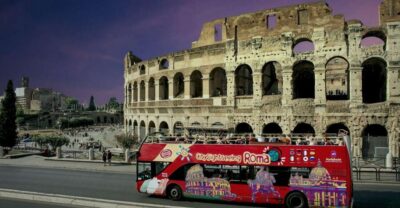
City Sightseeing Florence Hop-On Hop-Off Bus Tour
Read our review →Browse the lists this tour appears in