
Reviewed · WALKING TOURS
Best of Rome Walking Tour including Trevi Fountain
Rome can feel like a giant open-air museum where you need a map and a translator. This walking tour is interesting because it’s designed to get your bearings fast while you hit the most famous icons in a short span. And yes, it includes the Trevi Fountain, plus a guided pass through the neighborhood landmarks people keep coming back for.
Two things I like a lot: first, the pay-what-you-wish setup means you’re paying a small booking fee up front and deciding with your own judgment if the tour is worth more. Second, the small-group size (max 20) makes it easier to hear your guide, get photo time, and ask questions, even when Rome is loud and crowded.
One possible drawback to plan around: the Pantheon interior is not included right now. You’ll get a detailed explanation from the outside, and if you want to go in, you’ll need to arrange an individual reservation under your own name.
Key highlights you can expect
- Trevi Fountain time built in so you can toss a coin and take photos without sprinting
- Central Rome route that links classic landmarks like Piazza Navona and the Pantheon area
- Church stop with free admission at Sant’Ignazio di Loyola (dress code still applies)
- Pantheon inside is limited by a mandatory individual reservation rule, so you’ll view it from outside
- English-guided walk with lots of context for first-timers and returning visitors alike
Why this Rome highlights walk works in 2 hours
This is the kind of tour I recommend when you want Rome’s “greatest hits” without turning your day into a logistics puzzle. You start at Piazza Barberini, then work your way through central sights that are spread out enough to feel like a real orientation walk, but close enough that you’re not constantly waiting for buses or trains.
The format also helps. You’re with a professional guide and you stay moving, but it’s not a race. Reviews commonly praise guides for keeping a comfortable pace, giving time for pictures, and answering questions. That matters in Rome, because the sights are famous, which means crowds are real, and your time gets swallowed fast if you’re not prepared.
The other smart angle is how the tour sets you up to explore after. A guided pass can show you what to look for, what to skip, and where the same buildings connect to bigger stories about power, religion, and everyday life in the city.
More Walking Tours in Rome
- Rome: Trastevere & Campo de Fiori Street Food Walking Tour
★ 4.9 · 2,768 reviews - Rome: Paranormal Night Walking Tour & Secret Backstreets
★ 4.9 · 1,921 reviews - Rome by Night Walking Tour – Legends & Criminal Stories
★ 4.5 · 1,003 reviews
Start at Piazza Barberini, then sweep toward Piazza Navona
The tour begins at Piazza Barberini, a handy launch point because it’s central and well connected to public transportation. You’ll end at Piazza Navona, which is a great finish because the area is filled with places to pause, grab a drink, and keep exploring at your own speed.
Along the way, you’ll pass through the squares and streets that make central Rome feel like it’s layered on top of itself. You’ll see major visitor magnets such as Piazza Navona and the Pantheon zone, but the tour’s value comes from what your guide points out beyond the obvious.
One practical note I’d take seriously: meeting points in Rome can be chaotic. Piazza Barberini and the surrounding areas get swarmed with other groups at similar times. If you’re easy to lose, arrive a little early and keep a close eye on the guide, not on the landmark itself.
Trevi Fountain photos, coin-toss tradition, and crowd reality
Trevi Fountain is the star of this walk, and the tour is built around that. The best part is that you’re not just “shown” the fountain from 20 feet away while you’re already late for the next stop. You get time for photos and for the classic coin toss.
That time window matters because Trevi is usually packed. In reviews, people mention getting a chance for selfies and photos, even while crowds roll in and out around you. If you’ve only got one short day in Rome, this is the difference between seeing the Trevi Fountain and actually enjoying it.
Also, take the safety tips seriously. Several guides on this tour have warned about pickpockets around busy attractions. That’s not fear-mongering, it’s just good sense. Keep your phone secure, keep your bag zipped, and don’t treat Trevi like a calm park stroll.
If you’re sensitive to crowds, go in with realistic expectations: you’ll be able to enjoy the moment, but you might not get the kind of quiet view you see in photos online.
Piazza Navona and the big-square feeling of central Rome
Piazza Navona is the tour’s grand “square moment,” and it lands well as an ending point. It’s visually strong, very walkable, and it naturally pulls you into a slower pace after the guided portion.
In the walking flow, you’ll transition from the fountain-heavy scenes into the broader feel of the piazza, where you can notice how this part of Rome functions as a public stage. Even if you don’t go inside every structure, the guided context helps you understand what you’re looking at and why it became a favorite gathering spot over time.
Piazza Navona is also a good place to regroup because you can easily extend your evening after the tour. You’ll finish there, so you’re not trapped in “walk back to the hotel” mode. You can keep strolling, sit down for a gelato, or connect with dinner plans you already mapped out.
A different Rome day to consider:
- Colosseum, Roman Forum & Palatine Guided Tour
★ 4.7 · 63,148 reviews - Vatican Museums, Sistine Chapel & St Peter’s Basilica Guided Tour
★ 4.5 · 39,149 reviews - Rome: Colosseum, Palatine Hill and Roman Forum Guided Tour
★ 4.8 · 32,814 reviews - Rome: Guided Tour of Colosseum, Roman Forum & Palatine Hill
★ 4.7 · 27,897 reviews
Sant’Ignazio di Loyola: a free church stop that changes the mood
Not every highlight tour includes a church, and not every church stop actually feels worth your time. This one does include Chiesa di Sant’Ignazio di Loyola, and the payoff is that it’s time well used.
You’ll spend about 15 minutes at the church, and admission is listed as free. That’s a rare win in Rome, where many of the best moments still have a ticket attached. More important than the price is the shift in mood: you go from civic Rome, fountains, and squares, into a quieter space designed for reflection.
Dress code still applies, though. Plan for it even if you’re only stopping briefly. The tour notes that you need knees and shoulders covered, and no shorts or sleeveless tops. It’s a simple rule, but it can cause real frustration if you ignored it.
If you enjoy architectural details and symbolism, a short church stop can feel like a mental reset. It’s also a good stop if you’re traveling with mixed interests, because churches connect history, art, and everyday life in one place.
Pantheon interior limits: what you get and what you need to arrange
This is the part you must plan for, because it affects what you can actually see.
Right now, entering the Pantheon interior is not part of the tour. The reason is straightforward: entry requires an individual reservation made under your own name, and the tour team can’t reserve on your behalf. So the guide will provide detailed explanations from the outside instead, and then you can return on your own if you want to go in.
If you were picturing standing inside the Pantheon during your guided hour, adjust your expectations. Think of this tour as a guided “what to notice” lesson, not a guaranteed interior ticket.
The good news is that the outside view still works well if you know what to look for. Your guide can point out design clues, give context, and help you understand how the building fits into the broader story of Rome.
The practical takeaway: if you want the inside experience, don’t assume you can wing it. You’ll need to make your own reservation under your name, and you’ll be responsible for timing your return.
Temple of Hadrian: small stop, strong payoff if you look closely
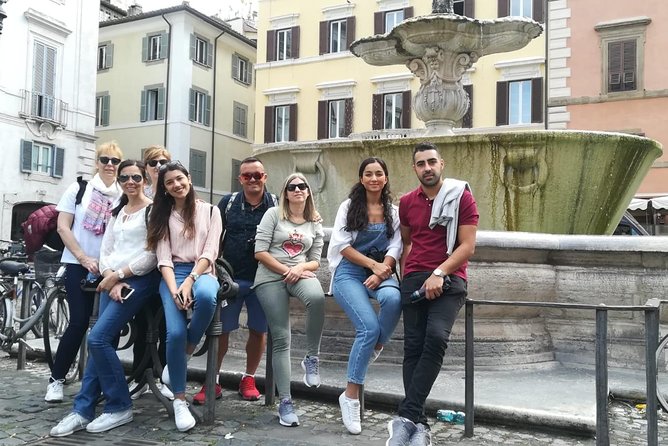
Another stop is the Temple of Hadrian. It’s not the kind of monument that always steals the spotlight from Trevi or the Pantheon from a distance, but that’s exactly why it’s valuable.
What you get from a guided walk is interpretation. The guide can help you connect what you’re seeing to the larger Roman world that produced these structures, instead of treating them like standalone photos. This kind of stop is where a good guide turns “I walked past it” into “I finally understood what it meant.”
Even if you’re not an architecture superfan, a stop like this can break up the tour rhythm. After fountains and squares, you get a different angle on Rome’s built environment, and you start noticing how the city reuses space and layers eras.
One thing to watch: Rome sites are exposed to wind, heat, and sudden rain. The tour states it operates in all weather conditions, so bring the right shoes and plan for what Rome does to you.
Price, pay-what-you-wish, and how this feels in real value
The listed price is $4.62 per person. That’s the booking fee portion. The tour is also described as a pay-what-you-wish model, and the notes clarify that after you pay the booking fee, there’s no extra cost unless you choose to tip the guide if you liked the tour.
So the “value question” is not just price. It’s whether you benefit from a guide-driven orientation. For a first trip, this kind of route can save you hours of figuring out which sights matter and how they connect. For repeat visitors, it can still be worth it because a guide helps you see what you might have missed when you were going site to site on your own.
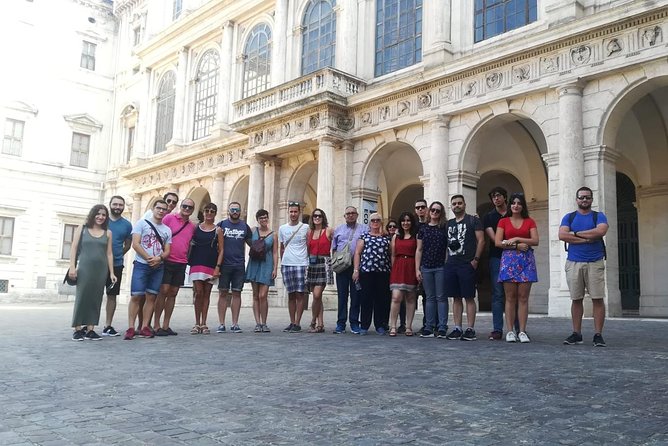
Group size also affects value. A max of 20 means you’re less likely to feel like part of a human conveyor belt. Reviews often highlight small-group experiences and the ability to ask questions.
What to consider before booking: this is a walking tour. That’s part of the magic, but it’s still a physical activity. If you want indoor time every few minutes, or you’re not comfortable with crowds, you might prefer a different style of tour that includes more transport and fewer street transitions.
Dress code, walking comfort, and the practical stuff you should not ignore
Rome runs on walking, and this tour runs on walking. The duration is about 1 hour 30 minutes to 2 hours. That’s a manageable window, but you’ll cover enough ground that your shoes matter.
Wear comfortable walking shoes. The tour also notes it operates in all weather conditions, so plan for sun, wind, and rain. Rome doesn’t pause because you’re sightseeing.
Then there’s the dress code. It’s not just for churches as a technicality. It applies to places of worship and selected museums. The rule given is clear: no shorts or sleeveless tops, and knees and shoulders must be covered for both men and women. If you don’t meet it, you risk refused entry.
If you like planning your day down to the minute, remember you’ll also finish at Piazza Navona. That’s an easy place to turn the guided part into a self-guided evening.
Finally, communication. The tour notes say the chat function is not instant. If you need help, you should call or send a WhatsApp message.
Who this tour fits best, and who might want a different option
This tour fits best if you want a guided orientation to central Rome and you care about understanding the “why” behind major landmarks. It’s also a strong match for people with limited time, since you can cover Trevi, the Pantheon area, Piazza Navona, and a church stop in a short window.
It’s also helpful if you like a human guide more than an audio app. Reviews frequently mention guides bringing stories to life, guiding the group smoothly through busy areas, and answering questions.
Who might want to look elsewhere: if your top priority is guaranteed Pantheon interior entry, you’ll need to make your own reservation. If you hate crowds, Trevi Fountain may test your patience, even with photo time built in.
Also be aware of tour-to-tour variation. Some reviews mention that on certain days the pace felt rushed or that the guide was harder to hear in extremely crowded spaces. Others praise excellent pacing and group management. That’s the reality of walking tours, especially around Trevi.
Should you book this Best of Rome walk with Trevi Fountain?
I’d book this tour if you want a focused Rome intro, with Trevi Fountain as the centerpiece, and you’re happy to treat the Pantheon interior as a separate add-on you arrange yourself. The guide-driven context, the church stop, and the central ending at Piazza Navona make it feel like a complete “first-night” plan.
Skip or replace it if your dream version of the day is inside the Pantheon during the tour, with no homework on reservations. In that case, you might prefer a tour that explicitly guarantees interior entry.
If you do book, go in with two smart expectations: Rome will be crowded at Trevi, and you’ll be most satisfied if you’re ready to walk and listen. If you’re the type who asks questions, this is a good bet. When guides like Fabian, Akra, Caitlin, Angela, Camilla, Axel, and Etienne show up, that interaction is exactly what makes the tour feel worth it.
So, should you book? If Trevi and a guided route through central Rome are on your must-do list, yes. It’s an efficient, budget-friendly way to turn your first steps in the Eternal City into something you’ll remember.
FAQ
How long is the Best of Rome walking tour including Trevi Fountain?
It runs about 1 hour 30 minutes to 2 hours.
Where does the tour start and where does it end?
You start at Piazza Barberini and finish at Piazza Navona.
Is this tour truly pay-what-you-wish?
It works as a pay-what-you-wish model. After you pay the booking fee, there should be no additional cost except tips for the guide if you liked the tour.
Will you enter the Pantheon during the tour?
No. Inside Pantheon entry is not included, due to the requirement for an individual reservation under your own name.
Do I need to make my own reservation to enter the Pantheon?
Yes. Pantheon entry requires an individual reservation made under your own name, and the tour team cannot make the reservation on your behalf.
What dress code do I need for the churches and other stops?
You need knees and shoulders covered. No shorts or sleeveless tops are allowed, and you may be refused entry if you do not meet the requirement.
Is the tour offered in English and does it run in bad weather?
It’s offered in English and operates in all weather conditions, so wear comfortable walking shoes and dress appropriately.
Reviewed lately around Rome
- Colosseum, Palatine Hill and Roman Forum with Guided Tour★ 5.0 · 500 reviews
- Exclusive Golf Tour Private VIP with Local & Gelato o Wine★ 5.0 · 500 reviews
- Rome Trastevere Pasta Making Class with Eating Europe★ 5.0 · 505 reviews
- Rome by Night Walking Tour★ 4.5 · 506 reviews
- Rome: Colosseum Express Tour with Forum & Palatine Access★ 4.5 · 511 reviews
- Rome Food Experience Max 6 People Group Tour | w/Private Option★ 5.0 · 516 reviews
- Rome: Papal Audience Experience with Pope Leo XIV★ 4.8 · 518 reviews
- Rome: Navona Square Underground Ticket with Audio Guide★ 4.0 · 518 reviews
Walking Tours, compared.
Guided Walking Tour & Last Supper Visit with Ticket
Read our review →


Rialto Bridge & Offbeat Unusual Venice Walking Tour
Read our review →
Private 3 hrs Venice Tour: St Mark’s, Walking tour & Boat tour
Read our review →
Skip the line: Uffizi and Accademia Small Group Walking Tour
Read our review →Browse the lists this tour appears in