
Reviewed · STREET FOOD TOURS
Discover Palermo in 3 hours. Art, history, markets and street food
Palermo works best when you’re not just looking at buildings, you’re hearing the stories behind them. This fast 3-hour walk ties together Capo Street Market, the Norman-Arab Cathedral, baroque squares, and the kind of street-level history that makes the city feel personal. I love how the route gives you both famous sights and the nearby alleys where Palermo’s character shows up quickly, plus the built-in chance to sample street food without planning a whole outing. One consideration: it’s only in Italian, so if you do not understand Italian, you might miss a lot of the point of the tour.
The payoff is practical. You finish with a clear mental map of the historic center, and you also get food guidance for later, like where to chase great cannoli and coffee. The guide may be Maurizio or Fabrizio, and the most consistent theme is how smoothly they keep the group moving while telling lively stories that connect the monuments to real Palermo people and legends. If you prefer a quiet, do-it-alone experience, this is more of an active storytelling walk.
Key highlights worth your attention
- Capo Street Market at Porta Carini for Arab-origin food vibes and everyday local energy
- Palermo Cathedral built in 1185 with Norman-Arab art and UNESCO connections
- Teatro Massimo and the Florio family through Belle Epoque context you can actually picture
- Quattro Canti and Piazza Pretoria where baroque design meets a darker nickname story
- Piazza Bellini and Martorana, San Cataldo, Santa Caterina in one compact, walkable sweep
- Opera dei Pupi tradition tied to Palermo culture and UNESCO heritage
How the 3-hour route helps you get oriented fast
This is a short, focused walking tour of Palermo’s historic center, designed to work even if you only have a couple of days. The plan runs about 3 hours (with short timed stops), and the walking is manageable because the sights cluster tightly. You start at Via Cavour, 135 and end in Piazza Bellini, which is a smart choice because Bellini sits in the middle of where you likely want to go next.
What makes this time limit work is the mix: you get big monuments, but you also get the market streets and square corners that shape how Palermo feels. The guide in Italian keeps the flow moving, so you’re not stuck waiting while everyone catches up.
The group is limited to 16, which usually means you can hear the guide without feeling swallowed by a crowd. Still, you are on a walking tour, so wear comfortable shoes and expect cobblestones and a fair bit of street-level motion.
More Food Tours in Palermo
- Palermo Original Street Food Walking Tour by Streaty
★ 5.0 · 2,105 reviews - Palermo: Street Food and History Walking Tour
★ 4.9 · 1,294 reviews - Palermo: Street Food Walking Tour with Local Guide & Tasting
★ 4.9 · 632 reviews
Capo Street Market and the Porta Carini entry point
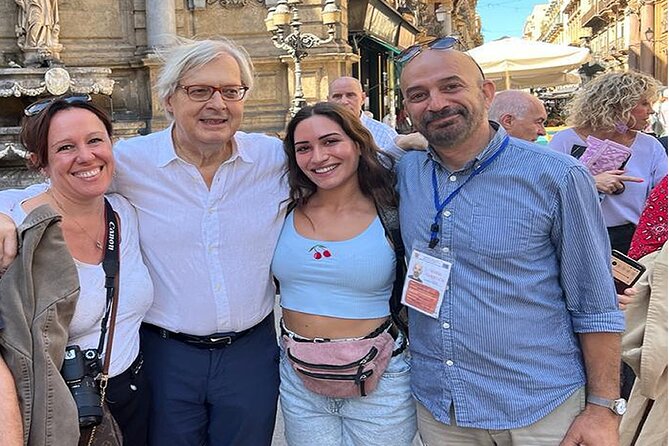
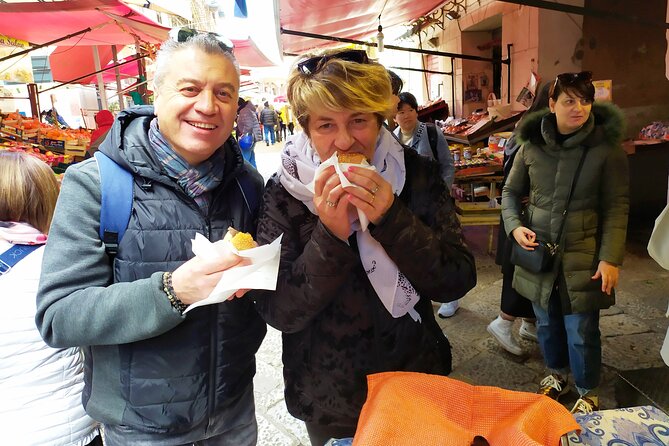
Your first proper taste of Palermo is Capo Street Market, entered through Porta Carini and along nearby market streets (including via Porta Carini and via Bandiera). This is the kind of place where you get more than souvenirs and photos. You see the everyday rhythm: stalls, aromas, and people doing what they do, and it’s also described as an ancient food market with Arab origins.
The tour includes admission to the market plus free tastings of food and drinks. That matters for value because street food can cost more than you expect if you do it haphazardly. Here, tastings let you sample the atmosphere first, then decide if you want to come back later for a full treat.
A practical note: the tastings are not a full meal, and food and drinks are not broadly included beyond those stops. So go in ready to graze, not to eat your whole day. If you have dietary needs, you’ll still want to ask what’s in things when the tasting moment comes.
Palermo Cathedral: Norman-Arab art, royal tombs, and a UNESCO anchor
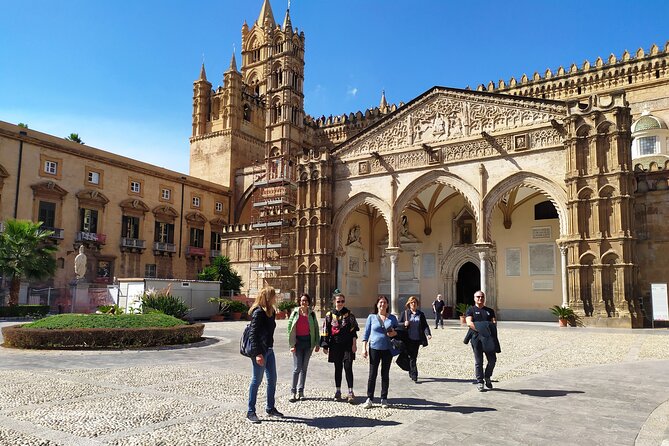
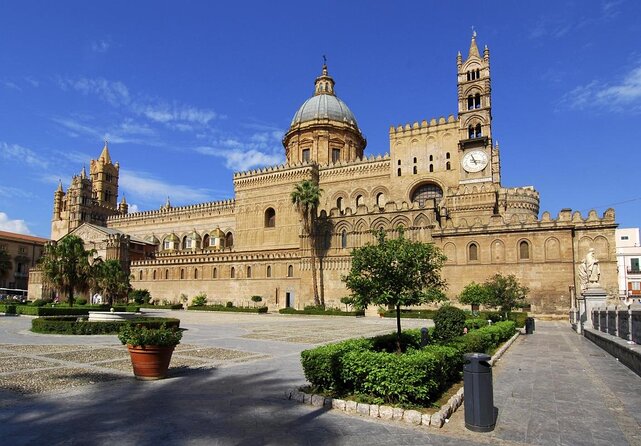
Next is the Cattedrale di Palermo, a centerpiece built in 1185 that’s often called a masterpiece of Norman-Arab art. This stop is quick but dense, which is exactly what you want on a short tour. In the Cathedral, you’re pointed toward major highlights like the royal tombs, the chapel of Santa Rosalia, and even an extraordinary sundial.
The Cathedral isn’t presented as an isolated monument. It’s tied to a UNESCO network: since 2015, the Palermo Cathedral belongs to the Arab-Norman itinerary alongside Monreale and Cefalù. Even if you never sit down to read a guidebook, you’ll leave with the key context in your head: this is Palermo shaped by layers of rule, faith, and design.
Your entrance here is included, so you avoid the extra friction of ticketing. That also helps cruise-day travelers, because you can hit a major sight without adding time traps.
Piazza Massimo and the Belle Epoque story of Teatro Massimo
From the Cathedral area you move toward Piazza Giuseppe Verdi, also known as Piazza Massimo. The star is Teatro Massimo, described as the largest theater in Italy and a symbol of the Belle Epoque and the Florio family.
This is one of those stops that becomes more enjoyable once you hear the framing. Instead of just seeing a grand façade, you start picturing the era behind it. The guide’s job here is to connect the theater to Palermo’s social world, not just its architecture.
This stop includes admission, which is a big plus when you only have a few hours. Even if you don’t care about theaters, the Florio context helps you understand why Palermo’s elites built things on this scale.
More Street Food Tours in Palermo
- Palermo Walking Tour and Street Food
★ 5.0 · 617 reviews - Palermo: Small Group Night Street Food Tour
★ 4.8 · 589 reviews - Palermo: Street Food and Local Market Tasting Tour
★ 4.9 · 540 reviews - Palermo: Street Food Walking Tour at Sunset
★ 4.9 · 492 reviews
Quattro Canti: the baroque square that organizes the whole old city
Then comes Quattro Canti, a scenographic baroque intersection that acts like a visual “center” for the ancient city. This is a short walk and a short look, but it’s worth it because the square is designed to be seen as a composition, almost like architecture in layers.
Why I like this stop: it gives you a quick reference point. Later, when you wander on your own, you can use Quattro Canti as a landmark. You’ll also notice how the baroque style fits into the street grid rather than floating alone.
The tour keeps it brief, and that’s smart. You’re here for orientation and for the visual impact, not for a long sit-down.
Piazza Pretoria and the Fountain of Shame nickname
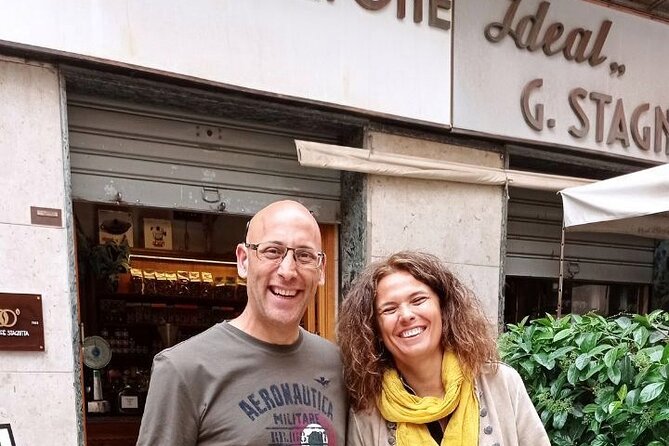
At Piazza Pretoria, you meet one of Palermo’s most famous fountain visions: Fontana Pretoria. The description you’ll hear is specific, and it matters. The fountain features 48 statues in white Carrara marble, sculpted in the Renaissance by Tuscan sculptors, and it was purchased in 1573.
But the real hook is the story behind the nickname: the Palermitans call it the Fontana della Vergogna, the Fountain of Shame. The guide explains why that name stuck, and it’s the kind of odd detail that makes your photos feel like more than pretty scenery.
This is a free stop (no paid entry), and it’s one of the best “payoff for time” moments in the route. You can understand why it became a symbol of the city even if you only have minutes.
Piazza Olivella: Sant’Ignazio and the museum area
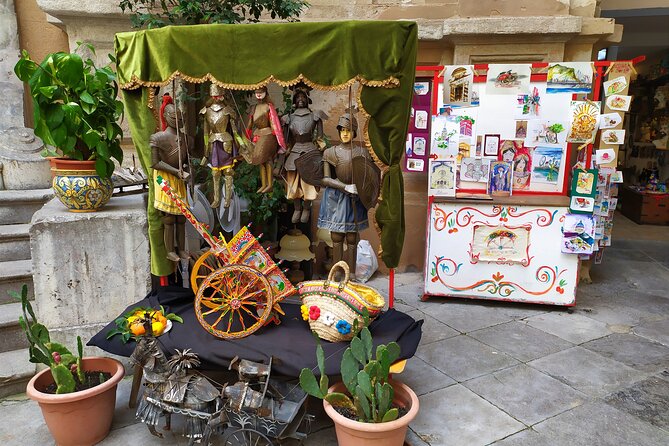
Next is Piazza Olivella, a scenic square linked to the Baroque church of Sant’Ignazio and the surrounding Archaeological Museum area. Even if you do not enter the museum, the square gives you a sense of how Palermo’s cultural layers sit close together.
This stop feels like a hinge between the grand sights and the more textural old-city streets. You’re learning what to look for, and the guide’s pacing keeps you from staring too long at one thing and forgetting to connect the dots.
Piazza Bellini: churches, convents, and Arabic-style details
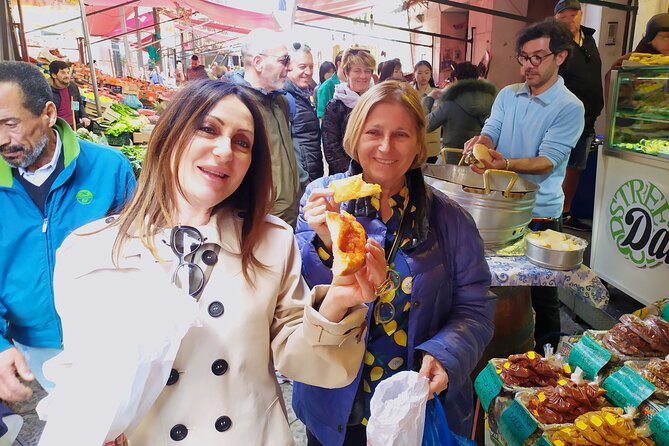
Piazza Bellini is where Palermo’s “layers” feeling turns into something concrete. It’s an extraordinary historical square overlooked by major buildings, including the Church of the Martorana (12th century), the Arab-style church of San Cataldo, and the Church and Monastery of Santa Caterina.
This is also where the tour ends, so you get the bonus of finishing at a spot you can continue exploring from. If you have only a day or two, that matters. You don’t end on the edge of nowhere, you end in a place where cafes and streets pull you forward.
The way this stop is handled is practical. You don’t need to memorize dates. You need to learn what to recognize: the Arabic-influenced look at San Cataldo, the age signal of Martorana, and the way Santa Caterina stands in a wider monastery context.
Opera dei Pupi and the Cassaro street you’ll want to walk later
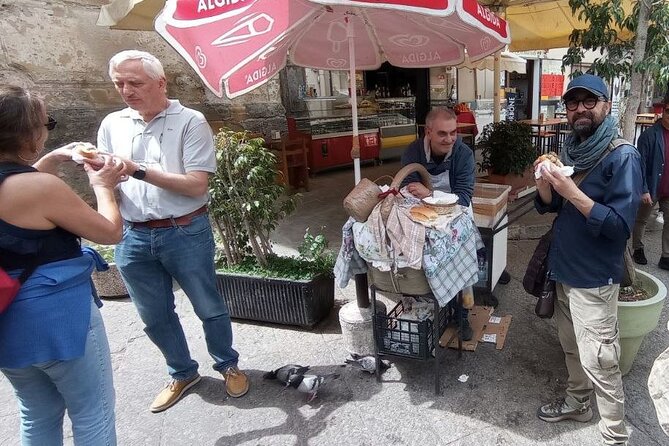
The tour also includes Teatro dell’Opera dei Pupi, the puppet show tradition associated with Palermo and UNESCO heritage. It’s connected to Mimmo Cuticchio, and it’s described as a typical Palermo show dating back to around 1800.
This stop works because it reminds you Palermo isn’t only marble and cathedrals. It’s also performance and popular tradition. And puppet theater, with its strong storytelling style, pairs well with the guide’s approach to legends and local characters.
After that, you’ll travel through the Cassaro, described as the oldest street in Palermo lined with palaces, churches, and convents. Even if you do not go inside every building, the Cassaro walk helps you understand how the city’s main arteries shaped its power and daily movement.
The Palermo stories you hear, and why they stick
A big reason this tour earns strong ratings is the way it uses stories to connect sites. You’re not just getting dates. The guide brings in local legends and dramatic episodes, including tales tied to the Beati Paoli secret sect, the miracles connected with Santuzza, and the murder story of the Baroness of Carini.
You also hear about Palermo’s cultural life through Teatro Massimo and the Florio family, not as dry biography but as a thread tying class, ambition, and city identity together. Then there’s the fountain nickname explanation at Piazza Pretoria, which adds a little moral flavor to Renaissance sculpture.
The result is memorable. When you later see a church sign or a square façade, you’ll have a story hook for it. That turns the historic center from a list of stops into a place with people behind it.
Food stops and the cannoli and coffee plan you can reuse
The tour includes free tastings during the Capo Market stop, and it’s also where you’ll likely get your first taste of street food energy. That’s a smart way to handle Palermo eating, because it gives you a safe way to try before you commit to a full sit-down.
Then the guide does something that helps long after the walk: they tell you where to find the best cannoli and the best coffee in the world. The exact recommendations are part of the value because Palermo’s food scene changes block by block.
Here’s how to use this well: after the tour, map the direction you ended in (Piazza Bellini) and decide whether you’ll do cannoli first or coffee first. That way, you’re not rushing around searching with jet-lag hunger.
Price, value, and who this tour makes the most sense for
The price is listed at $34.76 per person, and you’re getting a lot within a short time. The key value levers are: Cathedral entry is included, Capo Market entry is included, and there are free tastings. Also, you’re paying for orientation plus storytelling, not just access.
This is especially good value if you are on a tight schedule. A three-hour walk is often the difference between seeing the highlights and leaving feeling like you missed the point. It’s also a nice option for cruise passengers because the route is relatively compact and the start and sites are close enough that you can plan around port time, and the guide provides needed info for cruise timing.
Who it fits best:
- First-time visitors who want a guided “map in your head”
- People who enjoy baroque and Norman-Arab layers
- Short-stay travelers who do not want to juggle multiple museum tickets
Who might hesitate:
- Non-Italian speakers, since the tour is only in Italian
- Anyone who wants a long, slow photo walk rather than guided movement
Timing, meeting points, and what to do before you go
The start time is 10:30 am, and you meet at Via Cavour, 135, 90139 Palermo. The tour ends at Piazza Bellini, 90133 Palermo, which is convenient for continuing your day on foot or by hopping between central areas.
You’ll receive a mobile ticket, which keeps the start smoother. A good prep move is to wear shoes you’re comfortable with on uneven pavement, and bring a small water bottle if it’s warm.
Also, since the group size tops out at 16, you’ll have a better shot at hearing the guide if you stay near the front and keep your eyes up while crossing between stops.
Should you book this Palermo walking tour?
If you want a fast, high-signal introduction to Palermo, this tour is a strong choice. It hits the major sights people come for, but it also adds the stories that make Palermo feel less like a museum and more like a living city. The combo of market tastings, Cathedral access, and the way the guide connects legends with real buildings gives you a useful foundation for the rest of your trip.
Book it if you speak enough Italian to follow the guide and if you like learning while walking. Skip it if you want English-only narration or if you prefer to wander without a structured route. In short: for an efficient first pass through the historic center, this is a solid buy at $34.76, especially when you factor in included entries and tastings.
FAQ
Is the tour guide language only Italian?
Yes. The tour is guided only in Italian.
How long is the Palermo tour?
It lasts about 3 hours.
What does the ticket price include?
The price includes entrance to Palermo Cathedral and entry to the Capo Market, plus free tastings of food and drinks during the experience. The guide is also included.
Are food and drinks included?
Food and drinks are not fully included. You do get free tastings during the tour, but you are not covered for all meals or additional drinks.
Where do I meet the guide, and where does the tour end?
You start at Via Cavour, 135, Palermo and finish at Piazza Bellini, Palermo.
What time does the tour start?
The listed start time is 10:30 am.
How big is the group?
The tour has a maximum of 16 travelers.
Can I cancel and get a full refund?
Yes. You can cancel for a full refund up to 24 hours before the experience’s start time.
Who is the tour good for?
The tour states that most travelers can participate, and service animals are allowed.
More Historical Tours in Palermo
- Palermo: UNESCO World Heritage Sites Guided Walking Tour
★ 4.8 · 548 reviews - Palermo: Walking Tour of Historic Markets and Monuments
★ 4.9 · 478 reviews - Venice: St. Mark Basilica Ticket, Audioguide+History Gallery
★ 3.9 · 4,780 reviews - Venice’s Best: Basilica, Doge’s Palace, Gondola & History Gallery
★ 4.5 · 2,478 reviews
Reviewed lately around Palermo
- Palermo: Guided City Walking Tour w/Customizable Itinerary★ 4.6 · 390 reviews
- Mondello,CapoGallo Reserve Boat Tour with Snacks and Drinks★ 4.9 · 439 reviews
- Palermo: Wine Tasting with Snacks at Bottega Monteleone★ 4.8 · 453 reviews
- Palermo: Guided Bar Crawl with Shots and Discounts on Drinks★ 5.0 · 465 reviews
- Palermo: Walking Tour of Historic Markets and Monuments★ 4.9 · 478 reviews
- Palermo: Guided Bike Tour with Street Food Tasting★ 4.8 · 479 reviews
- Night Street Food Tour of Palermo with a Local -For real foodies!★ 5.0 · 486 reviews
- Palermo: Street Food Walking Tour at Sunset★ 4.9 · 492 reviews
Street Food Tours, compared.
Trastevere or Jewish Quarter Street Food Tour
Read our review →
Cinque Terre Park Day Trip with Optional Street Food
Read our review →
Trastevere & Campo de Fiori Street Food Walking Tour
Read our review →
Street Food Tour with a Local Guide and Tastings
Read our review →
Authentic Naples Street Food Tour With Local Expert Guide
Read our review →
Palermo Original Street Food Walking Tour by Streaty
Read our review →Browse the lists this tour appears in