
Reviewed · NAPLES TOURS
Caserta: Small-Group Royal Palace Tour
The Royal Palace of Caserta, Reggia di Caserta, is interesting because it pulls off a big-screen fantasy with real historical weight. You get a small-group format plus skip-the-line entry, so you spend more time looking and less time waiting. I also love that a historian guide gives you the why behind the marble, frescoes, and power, but one drawback is that the palace is not suitable for wheelchairs and people with mobility impairments.
In practice, this tour works well if you want the most famous rooms in a focused 2 hours. You’ll start with that first hit of grandeur from the gardens, then move up the monumental staircase before the interiors slow everything down in the best way. Just keep in mind the Royal Park and English Gardens are not covered as a guided tour here, so plan separately if that part is high on your list.
Key things to notice before you go
- Skip-the-line access helps you start faster at the palace entrance portal.
- Historian guide storytelling connects the rooms to Naples and royal politics.
- 116 marble steps set the tone before you reach the upper apartments.
- Top rooms include Palatine Chapel, Throne Room, Astrea Room, and Four Seasons Room.
- Palatine Library and the Murat apartments give you a deeper sense of elite life.
- Headphones are provided if the group goes beyond 6 people.
Meeting at Piazza Carlo di Borbone: Where the tour really starts

The meeting point is Piazza Carlo di Borbone, at the central entrance portal under the hanging flags. The guide is holding an ASKOS TOURS sign, which makes it easy to spot before you funnel into the palace area.
I like meeting at a clear plaza entrance because it reduces stress. No hunting through side streets, no last-minute confusion about who leads which group. And because this is only a 2-hour experience, keeping the start smooth matters.
If you’re combining this with Naples plans, build in buffer time. Caserta is its own world, and the palace entry process plus security checks can add minutes even when you have skip-the-line tickets.
More from a Naples stay:
- From Naples: Pompeii Ruins & Mount Vesuvius Day Tour
★ 4.3 · 11,459 reviews - From Naples: Sorrento, Positano and Amalfi Full-Day Tour
★ 4.6 · 10,988 reviews - From Naples: Sorrento, Positano & Amalfi Coast – Small Group Tour
★ 5.0 · 8,643 reviews
Skip-the-line tickets and small-group flow inside the Reggia

This tour is built for movement. You’re not just getting access, you’re getting a rhythm: enter, listen, walk, look, and keep going without getting stuck in long lines.
The small-group element is a big deal in a place this big. The rooms are grand, but they’re also crowded in peak times, and having a tight group helps you actually see what you came for. If the group is larger than 6, you’ll get headphones, so you can keep hearing the guide without leaning in or repeating yourself.
One practical note: this is a “see the highlights” tour, not an hours-long roam through all 1,200 rooms. That’s the value for most people. You get the signature rooms and the connections between them, without turning your visit into a blur of stone corridors.
The palace-gardens start: Your first view sets the theme
The tour begins by admiring the gardens view. That sounds simple, but it changes how you understand everything inside after.
Caserta is designed as a whole composition, and the gardens are part of the statement. Before you climb, you already feel the planning behind it, like the palace is the center of a larger system. It also helps you settle in, because the gardens view gives you a moment of orientation before the interior sprint.
If you’re the type who likes photos, plan your timing here. This is where your eyes get their bearings, and it’s easier to photograph when you’re not yet trying to navigate indoor crowds.
Palatine Chapel: Frescoes and religious design details to watch

After the garden start, the tour moves toward the monumental staircase and then into key interiors. One of the first serious stops is the Palatine Chapel, a sacred space decorated with detailed fresco work.
This is the room where you can slow down and actually read the design. A good guide helps you notice how decoration supports the space’s spiritual purpose, not just its beauty. If you’re the kind of person who normally skims churches, this chapel is a case where you might pause more than you expect.
The chapel also gives you a break from pure royal spectacle. It’s still power, still prestige, but it’s aimed at worship and ritual, not just display. That balance is part of why this tour feels richer than a quick hallway walk.
A different Naples day to consider:
- Naples: Catacombs of San Gennaro Entry Ticket & Guided Tour
★ 4.6 · 7,941 reviews - Naples: Downtown Tour with Veiled Christ & St Clare Tickets
★ 4.9 · 6,462 reviews - Naples: Pizza-Making Workshop with Drink and Appetizer
★ 4.9 · 5,411 reviews - Naples: Hop-on Hop-off Bus Tour 24-Hour Ticket
★ 4.3 · 5,157 reviews
Up the 116 marble steps: The staircase as a showpiece

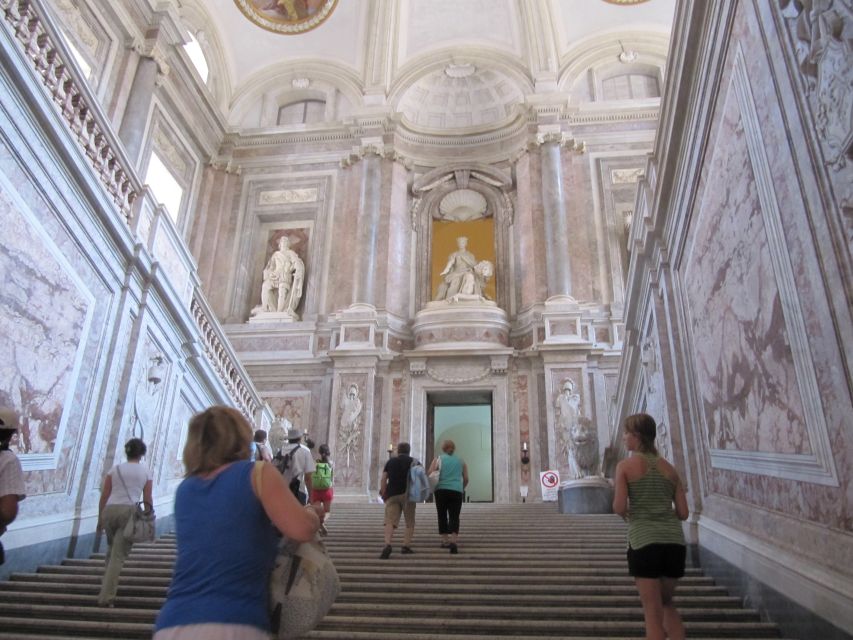
The centerpiece transition is the monumental staircase, with 116 marble steps. It’s not just a way to reach the next floor, it’s a staged moment.
This is where your pacing changes. You’ll look up, you’ll notice statues, and you’ll feel the scale in a physical way. For a first visit, that matters, because it trains your eyes for what comes next in the upper rooms.
I also like that the tour builds this structure into the visit. Instead of scattering highlights across the day, it gives you a clear arc: gardens, climb, and then royal interiors.
Throne Room plus Astrea and Four Seasons Rooms

On the upper floor, the tour shifts into rooms tied to authority and mythic imagery.
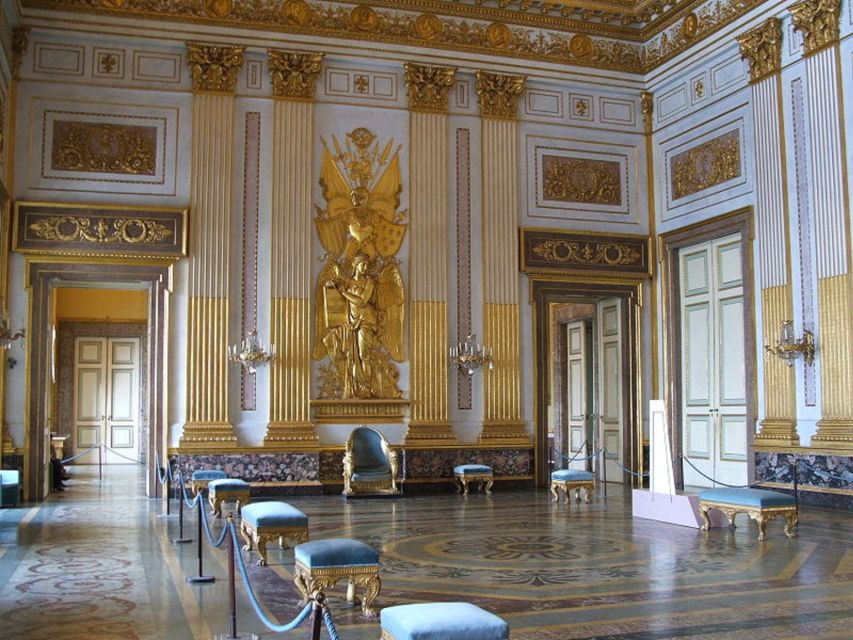
The Throne Room is decorated for rulership, and it’s tied to Neapolitan kings. When you’re standing there, the point is less about checking off a photo and more about understanding how decoration communicates control. A strong guide helps you see the room as propaganda in marble and paint.
Next up are rooms like the Astrea Room and the Four Seasons Room. The Astrea Room uses celestial motifs, while the Four Seasons Room translates each season into fresco scenes. If you like art that has a reason behind it, these rooms are a smart stop because they show how aesthetics can carry ideology.
A good practical mindset here is to pick two to three things per room to focus on. Don’t try to see everything at once. Caserta is massive, and your attention works better when you give your eyes a short assignment.
Palatine Library: Reading, power, and rare book symbolism

The Palatine Library is the kind of room that surprises people who expect only glamour. It’s described as a treasure trove of literature and learning, with shelves holding rare books.
Even if you can’t read every detail, the setup tells you what the palace valued. It’s a statement that culture, study, and knowledge were part of royal identity. In other words, this isn’t only about impressing people with walls and ceilings.
This stop is also where the tour gives your brain a break from constant royal imagery. After throne and fresco spectacle, the library shifts you into a different mode: quiet attention, recognition of status through intellect, and a sense of daily life beyond ceremonies.
Joachim Murat apartments: Naples elite life in a different key
The tour continues to the opulent apartments of Joachim Murat, Napoleon’s brother-in-law and King of Naples. This is where the palace feels less like a museum box and more like an inhabited political stage.
The rooms are lavishly decorated, and the value here is context. Murat represents a link between French influence and Naples power, so it’s not just pretty interiors. It’s a clue about shifting eras and how art and interiors adapt to new rulers.
One drawback to expect: if you’re short on time, the apartment stop can feel dense. Interiors are detailed, and it’s easy to get visually overloaded. Keep your focus on contrasts, like how royal authority looks in one period versus another, rather than trying to memorize everything.
Royal Park and English Gardens: What the tour covers, and what you should plan

This guided tour includes palace interiors and a garden view at the start, but it does not include a guided tour of the Royal Park and English Gardens. That matters because people often assume the gardens are part of the same ticket experience.
If English Gardens are on your must-see list, plan for a separate visit rhythm after the palace portion. The grounds are huge, and the English Gardens can be at the far end of a long walk.
If you’re energy-limited, you might find options helpful once you’re in the park area, like renting an e-bike, taking a shuttle, or using a golf cart. One smart tip from real visitors is that golf carts can take you through the gardens route more than just to the entrance. Also, English Gardens have a closing time, so time your move early enough that you are not rushing at the end.
Price and value for a 2-hour skip-the-line palace tour
At $23 per person for a 2-hour guided experience, this is strong value for Caserta’s scale. You’re paying for two things that matter in Italy: a historian-led tour and skip-the-line access.
Skip-the-line is not just convenience. In a complex site like the Royal Palace of Caserta, time saved can be the difference between seeing the key rooms or feeling like you’re stuck in delays while everyone else moves on. The guide also saves you from wandering. Caserta is so large that without context, your visit can become a blur of rooms.
There’s also headphone support if the group is bigger than 6, which signals they’re managing audio comfort, not just selling a ticket. And for those who want more control, a private group option is available.
One more value angle: you get coverage of signature rooms across royal themes, chapel, art, reading rooms, and Murat apartments. That’s a lot to compress into two hours, and it’s exactly why guided makes sense here.
Guides and the kind of storytelling you will likely get
The guide quality is the heart of why this tour earns such high praise. Names that have led tours include Gennero, Michele, Bruno, Walter, Alessia (also spelled Alesia in one booking), Sylvia, and Antonietta.
Across these guides, the common thread is clarity and strong engagement. People describe English that’s easy to follow, plus guides who explain how the palace connects to Caserta and Naples, and even wider Italy context. Some guides also keep the group active by answering the kinds of quirky questions that pop up when you’re staring at statues and frescoes.
If you’re traveling with kids, you’ll be glad to know at least one guide was praised for engaging children aged about 9 to 11. That’s useful because Caserta is visually stunning, but it helps to have the story translated into something that holds attention.
If you want humor and a lighter tone, that’s part of what guides have delivered here as well. The best part is that the humor doesn’t replace the information, it makes you remember it.
Who this tour suits best, and who might want a different plan
This tour is ideal if you want the Royal Palace of Caserta highlights without gambling on how much you’ll understand on your own. If you like architecture, fresco art, and power history tied to specific rooms, you’ll get your money’s worth fast.
I’d also recommend it to first-timers. Caserta’s scale is hard to grasp from outside, and the tour gives you a structure to follow. It’s also a good choice if you’re staying in the Naples area and want a half-day quality experience without spending half a day trapped in logistics.
If you have mobility challenges, plan carefully. This tour is not suitable for people with mobility impairments or wheelchair users. The route includes major walking and climbing, and that matters more than the exact length.
Should you book the Royal Palace of Caserta small-group tour?
Book it if you want maximum impact in two hours, with skip-the-line entry and a guide who can connect the palace rooms to the bigger story. The palace is huge, so this format helps you focus, and the guide makes the difference between seeing art and understanding it.
Skip it only if your priority is a long, flexible roaming day through everything including the Royal Park and English Gardens on your own schedule. In that case, you might want a different plan that spends more time outside the palace rooms.
If you can do the walking, and you want a smart, compact introduction to Caserta’s most famous spaces, this is the kind of tour that turns a ticket into a real visit.
Reviewed lately around Naples
- Naples: National Archaeological Museum of Naples Guided Tour★ 4.8 · 498 reviews
- Naples Pasta Class: Fettuccine & Ravioli with Grandma’s Recipe★ 5.0 · 506 reviews
- Naples Walking Tour with Underground Roman Ruins Ticket★ 4.5 · 510 reviews
- Private Day tour of Positano, Amalfi and Ravello from Naples★ 5.0 · 522 reviews
- Naples: Street Art & History Tour in the Spanish Quarters★ 4.9 · 540 reviews
- Private Day Tour: Sorrento, Positano, Amalfi, Ravello from Naples★ 4.5 · 546 reviews
- Day Trip of Pompeii, Herculaneum and Vesuvius from Naples★ 4.5 · 547 reviews
- Day Trip of Pompeii, Sorrento and Positano from Naples/Salerno★ 5.0 · 560 reviews
Naples Tours, compared.

Sorrento, Positano and Amalfi Full-Day Tour
Read our review →
Sorrento, Positano & Amalfi Coast – Small Group Tour
Read our review →
Catacombs of San Gennaro Entry Ticket & Guided Tour
Read our review →
Downtown Tour with Veiled Christ & St Clare Tickets
Read our review →
Pizza-Making Workshop with Drink and Appetizer
Read our review →

Browse the lists this tour appears in