
Reviewed · CATACOMBS TOURS
Rome: Catacombs Skip-the-Line Tour with Tickets
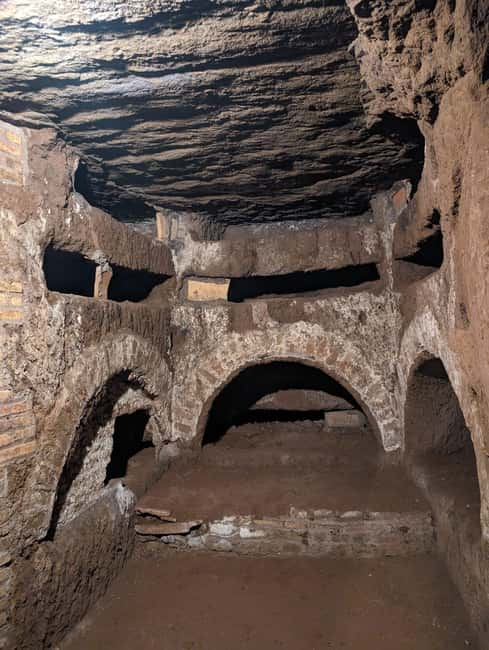
Rome’s catacombs are interesting because they turn history into something you can feel. One moment you are in daylight Rome, the next you are underground, walking among burial tunnels that once helped early Christians stay connected to their community.
I love that skip-the-line tickets are included, so you start faster and spend more time inside. I also love how the guide ties the site to the bigger story, from Roman pagan life to a Roman-Christian world, with specific stops like the tombs of Nereus and Achilleus. The only real drawback is that this is an underground walk in tight spaces with limited exits, and you need a strong level of English to follow the tour clearly.
Key things that make this catacomb tour worth your time
- Skip-the-line tickets included so you do not lose time at the entrance
- San Domitilla catacombs visit, with a focused 2-hour underground tour
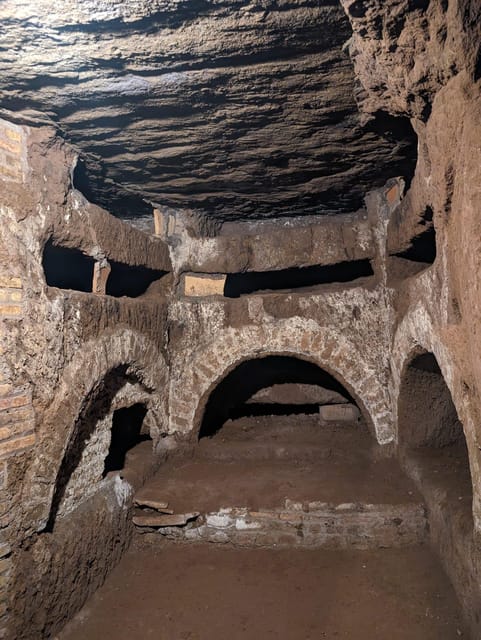
- Early Christian art and burial architecture, including the tombs of Nereus and Achilleus
- Guide-led storytelling that connects religious persecution to Rome’s shift from pagan to Christian
- Rules inside are strict, especially the no-photography policy
- Underground walking comfort matters, since it is not for wheelchair users
Skip-the-line at San Domitilla, with a guide who sets the story
This tour is built around one main idea: you should get into the Catacombs of San Domitilla smoothly, then use the time underground well. With skip-the-line tickets included, you are not stuck waiting in a queue while your daylight hours leak away. That matters in Rome, where lines can feel like part of the attraction.
Once you are underground, the guide does the heavy lifting. Instead of treating the catacombs like a dark hallway, you get a clear explanation of why these tunnels mattered and how Roman burial customs evolved as the city’s religion changed. You also hear about religious persecutions and the transition from pagan Rome into a Christian Rome, which helps the rooms and corridors make emotional sense.
There is a practical upside to the guide format too. This is designed as a small-group or private experience, so questions are actually possible. In a place like this, where details like wall markings and tomb placement can look random, having a guide explain what you are seeing turns the visit from entertainment into understanding.
More of underground Rome:
- Rome: Crypts and Catacombs Underground Tour with Transfers
★ 4.6 · 5,341 reviews - The Original Roman Crypts and Catacombs Tour with Transfers
★ 4.5 · 4,896 reviews - Rome: Catacombs of St. Callixtus Entry Ticket & Guided Tour
★ 4.6 · 3,037 reviews
Where you meet, and how to avoid a timing headache
The meeting point is on Via delle Sette Chiese, 282. When you arrive, look for the garden area with the picnic tables near the white gazebo and umbrellas.
Plan to show up a little early, because underground tours run on a tight schedule. If you are even slightly late, you might miss the group intro and the start of the tour story. Also, since the tour ends back at the same meeting point, you can plan your next stop right after the 2-hour underground time.
If you need transfers, note that transfers are not included. You will want to handle getting yourself there on your own.
The 2-hour underground portion, and what it actually feels like
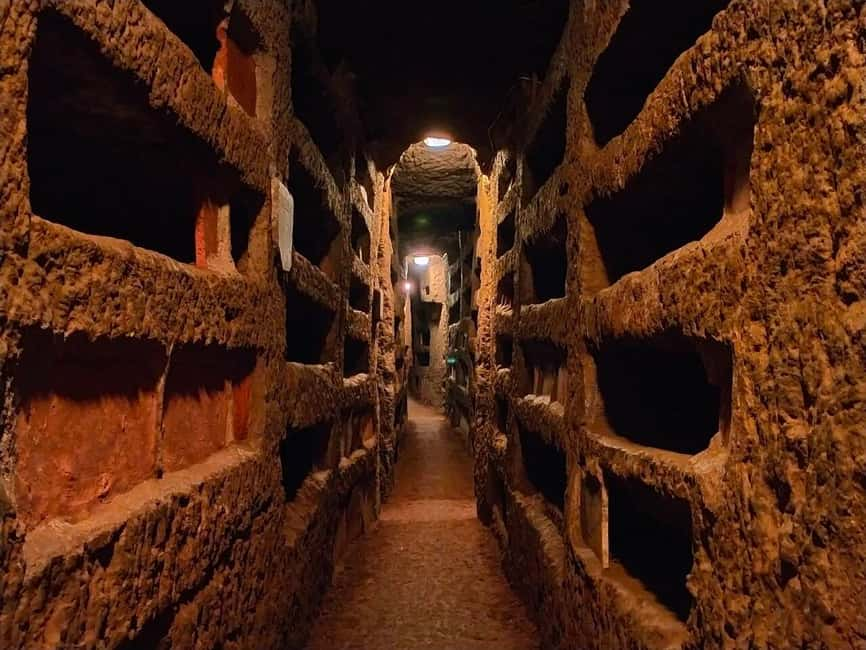
The main experience is the guided walk in Rome’s catacomb system. You are exploring part of a tunnel network that stretches over 180 miles, but your visit is only a slice of that. The good news is that the tour time is long enough to feel meaningful without turning into an all-day production.
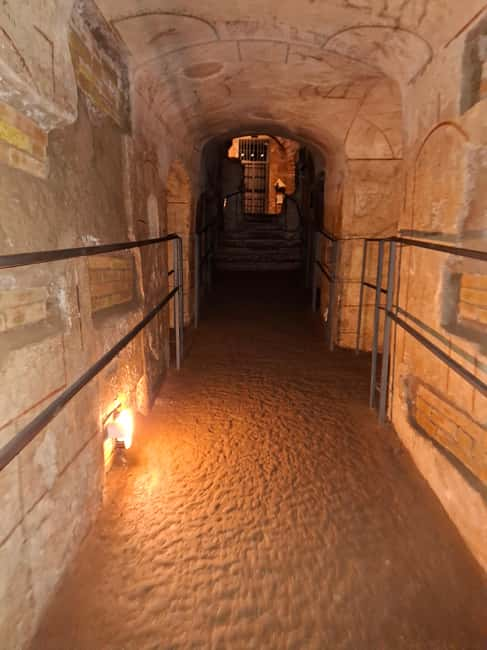
Comfort is a big consideration here. You should expect underground conditions: it can feel cooler than outside, and the surfaces and passageways can be narrow. The tour is not suitable for wheelchair users, so keep that in mind for anyone in your group who has mobility challenges.
The tour also has a clear rule that affects your mood underground: no photography inside. If you love taking photos as you go, mentally switch to observation mode. You will get more out of looking closely at tombs, inscriptions, and early Christian artwork, rather than trying to frame shots in dim areas.
What you learn about Rome’s shift from pagan to Christian
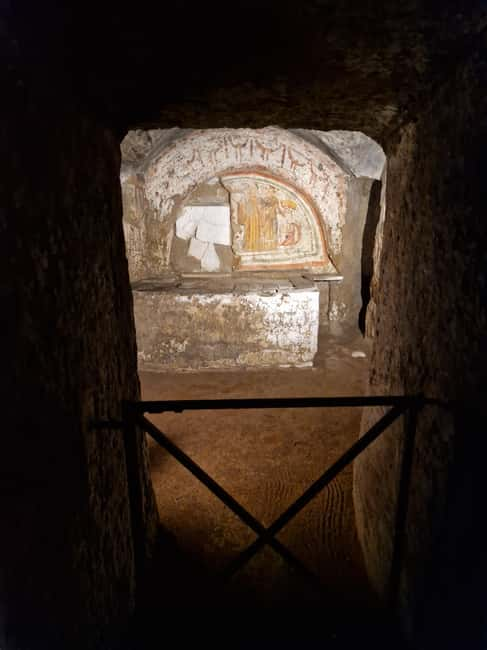
This tour is not just about who was buried where. The guide connects the catacombs to Rome’s religious and political tension. You hear about persecution and why underground burial spaces became so important for early Christians.
That religious shift is the spine of the tour. You start with a sense of pagan Roman burial culture and then watch how the practices evolve as a Roman-Christian identity forms. Even if you are not a history nerd, the story helps you understand why these tunnels were more than storage for bodies. They were part of community life, memory, and belief.
I like that the tour focuses on explanation you can follow. One common theme from the experience is that guides do not dump facts at you. They start with background so the underground rooms feel less confusing, then layer in details as you go.
One note to help you plan: the tour requires a strong English level. The guide is an English mother-tongue guide, but if your English is only basic or intermediate, you might miss key points. If you fall into that category, consider a different tour format where you can better keep up in real time.
More from a Rome stay:
- Colosseum, Roman Forum & Palatine Guided Tour
★ 4.7 · 63,148 reviews - Vatican Museums, Sistine Chapel & St Peter’s Basilica Guided Tour
★ 4.5 · 39,149 reviews - Rome: Colosseum, Palatine Hill and Roman Forum Guided Tour
★ 4.8 · 32,814 reviews - Rome: Guided Tour of Colosseum, Roman Forum & Palatine Hill
★ 4.7 · 27,897 reviews
Catacombs of San Domitilla: burial tunnels with real names and real meaning
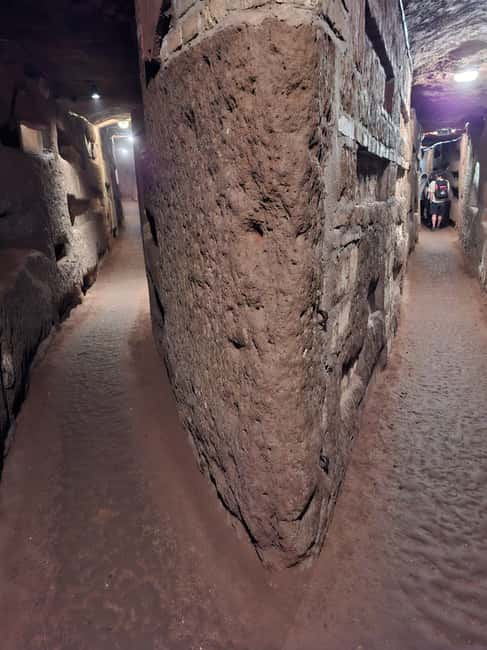
San Domitilla is a standout choice because it gives you a concrete window into early Christian burial practice. During the guided portion, you move through corridors and burial spaces that show how people honored the dead and how religious identity shaped those rituals.
You also get specific tomb stops that anchor the story. The tour includes sights connected to the tombs of Nereus and Achilleus. When you hear the names and the context, it stops being “some old burials” and becomes a tangible link to individuals in Roman history.
Another part I appreciate is that you see how the art and architecture work together. The catacombs are not only about graves. They also reflect belief, symbolism, and community storytelling using early Christian imagery.
The earliest Christian artworks you can actually see in Rome
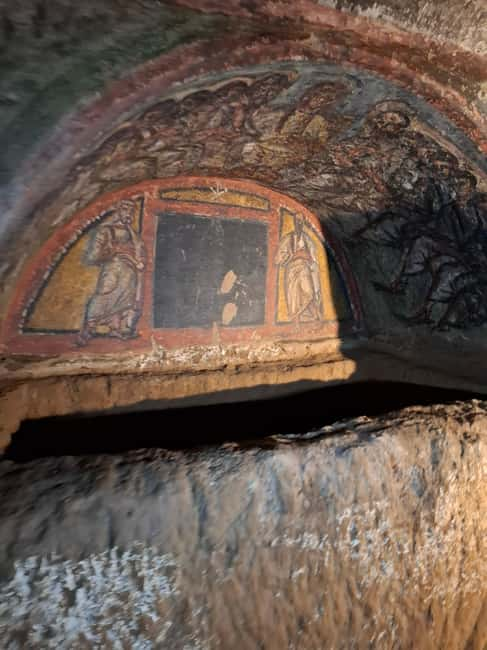
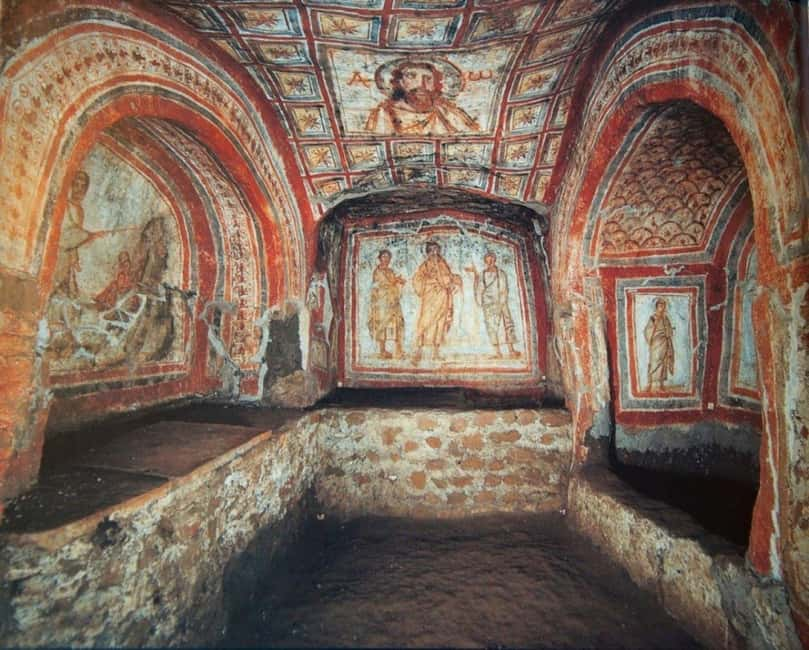
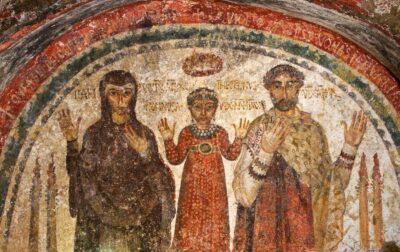
One of the best reasons to book a catacomb tour is that it can show you early Christian art in a setting where it feels earned. This tour includes some of the earliest Christian artworks available to see in Rome.
That matters because you are not just reading about symbols from a book. You see them in place, linked to burial spaces and the rituals tied to them. Even if the artworks are subtle or easy to overlook at first, a guide can point out what you are looking at and what it likely meant to people at the time.
If you are worried this will be mostly “dark and generic,” focus on this included element: you are going underground with the intent to view early Christian artwork, not just walk through tunnels. It is a meaningful difference.
Guide style makes or breaks a catacomb visit
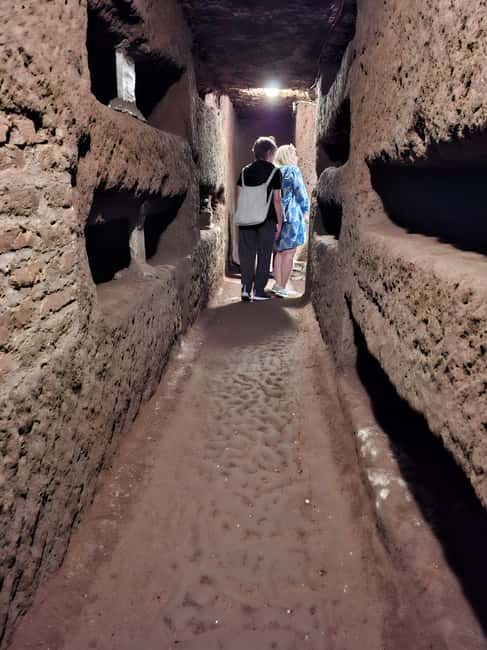
In Rome, a good guide can turn cramped underground corridors into a clear narrative. The most praised guides in this experience lean into storytelling, humor, and clarity while still keeping a reverent tone when the subject calls for it.
Names that come up include John, Divan, Sean, Heather, Devon, and Mike. Across these guides, the common strengths are strong setup information at the start, organized explanations, and a willingness to answer questions.
If you want a practical way to choose this tour, here it is: go for the tour time you can actually attend comfortably, then show up ready to listen. Since photography is not allowed inside and the spaces can feel tight, the guide becomes your main “visual aid.”
One more thing I value: the guides seem to pay attention to the group’s energy. In one case, a family with a three-year-old kept going without the tour turning chaotic. That suggests the guide knows how to maintain pacing and keep attention moving.
What to bring, and what to wear when you go underground
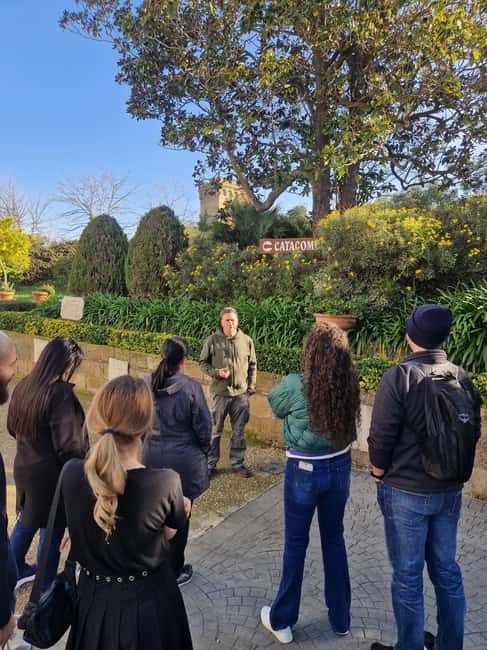
For your comfort, keep it simple. Wear comfortable shoes you can walk in for an underground route. Bring a jacket since underground air can feel cooler, even when Rome is warm.
Weather-appropriate clothing matters because you might wait outside before entering. Also, since there is no photography inside, do not waste time thinking about camera angles. Bring a phone for logistics and emergencies, then tuck it away during the interior parts.
And if you have any claustrophobia, take that seriously. Narrow passages and limited exits are part of the experience. The guide should help you feel more at ease, but your comfort should lead the decision.
Price and value at about $54.66 for two hours
At $54.66 per person for a roughly two-hour tour, this is not a budget, “grab it last minute” add-on. But it also is not overpriced for what you get.
Here is why I think it can be good value:
- Skip-the-line tickets are included, which reduces time cost and uncertainty.
- You get an English-speaking guide who explains religion, persecution, and burial practices, plus points out early Christian art.
- The experience is concentrated: you spend paid time underground where the value is, not on long transit or hours of wandering.
If you compare it to doing this area on your own, the guide element is usually where the money pays back. Catacomb spaces can look repetitive unless someone tells you what each stop means. With this tour, the meaning is the point.
How to plan the rest of your day after the catacombs
This tour ends where it starts, back at Via delle Sette Chiese. That makes it easier to chain with other nearby activities without complicated shuttles.
If you like having an easy plan, it can help to be ready for a recommendation. More than one guide has offered suggestions for what to do after, including places to grab gelato.
Also, since you will be underground for the main portion, treat the rest of your day as a slower pace day. Your mind will be full of symbolism and names, and you may want time to process it over a meal.
Who should book this tour (and who might pass)
Book this catacombs tour if you want:
- a guided look at the Catacombs of San Domitilla
- a clear explanation of Rome’s shift from pagan to Christian practice
- early Christian artwork you can see in context, plus tombs tied to Nereus and Achilleus
- a small-group or private feel with time for questions
You might skip it if:
- you rely on detailed visuals and hate listening to explanations in English (the tour needs a strong English level)
- you cannot handle tight underground passages or you need wheelchair access
- you really want photos inside (photography is not allowed)
Should you book Rome’s Catacombs Skip-the-Line Tour?
If you want a focused underground experience in Rome that uses a guide to turn confusing corridors into a story, I think this is a strong pick. The skip-the-line part helps you protect your time, and the included focus on early Christian art and specific tombs gives the tour a clear payoff.
If your English is solid and you can handle narrow underground spaces, you will likely feel satisfied that you learned something real, not just visited a spooky attraction. If not, you may want to look for a different format that fits your comfort level.
FAQ
How long is the Catacombs of San Domitilla tour?
The tour duration is 2 hours. You can check availability to see starting times.
Where do I meet for the tour?
Meet at Via delle Sette Chiese, 282. You will meet in the garden at the picnic tables near the white gazebo or umbrellas.
Is the ticket line skipped?
Yes. Skip-the-line tickets are included.
What part of the catacombs will I visit?
You explore part of Rome’s catacomb tunnels outside the city walls, including the Catacombs of San Domitilla.
Is there an English-speaking guide?
Yes. The tour includes an English-speaking live guide.
Do I need good English to enjoy the tour?
The tour notes a strong English level is needed, so you should be comfortable following English explanations underground.
Can I take photos inside the catacombs?
No. Photography is not allowed inside.
Is the tour wheelchair accessible?
No. It is not suitable for wheelchair users.
What should I bring?
Wear comfortable shoes and bring a jacket and weather-appropriate clothing.
Is transfer included?
No. Transfer is not included. You will need to arrange your own way to the meeting point.
Reviewed lately around Rome
- Rome: Private Customizable 3-Hour Golf Cart City Tour★ 5.0 · 229 reviews
- Papal Audience Experience with Pope Leo XIV★ 4.5 · 230 reviews
- The Three Tenors in Rome – Nessun Dorma★ 4.5 · 231 reviews
- Discover Rome in a Day – Private Driver Tour★ 5.0 · 231 reviews
- Rome: Colosseum, Roman Forum & Palatine Hill Group Tour★ 4.7 · 232 reviews
- Rome Airport Transfer – Private Luxury Service with Driver★ 4.5 · 231 reviews
- Moonlight Rome: Night Walking Tour of Roman Highlights★ 5.0 · 232 reviews
- Fast track: Vatican Museums, Sistine Chapel Guided and St. Peter’s Basilica Tour★ 4.5 · 232 reviews
Catacombs Tours, compared.
Catacombs of San Gennaro Entry Ticket & Guided Tour
Read our review →
Crypts and Catacombs Underground Tour with Transfers
Read our review →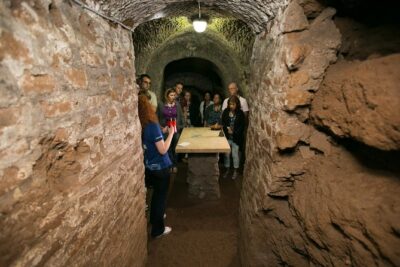
The Original Roman Crypts and Catacombs Tour with Transfers
Read our review →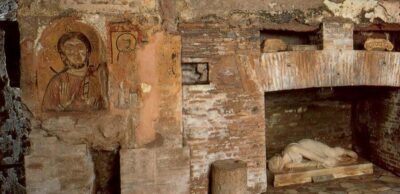
Catacombs of St. Callixtus Entry Ticket & Guided Tour
Read our review →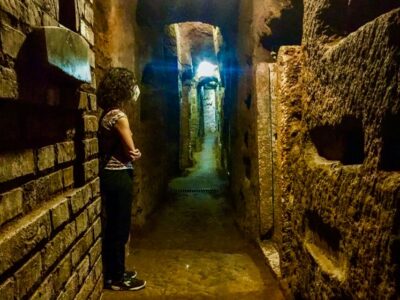

Rome EBike Tour: Appian Way, Catacombs & Roman Aqueducts
Read our review →
Catacombs and Capuchin Crypt Guided Tour with Transfer
Read our review →Browse the lists this tour appears in