
Reviewed · CATACOMBS TOURS
Rome: Catacombs of Priscilla Entry Ticket & Guided Tour
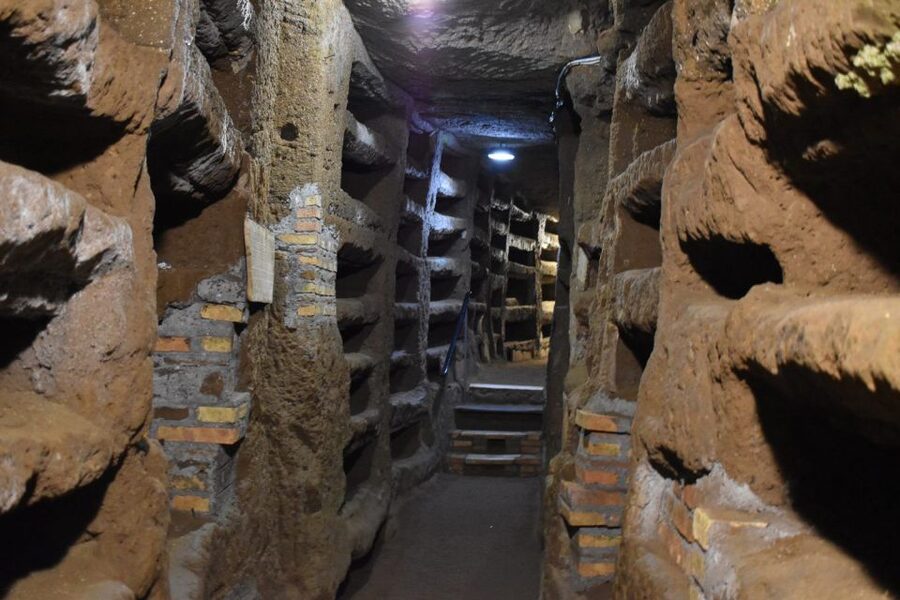
The Catacombs of Priscilla are interesting because this isn’t the usual Rome-of-bright-marble stuff. You step down into underground burial corridors where early Christians marked deaths and remembered faith, side by side with some of the earliest Christian wall art.
I love the small group size (up to 10), because it makes it easier to hear the guide in tight spaces. I also like the focus on surviving frescoes and inscriptions, including details tied to the Acili family and the martyrs of Priscilla.
One drawback to plan for: it is underground and narrow, and it is not suitable for people with mobility impairments. Also, photography is not allowed inside, so bring your curiosity, not your camera.
Key highlights worth your time
- Priscilla’s catacomb has a different origin: it started as an arenarium (sand quarry) before Christians adapted the large, irregular galleries.
- Two floors of underground space: you move through niches carved into the walls, plus areas linked to the cryptoporticus.
- The Acili hypogeum story: once a cistern of water, it is tied to inscriptions of the Acili family and what’s been found there.
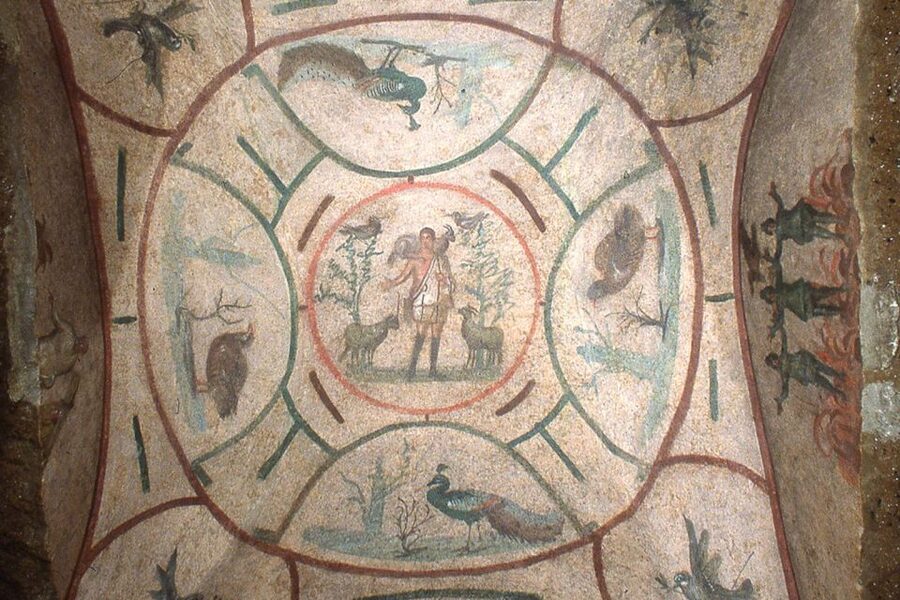
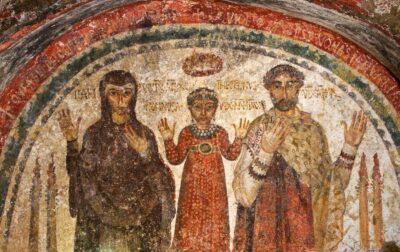
- Early Christian art details: you’ll see wall painting remnants, including well-known references to very early Marian imagery.
- Burial and commemoration names you’ll actually remember: martyrs like Felice and Filippo, plus popes buried here (Marcellino, Marcello, Silvestro, Liberius, Siricius, Celestino, Vigilius).
- A short connection to the above-ground site: the area around Villa Ada includes a basilica associated with tombs tied to Felice and Filippo, and a nearby museum with sarcophagus fragments.
Entering the Catacombs of Priscilla on Via Salaria
Catacombs can feel like a theme-park version of death if they are handled badly. This one tends to feel more like serious excavation plus storytelling, because the space is being actively studied and preserved. The whole experience is built around underground burial and funeral commemoration in the Christian community, not just a quick walk-by photo stop.
The tour starts at the ticket office of the Catacomb of Priscilla, and you’ll want to show your reservation there at least 10 minutes before your time. After that, you’ll follow your guide down and into the rhythm of underground Rome, with spaces that are darker, tighter, and naturally cooler than street level.
If you are doing Rome’s big-ticket sights first, this is a nice counterweight. You trade crowds and long lines for a smaller, quieter kind of attention, where what matters is what you can read on the walls and what you can understand about how this place was used.
More of underground Rome:
- Rome: Crypts and Catacombs Underground Tour with Transfers
★ 4.6 · 5,341 reviews - The Original Roman Crypts and Catacombs Tour with Transfers
★ 4.5 · 4,896 reviews - Rome: Catacombs of St. Callixtus Entry Ticket & Guided Tour
★ 4.6 · 3,037 reviews
The 45-minute format: how the small-group pacing works
The official tour duration is 45 minutes, and that time matters. Underground spaces do not give you much room to roam anyway, and the guide needs enough time to explain what you are looking at without rushing you.
Group size is capped at 10 participants, which makes a big difference in the narrow corridors. In cramped spaces, a large group turns the experience into a slow shuffle. With a small group, you can usually hear the guide’s explanations and keep your bearings as the route changes.
The tour is offered in Italian, English, and Spanish, and you’ll notice that the best versions of these tours focus less on dates and more on what the space is doing. You are not just looking at walls. You are learning how galleries, niches, and burial areas worked together as a place of memory.
Practical reality check: you should plan for stairs and uneven underground walking. It is not described as accessible, and it is also not set up for strollers.
What you will see underground: niches, galleries, and surviving Christian art
The Catacombs of Priscilla covers two floors, which helps explain why this site can feel both intimate and wide at the same time. The first floor is made up of large, irregular galleries, originally tied to an older use of the site as an arenarium. Later, Christians began using those big corridors for burial and commemoration, especially as the third century got underway.
From there, the character of the catacombs becomes clear: hundreds of niches carved into the walls for burial. Even without bodies on display, niches still communicate a lot. They show you a system, not random holes in stone, and that is the key point many people miss until they are down there.
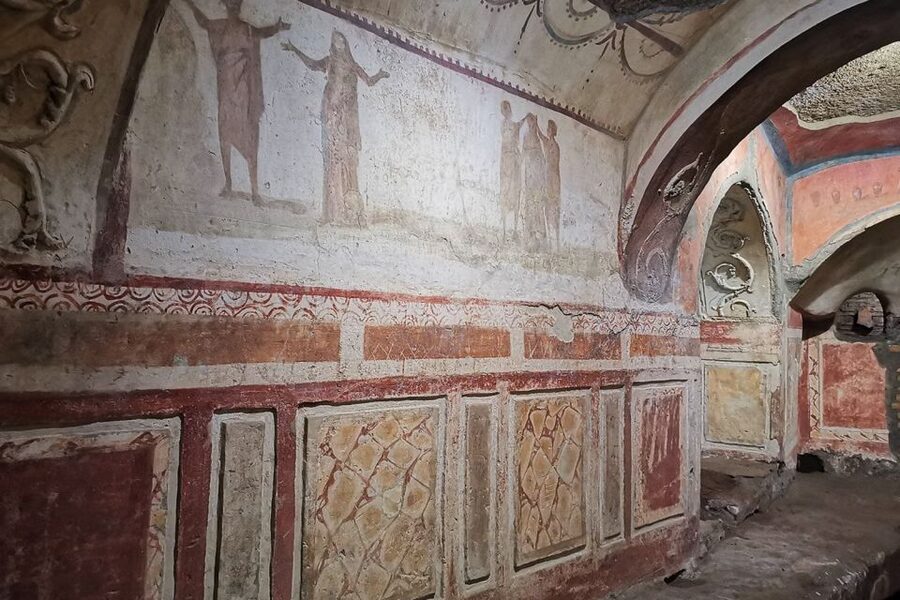
A highlight is the presence of early Christian wall painting and frescoes. Multiple visitors call out preserved artwork and especially the emotional effect of seeing paintings that have survived for centuries in underground conditions. One of the most discussed moments is the reference to very early Marian imagery, often described as among the oldest known representations of the Virgin Mary in Christian art.
One more thing you should be aware of: many tombs you see may be empty. There’s no guarantee you will find the remains in place, because the bodies have been moved over time. The tour is still worth it, but it helps to set your expectations early, so you focus on art, inscriptions, and the burial layout instead of expecting a preserved body or a full burial display.
The Acili hypogeum and inscriptions: how water became a memorial space
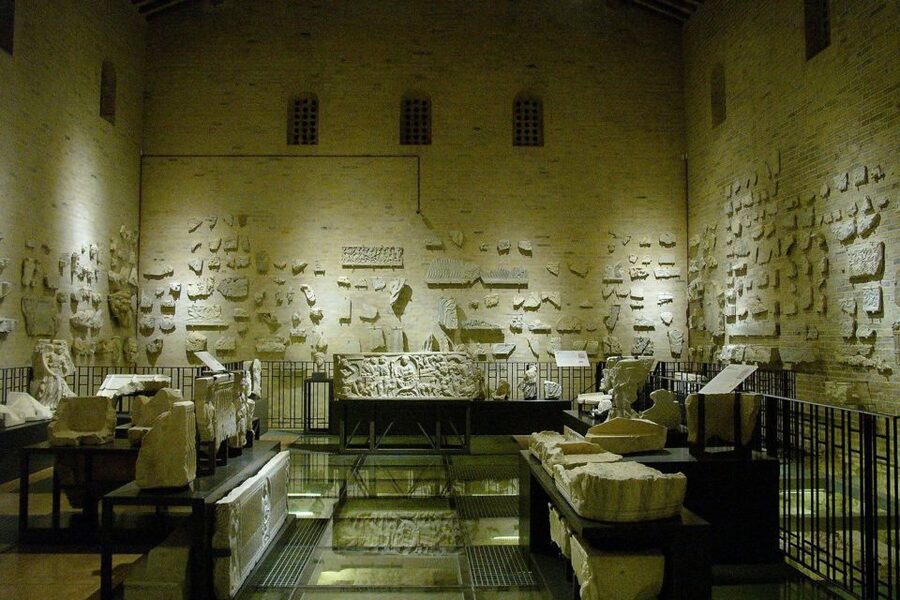
A big part of Priscilla’s story is the hypogeum of the Acili. The site information ties this area originally to a cistern of water, which later connects to the Christian burial complex.
This is where you’ll hear about the Acili inscriptions, which were found and then exhibited. That matters because inscriptions are how historians get beyond guessing. They help anchor the story to real names and families, turning the catacombs from a vague underground maze into a documented place tied to Roman lives.
You might also notice how the guide explains transitions between spaces. The catacombs are not one single room. They are layers of use: older infrastructure, then adaptation by later communities. That is why the tour feels thoughtful instead of just spooky.
If you care about early Christianity as more than a set of beliefs, this part pulls its weight. It shows you how people used the built environment to maintain community memory, even underground and even when the public world was complicated.
More from a Rome stay:
- Colosseum, Roman Forum & Palatine Guided Tour
★ 4.7 · 63,148 reviews - Vatican Museums, Sistine Chapel & St Peter’s Basilica Guided Tour
★ 4.5 · 39,149 reviews - Rome: Colosseum, Palatine Hill and Roman Forum Guided Tour
★ 4.8 · 32,814 reviews - Rome: Guided Tour of Colosseum, Roman Forum & Palatine Hill
★ 4.7 · 27,897 reviews
The martyrs and the popes: who is buried at Priscilla
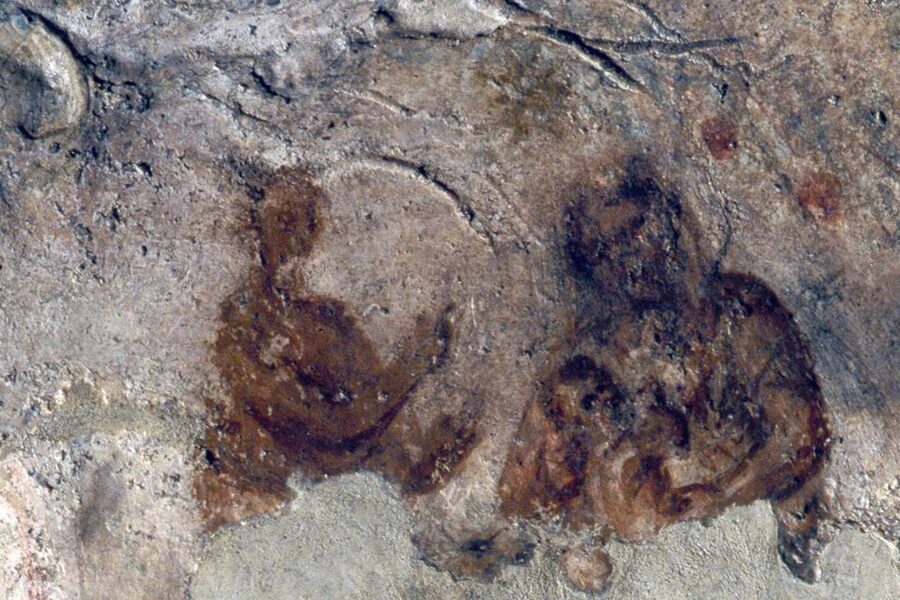
Catacombs become more meaningful when you can attach names to places. Priscilla gives you several.
The site is associated with martyrs including the brothers Felice and Filippo, who were martyred, likely under Diocletian. Their mother, St. Felicita, is remembered alongside them. The information also includes five additional brothers named Alessandro, Marziale, Vitale, Silano, and Gennaro.
Then there are the popes. Priscilla includes burial connections for Marcellino (296 to 304), Marcello (308 to 309), Silvestro (314 to 335), Liberius (352 to 366), Siricius (384 to 399), Celestino (422 to 432), and Vigilius (537 to 555). Even if you are not a church-history specialist, these names are a strong clue that this underground site had long-term importance for Christian communities.
In my view, this is where the best guides bring the site to life. Some of the standout tour experiences you’ll encounter are led by sisters and guides who explain both the archaeological side and the faith-based side, so the place feels human. Names like Sister Lydia, Sister Lidia, and guides such as Alexandra, Clara, and Sister Lydia come up often, and they tend to be praised for being friendly, humorous, and good at keeping a group oriented in tight conditions.
The cryptoporticus and Greek Chapel connection
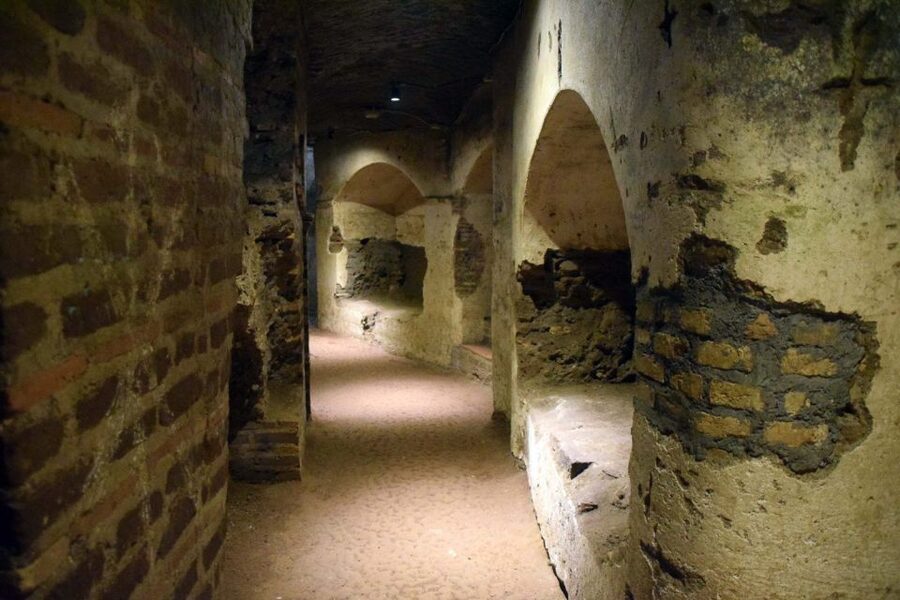
One of the most interesting angles of Priscilla is how the underground world extends beyond simple burial corridors. The adjacent area described as a cryptoporticus connects to the catacomb story, including the Greek Chapel.
This matters because it changes the way you see the site. You are not just walking through one burial system. You are seeing how different spaces in a connected underground complex could serve different community and family purposes over time.
The information also links the cryptoporticus to a noble family burial ground, which was later connected to the catacomb. That “layers of use” idea comes back again and again in Priscilla, and it is a major reason this catacomb tour feels more like history you can reason about than just a dark walk.
Villa Ada basilica and the nearby sarcophagus museum
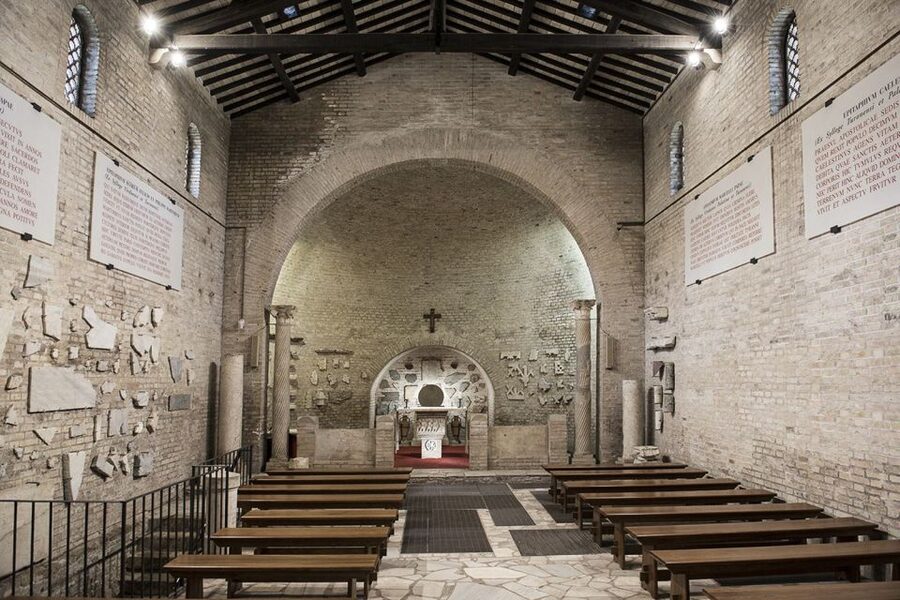
Above ground, the story continues in the nearby area around Villa Ada. The information ties a basilica built by Pope St. Silvestro to the tomb area associated with Felice and Filippo.
Nearby there is a museum that collects hundreds of fragments of sarcophagi found during excavations in the catacomb area. This is practical for two reasons. First, it helps you see what the catacombs connect to in the wider burial culture of Rome. Second, it shows the difference between what survives in situ underground versus what is preserved and studied through excavation.
If you are the type who likes to connect “what I just saw underground” to “where it fits in Roman life,” this above-ground connection is a nice closing note. Even with limited time underground, it makes the overall experience feel complete.
Price and value: is $16 fair for 45 minutes?
At about $16 per person, this tour is priced like a short add-on, not a full-day commitment. For Rome, that is usually where you look for value: a focused visit that gives you access to something you would not easily do well on your own.
Here’s why it can be good value:
- You get a guided tour, not just entry. Catacombs make more sense with names, timelines, and explanations attached to what you are seeing.
- The visit is small group sized (up to 10), which helps you actually hear the guide.
- The site is tied to specific, memorable content: Felice and Filippo, the Acili inscriptions, and popes buried here.
Is it a long tour? No. But 45 minutes is enough time to understand the main spaces and learn the key names, without losing the group in the maze-like underground layout.
If you already know catacombs well and you want a huge amount of time, you might feel it is short. But for most people, the tight format is the strength, not the weakness.
Practical tips for comfort and expectations underground
A few practical points can make your experience smoother.
First, take into account that it will feel cool underground compared to street level. If you are visiting in warm months, this can be a welcome break.
Second, plan for restrictions:
- No photography inside
- No baby strollers
- Not suitable for mobility impairments
That means you should wear something easy to walk in, and you should be ready for tighter passages. Also, because you cannot record with your phone, I recommend you do one thing instead: mentally choose two or three details to focus on as the guide talks, like a specific painting area or a named inscription zone.
Finally, arrive on time. The meeting point is direct at the ticket office, and you should show your reservation at least 10 minutes before your scheduled tour. Underground tours run on timing because guides need to keep the group together and within the visit window.
Who should book this catacomb tour
This tour is a strong fit if you like:
- Early Christian art and the stories behind it
- A quieter alternative to the big icons of Rome
- Learning names and connections, like Felice and Filippo and popes buried in Priscilla
- A guided experience where the route makes sense, even in tight spaces
It is also a good option for teens and older kids who enjoy history, especially if you want something different from the usual crowds.
It is not a good match if you:
- Need an accessible route (it is not suitable for mobility impairments)
- Want to push a stroller
- Expect a “wow” spectacle like you might get from Rome’s most famous ruins. This is more about meaning, art, and context than scale.
Should you book the Catacombs of Priscilla guided tour?
If you want one of the more thoughtful underground experiences in Rome, I’d say yes. The 45-minute small-group format is well matched to catacomb conditions, and the focus on early Christian frescoes, the Acili inscriptions, and specific burial names gives you something you can remember after you walk back out into daylight.
Book it if you care about how people used underground spaces for community memory, and if you like guides who explain both archaeology and faith context. Skip it if you need accessibility, you want photography, or you dislike tours where the main value is interpretation rather than huge visual spectacle.
If your Rome plan already includes the Coliseum and the big fountains, this is a smart way to add something quieter, older, and far more personal to the story of early Christianity.
FAQ
Where do I meet for the Catacombs of Priscilla tour?
Meet directly at the ticket office of the Catacomb. Show your reservation at least 10 minutes before the scheduled tour.
How long is the guided tour?
The tour lasts about 45 minutes.
How much does it cost?
The price is $16 per person.
Is the tour limited to a small group?
Yes. It’s a small group with a maximum of 10 participants.
What languages are available for the live guide?
The live tour guide is offered in Italian, English, and Spanish.
Is photography allowed inside the catacombs?
No. Photography is not allowed inside.
Are baby strollers permitted?
No. Baby strollers are not allowed.
Is the tour suitable for people with mobility impairments?
No. It is not suitable for people with mobility impairments.
Is there free cancellation?
Yes. Free cancellation is available up to 24 hours in advance for a full refund.
What is included in the ticket?
You get an entrance ticket and a guided tour of the Catacombs of Priscilla. Transportation and hotel pickup are not included.
Reviewed lately around Rome
- Rome: Private Customizable 3-Hour Golf Cart City Tour★ 5.0 · 229 reviews
- Papal Audience Experience with Pope Leo XIV★ 4.5 · 230 reviews
- The Three Tenors in Rome – Nessun Dorma★ 4.5 · 231 reviews
- Discover Rome in a Day – Private Driver Tour★ 5.0 · 231 reviews
- Rome: Colosseum, Roman Forum & Palatine Hill Group Tour★ 4.7 · 232 reviews
- Rome Airport Transfer – Private Luxury Service with Driver★ 4.5 · 231 reviews
- Fast track: Vatican Museums, Sistine Chapel Guided and St. Peter’s Basilica Tour★ 4.5 · 232 reviews
- Moonlight Rome: Night Walking Tour of Roman Highlights★ 5.0 · 232 reviews
Catacombs Tours, compared.
Catacombs of San Gennaro Entry Ticket & Guided Tour
Read our review →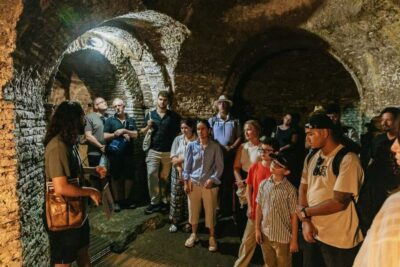
Crypts and Catacombs Underground Tour with Transfers
Read our review →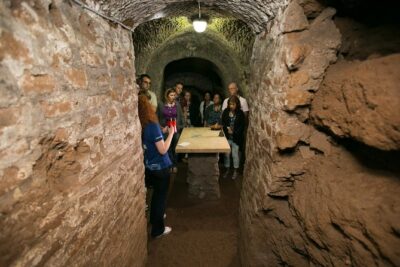
The Original Roman Crypts and Catacombs Tour with Transfers
Read our review →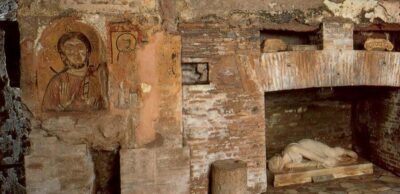
Catacombs of St. Callixtus Entry Ticket & Guided Tour
Read our review →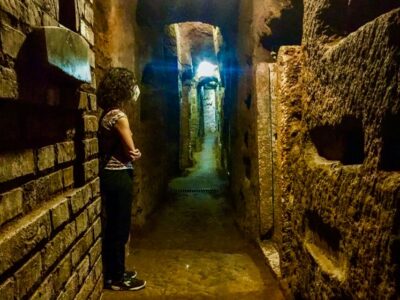

Rome EBike Tour: Appian Way, Catacombs & Roman Aqueducts
Read our review →
Catacombs and Capuchin Crypt Guided Tour with Transfer
Read our review →Browse the lists this tour appears in