
Reviewed · WALKING TOURS
Rome: Fountains and Squares Small-Group Walking Tour
Rome’s fountains and piazzas are famous, but this route ties them together with Roman Empire to Baroque contrasts you can spot block by block. I especially love the chance to go inside the Pantheon and then end at the Trevi Fountain for the coin-and-wish moment. One note: it is real walking, with no strollers or wheelchair support, so comfy shoes matter.
The best part is the guide energy, with people like Stefano and Bruno often described as funny and tuned to pacing, so you do not feel lost in the crowd. You’ll also get a clear route through Piazza Navona, Sant’Ignazio’s trompe l’oeil dome, and a Marcus Aurelius column detail that connects to Gladiator. Expect mostly outdoor time, then a couple indoor stops where you can cool your brain and your feet.
Key highlights worth prioritizing
- Spanish Steps start point near Keats-Shelley Museum: easy to find, with a guided uphill warm-up to Trinità dei Monti.
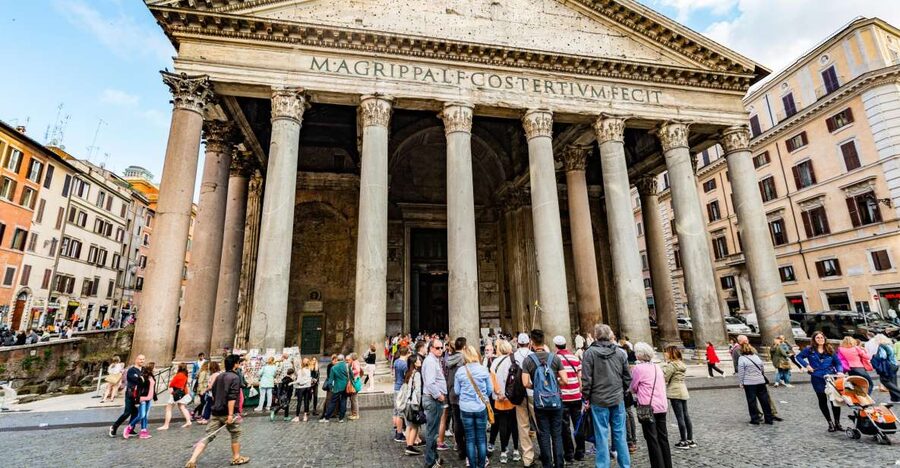
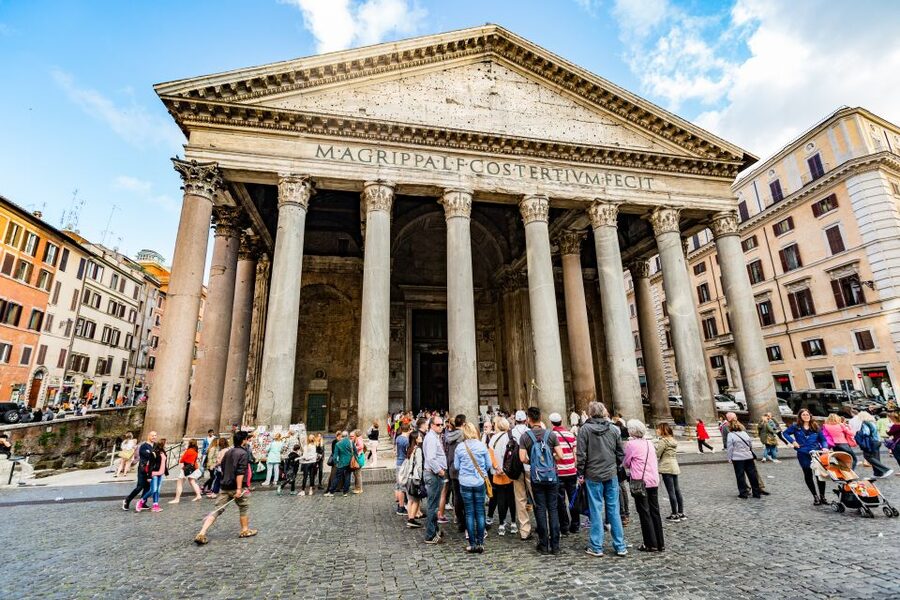
- Pantheon interior access: you get inside a Greek-Roman temple that still feels intact in its structure and atmosphere.
- Piazza Navona and its Bernini and Borromini fingerprints: one square that can feel like three different eras at once.
- Sant’Ignazio’s trompe l’oeil dome: a church stop that turns painting and perspective into a real wow moment.
- Marcus Aurelius Column detail: the tour points you to imagery that movie fans recognize fast.
- Trevi Fountain finish: you end right where you can throw your coin and do the classic wish for a return visit.
Why this Rome fountains and squares route makes sense
Rome can be overwhelming in the best way. You see a fountain, then you wander, then you realize you have moved about three blocks but your feet feel like you crossed continents. This kind of small-group walking tour helps you keep your bearings.
The magic here is the time travel effect. You start in the Baroque world of staircases, fountains, and showy piazzas. Then, with a few guided turns, you are looking at architecture that traces back to the Roman Empire, and you keep jumping forward through Renaissance and later work. You are not just collecting famous stops. You’re learning how Rome reuses and reshapes space, again and again.
And because it is a licensed English-speaking guide and a small group (max 20), you get explanations at a human scale. No sprinting. No shouting over traffic. You can actually hear what matters, then look back at the monuments like you know what you’re seeing.
More Walking Tours in Rome
- Rome: Trastevere & Campo de Fiori Street Food Walking Tour
★ 4.9 · 2,768 reviews - Rome: Paranormal Night Walking Tour & Secret Backstreets
★ 4.9 · 1,921 reviews - Rome by Night Walking Tour – Legends & Criminal Stories
★ 4.5 · 1,003 reviews
Spanish Steps and Trinità dei Monti, start with height and attitude
You meet by the entrance of the Keats and Shelley Museum at the bottom of the Spanish Steps, right in front of an Acqua di Parma store. The guide is easy to spot, wearing a GETYOURGUIDE badge or holding the matching sign. Aim to arrive about 10 minutes early, because if you show up late you can miss the group.
From there, the walk climbs. You follow the flow of the Spanish Steps up toward Trinità dei Monti, a late Renaissance church. Even if you have seen the Spanish Steps in photos, seeing them in motion gives you a new appreciation for why this area became a magnet for visitors and style.
Practical tip: Rome streets here can feel slick if it is wet. Wear shoes with good grip. You will be standing still at a few points, then moving again, and you want your footing to feel solid.
Piazza di Spagna and Bernini’s half-sunken ship detail
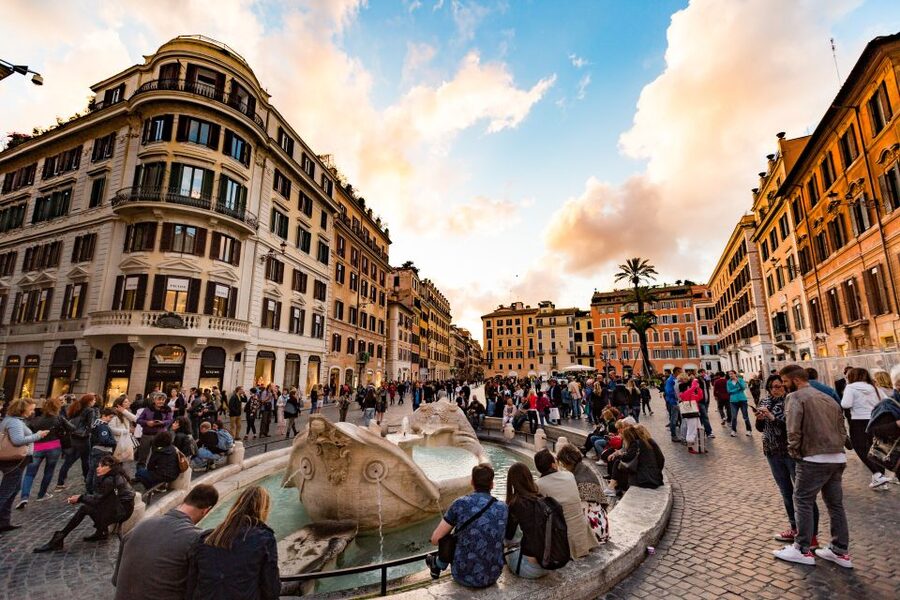
One of the fun things about this route is that you do not only look at the big tourist icons. You get guided attention to specific fountain moments that people often rush past.
At Piazza di Spagna, the tour includes Bernini’s fountain of a half-sunken ship. It sounds almost comical until you see how carefully it is designed to look like it is paused mid-story. The kind of detail you will notice more when someone points it out, because your eyes tend to default to the loudest shape first.
If you like art details that reward a slower stare, this is one of those stops. It is short, but it helps train your eye for the rest of the day.
Piazza Navona, Stadium of Domitian turned Baroque showpiece
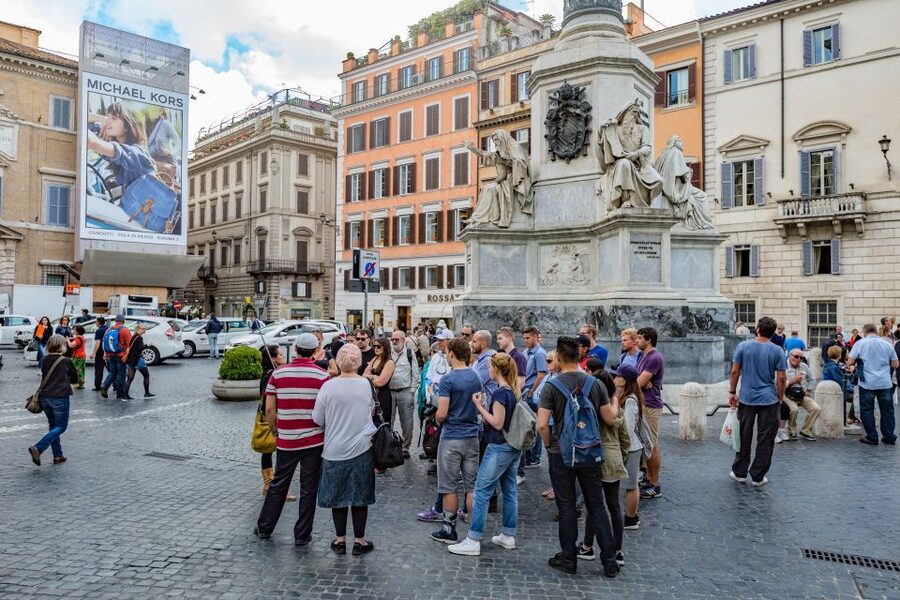
Next comes Piazza Navona, one of Rome’s most photogenic squares and, more importantly, one of the clearest examples of how the city layers eras.
Here’s what makes it special for you: the square sits on the footprint of the old Stadium of Domitian, built in 85 A.D. That ancient athletic space is basically the skeleton under the skin. On top, you get Baroque Rome in full performance mode.
Your guide also connects the dots to major sculptors and architects, including Gian Lorenzo Bernini and Francesco Borromini, and you’ll see why this square became the pride of Baroque Rome. There’s even a nod to Bernini’s Fountain of the Four Rivers, which is one of those works that people describe with the word wow, but the better goal is to understand the symbolism and the visual staging.
Drawback to consider: Piazza Navona is a popular area, so the crowd density can rise at certain times. The small group helps you get close without chaos, but you still need patience for photos.
A different Rome day to consider:
- Colosseum, Roman Forum & Palatine Guided Tour
★ 4.7 · 63,148 reviews - Vatican Museums, Sistine Chapel & St Peter’s Basilica Guided Tour
★ 4.5 · 39,149 reviews - Rome: Colosseum, Palatine Hill and Roman Forum Guided Tour
★ 4.8 · 32,814 reviews - Rome: Guided Tour of Colosseum, Roman Forum & Palatine Hill
★ 4.7 · 27,897 reviews
Pantheon interior and Raphael’s tomb, where time feels compressed
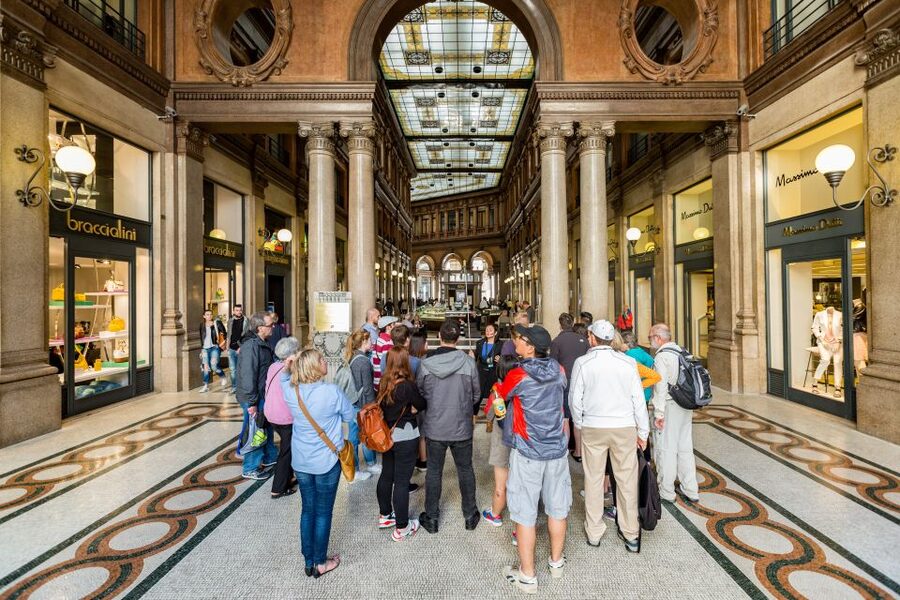
The walk to the Pantheon is one of the easiest ways to feel the shift from streetscapes to a true monumental interior. The Pantheon stop is built into the experience for a reason: it is one of those rare sights where you can stand in the space and understand why people kept coming back for centuries.
The tour takes you inside the Pantheon, emphasizing how remarkably intact the temple structure feels, much like it did for ancient Romans. And yes, the stop also includes Raphael’s tomb, which makes this more than architecture appreciation. It’s a place where art history and Roman engineering sit side by side.
What to do in there: slow down and look up. Your eyes will want to chase details at eye level, but the real effect comes from noticing how the space holds light and scale.
Also, remember church rules for attire. You may want a layer ready because you will go from bright outdoor sun into an indoor space that can feel cooler. Bring comfortable clothes you can wear without constantly adjusting.
Marcus Aurelius column and the Gladiator connection you can point at
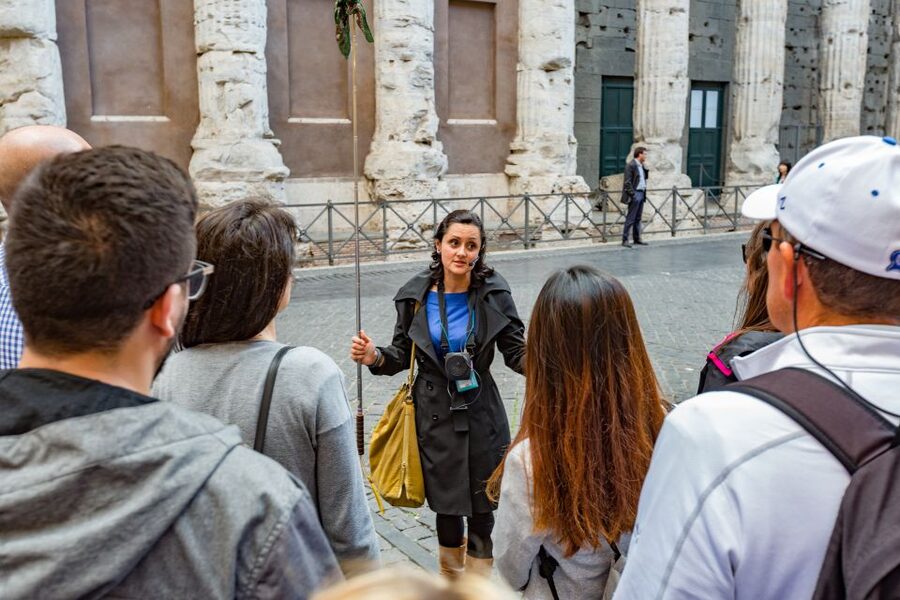
After the Pantheon, the route includes the carved Column of Marcus Aurelius. This is one of those “wait, that’s right there” moments. When someone points out what you should look for, it turns into a tangible story rather than an object you walk past.
The guide also links the column to scenes recognizable from the movie Gladiator. Even if you are not a movie superfan, this kind of reference helps you mentally organize the imagery, which makes the art easier to remember later.
This stop is also a good reminder that Rome is not only about the famous statues. It is about the way sculpture and relief tell a narrative over space and time.
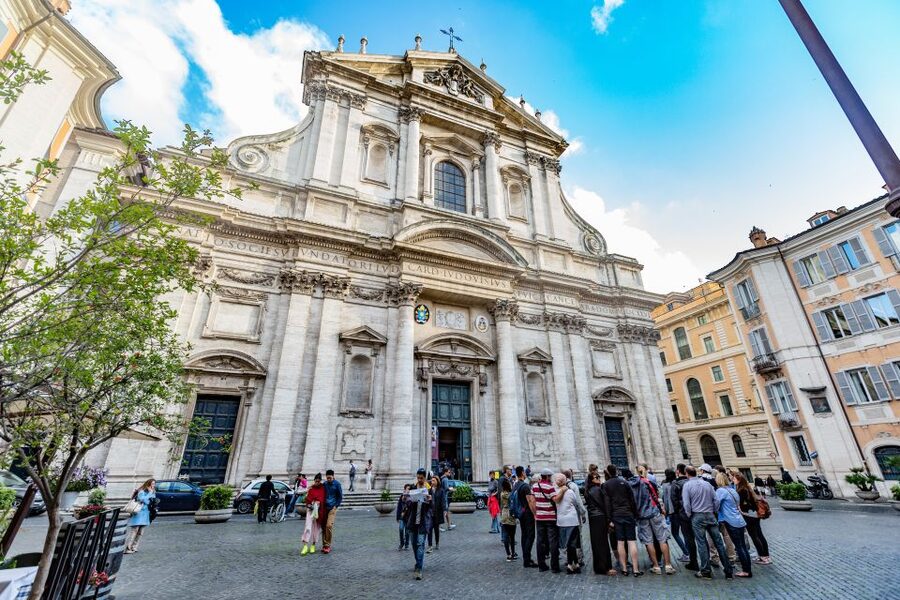
Sant’Ignazio Church, trompe l’oeil that actually fools your eyes
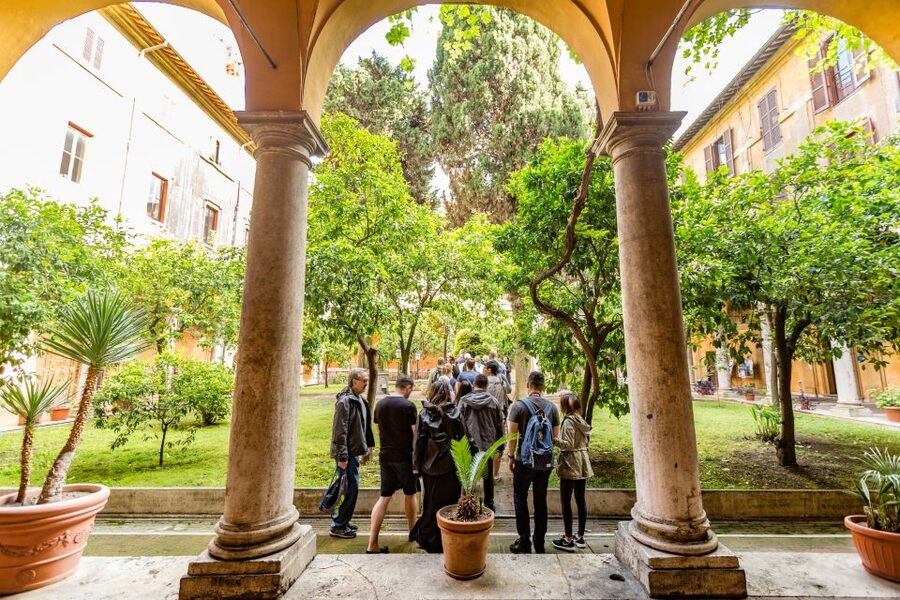
Now comes a stop that tends to get the biggest reactions for the right reason. Sant’Ignazio Church is included for one standout feature: trompe l’oeil work inside the dome.
Trompe l’oeil is art that plays optical tricks. In a church setting, it becomes extra powerful, because you’re not staring at a flat display. You’re experiencing it in an architectural space designed to frame the effect. The guide highlights what to watch for, so it is not just random pretty decoration. You understand why it looks the way it does.
Even if you think you know what optical illusions are, this one is the kind that makes you look twice. And if you have had enough of churches as a generic checklist item, this one feels like a show staged for your eyes, not just for your feet.
Practical note: you will need to follow dress rules for entering churches and similar spaces. The tour asks for something that covers shoulders and knees, and it also discourages shorts and short skirts.
Trevi Fountain at the end, how to make the coin moment more meaningful
You finish back around the Trevi Fountain for the classic gesture. You throw your coin into the fountain and make a wish to one day return to Rome.
This ending works well because you finish after a sequence of stops that taught you how Rome tells stories through monuments. By the time you reach Trevi, you are not only seeing a landmark. You’re part of a centuries-old ritual that modern visitors repeat, then carry forward as a personal promise.
If you care about photos, start by soaking in the view without your phone first. Trevi is crowded, and your first few seconds of looking with your own eyes can help you frame the shot, not just capture it.
Also, keep the pacing in mind. The tour ends back at the meeting area, so you will not have the full freedom to linger for an hour. If you want extra time afterward, plan your post-tour wandering route.
Small-group pacing, guide style, and what you’ll actually do for 2 to 2.5 hours
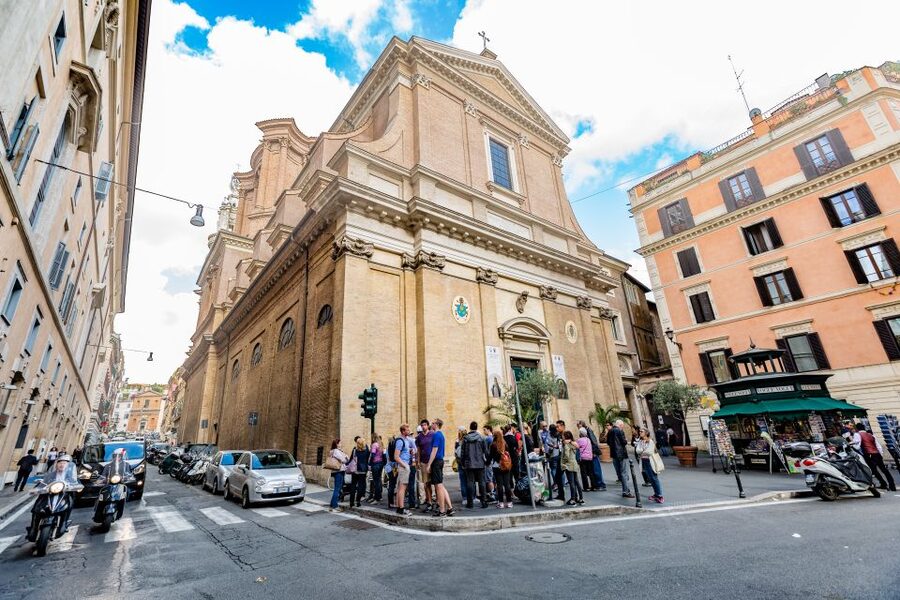
The duration listed is 2.5 hours, but the tour is also described as a 2-hour walk. Either way, you’re looking at a focused half-day block, built around a tight circle of major sights.
What you’ll feel during the walk:
- brief listening moments
- slow stops for photos and explanations
- steady forward movement through the center of Rome
The most highly praised aspect across guides is how they keep people engaged. Many guides, including Stefano and Bruno, are noted for enthusiasm, humor, and a sense of keeping the group together. Some guides have even been reported to add small food treats, like a tiaramisu or ice cream, though you should not count on that as a guaranteed part of every tour.
One practical rule from the tour style: no translating is allowed during the walk, which helps keep the group moving smoothly. It also means the experience is fully in English, so if English is not your comfort zone, you might feel the pressure of the pace.
Price and value: is $45.55 worth it?
At $45.55 per person, this tour is not a bargain, but it also does not try to be. The value comes from four things you typically struggle to manage on your own:
- A licensed guide who can explain what you’re looking at, not just name it.
- Time saved by bundling multiple big stops in one coherent route, from Spanish Steps to Trevi, with Pantheon and Sant’Ignazio included.
- Better sightlines on crowded monuments, because the guide keeps the group together.
- Context that turns iconic places into something you can remember, like Bernini details at Piazza di Spagna or why trompe l’oeil matters in Sant’Ignazio.
If you are in Rome for a short stay, paying for a guided loop often beats spending that same time trying to figure out which turn gets you the most meaning per minute. If you love walking and you like learning while you look, this is a sensible use of your first days in town.
Who should book this tour, and who should skip it
This experience fits best if:
- you want to see major fountains and piazzas in a single session
- you like guided explanations while you walk
- you plan to visit other big sites later, like Colosseum and the Forum areas, and you want this to help you get your bearings
You should think twice if:
- you need wheelchair access or a stroller route, because the tour says it is not possible to join with strollers or wheelchairs due to the itinerary
- you have mobility limits that make steady walking hard, since it is designed around walking between stops
- you are traveling with children under 10, since it is not suitable for them
Finally, follow the tour clothing and conduct rules. The tour does not allow shorts, smoking, food, or drinks during the walk, and it also restricts large bags and oversize luggage. If you come prepared, the day feels smooth instead of fussy.
Should you book this Rome fountains and squares walking tour?
Yes, if you want a practical way to experience central Rome without getting lost in noise. I’d book it when you arrive, or at least early in your trip, because it helps you understand the city’s layout and how its eras connect.
Skip it if you want a slow, solo, pick-anything wandering day, because this is structured and you are moving steadily through stops. It also is not designed for strollers or wheelchair users.
If you do book, bring comfortable shoes, plan for mostly outdoor time, and treat the Pantheon and Sant’Ignazio as your two “slow down and look up” moments. Do that, and you’ll leave with more than photos. You’ll have a clearer sense of how Rome paints its stories in stone.
FAQ
How long is the Rome fountains and squares walking tour?
The tour duration is listed as 2.5 hours. It is also described as a 2-hour walk, so plan for roughly that half-day time window.
Where do we meet the guide?
You meet by the entrance of the Keats and Shelley Museum at the bottom of the Spanish Steps, in front of the Acqua di Parma store. The guide will have a GETYOURGUIDE badge or matching sign.
What does the tour include?
It includes a licensed English-speaking guide. The experience also includes visits to major sights such as the Pantheon and Sant’Ignazio Church.
What should I wear or bring?
Wear comfortable shoes and comfortable clothes. For churches and certain monuments, make sure you have something to cover your shoulders and knees.
How big is the group?
This is a small-group tour with a maximum of 20 participants.
Is it suitable for children or wheelchair users?
It is not suitable for children under 10. It is also not suitable for wheelchair users, and the tour cannot be joined with strollers.
Are there restrictions on what I can bring?
Pets are not allowed. You also cannot bring shorts, oversize luggage, baby strollers, or large bags. Smoking, food, and drinks are not allowed during the tour.
Reviewed lately around Rome
- Rome: Private Customizable 3-Hour Golf Cart City Tour★ 5.0 · 229 reviews
- Papal Audience Experience with Pope Leo XIV★ 4.5 · 230 reviews
- The Three Tenors in Rome – Nessun Dorma★ 4.5 · 231 reviews
- Discover Rome in a Day – Private Driver Tour★ 5.0 · 231 reviews
- Rome: Colosseum, Roman Forum & Palatine Hill Group Tour★ 4.7 · 232 reviews
- Rome Airport Transfer – Private Luxury Service with Driver★ 4.5 · 231 reviews
- Fast track: Vatican Museums, Sistine Chapel Guided and St. Peter’s Basilica Tour★ 4.5 · 232 reviews
- Moonlight Rome: Night Walking Tour of Roman Highlights★ 5.0 · 232 reviews
Walking Tours, compared.
Guided Walking Tour & Last Supper Visit with Ticket
Read our review →

Rialto Bridge & Offbeat Unusual Venice Walking Tour
Read our review →
Private 3 hrs Venice Tour: St Mark’s, Walking tour & Boat tour
Read our review →
Skip the line: Uffizi and Accademia Small Group Walking Tour
Read our review →Browse the lists this tour appears in