
Reviewed · NAPLES TOURS
Naples: The Bourbon Tunnel Guided Tour with Entrance Ticket
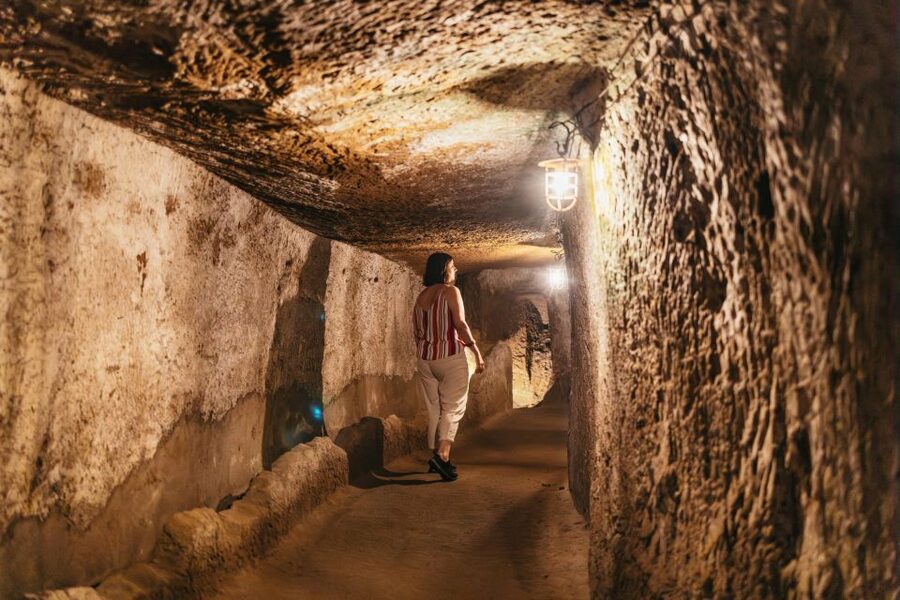
What makes this tour interesting is that you walk beneath Naples in the Bourbon Tunnel, a passage planned in 1853 by Ferdinand II of Bourbon. It is not just underground sightseeing. It feels like a history lesson you can touch, with the city’s layers literally overhead.
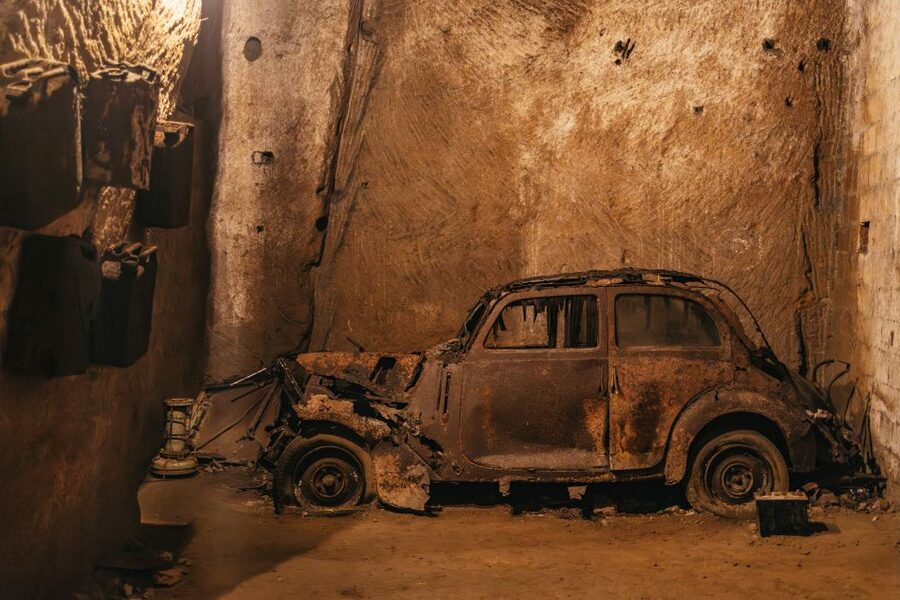
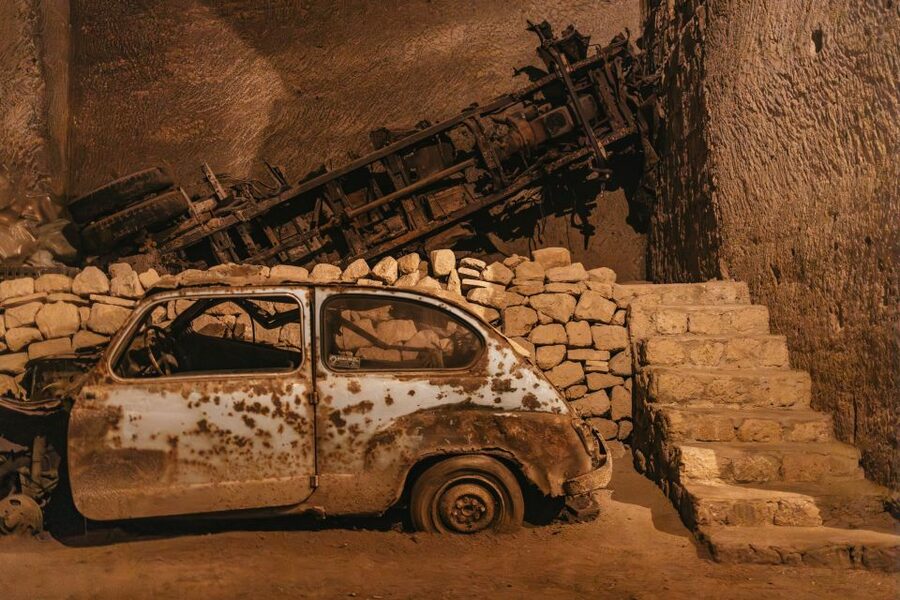
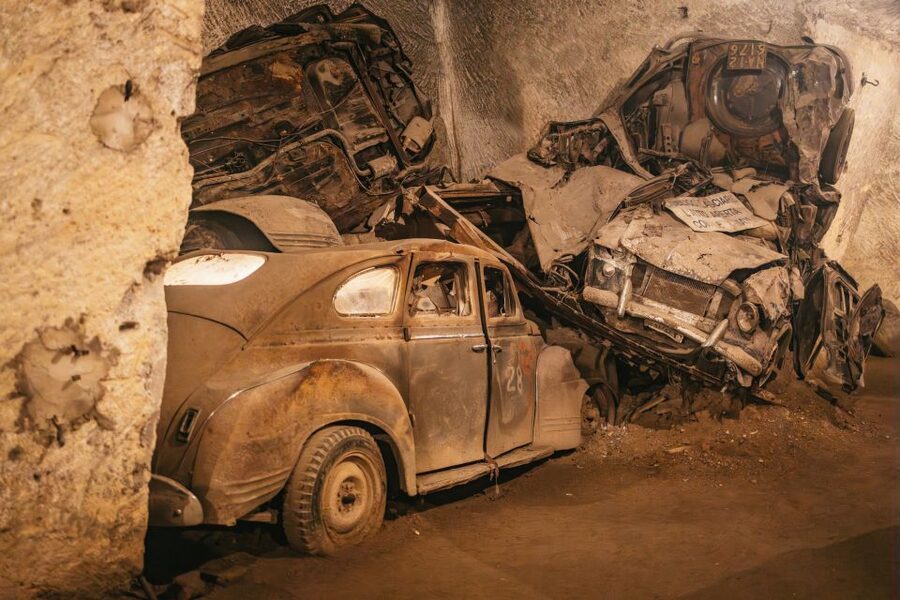
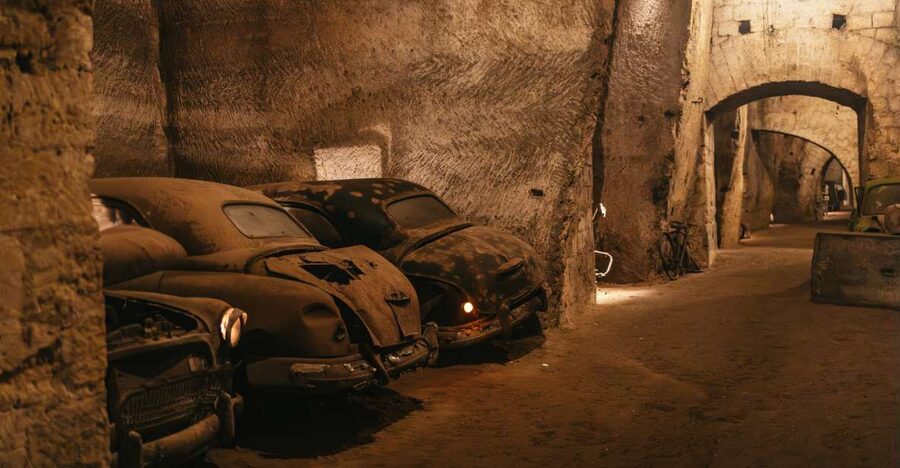
I love the way the guide turns the tunnel into a four-century story, and you get to see WWII finds firsthand. I also like the surreal contrast of statues from the fascist period and the small exhibition of cars and motorcycles that were left underground for years.
The main drawback is the stamina test, there are 90 steps at the entrance, and some chambers can echo enough to make hearing tricky.
Key Points Before You Go
- A tunnel built in 1853 by Ferdinand II with a story that starts as an escape plan and turns into something else entirely
- WWII-era traces you can actually read and see, including handwritten messages left underground
- Fascist-period statues plus an exhibition of cars and motorcycles that feels strange in the best way
- Via delle Memorie option on tuff-cut route, with extra stairs (115 steps at the entrance for that option)
- Small-group feel and strong English support, with guides like David, Lucia, Sabrina, and others mentioned in real departures
- Cooler underground temperatures and good photo stops, a welcome break from Naples humidity above
Naples Bourbon Tunnel: a second city under your feet
Naples already has a talent for surprises. This tour adds a bold one, because you are not just looking at relics, you are walking inside the infrastructure of the city’s underground life.
The Bourbon Tunnel was built in 1853 by Ferdinand II of Bourbon. The idea was tied to control and safety after fears of rebellion. That matters because the tunnel’s purpose keeps changing over time, and the guide makes that shift crystal clear as you move through the spaces. It is a “you are here” history lesson, not a slideshow.
What makes the experience land is the mix of eras in one route. You go from older underground spaces to wartime use, then into later displays and art-like fragments, including statues from the fascist period and a small lineup of vehicles. Even if you are not a history person, the tunnel does what good museums do. It shows how people adapted to what was above, and what was coming next.
And yes, it is also practical. Being underground gives you a cooler pause from Naples heat and humidity, and the tunnel itself is photogenic. The space also changes how you see the city, because you start thinking in layers, not neighborhoods.
More from a Naples stay:
- From Naples: Pompeii Ruins & Mount Vesuvius Day Tour
★ 4.3 · 11,459 reviews - From Naples: Sorrento, Positano and Amalfi Full-Day Tour
★ 4.6 · 10,988 reviews - From Naples: Sorrento, Positano & Amalfi Coast – Small Group Tour
★ 5.0 · 8,643 reviews
Ferdinand II to WWII, why the tunnel’s story keeps flipping
To understand what you will see, it helps to know the tunnel’s basic timeline. Ferdinand II of Bourbon had the Bourbon Tunnel constructed in 1853. He asked for an escape route from the Royal Palace to a barracks area in what is now Via Morelli, then referred to as Via della Pace. The goal was simple, if trouble started above ground, there needed to be a way out.
But the work was not completed. That is where things get interesting, because the tunnel did not end up being one neat, finished answer to a political fear. Instead, it became a useful container for later needs.
During World War II, the tunnel was used as a military hospital. Later it became a Hall Judicial Deposit. Those changes leave marks, and the tour points you toward them. You do not just hear dates. You notice traces, including handwritten messages of wishes and desolation left by people who lived or worked there during that period.
That wartime layer is one of the reasons this tour stands out in a city with many surface attractions. Naples Underground stories are often about aqueducts and tuff caves. Here, you get the emotional texture of a place used for care and then for storage. It is one thing to learn history. It is another to stand in a space where words were left behind.
Inside the Bourbon Tunnel: the key stops and what they mean
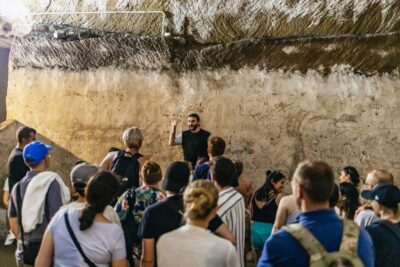
Your visit starts at the Palazzo Serra di Cassano basement. From there, you head into the tunnel and begin with the entrance staircase. Expect a real descent. The tunnel has 90 steps at the entrance on the standard route. Going slowly helps, especially if you are tall or prone to getting out of breath.
1) First descent and early finds
The first phase is about orientation. Your guide sets the stage, then you start picking out what makes this tunnel different from many “underground tours.” The route is part passage, part exhibit space, part time capsule.
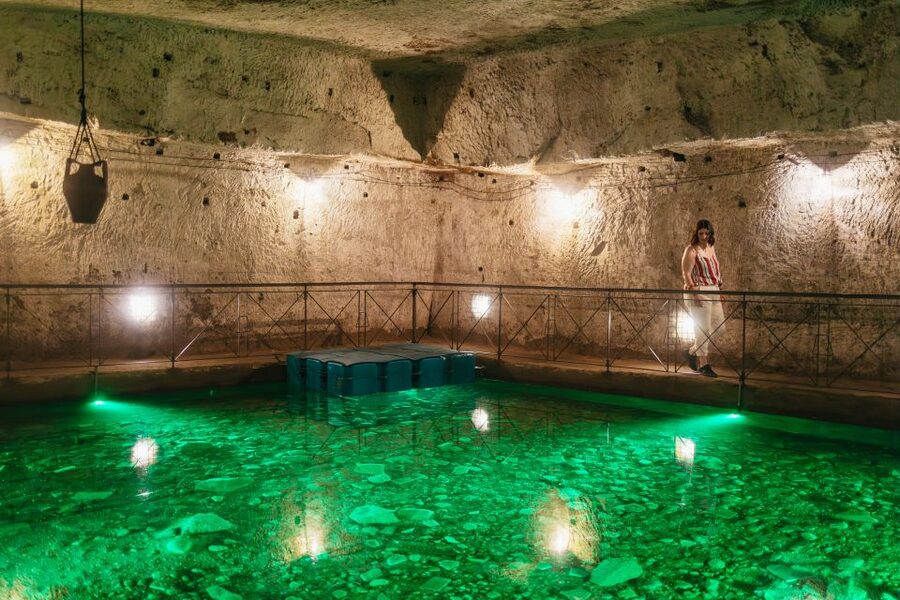
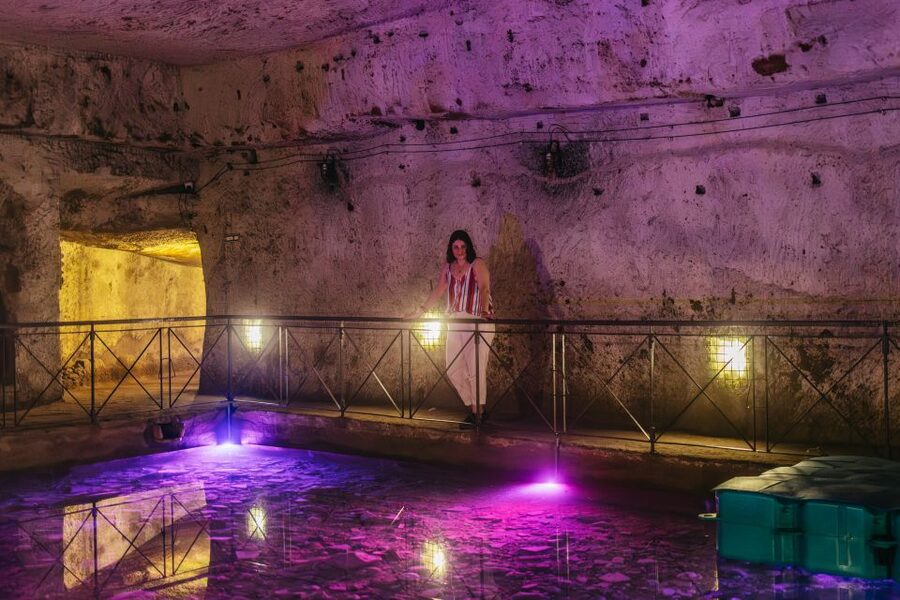
You can also expect older underground elements in the mix. The tour references historical finds such as 16th-century caves, plus a 17th-century water tank that later had a bomb shelter role. Even if you cannot process every date in your head, your guide helps you connect what you are seeing to why it existed.
More Naples bookings worth a look
- Naples: Catacombs of San Gennaro Entry Ticket & Guided Tour
★ 4.6 · 7,941 reviews - Naples: Spanish Quarters Underground Guided Tour
★ 4.8 · 5,064 reviews - Naples: Street Food Walking Tour with Local Guide
★ 4.8 · 4,256 reviews - Herculaneum: Skip-the-Line Guided Tour with Archaeologist
★ 4.8 · 3,439 reviews
2) WWII traces: handwritten messages and hospital-era remnants
A major highlight is the WWII period, including handwritten messages. This is the part where the tunnel shifts from being impressive to being emotional.
The tour frames these notes as more than artifacts. They are evidence of real people trying to make sense of fear and waiting. It is also a reminder that underground spaces become psychological shelters as much as physical ones.
Some parts may be harder to see clearly, especially if you are older or you wear glasses and light is dim. The guides work the crowd through the route, and that matters because you want to stop and read, not rush past.
3) Fascist-period statues and the later museum-like displays
As you continue, you reach sections with statues dating from the fascist period. Seeing political-era statuary in an underground setting can feel jarring, but it is also part of the point. The tunnel served different purposes and held different meanings as decades passed.
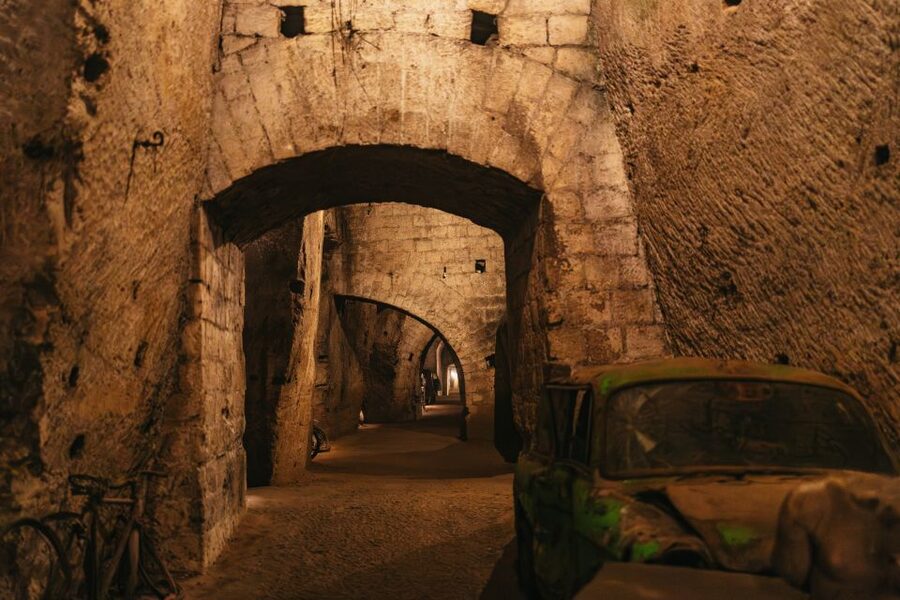
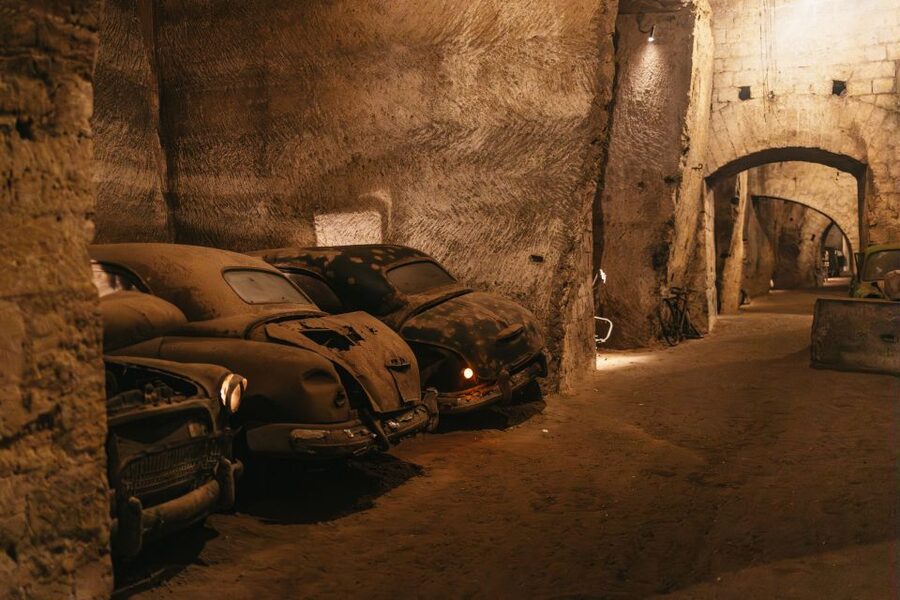
You also see an exhibition of cars and motorcycles that were abandoned underground and then freed from rubbish. This is one of those stops that sounds odd on paper, then turns into a highlight in person. A vehicle display down there is not just “cool stuff.” It shows how the city used underground space during different phases of disruption and recovery.
There is a real sense of discovery here, especially when your guide explains what was found and why restoration efforts mattered.
4) The tunnel’s last section walk
You finish with a walk through the final part of the tunnel. This closing loop helps you make sense of the whole route, because you move away from the densest interpretive stops and see the tunnel as a continuous corridor, not a set of isolated rooms.
In other words, you leave with a map in your mind, even if you cannot remember every detail. That is a big deal on a compact, one-hour-style experience.
Via delle Memorie: the extension that adds stairs and meaning
If you want more time underground, choose the Via delle Memorie option. It is designed as an enrichment, not a totally separate tour. You walk an underground route carved out of the tuff.
This option also changes the physical side of the visit. There are 115 steps at the entrance if you start with Via delle Memorie. That is the single biggest difference you should plan around.
The benefit is that Via delle Memorie helps you experience Naples underground as a connected system, not just one tunnel. It is still guided, but the walking component adds rhythm. You get more of the “secret place full of history and atmosphere” feel, which pairs well with the tunnel’s emotional storytelling.
If you like photography, this extension often gives you more opportunities for angles and scene changes. And because you are moving through tuff-carved corridors, the texture of the space feels different from the main Bourbon Tunnel rooms.
The trade-off is obvious: more stairs and more time on your feet. If steps are a concern, you might prefer the standard tunnel route.
Stairs, sound, and visibility: what comfort looks like underground
Let’s talk logistics that affect your enjoyment, because underground tours can be great or frustrating depending on your body and your expectations.
The stairs are real
The entrance has a staircase, with 90 steps for the regular tour and 115 steps for the Via delle Memorie option. Even if you are fit, take it slow. One or two slower steps at a time makes a difference.
Some people worry about claustrophobia. The good news is that the tour is guided and paced. The first descent is the hardest moment for many visitors, then things often become easier once you are moving and the group is flowing.
Hearing can be tough
Echo can make it harder to hear in some chambers. If sound matters to you, pick a position closer to the guide when possible. Also remember that underground acoustics are part of the deal, so there is no perfect solution besides good group management, and guides tend to work with the space.
Seeing up close can be challenging
Light levels are not like street-level museums. If you are older, or you simply do not see well in dim light, go in with patience. The tour guides do a good job shepherding the group through the route so you do not feel lost.
Guides and group size: why the tour feels personal
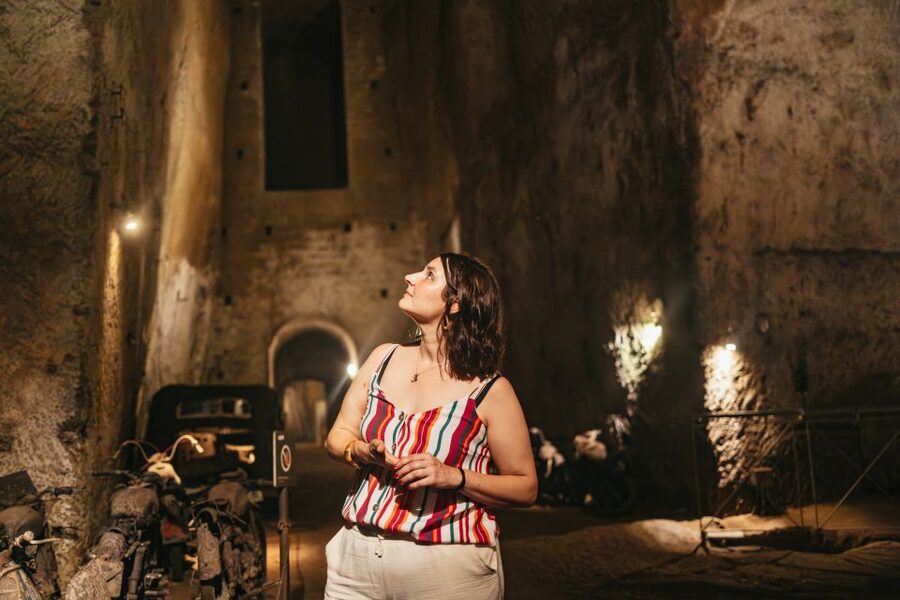
The biggest reason this tour earns a high rating is the way the guide connects facts to a place you can actually see. You can also tell that the operation is used to handling different languages and different group tempos.
The tour offers live guiding in Italian and English, and small-group sizes are available. In practice, that usually means you can ask questions and get answers that match your interests, rather than hearing your question get swallowed by a crowd.
English-guided departures have been led by people like David, and some guides are described as humorous, patient with questions, and very clear about the tunnel’s layers. Lucia is also mentioned in a way that suggests deep involvement with excavation and restoration work, which helps because she can answer specific questions about what was found and how it was uncovered. Sabrina is another name tied to strong presentation and warmth.
And here is a fun human touch you might catch at the end. One departure notes a chance to meet Marco, a cofounder, which makes the experience feel less like a transaction and more like a shared story.
None of that is guaranteed for every time slot, but it explains why the tour consistently lands well when the guide does their job.
Price and value: is $12 a fair deal for this Naples moment?
At about $12 per person, this is one of the more approachable underground experiences in Naples. The value comes from three things.
First, you get a true guided experience. You are not just walking a corridor and reading placards. You have a live guide translating the tunnel’s changing roles, from Ferdinand II’s escape concept to WWII hospital use and later functions.
Second, the stops are specific. WWII handwritten messages, fascist-period statues, and an exhibition of abandoned cars and motorcycles give you multiple “wow, that is really there” moments instead of one long lecture.
Third, the duration is short. The activity lists 1 hour, which keeps it from eating your whole day. Even if the exact pace varies by group size and starting time, the tour length is designed to be digestible.
If you are comparing it to other Naples options, this one is easy to slot in. It is also a great strategy for your itinerary if you want a break from outdoor walking. Underground time can refresh you for the rest of your day.
Who should book, and who should skip
This tour is a good match if you want:
- A guided Naples experience that is short, underground, and story-driven
- The chance to see WWII-related traces in a real setting, not just a general exhibit
- A change of pace from churches and street life, especially in hot weather
- A route that can include Via delle Memorie if you want extra walking and tuff-carved atmosphere
You might consider skipping or choosing the standard route if:
- Steps are a deal breaker for you, since there are 90 steps at the entrance (or 115 with Via delle Memorie)
- You struggle with hearing in echo-y spaces and do not do well with dim underground lighting
- You prefer wide-open views and lots of space to move around
My practical advice: If you are willing to climb stairs and you like place-based history, this is a smart buy for Naples. It is not expensive, it is not long, and it feels distinctive because the tunnel itself carries the story.
FAQ
How long is the Bourbon Tunnel guided tour?
The tour is listed as 1 hour. Starting times vary, so check availability for the time slots offered.
What is included with the ticket?
Your ticket includes an entry ticket and a guided tour. If you select the Via delle Memorie option, that route is included as well.
Where does the tour start and where does it end?
The tour starts at the Palazzo Serra di Cassano basement. It ends back at the meeting point.
What languages are the tours offered in?
Tours are offered with a live Italian and English guide.
How many steps are there at the entrance?
For the standard Bourbon Tunnel entrance, there are 90 steps. If you choose the option that starts from the Via delle Memorie route, there are 115 steps at the entrance.
Do children get free entry?
Yes. Children under 10 can enter for free.
Is Via delle Memorie included in every option?
No. Via delle Memorie is included only if you choose the Via delle Memorie tour option.
Can I cancel for a refund?
Yes. There is free cancellation up to 24 hours in advance for a full refund.
Reviewed lately around Naples
- Naples: National Archaeological Museum of Naples Guided Tour★ 4.8 · 498 reviews
- Naples Pasta Class: Fettuccine & Ravioli with Grandma’s Recipe★ 5.0 · 506 reviews
- Naples Walking Tour with Underground Roman Ruins Ticket★ 4.5 · 510 reviews
- Private Day tour of Positano, Amalfi and Ravello from Naples★ 5.0 · 522 reviews
- Naples: Street Art & History Tour in the Spanish Quarters★ 4.9 · 540 reviews
- Private Day Tour: Sorrento, Positano, Amalfi, Ravello from Naples★ 4.5 · 546 reviews
- Day Trip of Pompeii, Herculaneum and Vesuvius from Naples★ 4.5 · 547 reviews
- Day Trip of Pompeii, Sorrento and Positano from Naples/Salerno★ 5.0 · 560 reviews
Naples Tours, compared.
Sorrento, Positano and Amalfi Full-Day Tour
Read our review →
Sorrento, Positano & Amalfi Coast – Small Group Tour
Read our review →
Catacombs of San Gennaro Entry Ticket & Guided Tour
Read our review →
Downtown Tour with Veiled Christ & St Clare Tickets
Read our review →
Pizza-Making Workshop with Drink and Appetizer
Read our review →
Browse the lists this tour appears in