

Reviewed · NAPLES TOURS
Naples: San Lorenzo Maggiore and Neapolis Sotterrata Ticket
San Lorenzo Maggiore and Neapolis Sotterrata are interesting because you see ancient Naples two ways, above you in fresco-filled halls and below you in the remains of the city’s old commercial center. I love the Franciscan and ceiling frescoes (bright, human, and not just decorative background), and I also love the moment you descend into the Roman market at Neapolis Sotterrata and realize you’re walking through space that served real daily trade centuries ago. A possible drawback: the underground visit is focused and not huge, so if you’re expecting the bigger, wider subterranean Naples picture, adjust your expectations.
The site sits at the geographic center of ancient Naples, so it feels purposeful, not random. Plus, it’s one of those places where the architecture helps your understanding, Gothic portals above, then a Greek-Roman story underneath. If you’re the type who wants a long checklist of stops, you may want to budget extra time just to slow down and look.
Key points that make it worth your time
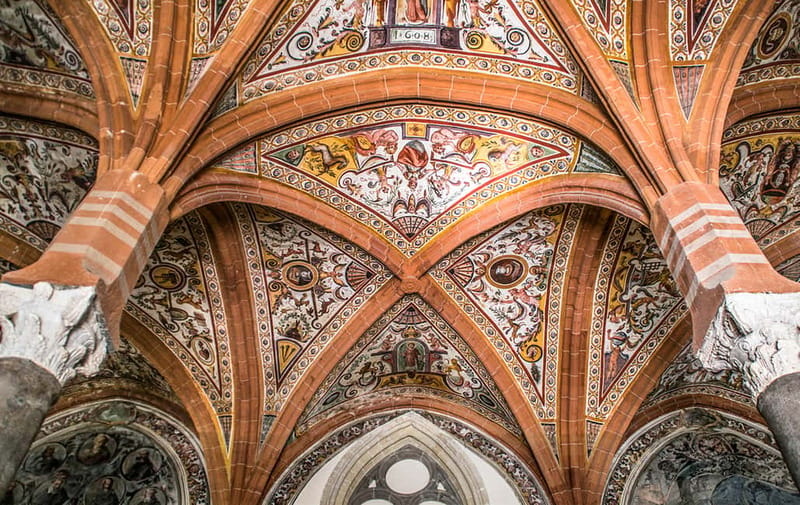
- Fresco overload, in a good way: Franciscan painting in the basilica areas, then dramatic frescoes in the Sisto V Hall
- A real descent underground: drop about 10 meters to reach the Neapolic ruins below San Lorenzo Maggiore
- The Macellum market: walk an ancient road and see the remains of the Roman commercial heart, often described as over a thousand years old
- A guided story without the tour crowd: a free audio guide is available on site, in English and Italian
- Museum add-on matters: you’ll see a cross-section of Naples from the classical age into the 1800s
San Lorenzo Maggiore and Neapolis Sotterrata: why this feels like time travel
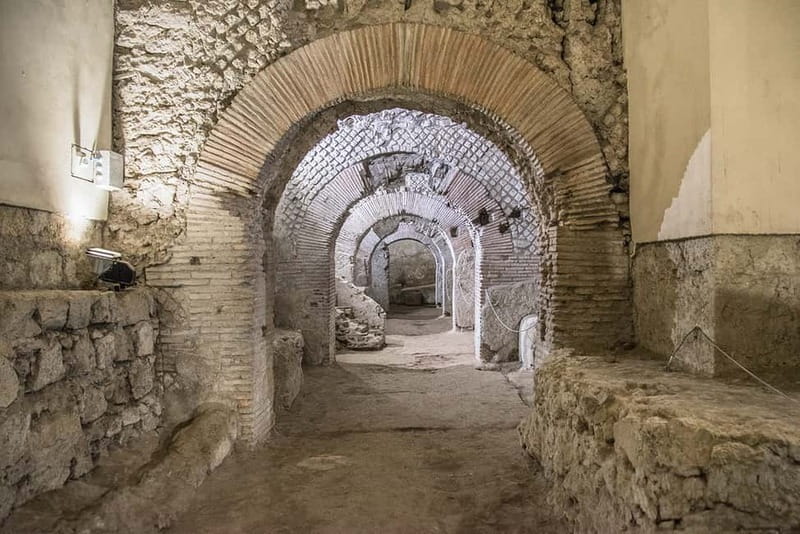
You start by walking through a monumental complex that looks like it was built to impress, then you go a level deeper, literally. The main thrill here is contrast: elegant halls and cloister spaces up top, then a cooler, quieter underground world that connects directly to ancient city life.
This ticket is built around the San Lorenzo Maggiore complex and the Neapolis Sotterrata site beneath it. That matters because it makes your visit coherent. You are not hopping between unrelated ruins. You follow one location’s story from the classical roots, through medieval church life, and into more recent interpretations in the museum.
Two things make it especially satisfying. First, the art is front and center, especially in the basilica fresco areas and the Sisto V Hall. Second, the underground portion is the kind of place where your brain goes, wait, this is still street-level history, even if it’s under a church today.
Ticket basics: what you get for $10, and what not to assume
At about $10 per person, you’re paying for more than just the “underground bit.” The ticket includes entrance to the Complex of San Lorenzo Maggiore (cloister, Chapter Hall, Sisto V Hall, and museum) plus entry to Neapolis Sotterrata.
You should know what it does not try to be. If you’re thinking of the broader “Subterranean Naples” concept with lots of scattered underground spaces, this focus is narrower. This experience centers on the ancient ruins and market beneath this specific church complex, not a massive network of flooded or disconnected tunnels.
Also note that the basilica itself has free entrance, separate from the ticketed complex areas. So if you decide you only want a quick look at the church, you might be able to do that without paying for the full ticket. But if your goal is the underground market and the museum, the $10 ticket is the right move.
More from a Naples stay:
- From Naples: Pompeii Ruins & Mount Vesuvius Day Tour
★ 4.3 · 11,459 reviews - From Naples: Sorrento, Positano and Amalfi Full-Day Tour
★ 4.6 · 10,988 reviews - From Naples: Sorrento, Positano & Amalfi Coast – Small Group Tour
★ 5.0 · 8,643 reviews
Getting there at Piazza San Gaetano, 316, without losing time
Your meeting point is the entrance to the complex at Piazza San Gaetano, 316. This is the kind of site where timing and orientation matter, because if you wander around the neighborhood once you’re already in the right zone, you’ll lose the momentum.
One practical tip: don’t trust GPS blindly. People have been sent past the correct entrance, and once you’re close, it takes only a few minutes to find the right doorway instead of a 20-minute detour.
When you arrive, take 30 seconds to confirm where ticket holders enter. If you’re using a QR code on your phone, bring it up before you reach the staff and make sure the screen brightness is high.
Basilica of San Lorenzo Maggiore: Franciscan frescoes before you go underground
Even with the ticket, I like starting with the basilica areas first. The reason is simple: it sets the tone. You are stepping into a religious and artistic environment that helped preserve and frame what sits below.
The experience calls out the beauty of the San Lorenzo Maggiore Church and especially its Franciscan frescoes. Look for how the painting gives you a human scale. It’s not just “pretty wall art.” It’s part of how medieval Naples thought about faith, identity, and public life.
Practical note: because you’re about to walk through halls and then descend underground, comfortable shoes matter. You’re going to be on your feet in multiple spaces, and some areas can be slick or uneven.
Cloister and Chapter Hall: Gothic details you can actually notice
After the church areas, you’ll move into the complex, including the Cloister and the Chapter Hall. The cloister is a good mental reset. It’s calmer than the frescoed zones and it gives you breathing room between art and archaeology.
The Chapter Hall gets attention for its Gothic character and its late fourteenth-century Gothic portal. Even if you’re not a medieval architecture specialist, the portal helps you orient yourself. It signals that this wasn’t just a “church with a museum added later.” It was built as a working religious space with formal, ceremonial design.
What I like about these above-ground stops is that they explain the physical layers of Naples. You can see how the complex itself became the cover story for the city underneath. The underground ruins did not float up into view. They sit there, held by later construction and centuries of reuse.
More Naples bookings worth a look
- Naples: Catacombs of San Gennaro Entry Ticket & Guided Tour
★ 4.6 · 7,941 reviews - Naples: Downtown Tour with Veiled Christ & St Clare Tickets
★ 4.9 · 6,462 reviews - Naples: Hop-on Hop-off Bus Tour 24-Hour Ticket
★ 4.3 · 5,157 reviews - Mount Vesuvius: Skip-the-Line Ticket and Smart Digital Guide
★ 4.2 · 2,780 reviews
Sisto V Hall frescoes: the art that makes you slow down

The Sisto V Hall is one of the biggest reasons people rate this experience highly. The focus is on the hall’s colorful frescoes, and the description emphasizes the beauty of the chapel-like artistic setting.
This is where you should give yourself permission to linger. Since the entire ticket runs on a planned sequence, it’s easy to rush. Don’t. Stand where you can see the overall ceiling work, then step sideways for detail.
Even if you only catch fragments at first, you’ll start noticing how frescoes guide your eye. They point. They frame. They make the room feel alive rather than like a display.
If you care about art, this hall is worth being patient for. If you do not, you can still enjoy it, but you’ll probably prefer to keep moving faster. Either way, it’s a clear high point.
Neapolis Sotterrata: descend 10 meters into the ancient Macellum market
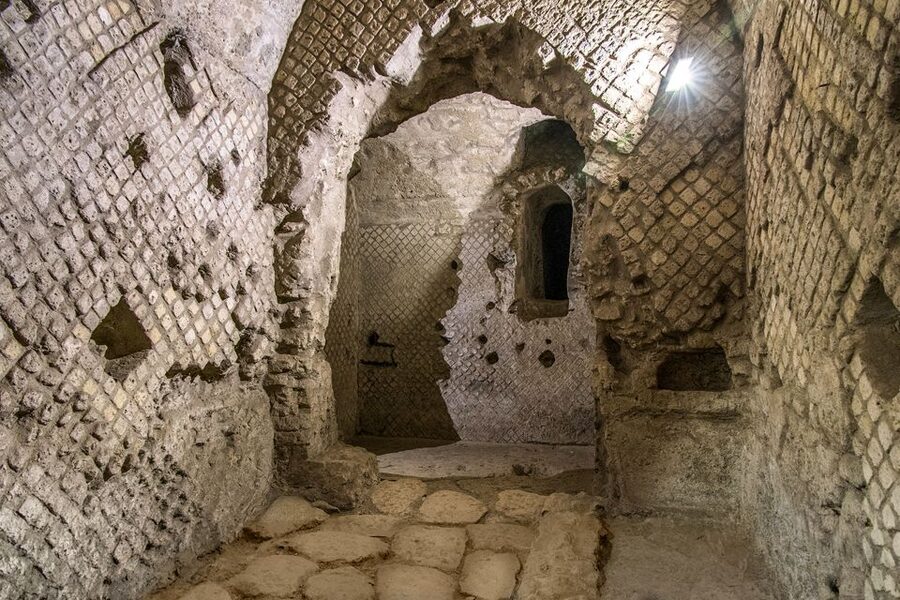
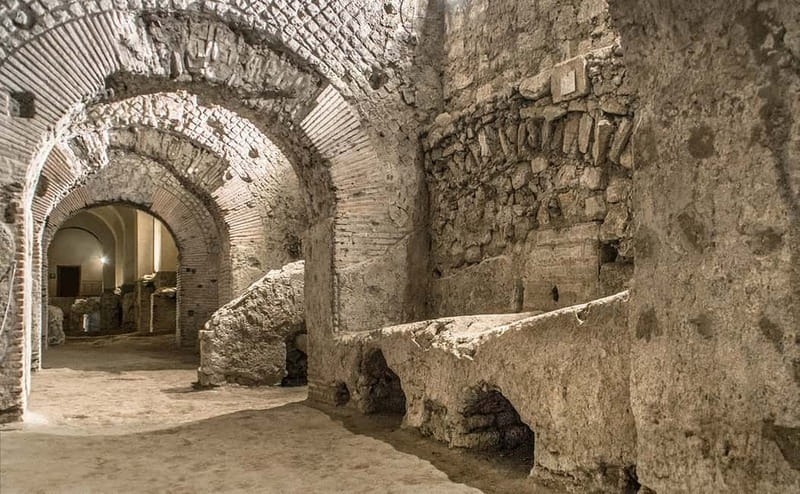
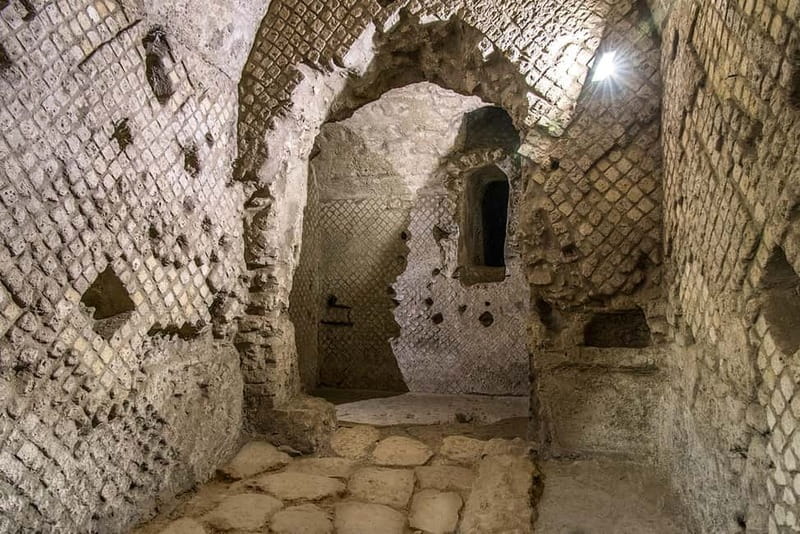
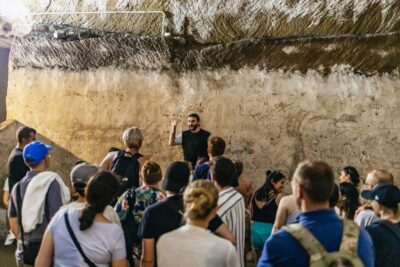
Now for the main event. You descend roughly 10 meters underground and reach the ruins of Neapolis Sotterrata, tied to the ancient Greek-Roman city of Neapolis, founded in 470 B.C. This is not theoretical history. You’re walking through the footprint of an old urban commercial center.
The experience highlights the ancient road and the Macellum, the Roman market. That word alone can sound academic, but the idea is very practical. This was where trade happened. People came and went. Food, goods, and daily business all passed through here.
The “time travel” effect comes from perspective. Up top, you see medieval religious grandeur. Underground, you see the infrastructure of everyday urban life. It’s not a tomb, not a dramatic throne room. It’s a market space, which is exactly why it feels real.
One consideration: the underground portion is described as being focused. If you want a long subterranean walk with lots of different types of ruins, you may find this more compact than you imagined. Still, many visitors consider the experience worth it specifically because the Roman market feeling is so strong and the site tends to feel calmer than larger attractions.
Museum visit: learning Naples from classical times to the 1800s
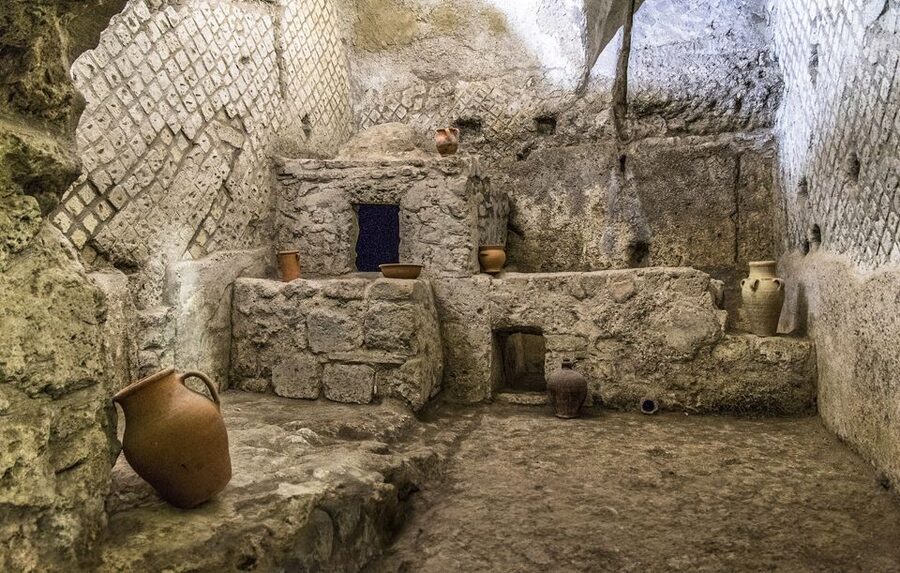
After you come back out of the underground spaces, the museum helps you stitch the story together. The museum is described as offering a cross-section of the history of Naples, from the classical age through the nineteenth century.
I like museum stops that answer the question you’re already thinking in the ruins. After walking the Macellum, you naturally want context: what did people value, what changed, what survived, and how did Naples keep reinventing itself?
This museum format supports that. It gives you a clearer timeline and helps you understand what you saw in the underground portion and why the complex matters.
One more practical tip: don’t skip the museum just because you think it will be redundant. The underground ruins are a physical experience. The museum is your chance to connect those physical pieces into a larger narrative.
Audio guide and optional guided tour: making the most of the walls
A free audio guide is available to download on site. You can choose English or Italian. This is a good setup if you want flexibility and you don’t want to follow a group pace.
Some people have had trouble getting the audio guide from a website link or download process, so if it doesn’t work for you instantly, ask on site for the right method. The most important thing is to have some interpretive support, because frescoes and archaeology can look similar at first glance.
There’s also an optional guided tour available for €2. If you want faster explanations and you’re comfortable paying a small add-on, it can help you catch key details without needing to read everything yourself.
How long to plan, and when to go
This ticket is valid 1 day, with starting times shown by availability. In other words, you’re not just showing up anytime and wandering in. Pick a time window that fits your energy level.
Plan on taking your time. Even if the underground portion is compact, the frescoed halls and the museum encourage slow viewing. If it’s a hot day, the underground visit can feel like a welcome break. If it’s rainy, the indoor mix of church spaces, halls, and museum areas keeps the day from collapsing.
If you have limited time in Naples and you still want a meaningful cultural stop, this is a smart target. It gives you art, architecture, and archaeology in one place.
Price and value: $10 for art, archaeology, and a Roman market
Let’s talk value with real numbers and real expectations.
At $10 per person, you get:
- Entry to the San Lorenzo Maggiore complex (cloister, Chapter Hall, Sisto V Hall, museum)
- Neapolis Sotterrata entry underground
- A free audio guide available on site
- Plus, the basilica entrance is free separately
The optional €2 guided tour is there if you want more structure. For many people, the $10 ticket already feels like it covers multiple layers of Naples without tipping into the “pay extra for everything” trap.
The key is what you’re really buying. You’re buying access to a specific, concentrated location with strong fresco content above and a Roman market below. If that match sounds like your style, it’s good value. If you’re hoping for a massive underground network, you might feel under-satisfied, even if what you do see is impressive.
Who this experience suits best
This ticket fits best if you like:
- Frescoes and church art
- Archaeology that stays tied to how people lived day to day
- Sites that mix medieval and ancient Naples in one walking flow
- Indoor-friendly plans, especially if weather is not cooperating
It’s also wheelchair accessible, so it works for people who need that in-person consideration.
If you travel with kids, it can still work, but plan for a bit of explaining. The underground market is visual, but the meaning takes context, and the audio guide or a guided add-on can help.
Should you book the Naples San Lorenzo Maggiore and Neapolis Sotterrata ticket?
Book it if you want one place that delivers art above and ancient street life below, all tied to a single site in Naples. The frescoes in the Sisto V Hall and the Franciscan fresco areas are the kind of highlights that justify the stop even before you go underground. Once you descend and see the Macellum market feeling, the ticket starts to make a lot of sense.
Skip or rethink if you’re expecting a sprawling subterranean Naples route with many different underground zones. This is more focused and smaller in scale than some people imagine, even though it’s still compelling and often feels calm.
If you’re trying to choose between speed and meaning, pick meaning. This is the sort of visit where taking your time pays off, and the $10 price is the kind that lets you slow down without guilt.
FAQ
Where is the meeting point for the San Lorenzo Maggiore and Neapolis Sotterrata ticket?
The meeting point is the entrance to the complex at Piazza San Gaetano, 316.
How much does the ticket cost?
The price is listed at $10 per person.
What does the ticket include?
It includes entrance to the Complex of San Lorenzo Maggiore (cloister, Chapter Hall, Sisto V Hall, and museum) and entry to Neapolis Sotterrata. A free audio guide is available to download on site.
Is the basilica included in the ticket?
The entrance to the Basilica of San Lorenzo Maggiore is free, according to the activity info. The ticket covers the complex areas and the underground Neapolis Sotterrata visit.
Is there an audio guide, and what languages are available?
Yes, there is a free audio guide available to download on site. The host or greeter languages listed are English and Italian.
Is food included?
No. Food and drinks are not included.
How long is the ticket valid?
It is listed as valid 1 day, with starting times depending on availability.
Can I cancel for a refund?
The activity offers free cancellation up to 24 hours in advance for a full refund.
Reviewed lately around Naples
- Naples: National Archaeological Museum of Naples Guided Tour★ 4.8 · 498 reviews
- Naples Pasta Class: Fettuccine & Ravioli with Grandma’s Recipe★ 5.0 · 506 reviews
- Naples Walking Tour with Underground Roman Ruins Ticket★ 4.5 · 510 reviews
- Private Day tour of Positano, Amalfi and Ravello from Naples★ 5.0 · 522 reviews
- Naples: Street Art & History Tour in the Spanish Quarters★ 4.9 · 540 reviews
- Private Day Tour: Sorrento, Positano, Amalfi, Ravello from Naples★ 4.5 · 546 reviews
- Day Trip of Pompeii, Herculaneum and Vesuvius from Naples★ 4.5 · 547 reviews
- Day Trip of Pompeii, Sorrento and Positano from Naples/Salerno★ 5.0 · 560 reviews
Naples Tours, compared.
Sorrento, Positano and Amalfi Full-Day Tour
Read our review →
Sorrento, Positano & Amalfi Coast – Small Group Tour
Read our review →
Catacombs of San Gennaro Entry Ticket & Guided Tour
Read our review →
Downtown Tour with Veiled Christ & St Clare Tickets
Read our review →
Pizza-Making Workshop with Drink and Appetizer
Read our review →
Browse the lists this tour appears in