
Reviewed · LECCE TOURS
Lecce guided tour with underground discoveries
Lecce is one of those places where the stonework feels like it is talking back, and this short guided loop helps you read it fast. I love the mix of Piazza Duomo landmarks and the way the guide explains the meaning behind the facade details, plus the included Museo Faggiano underground route. One heads-up: the underground time is mainly inside the museum experience, so if you are expecting lots of in-city subterranean wandering, you may find it lighter than the name suggests.
In just two hours you’ll move from cobbled lanes to big square views, with photo stops timed so you can actually see the architecture, not just get passed along. I also like that the tour is built for small groups, typically around 10 to 12 people, so questions fit without the guide losing the thread.
Key things I’d circle before you go
- Start in Piazza Duomo: Santa Croce and Lecce Cathedral bell tower views are the perfect “first lesson.”
- Corso Vittorio Emanuele pacing: you get a clean sense of how the historic center connects.
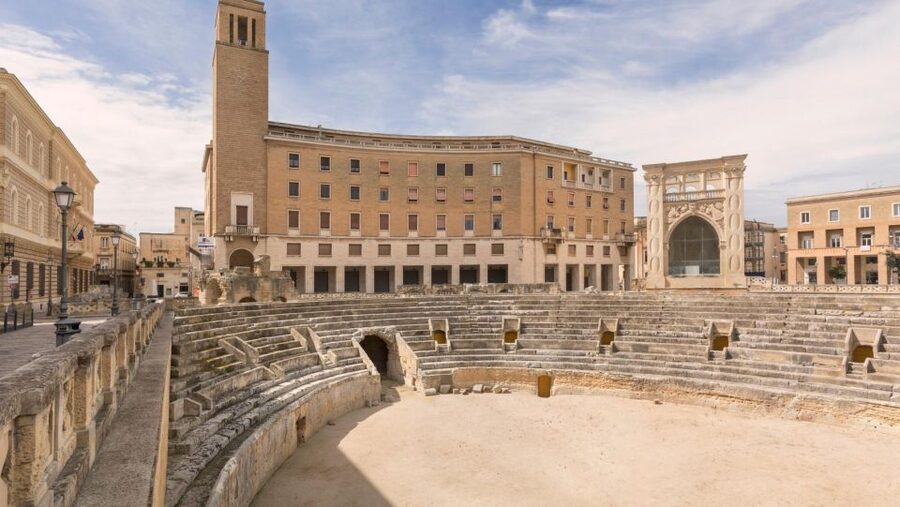
- Piazza San Oronzo stop: a central square moment for orientation in Salento.
- Chiese e Palazzi focus: facades and palace exteriors, so you can spot Baroque signatures.
- Faggiano Museum ticket included: skip the hassle and go straight to the covered highlights.
- Underground is museum-based: the big subterranean payoff happens inside Museo Faggiano.
Lecce Baroque in 2 hours, the practical way to get it
This tour is built for one main reason: Lecce’s Baroque is everywhere, and it can be hard to know what you are actually looking at when you are on your own. With a guide, the same streets suddenly make sense. You stop to notice the stone curls, the sculpted figures, and the patterns that repeat across churches and palaces.
For me, the value is that the tour does not just name buildings. It teaches you how to read them. That means when you spot a detail later, you understand why it’s there and what it likely signaled to the people who commissioned it.
The second big reason I like it: the tour ends at Museo Faggiano, where the story shifts from ornate surfaces to what lies beneath the city layers. That contrast helps you understand Lecce as more than a pretty postcard.
More from a Lecce stay:
- Lecce: Baroque Architecture and Underground Walking Tour
★ 4.7 · 842 reviews - Small group tour of the caves of Santa Maria di Leuca
★ 5.0 · 806 reviews - 3 Hour Group Tour by Boat to the Caves of Santa Maria di Leuca
★ 5.0 · 472 reviews
Piazza Duomo: Santa Croce and the Cathedral bell tower payoff
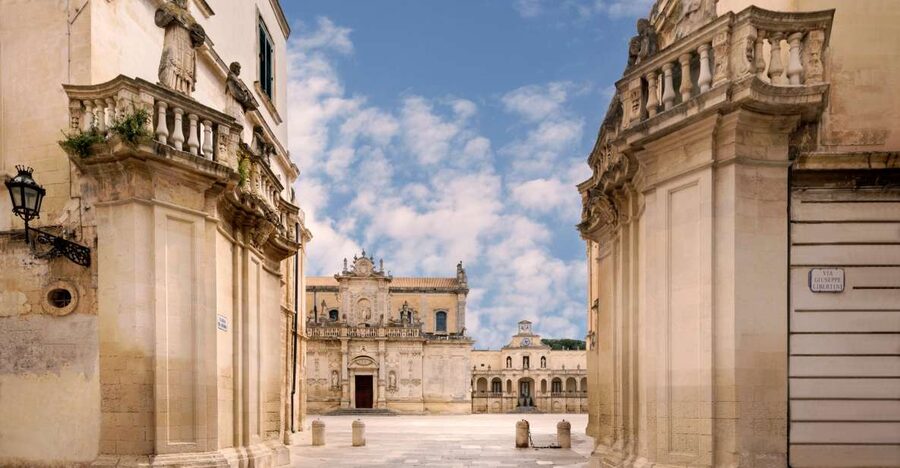
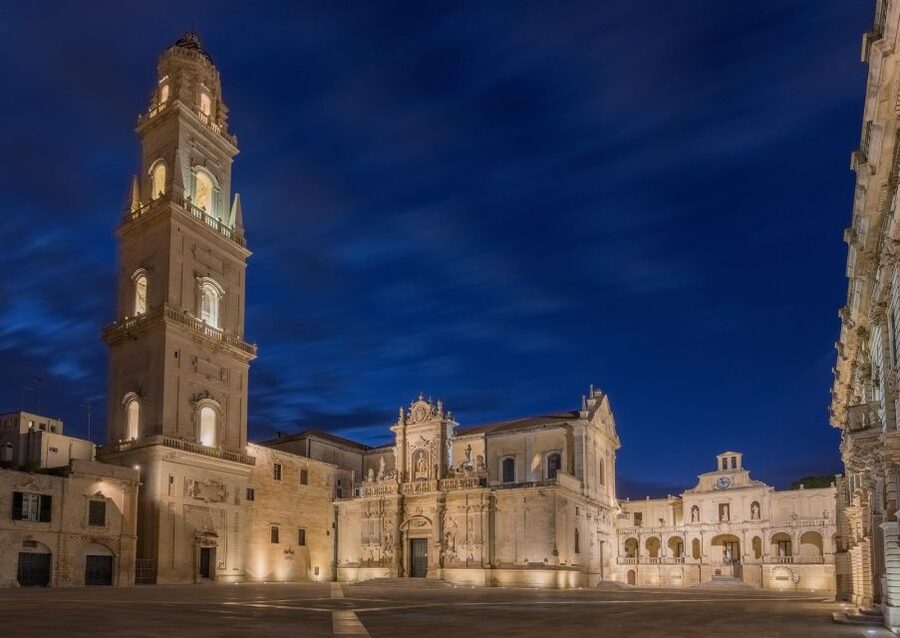
Your walking route typically anchors on Piazza Duomo, where the architecture hits you right away. This is the stop that sets the tone: you’re in the right mood, and you have enough open space to see the facade shapes without craning your neck at every turn.
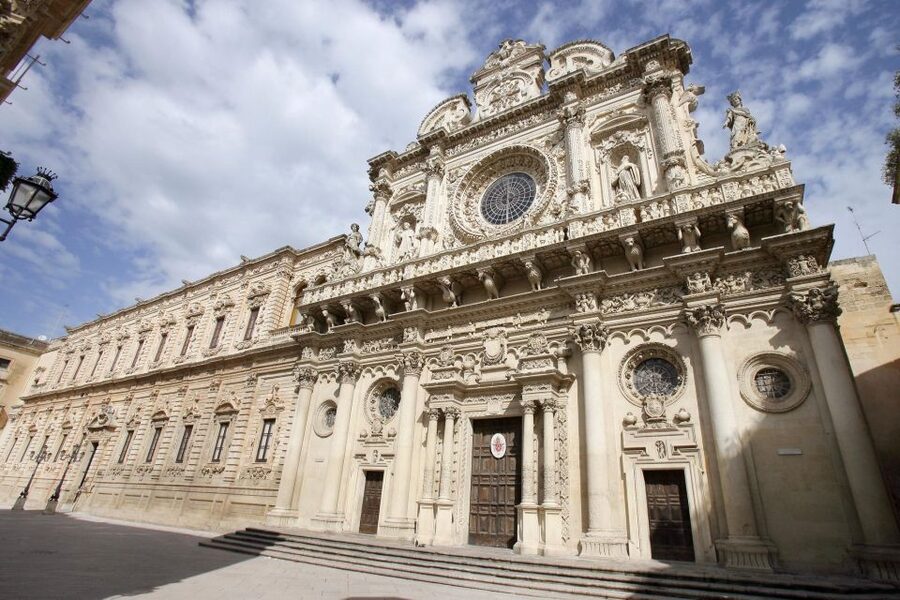
The guide specifically points out the Basilica of Santa Croce facade, and you’ll also focus on the bell tower connected to Lecce Cathedral. Santa Croce is a classic Lecce moment because the facade is like a vertical storyboard. The guide helps you connect the sculptural program to the broader Baroque obsession with drama, devotion, and display.
Practical tip: if you care about photos, stand where the guide asks, then take one extra minute to adjust your angle. From slightly different positions, the facade’s depth changes. That is where the “stone relief” effect shows up.
Corso Vittorio Emanuele: your shortcut through the historic center
After the first square moment, the tour follows Corso Vittorio Emanuele, which works like a main spine through the historic center. Even if you’ve never been to Lecce before, this kind of route gives you orientation fast. You learn the city rhythm: where people flow, where the key landmarks sit, and how you can later retrace your steps on your own.
This section also matters because Baroque in Lecce is not just in one place. As you walk, the guide’s explanations help you spot the same motifs across different buildings. That is a big deal if you only have a day or two in Apulia.
If you’re visiting in hot weather, this is also where the pace becomes real. You’ll be outside for stretches, so bring water and plan to move at the tour’s rhythm rather than your own.
Piazza San Oronzo: the central square energy and context
Next comes Piazza S. Oronzo, another anchor point for Lecce orientation. This is where you feel the city’s daily pulse, even with the tour’s structured pace. The guide uses the square to connect what you saw at Piazza Duomo with what you’ll notice next in churches and palaces.
In practical terms, this stop helps you understand the “layout logic” of the historic center. You’ll know where you are relative to the major monuments, so the rest of your time in Lecce feels less like wandering and more like exploring with a map in your head.
If you want to keep costs down for your self-guided time afterward, this square is a good place to reset. You can decide where to go next based on what you now understand, instead of following the loudest souvenir streets.
More Lecce bookings worth a look
- Lecce: City Highlights Guided Tour by Bike
★ 4.8 · 362 reviews - Lecce: Guided Street Food Walking Tour with Food and Wine
★ 4.6 · 273 reviews - Lecce: City Highlights Guided Tour by Rickshaw
★ 4.8 · 236 reviews - Colosseum, Roman Forum & Palatine Guided Tour
★ 4.7 · 63,148 reviews
Chiese e Palazzi: what to notice on facades and exteriors
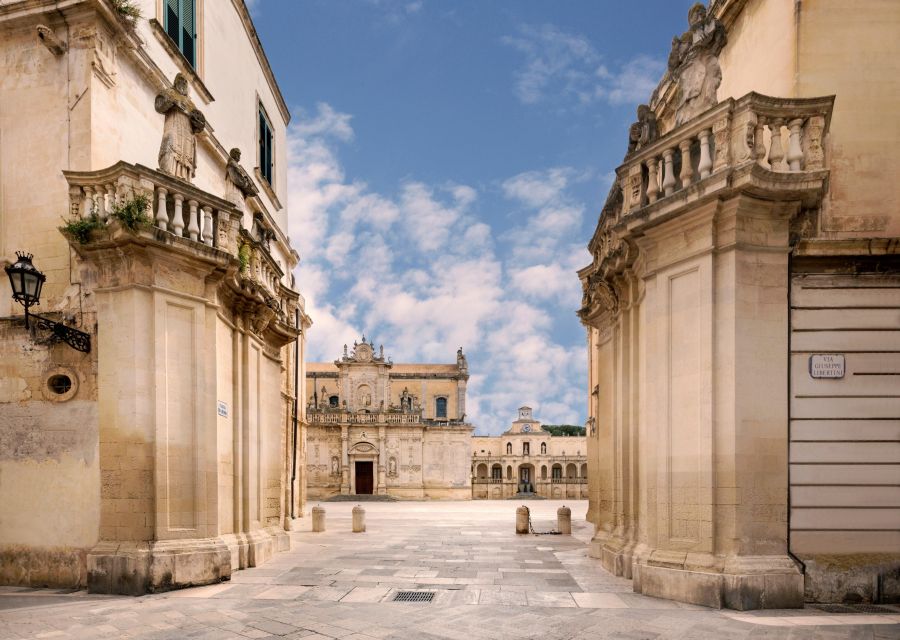
The tour includes time focused on chiese e palazzi. This does not mean you are touring every interior. Instead, you get the exterior story, which is honestly a smart use of limited time because Lecce’s signature is on the buildings’ exteriors.
Here’s what the guide’s approach tends to do well. They slow you down just enough to notice pattern details, like repeated stone ornaments and how the facade design frames entrances or windows. You start to see Baroque not as one style, but as a toolkit used to communicate status and devotion.
One practical note: the tour ticket includes the museum, but church entry is not included. So if you want interiors, you’ll need to plan for paid church tickets separately when the schedule offers the chance.
Museo Faggiano ticket included, and why this museum changes the mood
The highlight that makes this tour different from a standard Baroque walk is the included visit to Faggiano Archaeological Museum with the underground discoveries. The ticket is part of your package, and you can also skip the ticket line, so you lose less time switching from street to museum.
Museo Faggiano shifts the emphasis from ornament to evidence. Instead of sculpted stone above ground, you’re looking at excavated layers and remnants that point to daily life beneath the city you see today. That is a powerful contrast because it answers a question you might have while staring at Baroque facades: what was happening here before the showy stone?
What I like about this change of pace is that it gives you a more complete Lecce picture. You get to connect the modern landmark city image with the older urban rhythms found through archaeology.
The underground discoveries: corridors, chambers, and daily-life traces
The tour’s underground payoff is tied directly to the museum’s interior underground spaces. Inside, you move through sections that feel like corridors and chambers, where the idea is simple: you are seeing what was buried under centuries of change.
This is where your understanding of Lecce becomes less surface-level. Instead of treating the city as only a beautiful exterior, you start to see it as a place that evolved layer by layer. The guide’s explanations help link what you see underground to the daily routines and buried traditions associated with the city’s past.
A fair caution: one traveler pointed out that the tour name can sound like it promises a heavier underground experience than you actually get. In practice, plan to experience the underground as part of the museum segment, not as an extended underground circuit.
Guides who make the architecture click
The biggest pattern in the experience is how much the guide matters. Names like Fabio Grasso and Elena show up often, and their teaching style tends to focus on clarity and practical connections between architecture and meaning.
What I consider a real plus: multiple guides mentioned in the experience handle questions well and keep the group from getting lost. One review mentioned that group size around 10 to 12 keeps the pace comfortable, and that makes sense. If the tour was bigger, the guide would have less room to respond, and the whole architecture-reading part would suffer.
English quality also appears to be strong. Several guides are described as speaking clearly and answering questions in a way that makes architecture feel understandable rather than like a museum lecture. On days when you are tired from walking, that can be the difference between memorizing facts and actually learning something you can use later.
How much this costs, and whether it is a good value
At $41 per person for a 2-hour small-group style tour, the value comes from two things.
First, the museum ticket is included. If you were planning to visit Museo Faggiano anyway, you are already getting a priced-in component. Second, the guide experience helps you convert what you see into something you remember and can reuse while touring on your own.
Church tickets are not included, so factor that in if you expect to go inside several churches during the time you are in Lecce. Still, for a short stay, focusing on exterior Baroque at key squares and then doing the museum underground is a smart way to get a lot of payoff without dragging your day longer than needed.
If your schedule is tight and you want a fast, guided path that makes Lecce’s baroque style readable, this price tends to feel fair.
Timing, weather, and how to dress for an outdoor heavy walk
Even with the museum segment, this tour is built around walking through Lecce’s historic center. That means you should plan for outdoor conditions. On rainy and windy days, you’ll still be moving between squares and streets, so it helps to have a jacket that blocks wind and a compact umbrella you can manage while walking on uneven cobbles.
Also consider your shoes. Lecce’s center is charming, but cobblestones are not forgiving. Choose footwear with grip and comfort, especially if you are traveling in summer heat.
Bring a small bottle of water. Two hours can feel longer if you are pausing to read stone details and answering questions at stops.
Who should book this Lecce tour
This one fits best if you:
- Have limited time in Lecce and want the “greatest hits” plus one major differentiator.
- Like learning how architecture works, not just taking photos.
- Want Baroque context and then a change of pace underground at Museo Faggiano.
- Prefer small groups where questions are still welcome.
If you only care about interiors of churches, you might feel church entry limitations. But if you love facades, squares, and the meaning behind the sculpted stone, you’ll likely enjoy the structure.
It also works well as a morning or early afternoon activity. You’ll finish with a museum that gives you a different angle on the city, which makes the rest of your day feel more connected.
FAQ
FAQ
How long is the tour?
It lasts about 2 hours.
What is included in the price?
You get a live tour guide and the ticket for the Museo Faggiano (including the underground museum experience).
Are church entrances included?
No, entry tickets for paid churches are not included.
What stops are part of the tour?
Key stops include Piazza Duomo, Corso Vittorio Emanuele, Piazza S. Oronzo, the Faggiano Archaeological Museum, and time focused on chiese e palazzi.
What languages is the tour offered in?
The live tour guide is available in English and Italian.
Does the tour help with ticket lines?
Yes, it includes skip-the-ticket-line for the museum experience.
Is it flexible to book and cancel?
You can reserve and pay later, and you can cancel up to 24 hours in advance for a full refund.
Should you book this Lecce tour?
If you want the fastest way to understand Lecce Baroque without feeling lost, I’d book it. The guide-led focus on Piazza Duomo and the Santa Croce facade, then the included Museo Faggiano underground segment, makes this more than a sightseeing walk. Just go in expecting that the underground part is primarily the museum experience, then you’ll come away with the right kind of Lecce story.
Reviewed lately around Lecce
- 3-hour Boat Tour in Santa Maria di Leuca★ 5.0 · 233 reviews
- Lecce: City Highlights Guided Tour by Rickshaw★ 4.8 · 236 reviews
- Santa Maria di Leuca: Capo di Leuca Boat Tour★ 4.8 · 245 reviews
- Discovering Lecce★ 5.0 · 247 reviews
- Mini-cruise tour to the Caves of Santa Maria di Leuca★ 5.0 · 250 reviews
- Tour of Lecce with a visit to the basement of the ancient synagogue★ 5.0 · 258 reviews
- Lecce: Guided Street Food Walking Tour with Food and Wine★ 4.6 · 273 reviews
- Lecce History and Street Food Tasting Small Group Tour★ 5.0 · 288 reviews
Lecce Tours, compared.
Baroque Architecture and Underground Walking Tour
Read our review →
Small group tour of the caves of Santa Maria di Leuca
Read our review →
3 Hour Group Tour by Boat to the Caves of Santa Maria di Leuca
Read our review →Snorkelling-Tour in Porto Cesareo with typical aperitif
Read our review →
Pasta Making Class in 1400s-Era Courtyard with Wine
Read our review →
Tour to 4 Towns of Salento: Otranto, Leuca, Gallipoli, Galatina
Read our review →
Cooking class, dinner and wine tasting near Lecce
Read our review →Browse the lists this tour appears in