
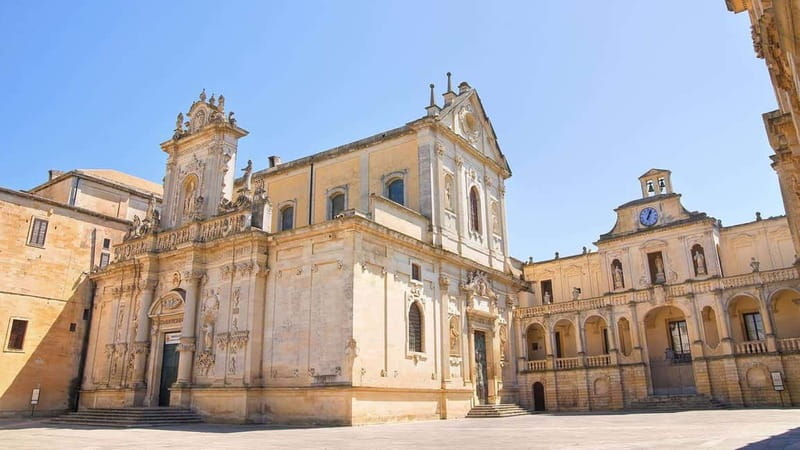
Reviewed · WALKING TOURS
Lecce: Baroque Architecture and Underground Walking Tour
Lecce has baroque façades that look almost too detailed to be real. What makes this tour extra interesting is that it doesn’t stop at the pretty stone surfaces, it takes you underground to the Jewish Museum too. I especially like the strong focus on the Santa Croce Church start, and how quickly you’re shown the city’s Roman to Jewish layers. One drawback to consider: the route is time-tight, so you’ll be seeing a lot of exteriors and moving at a lively pace for about 1.5 to 2 hours.
This is a guided walking tour in the historic center, with a local guide and multiple 15-minute stops. You can go in a shared group or choose a private tour, and the guide language is English, Italian, or French. It’s also wheelchair accessible, which matters in a city where cobblestones can be a wildcard.
Key points to know before you go
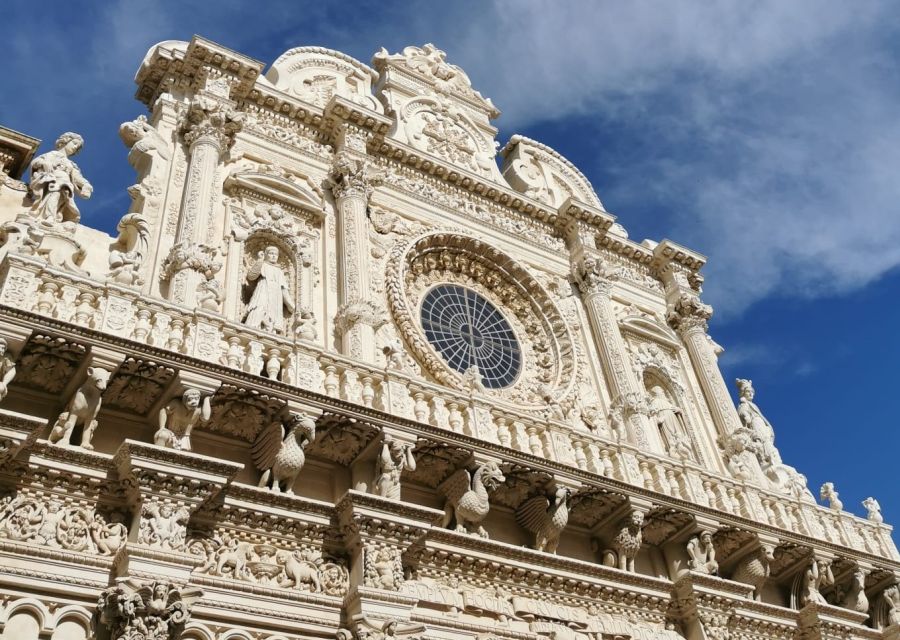
- Santa Croce Church kicks things off with a proper introduction to Lecce’s baroque visual style
- Piazza Sant’Oronzo connects you to Roman-era remains, including the Roman Column
- Corso Vittorio Emanuele is the in-between stroll with baroque palaces and the Sant’Irene Church stop
- Piazza Duomo is the architectural highlight area, with guided exteriors of the cathedral ensemble
- Underground Jewish Museum visit includes entry and adds a different, thoughtful chapter to the story
- You can choose shared group or private tour, and the price includes the Jewish Museum ticket
Santa Croce Church: Your Baroque “Okay, Wow” Moment
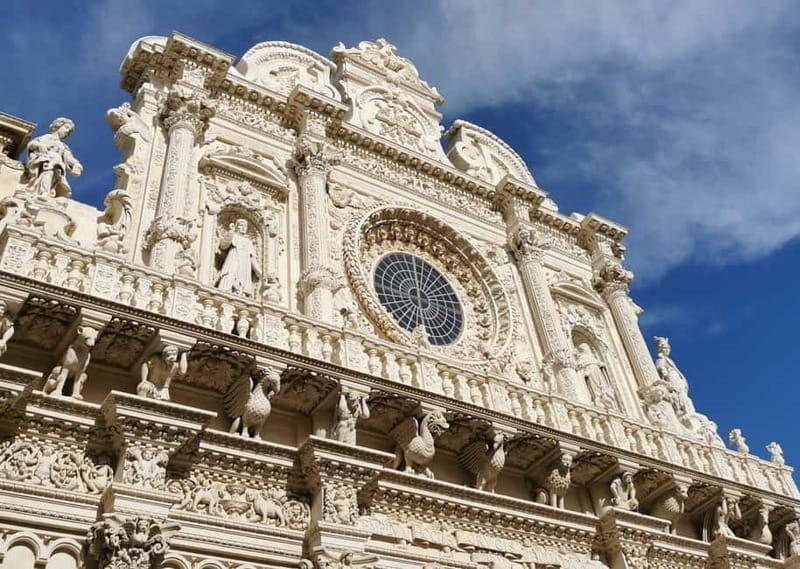
The tour starts with an external visit to Santa Croce Church, the headline example of Lecce’s baroque architecture. The guide frames what you’re looking at, so you’re not just admiring shapes, you’re learning what they’re trying to communicate and why this style became such a defining look for Lecce.
Even if you’re not a big church person, this stop works because it’s about reading the façade. Expect plenty of time spent outside with the guide pointing out architectural features and explaining how Lecce’s baroque identity shows up across the town.
Practical tip: if you’re photographing, arrive mentally ready for angles. Church façades reward looking slightly from the side, not only straight-on. Also, if light conditions are harsh, the guide’s commentary will still be useful even if your photos are imperfect.
More Walking Tours in Lecce:
- Milan: Guided Walking Tour & Last Supper Visit with Ticket
★ 4.7 · 5,409 reviews - Naples: Street Food Walking Tour with Local Guide
★ 4.8 · 4,256 reviews - Venice Walking Tour and Gondola Ride
★ 3.5 · 3,630 reviews
Piazza Sant’Oronzo and the Roman Column: Lecce’s Older Backbone
Next you move to Piazza Sant’Oronzo, the former market square area where you’ll see several key landmarks close together. This is where the tour helps you understand that Lecce did not begin as baroque. You’re shown the Old Town Hall nearby, the Roman Column, and the remains of a huge Roman amphitheater.
The Roman Column stop is short but meaningful. It’s the kind of object that makes you realize how later eras built over earlier ones. With a guide speaking in context, it’s easier to see the city as a sequence of layers rather than a collection of unrelated sights.
What I like here for first-time visitors: you don’t waste time hunting for the “right” ruins. The guide brings you straight to the spots where the Roman past is most visible in the old town layout.
Corso Vittorio Emanuele: The Walk Between the Big Stops
After Piazza Sant’Oronzo, you head along Corso Vittorio Emanuele, a main corridor lined with baroque palaces. This stretch is not just transit. It’s where you get to keep the baroque momentum going while still being on your feet.
One highlight along the route is the recently restored Sant’Irene Church. The value of adding this stop is simple: you get another set of architectural details and another guided moment to connect the look of Lecce to its history. If you’re the type who likes to compare styles, this is a good place to do it.
Small practical note: because the tour is structured as several 15-minute guided segments, you’ll want comfortable walking shoes. You won’t be trudging for miles, but you will be moving.
Piazza Duomo: Seeing the Whole Ensemble Without Going Inside
Then you arrive at Piazza Duomo, one of the most critically praised architectural ensembles in Italy. This area is the “final approach” of the standard baroque greatest-hits circuit, and it’s where the guide’s pacing matters.
Here you focus on the exteriors of the Archbishop’s Residence, the Seminary, the Bell Tower, and the cathedral. That exterior-only format can sound limiting, but it actually helps you in two ways:
1) It keeps the tour moving at a manageable rhythm for a 1.5 to 2 hour experience.
2) It gives you a clear sense of how buildings relate to each other in a single public space, not just as separate sights.
If you’re deciding where to spend extra time on your own after the tour, this is the area to remember. You’ll likely feel the urge to return for a slower look, especially if baroque street-level details are your thing.
The Underground Jewish Museum: A Different Side of Lecce
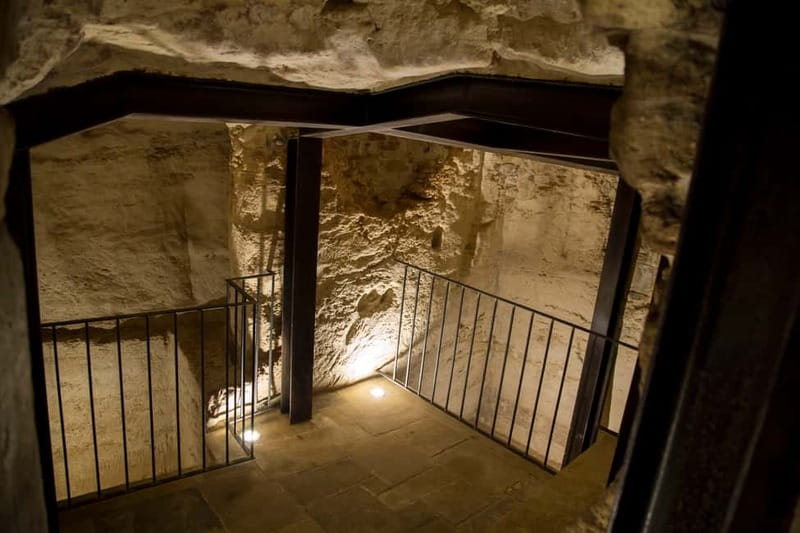
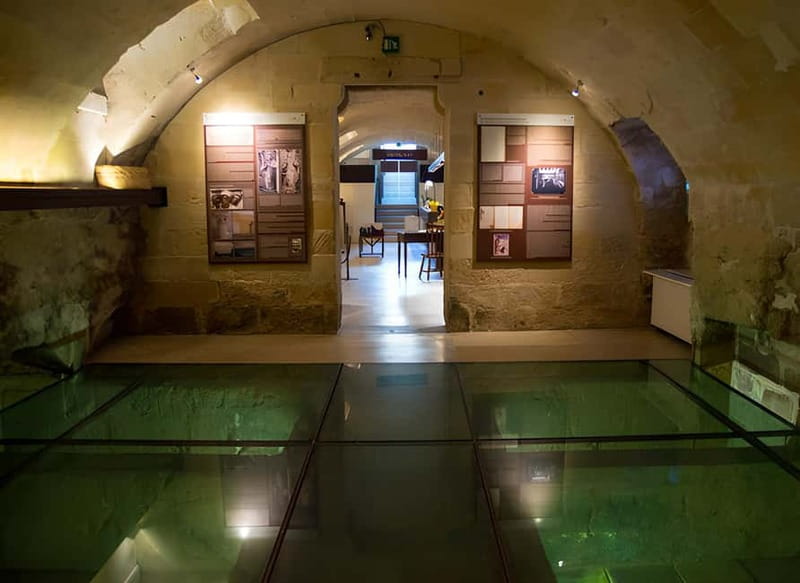
The final portion is the visit to the underground Jewish Museum. You get about 15 minutes inside, and the entry ticket is included. This is the part of the tour that changes the tone from baroque spectacle to human history and memory.
Because the visit is underground, it naturally feels like a shift. The guide helps you connect the dots so you’re not just looking at exhibits, you’re understanding why this history matters to Lecce’s identity. For me, this is what prevents the tour from becoming a one-note baroque walk.
One consideration: 15 minutes is not long. If you prefer museum time where you can read every panel slowly, you might want to treat this stop as an intro. Then plan a longer self-guided return if the topic grabs you.
How the 1.5 to 2 Hours Actually Feels on the Ground
The whole tour is about 1.5 to 2 hours, with multiple guided segments around 15 minutes each. That structure tends to work well in Lecce because the center is compact, and the sights are close enough that you can cover real ground without feeling like you’re sprinting.
Still, it’s not a slow stroll. You’re visiting several major points in sequence: Santa Croce Church, Piazza Sant’Oronzo and Roman remnants, Corso Vittorio Emanuele with palaces and Sant’Irene Church, Piazza Duomo, and then the underground museum.
If you’re traveling with someone who wants long pauses, this might feel a bit brisk. On the flip side, if you want an efficient first introduction to the city that sets you up to explore later, it’s a smart format.
Rain factor: one guide-led tour experience noted that even when it rained, much of the tour was still manageable because you spend time at churches and in shorter indoor moments.
Price and Value: What You’re Really Paying For
The tour price is listed at $28 per person, and it includes a walking tour, a local guide, and entry to the Jewish Museum. When you compare that to paying for a guide plus tickets separately, the value is fairly clear.
A small caution: one person reported that the same tour was cheaper when purchased directly at the guide office. I can’t tell you the exact current difference from that alone, but it does suggest it’s worth comparing the official in-town pricing if you have time to stop by.
For planning purposes, I’d think of this tour as:
- You pay for direction, pacing, and context.
- You pay for the guided explanation so the baroque façades and Roman remnants mean something.
- You get a museum ticket without having to coordinate it yourself.
That’s the kind of value that pays off most for first-timers.
Private vs Shared Group: Picking the Right Pace
You can choose between a shared group and a private option. In practical terms, here’s what that changes:
- Shared groups are usually better if you want to learn fast and don’t mind hearing questions from others.
- Private tours tend to work best if you have specific interests, like focusing on church architecture, Roman clues, or the underground Jewish history portion.
The tour also runs with local guides, and the names that came up with strong praise included Angela, Antonio, Massimiliano, Max, Anita, and Luigi Bianco. The consistent theme across those different guides: clear commentary and lots of energy for questions.
Getting More From Your Guide: Names I’d Watch For
This is the kind of tour where the guide can make or break the experience, and the strongest feedback tied to a few specific behaviors:
- Clear, enthusiastic explanations that connect each stop to the next
- A good sense of humor, not just dates
- Time spent answering questions
- Extra suggestions beyond the tour, like places to eat or what to do next in Lecce
Also, one experience specifically mentioned whisper Bluetooth headsets, which can be a big deal when you’re standing close to other groups or in noisy piazzas. If your tour provides them, use them. You’ll hear more and catch details you might otherwise miss.
If you want to get your money’s worth, bring at least two questions in your pocket. For example: what makes Lecce baroque distinct from other Italian baroque towns, and how does the Jewish Museum story fit into the city’s timeline?
Who Should Book This Tour in Lecce
Book it if:
- You want a fast, guided overview of Lecce’s baroque highlights
- You like architectural walking tours with a clear stop-by-stop plan
- You want Roman-era references without doing heavy research first
- You’re interested in Jewish history and want an introductory visit to the underground museum
You might skip or pair it differently if:
- You want lots of museum reading time, because the underground Jewish Museum visit is about 15 minutes
- You dislike walking pace and prefer long sits at each attraction
Should You Book It? My Practical Take
I’d book this tour if you’re going to Lecce for the first time or if you want an efficient way to understand why the city looks the way it does. The biggest payoff is the mix: baroque exteriors at Santa Croce and Piazza Duomo, Roman layers at Piazza Sant’Oronzo, and the underground Jewish Museum that adds real historical weight.
Just go in with the right expectations. This is a guided overview, not a slow museum day. If you treat it as the start of your Lecce story, you’ll likely leave with a sharper sense of what to explore next on your own.
FAQ
How long is the Lecce baroque and underground walking tour?
It lasts about 1.5 to 2 hours. Starting times depend on availability.
What does the tour cost?
The price is $28 per person.
What’s included in the price?
You get a walking tour, a local guide, and entry to the underground Jewish Museum.
Which languages are offered?
The live guide is available in English, Italian, and French.
Is the underground Jewish Museum ticket included?
Yes, entry to the Jewish Museum is included.
Is the tour wheelchair accessible?
Yes, the tour is listed as wheelchair accessible.
Reviewed lately around Lecce
- 3 Hour Group Tour by Boat to the Caves of Santa Maria di Leuca★ 5.0 · 472 reviews
- Small group tour of the caves of Santa Maria di Leuca★ 5.0 · 806 reviews
- Lecce: Pasta Making Class in 1400s-Era Courtyard with Wine★ 4.7 · 369 reviews
Walking Tours, compared.
Guided Walking Tour & Last Supper Visit with Ticket
Read our review →
Rialto Bridge & Offbeat Unusual Venice Walking Tour
Read our review →
Private 3 hrs Venice Tour: St Mark’s, Walking tour & Boat tour
Read our review →
Skip the line: Uffizi and Accademia Small Group Walking Tour
Read our review →Browse the lists this tour appears in